
 Software Development
 Security Services
 Cloud Services
 AI Services
 Other Services














 TechMagic Academy


Hiring vs Outsourcing AI Engineers: The Real Cost Comparison
Last updated:29 December 2025

Artificial intelligence has moved from experimentation to expectation. For many companies, the question is no longer whether to invest in AI, but how to build and sustain the capability without burning time, money, or strategic focus.
AI engineers play a key role in turning AI experiments into practical, working products such as chatbots, computer vision systems, and recommendation engines. They focus on applying machine learning models to real business problems, building scalable AI applications that automate workflows, improve decision-making, and increase efficiency by utilizing advanced tools and robust data collection processes to ensure AI systems are efficient and future-ready.
AI engineers help organizations assess where AI can deliver real value, define clear AI roadmaps, and scale solutions in line with business goals. They also address critical areas such as data governance, model bias, and responsible AI use, while providing ongoing optimization to ensure models remain accurate and effective over time.
The main question is whether to hire AI developers in-house or outsource AI development to a specialized partner. The second is how to source that talent efficiently. Both decisions look straightforward on the surface. In practice, they are anything but. The complexity of a project’s requirements and existing systems significantly influences the approach to AI development, including the need for advanced techniques like reinforcement learning and transfer learning techniques to build effective and scalable solutions.
Aligning AI with Business Objectives
Aligning ai development with your business goals is essential for maximizing the value of your ai projects. Our approach starts with a thorough understanding of your business objectives, enabling us to design ai solutions that directly support your growth strategy and operational priorities. By leveraging advanced techniques such as transfer learning, we develop custom ai solutions that deliver peak performance and cost efficiency, even as your needs evolve.
Our commitment to ongoing support ensures that your ai systems continue to deliver results, adapting to new challenges and opportunities as they arise. With a focus on sustainable growth and long-term success, we help you harness the full power of artificial intelligence to achieve your business goals and maintain a competitive advantage in your industry.
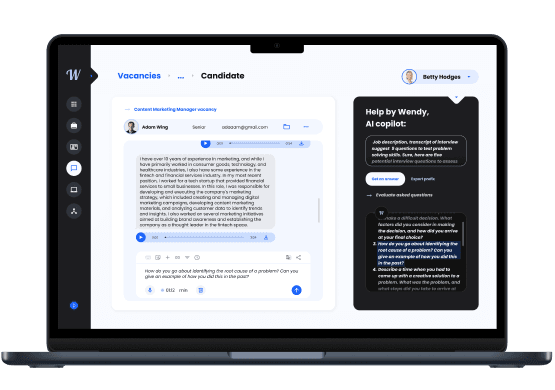
Learn how we built an AI-powered recruitment assistant using OpenAI stack
The Two Primary Models Explained
1. Building an In-House AI Team
This approach involves sourcing, hiring, training, and managing permanent AI professionals like data scientists, ML engineers, AI architects, and MLOps specialists that awe fully embedded within your organization.
Building and maintaining an in-house AI team demands significant allocation of internal resources, including time, budget, and ongoing management attention. It requires a deliberate in-house AI talent strategy, long-term funding, and executive sponsorship. Integrating AI solutions into existing systems can present substantial challenges, and the project's complexity, such as the requirements and current infrastructure, can greatly influence planning, execution, and the level of customization needed for successful implementation.
2. Outsourcing AI Development Services
Here, an external artificial intelligence development company or specialized agency delivers AI capabilities, either as a fully managed team or as staff augmentation supporting internal efforts. AI software development services can provide custom AI solutions tailored to your business needs, ensuring that AI applications are designed, implemented, and integrated to address specific challenges.
Artificial intelligence development companies often provide AI consulting services to help enterprises define, implement, and scale AI initiatives. Many organizations struggle with inefficiencies in their processes and the complexity of scaling AI solutions; business process outsourcing can help address these challenges by allowing companies to focus on core competencies while leveraging external expertise.
Outsourcing can range from MVP development to long-term partnerships supporting enterprise-scale AI initiatives. It also helps reduce operational costs and facilitates the integration of AI into existing systems, streamlining processes and optimizing your current infrastructure for maximum efficiency. Choosing the right AI development partner is key to making this model work.
Upfront Investment vs. Cost Flexibility
Building AI capabilities in-house almost always demands a significant upfront investment. Recruiting AI talent is expensive, with recruitment fees alone frequently reaching 20–30% of a first-year salary before any real productivity begins.
Over time, this investment can generate strong returns, but only if the team remains consistently utilized and aligned with long-term strategic priorities. Underutilization quickly turns fixed costs into financial drag.
Outsourcing fundamentally changes this cost structure. Initial expenses are lower, and spending is typically linked to clearly defined project scopes or time-based engagements. By leveraging AI software development services through outsourcing, companies can reduce operational costs and support business growth with scalable, efficient AI solutions tailored to their needs. This variable cost model is particularly appealing for companies launching their first AI initiative, testing a new product concept, or managing fluctuating demand. That said, cost efficiency depends on disciplined vendor management and well-structured contracts to prevent scope creep and uncontrolled spending.
Which Is Faster: Hiring AI Engineers In-House or Outsourcing AI Development?
Speed is often the deciding factor. Hiring experienced AI specialists can take several months, and assembling a fully productive internal team may take close to a year. During this period, competitors may already be shipping products, gathering user feedback, and capturing market share.
Outsourced AI teams are typically ready to begin within weeks. Partnering with an AI software development company can further accelerate the development and deployment of AI applications and AI products, enabling organizations to quickly deliver innovative solutions and secure early market advantage. For organizations racing to deliver an AI-powered MVP or secure early market advantage, this acceleration in time-to-market can outweigh nearly every other consideration.
How Do In-House and Outsourced Teams Differ in AI Integration and Ownership?
Control and integration differ sharply between the two models. In-house teams provide direct oversight, tight alignment with internal processes, and deep familiarity with proprietary systems and data. This approach also allows for direct control over data security and seamless integration of AI solutions with existing systems, which is crucial for maintaining compliance and protecting sensitive information. This level of integration is especially valuable when AI is central to core business operations or long-term intellectual property.
Outsourcing introduces a different dynamic. While day-to-day control is reduced, success depends on trust, strong communication, and clearly defined expectations. Intellectual property ownership must be contractually explicit, and knowledge transfer should be planned from the outset. Without deliberate effort, critical expertise and institutional learning risk remaining with the external partner rather than the organization itself.
Hidden Infrastructure & Operating Costs of In-House AI Teams
Building an in-house AI-powered B2B outbound team requires substantial upfront and ongoing investment. Beyond salaries, companies must fund hardware, software, cloud infrastructure, security, and continuous maintenance—costs that are often underestimated.
Infrastructure and maintenance alone can reach $30,000–$70,000 per year, with utilities and facilities adding $40,000–$80,000 annually. This includes servers, GPUs for AI training, data storage, and networking, all requiring regular upgrades and IT support. Software licenses for AI platforms and analytics tools add recurring costs, while cloud usage can scale rapidly with intensive AI workloads. To ensure peak performance of AI systems, it is crucial to clean and optimize data during acquisition and preparation, leveraging advanced tools to maximize system effectiveness.
Security and compliance are another major expense. Protecting B2B data and meeting regulations like GDPR or CCPA typically costs $20,000–$50,000 per year, with non-compliance carrying serious legal and reputational risk. As the project’s complexity increases, so does the need for robust data security measures and infrastructure to ensure secure AI integration and protect sensitive information throughout the system.
Training, Management, and Scalability Challenges
AI skills evolve quickly, making ongoing training unavoidable. Companies often spend $10,000–$30,000 annually on courses, certifications, and adoption support, while losing productivity during training periods.
Operationally, in-house AI teams create significant management overhead. As the project's complexity increases, so does the demand on internal resources for training, ongoing support, and optimization. When infrastructure, software, training, compliance, and facilities are included, the total annual cost per employee can range from $270,000 to $580,000. Scalability is limited, making it difficult to adjust resources quickly as demand changes.
The True Cost of Hiring AI Engineers In-House
In addition to higher spend on salaries, in-house AI teams demand continuous investment in cloud infrastructure, development tools, data security, compliance, and ongoing training to keep pace with rapidly evolving AI technologies. When these factors are combined, the actual annual cost of a single in-house AI engineer typically ranges from $270,000 to $580,000, depending on location and seniority.
This model only becomes cost-effective if engineers are fully utilized year-round. Any downtime, caused by shifting priorities, data readiness issues, or internal bottlenecks, quickly turns fixed costs into wasted spend.
Development Services and Cloud Platforms: The Overlooked Cost Factor
When assessing the true cost of AI development, many companies focus on upfront expenses and underestimate the long-term impact of development services and cloud platforms. In reality, these costs play a major role in the success and sustainability of any AI initiative.
AI integration is rarely simple. Embedding machine learning, NLP, or conversational AI into existing systems requires deep technical expertise and a strong understanding of business processes. While AI tools can automate workflows and improve decision-making, they also require ongoing development, maintenance, and support.
Cloud platforms enable scalability and flexibility but introduce recurring costs related to data storage, processing, security, and model training. As AI workloads grow, these expenses can increase quickly and become difficult to predict without careful planning. Leveraging emerging technologies is essential for organizations aiming to achieve digital transformation, streamline operations, and drive long-term business innovation.
Working with an experienced AI development partner helps businesses manage these complexities. The right partner can guide the integration process, select cost-effective cloud solutions, and provide ongoing support to keep AI systems secure, efficient, and up to date. Considering the full cost of ownership, from development to long-term support, is essential to maximizing ROI and ensuring sustainable AI adoption.
Why Outsourcing AI Development Is A More Flexible Cost Model?
Outsourcing AI development replaces fixed expenses with usage-based pricing. Instead of maintaining permanent headcount, companies pay for development time based on project scope, duration, and required expertise. This makes outsourcing especially attractive for MVP development, pilot projects, and businesses scaling AI initiatives incrementally.
Hourly rates for outsourced AI engineers vary by experience level:
- Entry-level AI developers typically charge $25–$50 per hour and are well-suited for tasks like data preparation, model training, and implementation of existing AI tools.
- Mid-level AI engineers generally charge $50–$100 per hour and can build custom AI models or optimize production systems.
- Senior AI engineers, who specialize in areas such as deep learning, NLP, or reinforcement learning, usually charge $100–$200+ per hour and provide architectural guidance alongside hands-on development.
This approach allows businesses to pay only for the expertise they actually need, when they need it.
How Location Impacts AI Development Costs?
Geography plays a major role in AI engineer pricing. While companies hiring locally often face high salary benchmarks, outsourcing opens access to global talent at more competitive rates.
In many cases, the annual cost of one in-house AI engineer in North America equals the cost of several months or even multiple full projects delivered by an outsourced AI development team in lower-cost regions.
Why Outsourcing AI Engineers Often Delivers Higher ROI?
Outsourcing AI development is not just cheaper—it’s often more financially efficient. Companies avoid long-term commitments, reduce hiring risk, and gain immediate access to specialized expertise. Teams can scale up or down quickly, aligning costs directly with business needs.
For many organizations, a three- to six-month outsourced AI project can cost 30–70% less than maintaining an equivalent in-house role for the same period. This makes outsourcing particularly effective for early-stage AI initiatives, complex one-off projects, or rapidly evolving product requirements.
When In-House, Outsourcing, or Hybrid Makes Sense?
Companies that treat AI as core intellectual property often aim to build in-house over time. This is especially true in regulated industries, data-sensitive environments, or businesses where AI models directly define competitive advantage. The cost and patience required are justified by long-term control and deep integration.
Outsourcing makes more sense when speed matters, internal expertise is limited, or the scope is clearly defined. It is also the most practical way to access highly specialized skills, such as advanced NLP or computer vision—without committing to permanent hires.
In reality, most successful organizations use a hybrid approach. They outsource early development or niche components while gradually building a small, strategic internal AI team. This balances speed with sustainability and avoids locking the company into a single path too early. Regardless of the chosen model, leveraging custom AI solutions and AI applications enables companies to support business growth and enhance decision making by tailoring technology to their unique needs and integrating advanced capabilities into existing systems.
Build vs. Outsource: At-a-Glance
Breakdown Of When Each Model Makes Sense
Choose In-House When:
- AI is core to long-term competitive advantage
- Data sensitivity demands full control
- You have sustained funding and long time horizons
- Deep integration with proprietary systems is essential
Choose Outsourcing When:
- Speed to market is critical (especially MVPs)
- Internal AI expertise is limited
- The project scope is defined
- Specialized skills are needed temporarily
- Budget predictability matters
- You want to leverage AI software development services for a custom AI solution tailored to your specific business needs
3-Month Cost Comparison: In-House vs Outsourced AI Engineers
To better understand the real financial difference between hiring in-house and outsourcing AI engineers, the table below compares estimated three-month costs across key regions. The in-house figures reflect the true total cost of ownership, including not only salaries but also recruitment fees, onboarding, infrastructure, tools, security, compliance, and management overhead. The outsourced figures represent typical market rates for senior AI engineers and reflect a more flexible, usage-based cost model.
The figures shown represent market-level benchmarks based on current industry averages and publicly available rate data across major regions.
Cost Breakdown Criteria:
- Senior-level AI engineer working 40 hours per week over a three-month period
- In-house costs include salaries, recruitment (20–30%), onboarding, infrastructure, tools, security/compliance, and management overhead
- Outsourced costs are based on typical regional rate ranges for senior AI engineering roles and reflect global salary differences
Why Outsourcing Often Is A Better Solution?
Outsourcing AI development is often the smarter starting point for companies adopting or expanding AI capabilities. It enables faster execution, reduces financial risk, and provides immediate access to experienced specialists. Industry data suggests that outsourcing can lower project costs by up to 2x, which helps explain why 66% of U.S. companies outsource at least one business function. These savings become clear when comparing the cost structures of in-house teams versus outsourced models.
For startups, outsourcing is particularly advantageous. While in-house teams may appear to offer closer developer involvement, the time and expense required to recruit, onboard, and manage AI engineers often slow momentum and strain limited budgets. Outsourcing allows startups to focus resources on product development and market validation rather than long-term staffing commitments.
Companies enhancing existing products with AI also benefit from outsourcing. Instead of relying on the expertise of a single engineer, businesses gain access to a vendor’s collective knowledge. Where an in-house specialist may encounter skill gaps, an outsourced team can draw on experience from multiple projects, industries, and use cases. This shared expertise reduces delivery risk and often results in higher-quality solutions.
Outsourcing is especially effective when speed to market is critical, internal AI expertise is limited, or project requirements are clearly defined. It also enables access to advanced capabilities—such as natural language processing, computer vision, or generative AI—without committing to permanent hires, making it a flexible and cost-efficient path for many organizations.
When In-House AI Teams Make Sense?
Building an in-house AI team can be justified when AI is treated as core intellectual property and long-term utilization is guaranteed. This is most common in regulated industries, highly data-sensitive environments, or businesses where proprietary AI models directly define competitive advantage.
However, this approach requires patience, sustained funding, and strong executive support. In-house AI teams come with high fixed costs and limited flexibility, making them a strategic choice rather than a default one.
In short, in-house AI is rarely about “what’s better” and more about what the company can afford and sustain over time.
The Bottom Line
Hiring AI engineers in-house can make sense when AI is core intellectual property and long-term utilization is guaranteed. However, for most companies, outsourcing AI development offers a more flexible, lower-risk, and more cost-efficient path to building AI-powered solutions.
By converting fixed costs into variable ones and leveraging global AI talent, businesses can invest in outcomes rather than overhead—accelerating innovation while maintaining financial control.
Best Practice: Hybrid Model Most successful companies combine both - outsourcing early or specialized work while gradually building a strong internal AI core.
Our AI expert team can assess your opportunities, refine your roadmap, and accelerate your transformation

FAQ
Not the license - the total cost of ownership. Implementation delays, productivity loss, compliance work, and poor hiring decisions can push first-year costs beyond $180,000. Additionally, the project's complexity and stringent data security requirements can significantly increase the total cost of ownership, as they often require specialized planning, extended timelines, and robust security measures to ensure compliant and secure AI integration.
They can. AI learns from historical hiring data, so existing bias is often reinforced, increasing legal and compliance risk unless actively monitored.
When combined with human expertise, AI sourcing tools can significantly enhance decision making and support business growth by providing actionable insights and automating repetitive tasks. AI works best in expert-led models where it supports recruiters instead of replacing judgment.
They lack relevant data. Without enough past examples, AI can’t recognize emerging skills or adjacent profiles—leading to poor matches. A custom AI solution can address the unique requirements of niche roles more effectively than generic tools by tailoring algorithms and data models to the specific needs of your business.
Outsourcing is usually cheaper in the short term and faster to market. Leveraging AI software development services can further reduce operational costs and accelerate time-to-market compared to building in-house, as these services provide access to specialized expertise and ready-to-implement AI solutions. In-house can pay off long term, but only with consistent utilization.
Outsourcing. Experienced AI teams can start in weeks, while hiring in-house often takes months. Partnering with an AI software development company can further expedite the process by leveraging their expertise in building AI applications tailored for MVPs, ensuring rapid prototyping and integration with your existing systems.
Ensure clear IP ownership, documentation, and knowledge transfer from day one.
ROI should be measured against time-to-market, delivery speed, avoided hiring costs, and opportunity cost. Outsourcing often delivers faster revenue impact while avoiding long-term fixed expenses such as salaries, infrastructure, and training.
The main risks include IP ownership, data security, and dependency on a vendor. These risks can be mitigated through clear contracts, strong governance, documented processes, and planned knowledge transfer.
Yes. Experienced AI development partners regularly integrate with existing systems, cloud platforms, and data pipelines. In many cases, they bring broader integration experience than in-house teams encountering similar challenges for the first time.
Outsourcing offers more flexibility than in-house teams. Scope, team size, and skill mix can be adjusted without hiring delays or layoffs, making it easier to respond to changing business requirements.
Yes, but vendor selection is critical. Many AI development companies specialize in regulated sectors and have experience with compliance, audit trails, and secure AI integration.
Most companies benefit from building in-house only after AI value is proven, workloads are stable, and long-term utilization is guaranteed. Before that point, outsourcing typically offers better ROI and lower risk.