
 Software Development
 Security Services
 Cloud Services
 AI Services
 Other Services












 TechMagic Academy


AI Algorithms in Medicine: Improving Diagnostics, Efficiency, and Patient Outcomes
Last updated:10 December 2025


Diagnostic errors affect about 12 million patients in the U.S. every year, according to Johns Hopkins University. The pressure on healthcare systems keeps growing. More data. Fewer clinical staff. Tougher operational demands. And rising risks.
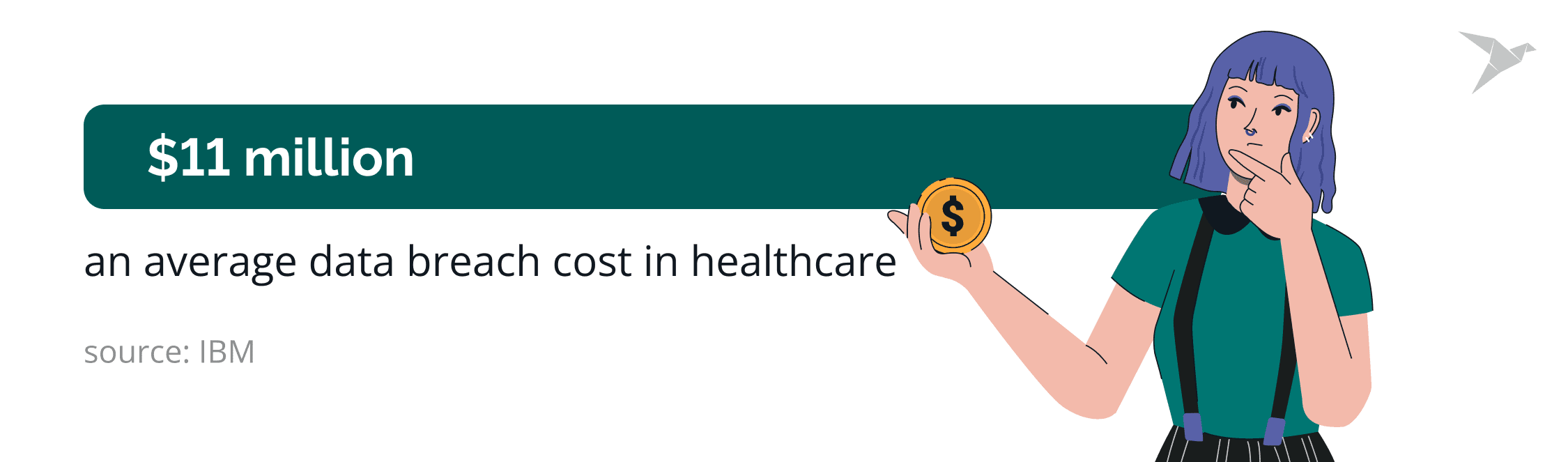
IBM reported that a single data breach in healthcare now costs an average of $11 million. These numbers point to why many healthcare leaders turn to AI algorithms in healthcare: not because it’s trendy, but because the gaps are real and the cost of inaction is high.
Healthcare leaders want tools that help clinicians see risks earlier, work faster, and rely on clearer information. They want systems that integrate smoothly, reduce manual effort, and support safer decisions. And they want all of this without adding more friction to already overloaded workflows.
And that’s the promise of AI algorithms in the medical industry when they’re designed and deployed well. In this article, we’ll walk through where AI is already working, the main types of ML algorithms in healthcare powering these solutions, the impact on diagnostics and patient outcomes, and the challenges to plan for.
We’ll also share insights from TechMagic’s experience integrating AI algorithms in healthcare software into complex clinical environments. Let’s start!
Key Takeaways
- AI must solve a real clinical or operational problem. Successful projects start with a clear need, not with experimenting for the sake of novelty.
- Clean, connected data is the strongest predictor of AI success. Even the smartest AI algorithms in healthcare fail when EHRs are incomplete, inconsistent, or siloed.
- The biggest early wins happen in imaging, risk prediction, documentation, and workflow automation. These areas already have structured data and defined processes.
- AI improves diagnostic confidence when it gives clinicians clearer signals, not more noise. Well-designed tools help medical professionals focus on what matters in each case.
- Operational gains matter as much as clinical ones. AI technology that optimizes scheduling, staffing, or bed management often delivers measurable impact faster than clinical models.
- Trust is earned through transparency and steady performance. Clinicians adopt AI when they understand how it works, when it fits their workflow, and when it reduces friction.
- Regulation is getting clearer. FDA, MDR, HIPAA, and global frameworks now define what “safe and responsible” looks like for AI algorithms in healthcare organizations.
- AI must fit into the systems hospitals already rely on. Integration with EHRs, imaging platforms, and monitoring tools is often harder, and more important, than the model itself.
- Human-centered design remains essential. The goal isn’t automation for its own sake. It’s giving clinicians more time, better information, and less administrative burden.
- AI works best with the right tech partner. When someone understands your data, regulations, and clinical reality, ideas become dependable care. TechMagic helps teams make that shift successfully.
How Can AI Algorithms Be Interesting for C-level Leaders in the Healthcare Industry?
AI algorithms in healthcare matter to C-level leaders because they affect strategy, safety, revenue, operations, and long-term competitiveness. They help organizations deliver more accurate diagnostics, reduce bottlenecks, improve patient experience, and strengthen compliance. For leaders managing risk factors, cost, and quality, these systems offer both immediate and future value. Now let’s look at each perspective in more detail.
Strategic and business impact
AI gives executives clearer visibility into clinical demand, operational performance, and financial risk. It helps healthcare organizations forecast trends, identify inefficiencies, and support growth decisions with real data. In 2024, about 71% of non-federal acute care hospitals reported using predictive AI integrated into their EHR systems, up from 66% a year prior, according to ASTP and ONC.
Clinical safety, ethics, and liability considerations
C-level teams focus heavily on patient safety. AI can reduce diagnostic variation and highlight risk earlier, but it also raises questions about liability, fairness, and oversight. Leaders want tools that make clinicians safer, not systems that introduce new blind spots.
Regulatory and compliance expectations
Healthcare AI must meet strict rules. Executives care about FDA requirements, HIPAA safeguards, model governance, and data handling protocols. They want assurance that AI algorithms in medical industry settings are deployable without creating regulatory exposure.
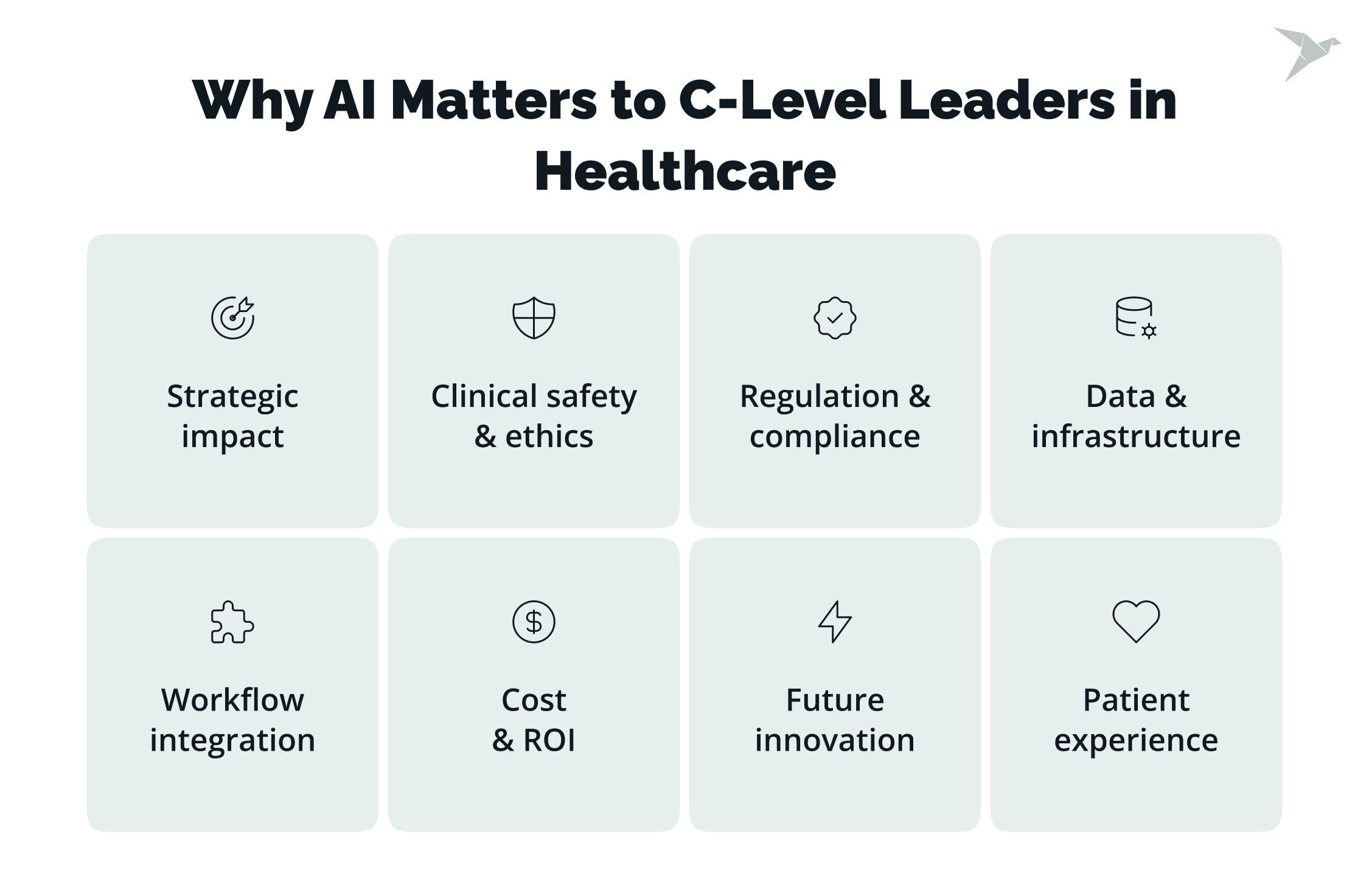
Data requirements and technical infrastructure
Artificial intelligence only works when data is complete, clean, and accessible. Leaders need to understand the quality of their EHR data, the gaps in interoperability, and the investments required to support ML algorithms in healthcare at scale. Many teams underestimate this part until they start an implementation.
Operational integration and change management
Executives want AI that fits into existing workflows. Not tools that disrupt them. This includes EHR integration, alerts that clinicians actually use, and processes that adapt to real clinical pacing. Change management is often a bigger challenge than the model itself.
Cost evaluation and vendor selection
C-level teams evaluate AI through ROI. They look at licensing, integration, compliance, training, and long-term maintenance. They also assess the transparency and reliability of vendors. This is where having AI algorithms in healthcare organizations that are well-tested and interoperable makes a difference.
Planning for future innovation
Leaders know the healthcare sector is advancing fast. They want systems that age well, support continuous learning, and can evolve as regulations and clinical needs shift. Future-proofing matters as much as current performance.
Patient experience and human-centered care
Executives increasingly track patient engagement, satisfaction, and access. AI can shorten waiting times, reduce unnecessary visits, and personalize care recommendations. But leaders also want assurance that these systems stay human-centered and do not distance clinicians from patients.
AI Priorities for Healthcare C-Level Leaders: Snapshot
The overview below highlights what matters most to each C-level role when assessing AI initiatives in a medical practice.
Note: The overview is approximate and may vary depending on the organization's goals.
And once leaders see the broader landscape, the natural question arises: where does AI actually work today and what results can teams expect? We cover this in the next section.
Learn about our expertise in the industry and what we have to offer
Where Are AI Algorithms Used in Healthcare Today?
AI algorithms in healthcare are already embedded in diagnosis, monitoring, operations, documentation, medical research, and population health. They’re becoming part of the clinical workflow rather than a future trend. Most hospitals use at least one AI-enabled function today, whether through their EHR, imaging systems, or monitoring platforms. Now let’s look at the core areas where these tools deliver real value.
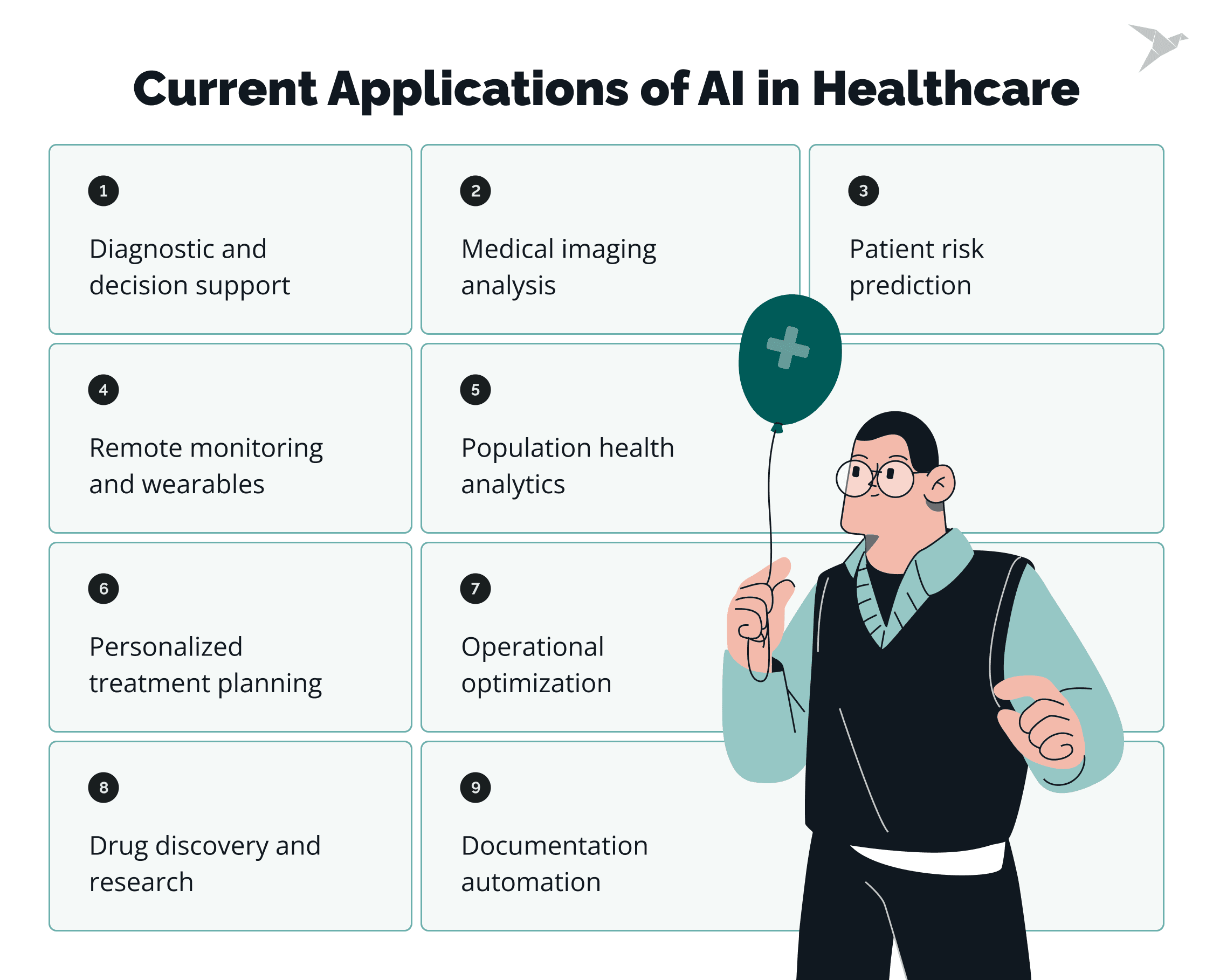
Diagnostic support and clinical decision support systems (CDSS)
These systems help clinicians spot risks faster and support clinical decision-making. They analyze symptoms, labs, imaging, and medical history to suggest possible conditions or highlight red flags. HIMSS reported that in 2024, almost 86% of healthcare providers used some form of AI-powered clinical decision support.
Medical imaging and anomaly detection
This is one of the strongest, most mature uses of AI algorithms in medical field settings. Deep learning models read radiology, pathology, and cardiology images to detect fractures, tumors, polyps, or arrhythmias that may be missed in a quick human review.
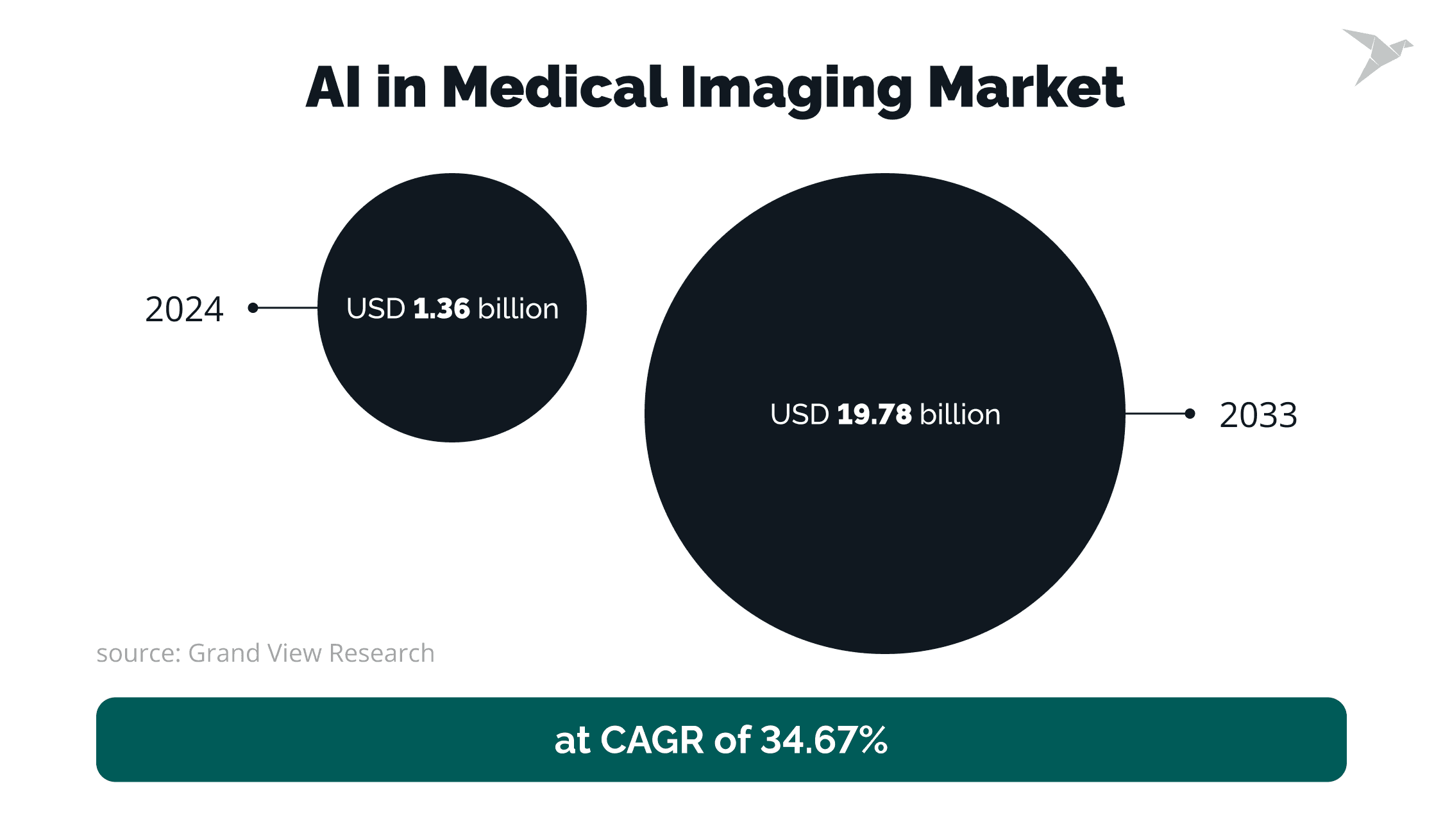
The AI in medical imaging market was valued at around $1.36 billion in 2024 and is projected to reach $19.78 billion by 2033, according to Grand View Research. The growth is driven largely by radiology, oncology, and cardiology use cases. Many hospitals already rely on artificial intelligence for image prioritization, surfacing cases with suspected critical findings first.
Patient risk prediction and early warning
AI can detect deterioration earlier than traditional scoring systems. Sepsis alerts, readmission risk, and chronic disease progression models are now used in AI algorithms in healthcare organizations to support ICU, ED, and inpatient teams. Early warning models can monitor thousands of data points in real time: something humans simply can’t do.
Predictive analytics for population health
ML algorithms in healthcare help identify high-risk cohorts, forecast disease trends, and support long-term planning. Digital health systems use these insights for care management programs, preventive outreach, and policy decisions. Risk stratification is one of the areas where AI innovation consistently shows measurable ROI.
Remote monitoring and wearable data analytics
Wearables and at-home sensors generate continuous streams of vital-sign and behavioral data. AI turns that raw data into meaningful signals: alerts for arrhythmias, oxygen drops, sleep disruptions, or mobility changes. All of these are highly important to be properly analyzed by healthcare AI apps. This gives clinicians a view of the patient between visits and supports earlier intervention. The demand is seen in numbers: last year, remote patient monitoring services and tools reached around 30 million U.S. patients, according to Market US Media.
Personalized treatment and care recommendations
AI supports precision medicine by matching patients with the most effective therapies based on genetics, biomarkers, past responses, or comorbidities. Oncology pathways, diabetes management, and pharmacogenomics tools rely heavily on AI algorithms in healthcare software to personalize healthcare delivery plans at scale.
Operational and workflow optimization
Hospitals use AI to forecast patient flow, optimize staffing, manage beds, reduce bottlenecks, and automate revenue cycle tasks. At TechMagic, we’ve built solutions that help hospitals predict ED surges, optimize imaging schedules, and reduce appointment gaps.
Drug discovery and clinical research automation
AI accelerates research as it screens molecules, models drug interactions, and automates protocol tasks. Trial-matching algorithms help identify suitable patients faster and reduce recruitment delays that often slow down clinical trials.
Documentation and administrative automation
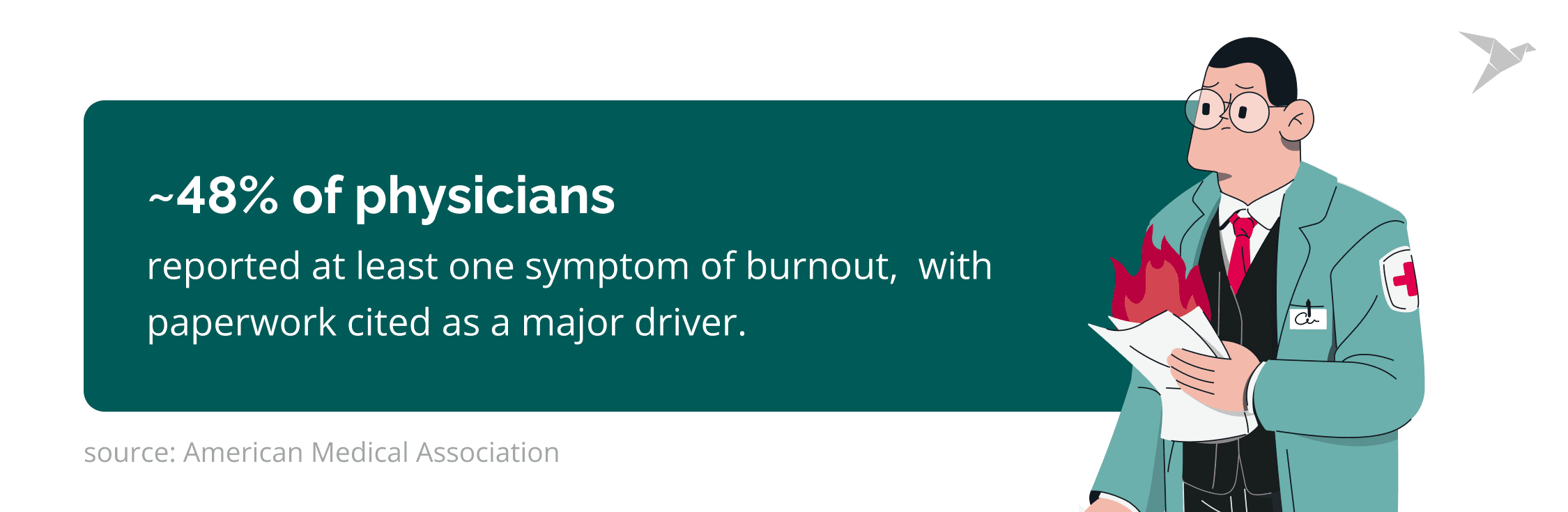
Generative AI and NLP tools now assist with coding, billing, summarization, and extracting structured medical data from EHRs. Documentation burden is a major pain point: the American Medical Association reported that in 2023, about 48% of physicians reported at least one symptom of burnout, with paperwork cited as a major driver. GenAI and NLP tools can help reduce the number. AI can generate drafts of notes, highlight inconsistencies, or auto-populate fields, which frees clinicians to focus on personalized patient care.

Core Clinical and Operational Use Cases for AI in Healthcare: Quick Overview
The following table summarizes the major clinical and operational use cases of AI in healthcare from the previous section. It shows what each category of tools does and the impact it delivers in real-world settings.
These use cases set the stage for a deeper question: what types of algorithms actually power these capabilities? Let’s break them down.
What Types of AI Algorithms Are Used in Healthcare?
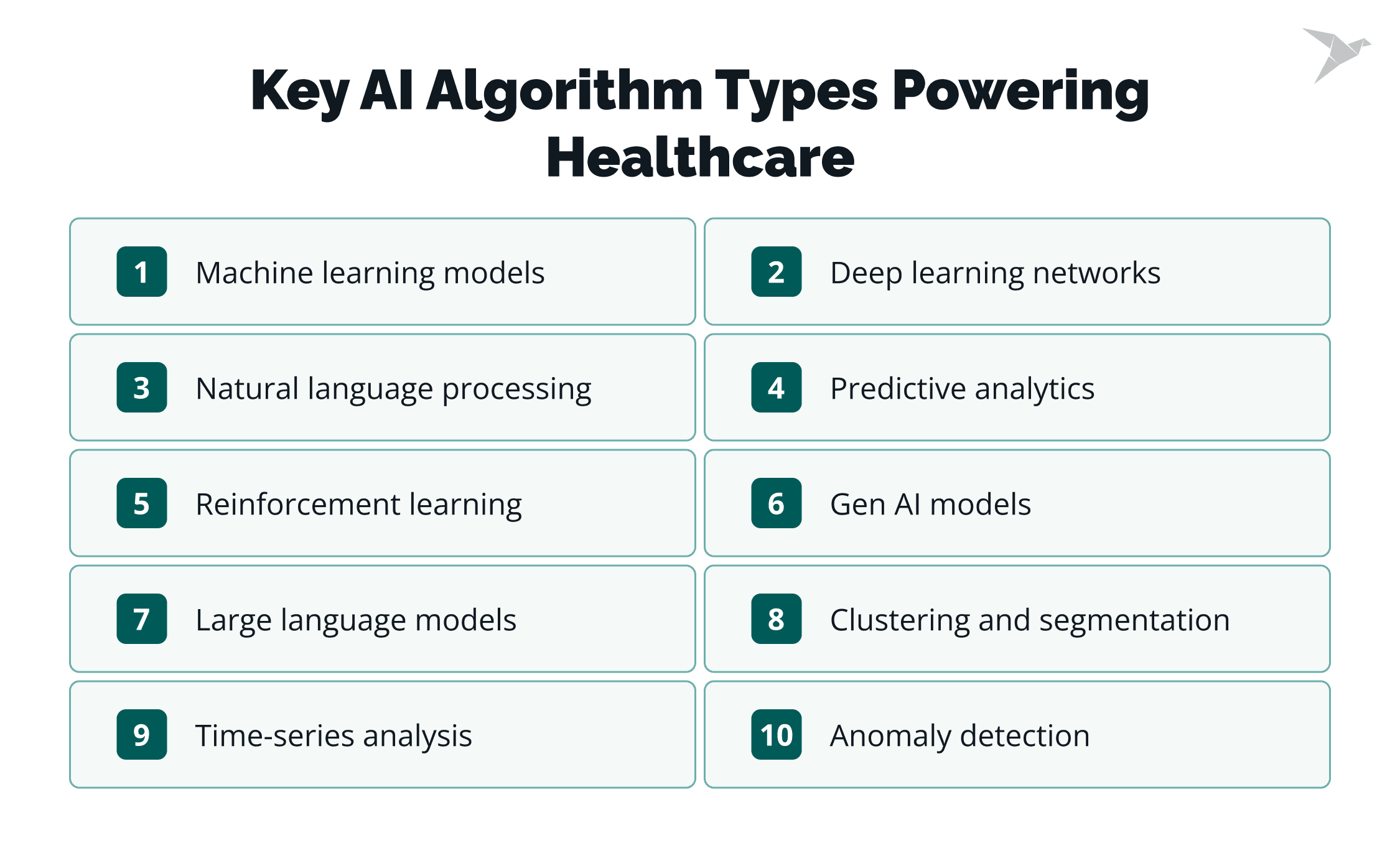
AI algorithms in healthcare rely on a mix of model types, each solving a specific clinical or operational problem. Some identify patterns. Some predict risk. Others interpret text, analyze images, or support decisions. Understanding the strengths of each model helps leaders choose the right tools and avoid overpromising. Now, let’s break down the key algorithm types in practical, simple terms.
Machine learning models for prediction and pattern detection
These models look at past data to predict what may happen next. They’re used for risk scoring, disease progression forecasting, and identifying unusual patterns in labs or vitals. Hospitals often rely on classic ML when they need models that are easier to explain, validate, and monitor.
Deep learning networks for medical imaging analysis
Convolutional neural networks (CNNs), a kind of deep learning model, are the backbone of AI imaging. They detect tumors, fractures, nodules, or skin lesions in radiology, pathology, and dermatology. This reflects how central these models have become to diagnostic workflows. This is one of the most proven areas of AI algorithms in healthcare industry settings, where precision and speed matter every minute.
Natural language processing for clinical text understanding
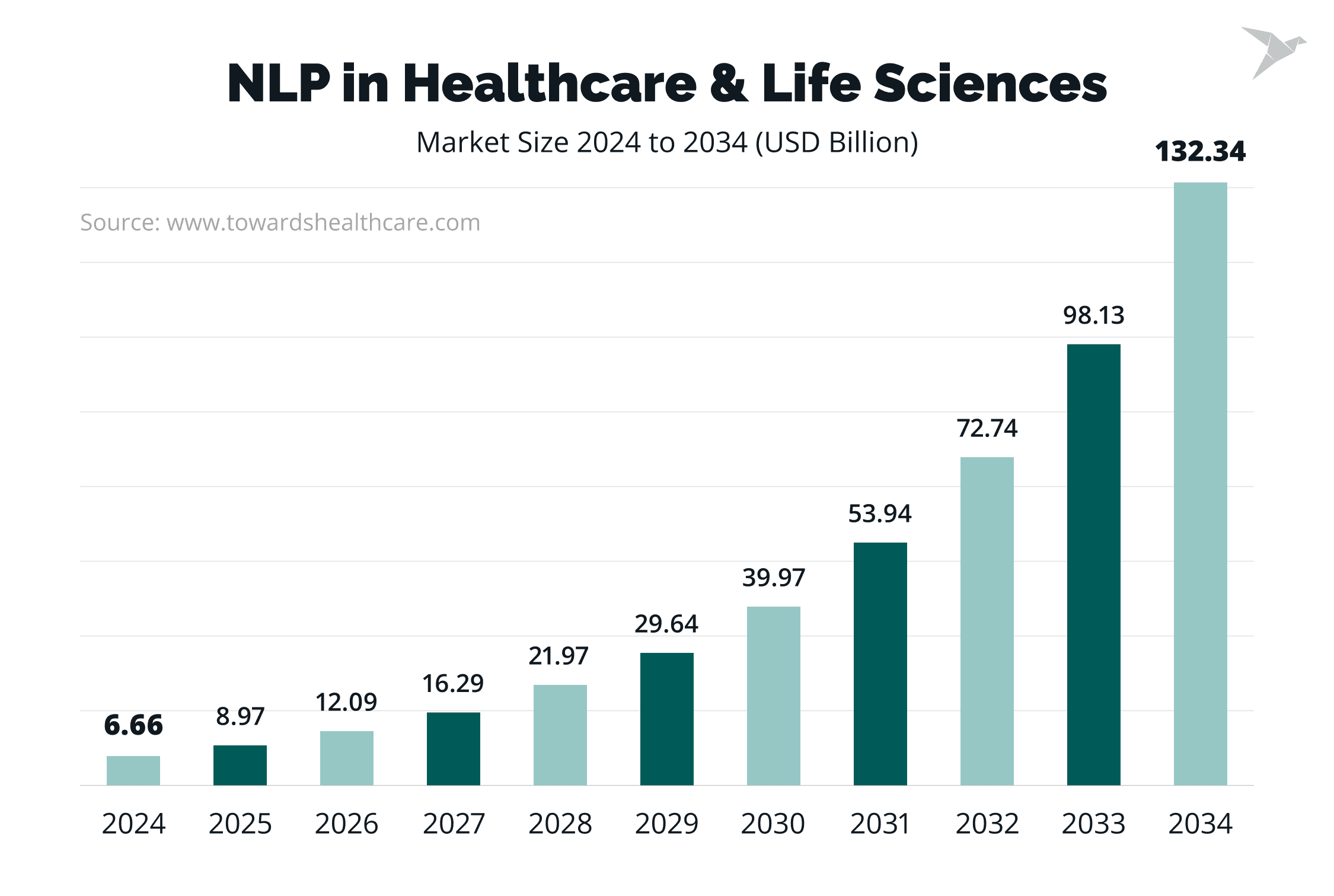
NLP helps systems read and interpret unstructured clinical notes. It extracts key details, summarizes long histories, supports coding, and automates documentation. The NLP in healthcare and life sciences market was valued at $6.66 billion in 2024 and is projected to grow to over $130 billion by 2034, driven largely by documentation, coding, and decision-support use cases.
Predictive analytics models for forecasting clinical outcomes
These models estimate risk for readmissions, deterioration, chronic disease progression, or mortality. They help care teams act earlier and prioritize resources. Many AI algorithms in healthcare organizations now run predictive models continuously in the background.
Reinforcement learning for treatment optimization
Reinforcement learning explores thousands of care-path scenarios to find the best next step for a patient. It’s used in dosage recommendations, adaptive care pathways, and personalized treatment protocols. This will likely become more common as guidelines grow more complex.
Generative AI for clinical documentation and data synthesis
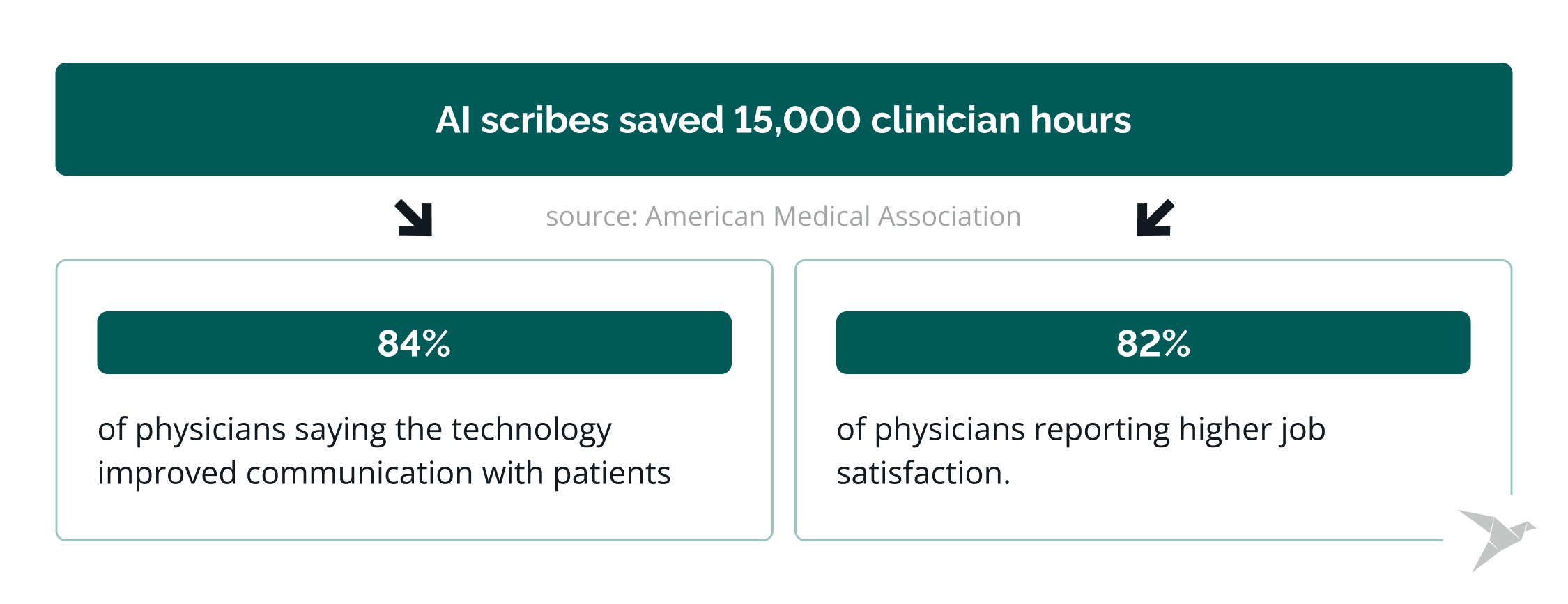
Generative models create drafts of notes, reports, and patient summaries. They also generate synthetic datasets to train AI safely when real data is limited. Early deployments are promising. Namely, an AMA-reported pilot showed AI scribes saved 15,000 clinician hours, with 84% of physicians saying the technology improved communication with patients and 82% reporting higher job satisfaction.
Large language models for clinical decision support
LLMs can interpret symptoms, summarize evidence, answer clinical questions, and support differential medical diagnosis. They don’t replace clinicians. But they support faster information retrieval and more consistent decision-making, especially when paired with validation and safety layers.
Clustering and segmentation algorithms for patient grouping
These models group patients with similar characteristics, risks, or behaviors. Population and public health teams use clustering to identify phenotypes, discover hidden patterns, and target interventions more precisely.
Time-series models for monitoring and early warning systems
These models analyze data that changes over time, like vitals from wearables, bedside monitors, or ICU devices. They flag deterioration early and help clinicians intervene before a condition becomes critical. ML algorithms in healthcare excel here because humans can’t monitor thousands of signals continuously.
Anomaly detection algorithms for fraud, errors, and outliers
These systems catch unusual patterns that might signal billing fraud, EHR inconsistencies, device malfunction, or unexpected clinical events. They’re widely used in payor systems and quality-control workflows.
To explore more practical examples of how these models work in real projects, take a look at our deep dive into ML in healthcare.
AI Algorithm Types in Healthcare: Snapshot
The overview below highlights the key categories of AI models used in healthcare and the practical roles they play in clinical and operational settings.
With these building blocks in mind, the next step is to see how they translate into real clinical benefits, especially for diagnostics and patient outcomes. Let’s see in the next section.
How Do AI Algorithms Improve Patient Outcomes and Diagnostics?
AI algorithms in healthcare improve diagnostics and outcomes as they help catch disease earlier, support more accurate decisions, speed up workflows, and give clinicians more time and context to act. Below are concrete examples of how this shows up in day-to-day care.
Earlier disease detection through imaging AI
Imaging models can highlight cancers (breast cancer, skin cancer, etc.), fractures, and heart diseases that might be missed in a quick human read. They draw attention to subtle patterns in CT, MRI, or X-ray studies so human radiologists can review the most concerning cases first.
A 2025 Lancet Oncology study on pancreatic cancer showed that an AI system increased diagnostic sensitivity and cut false positives by up to 38% compared with the combined performance of 68 radiologists, which is a major step for one of the hardest cancers to catch early.
Higher diagnostic accuracy with CDSS insights
Clinical decision support tools combine structured data, guidelines, and model outputs to help clinicians stress-test their first impression. ML models estimate the likelihood of different diagnoses. LLM-based tools bring relevant evidence and red flags into one place instead of forcing clinicians to search across systems. This doesn’t replace clinical judgment; it gives teams a better safety net against missed or delayed diagnoses.
Faster clinical workflows and time-to-diagnosis
AI triage models rank cases by urgency. Imaging tools generate preliminary findings and highlight regions of interest. This means critical studies get read earlier, and clinicians spend less time sorting through low-risk cases.
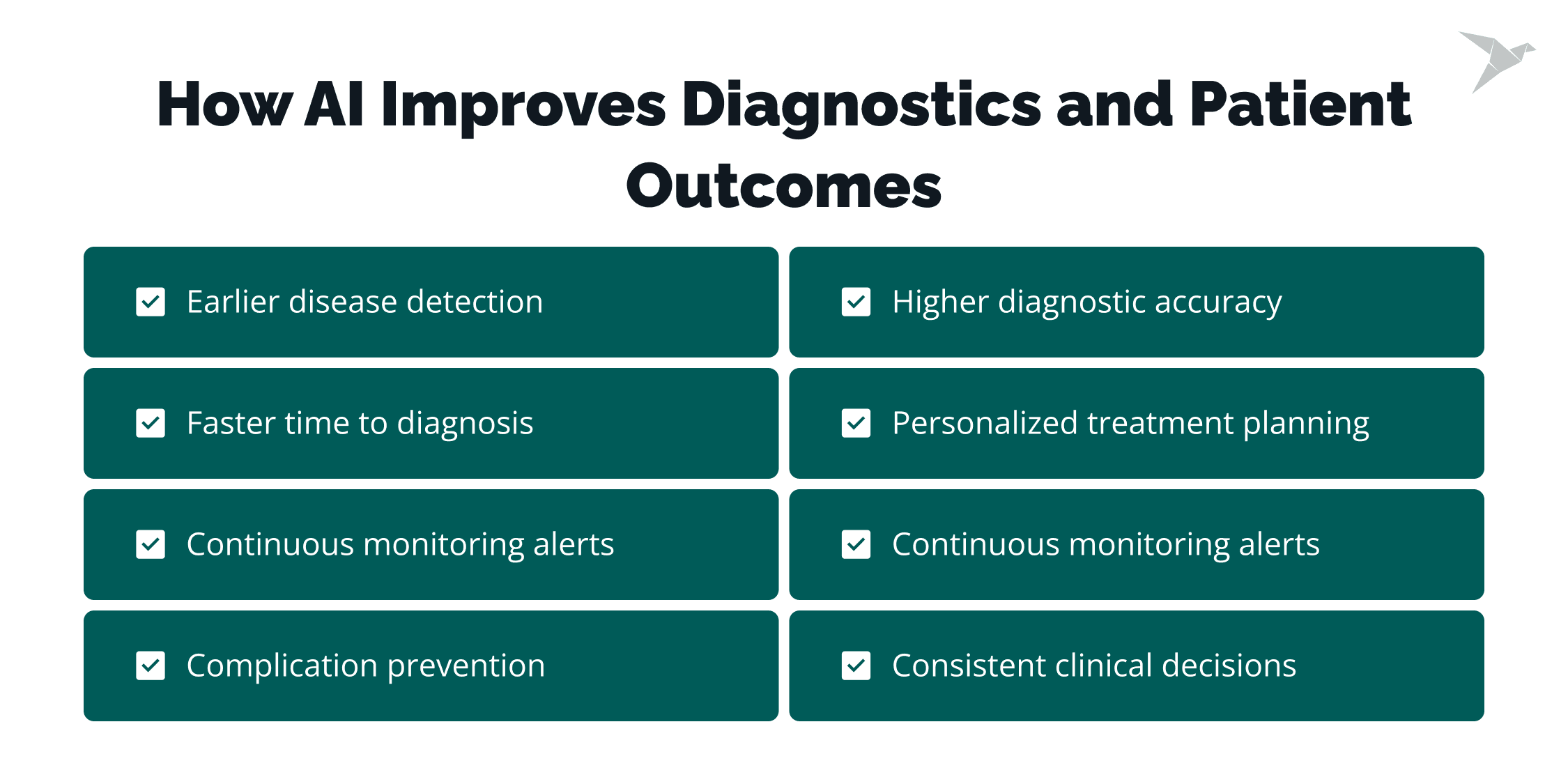
Personalized treatment plans based on patient specific data
ML models can look at prior outcomes, comorbidities, biomarkers, and genetics to suggest which treatment options are most likely to work for a specific patient. In oncology, cardiology, and endocrinology, this supports tailored care plans instead of generic protocols. It also helps healthcare professionals explain risks and benefits more clearly to patients and families.
Continuous monitoring and timely intervention alerts
Sepsis, shock, and respiratory failure don’t appear suddenly; the warning signs often build over hours. Time-series and early warning models monitor vital signs, labs, and notes in real time and alert teams when a patient is drifting into danger.
In a 2024 NPJ Digital Medicine study evaluating the deep-learning sepsis prediction model COMPOSER across two emergency departments, the researchers found that deployment of the system was associated with a 1.9-percentage-point absolute reduction in in-hospital sepsis mortality (about a 17% relative decrease) and improvements in sepsis bundle compliance. That’s a meaningful change at the population scale.
Reduced clinician workload and fewer documentation errors
Documentation is still one of the biggest sources of frustration in medicine. Generative tools now listen to the visit (with consent), draft the note, and surface key codes and terms for clinicians to review. For AI algorithms in healthcare software, this is low-hanging fruit: less clerical work, fewer copy-paste errors, and cleaner electronic health data for future models.
Predictive analytics that prevent complications
Risk models flag patients who are likely to be readmitted, develop complications, or run into medication issues. Teams can then schedule earlier follow-ups, adjust therapies, or coordinate social support.
More consistent decision-making across providers
AI-supported tools encourage guideline-aligned care across teams and locations. When the same evidence, risk scores, and recommended pathways are visible to every clinician, variation narrows. That consistency is especially important in large systems, where a patient may see multiple providers over a short period.
Taken together, these examples show how AI algorithms in healthcare move from “interesting technology” to measurable impact on safety, speed, and better health outcomes. Next, we’ll look at the flip side: the risks and challenges leaders need to manage as they scale these systems.
What Are the Challenges and Risks of AI Algorithms in Healthcare Industry?
Artificial intelligence in healthcare brings value, but it also brings real hurdles, such as data gaps, model fairness, workflow disruption, complex integration, regulatory pressure, and patient privacy. These concerns are justified, and they shape how AI algorithms in healthcare should be designed, validated, and deployed. Below are the core challenges that healthcare institutions must plan for.
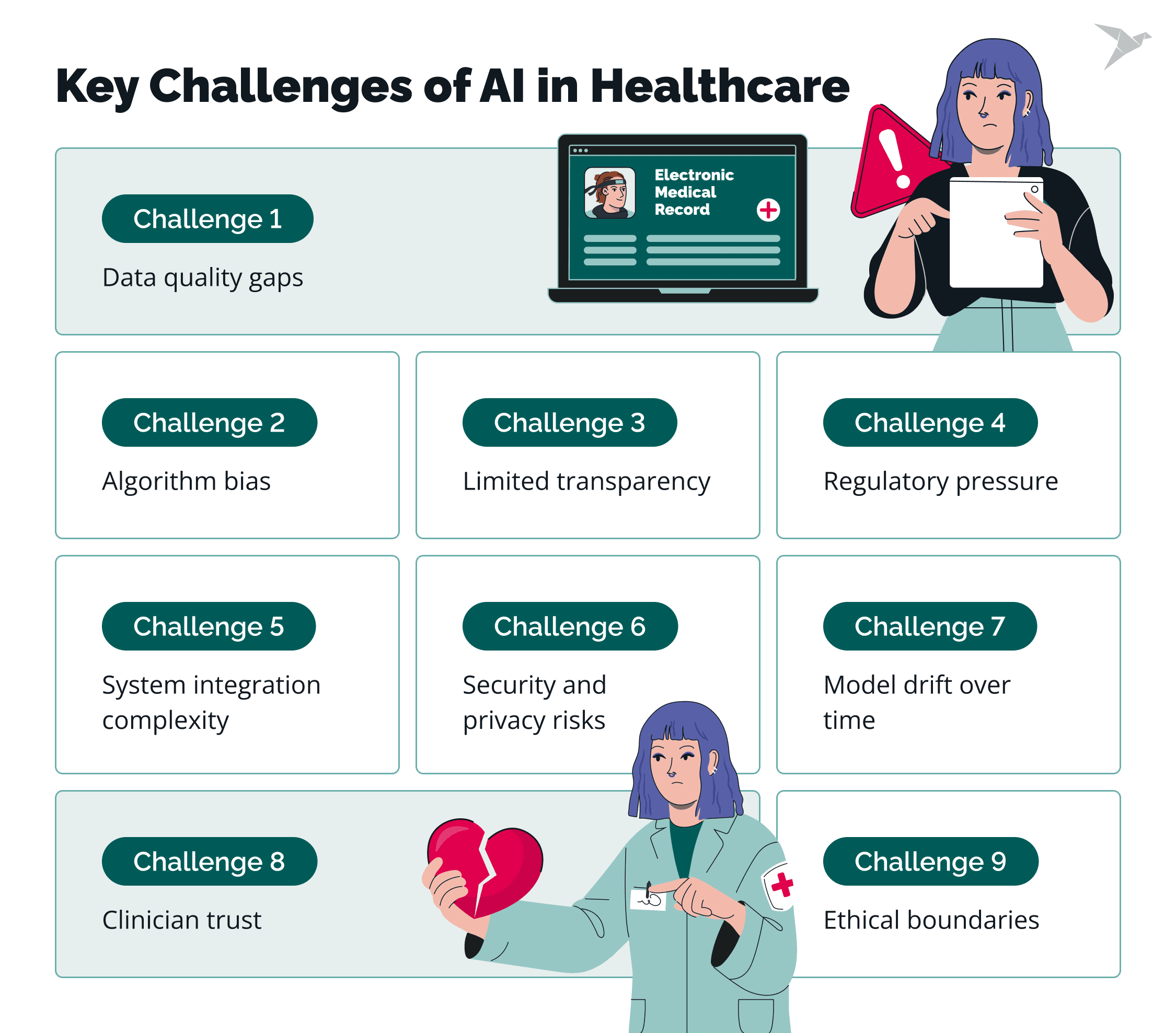
Data quality issues that limit model reliability
Most hospitals still work with incomplete EHRs, inconsistent documentation, and fragmented medical records across departments. Poor labeling or missing data can distort model outputs. ONC’s recent data show that only 46% of U.S. hospitals perform all four core interoperability functions (finding, sending, receiving, and integrating patient data). This fact underscores how much information remains siloed. For any predictive or diagnostic AI model, this fragmented data landscape creates a reliability limit from the start.
Algorithm bias that affects diagnostic fairness
Models trained on skewed or non-representative data can produce unequal outcomes across demographic groups. Bias has been documented in dermatology, cardiology, and risk-prediction tools, especially when certain populations are underrepresented in training data. Leaders want AI that improves equity, not widens gaps.
Limited model transparency and explainability
Some models, especially deep learning systems, can be difficult to interpret. Clinicians may see a recommendation but not understand how the model reached it. This makes clinical validation harder and slows adoption. Clinicians need simple, case-level explanations before they trust a tool in high-stakes decisions.
Complex integration with existing healthcare systems
Even strong models fall apart if they can’t integrate with the hospital’s electronic health records, imaging systems, or workflows. Legacy infrastructure, custom modules, and outdated interfaces cause delays.
High regulatory and compliance requirements
Healthcare AI must meet strict clinical, privacy, and safety expectations. Organizations deploying AI algorithms in healthcare face FDA rules, CE/MDR requirements, HIPAA protections, and audit obligations. The oversight is increasing: the FDA’s 2024 update emphasized ongoing monitoring for learning models, not just pre-market review. Compliance is now a lifecycle commitment.
Security risks and patient data privacy concerns
Healthcare remains the most expensive industry for data breaches. The average healthcare breach reached $11 million, the highest it has ever been, according to IBM’s Cost of a Data Breach Report. As AI systems handle more sensitive data, leaders must protect against model inversion, unauthorized access, and cyberattacks targeting clinical systems.
Model drift and performance degradation over time
Clinical data evolves. Disease patterns shift. Treatments change. Models trained on last year’s data may degrade quietly until someone notices unusual errors. Continuous monitoring and retraining pipelines are essential, and many organizations are not yet ready for this level of ML operations.
Clinician trust and adoption barriers
Trust is earned, not assumed. If clinicians worry about liability or can’t see how a recommendation was produced, they hesitate. If a model produces false alarms, they abandon it. Successful deployments depend as much on communication, training, and workflow fit as on technical performance.
Ethical concerns around autonomy and decision-making
Healthcare leaders want assurance that clinicians stay in control, not the model. AI must support decisions, not dictate them. Clear boundaries, fail-safes, and human oversight remain central to the responsible use of AI algorithms in healthcare organizations.
With these risks in mind, the next step is understanding how regulators define safe, responsible AI and what healthcare professionals must do to comply. Let’s understand in the next section.
How Are AI Algorithms Regulated in Healthcare?
Regulators treat AI algorithms in healthcare as part of the medical device ecosystem, not as standalone “tech products.” That means they expect clear clinical benefit, documented risk management, strong data protection, and ongoing oversight once the system is live. The details differ by region, but the direction is the same: AI must be safe, transparent, and accountable in real clinical use.
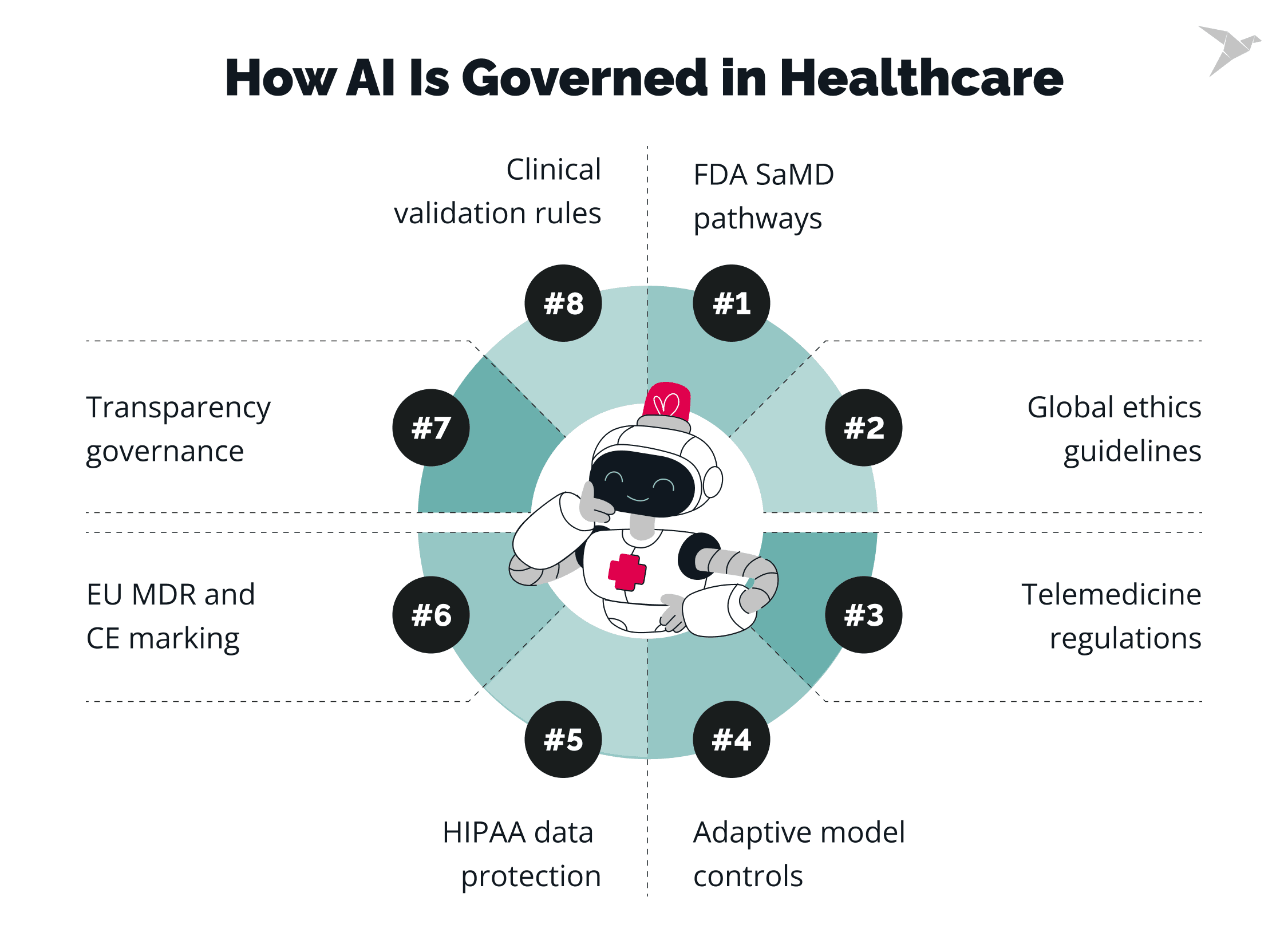
Now let’s look at how key frameworks approach this.
FDA pathways for Software as a Medical Device (SaMD)
In the U.S., many AI tools for diagnosis, monitoring, or treatment qualify as Software as a Medical Device (SaMD). These products usually go through one of three main device pathways:
- 510(k): for products that can show “substantial equivalence” to an existing device.
- De Novo: for novel, lower-risk devices without a clear predicate.
- PMA (Premarket Approval): for higher-risk devices that need more extensive clinical evidence.
AI-enabled imaging tools, triage systems, and monitoring algorithms often follow these routes, depending on risk and intended use. The FDA has also published specific guidance on AI/ML-based SaMD and what evidence and documentation they expect.
Ethical and safety guidelines from global health authorities
Global health bodies provide high-level guardrails that national regulators often align with.
- In 2021, WHO published its first major report on ethics and governance of AI for health.
- In January 2024, WHO released specific guidance on large multi-modal models (LMMs) in health, focusing on transparency, data quality, bias mitigation, and human expertise oversight.
These documents stress that AI should augment, not replace, clinicians, and that risks like bias, misuse, and overreliance must be actively managed.
Requirements for clinical validation and performance evidence
Regulators expect more than theoretical accuracy. They look for:
- Validation on representative, real-world data
- Clear performance metrics (sensitivity, specificity, AUC)
- Comparison against the standard of care
- Evidence that the model works as intended in the target population
For AI-based SaMD, the FDA expects documentation of training data, validation design, and post-market performance monitoring plans, not just a one-time test. In practice, this means teams building AI algorithms in healthcare software must plan for ongoing evidence generation.
Rules for adaptive and continuously learning AI models
A static model is easier to regulate than one that keeps learning. To handle this, FDA introduced the concept of a Predetermined Change Control Plan (PCCP) for AI-enabled device software. In December 2024, the agency finalized guidance describing how manufacturers can pre-define what aspects of a model may change (for example, updated weights or thresholds), how those changes will be tested, and how they will be documented and controlled.
HIPAA and data protection standards for AI workflows
In the U.S., any AI system that touches protected health information (PHI) must comply with HIPAA. Practically, that means:
- Clear legal basis for data use
- Data minimization and de-identification where possible
- Secure data pipelines and storage
- Role-based access controls and audit logs
- Business associate agreements (BAAs) with vendors handling PHI
For leaders deploying AI algorithms in healthcare organizations, a key question is where PHI flows and whether each step is covered by proper safeguards and contracts. HIPAA doesn’t mention “AI” explicitly, but its privacy and security rules apply fully to AI workflows.
EU MDR and CE marking for medical AI in Europe
In the EU, many AI tools are regulated under the Medical Device Regulation (MDR 2017/745) or IVDR (2017/746) if they perform medical functions such as diagnosis, monitoring, or prediction. Under MDR, most AI-driven diagnostic or monitoring software will fall into at least Class IIa and often Class IIb or III, depending on risk.
To obtain CE marking, manufacturers must:
- Show conformity with essential safety and performance requirements
- Undergo risk-based conformity assessment (often via a notified body)
- Implement a quality management system
- Plan and execute post-market surveillance, including vigilance reporting
Recent updates to MDCG 2019-11 (Rev.1, June 2025) give more detailed guidance on when software qualifies as a medical device and how to classify it.
Governance frameworks for transparency and explainability
Beyond formal approvals, regulators and policymakers now emphasize transparency, documentation, and explainability. For device submissions, this usually includes:
- Clear description of the model’s intended use and limits
- Information on training and validation datasets
- Description of performance across relevant subgroups
- Explanation methods or supporting tools for clinicians
OECD’s AI principles, which many countries reference, call for transparency, robustness, and accountability in AI systems, including those used in health. For AI algorithms in healthcare, that translates into design choices: how interpretable the model is, what is shown to clinicians, and how decisions are logged.
Local regulations for telemedicine and remote monitoring AI
When AI algorithms in healthcare are used in telehealth, home monitoring, or cross-border care, extra rules come into play. These can include:
- State- or country-level telemedicine laws
- Licensing requirements for clinicians treating patients in another region
- Specific rules for remote monitoring devices and home-use medical equipment
- Data localization or cross-border transfer restrictions
In short, regulation of AI algorithms in healthcare is tightening, but it’s also becoming clearer. For TechMagic and our clients, this means building compliance, documentation, and monitoring into the product from the very beginning.
How TechMagic Can Support Your Healthcare AI Initiatives
AI in healthcare is powerful, but making it work inside a real clinical environment takes time and effort. It requires engineering depth, regulatory awareness, and a practical understanding of hospital workflows. Many teams know the outcomes they want: earlier detection, smoother operations, less manual work… but need a partner who can help them move from concept to a safe, functioning solution.
Most health care leaders we speak with say the same thing:
“We see the value. We know where we want to go. But we need the right partner to get there safely, reliably, and without disrupting care.”
TechMagic supports organizations at every stage. We build new AI products from the ground up, integrate third-party AI tools into EHRs and existing systems, and help teams validate or improve models they already use. Our engineers have hands-on experience across diagnostics, clinical workflows, remote monitoring, operational automation, and ML infrastructure in healthcare settings.
If you’re planning your next AI initiative or rebuilding your digital stack, our healthcare software development services can give you a safe, scalable foundation to build on.
For teams that need a secure and cost-efficient way to accelerate development, we also provide Medplum development services. Medplum’s FHIR-native architecture and strong security model make it a solid base for AI-enabled products that need reliable data structures and fast integration without starting from scratch. You get an efficient solution while reducing costs.

Final Thoughts and What to Expect Next from AI in Healthcare
AI is becoming a practical part of clinical work. Not a replacement for clinicians, but a set of tools that help them catch issues earlier, make steadier decisions, and manage rising workloads. Healthcare systems are under real pressure, and AI can ease some of that strain when it’s designed and deployed with care.
The biggest gains will appear where timing and accuracy matter most: imaging, triage, early-warning systems, and continuous monitoring. Documentation support will become routine and give clinicians more time for patients. Remote monitoring will grow as chronic care shifts closer to the home. And LLMs, once properly validated and governed, will help clinicians handle complex information without losing time.
Regulation will tighten. Trust and transparency will stay central. The organizations that invest in clean data, clear oversight, and real clinical value will move the fastest.
FAQ

AI algorithms in healthcare are computational models that support clinical and operational work. They help with disease diagnosis, risk assessment, workflow coordination, and documentation. AI algorithms in healthcare give clinicians clearer signals in moments that matter.
They learn patterns from historical clinical data, such as imaging, labs, vitals, notes, outcomes, and apply those patterns to new cases. Some models flag abnormalities, others estimate risk, and some convert free-text notes into structured insights. They act as support tools that strengthen clinical judgment.
AI highlights subtle findings, points out early warning signs, and helps clinicians compare cases with large datasets. This often leads to earlier recognition of disease, fewer missed findings, and more consistent diagnostic decisions.
Common approaches include machine learning classifiers, deep learning models for imaging, natural language processing for clinical text, predictive models for outcomes, time-series models for monitoring, and large language models for decision support. Each one addresses a different clinical or operational need.
ROI shows up in earlier intervention, shorter workflows, cleaner documentation, stronger coding accuracy, safer care transitions, and better use of staff time. Many healthcare organizations also see fewer avoidable readmissions and smoother operational planning when AI algorithms in healthcare are embedded into everyday processes.
Imaging triage, early-warning systems, ambient documentation, scheduling tools, and revenue cycle automation. These areas already have structured data and defined workflows, so the impact appears quickly.
Clinical practices that use AI algorithms in healthcare software effectively offer faster access to care, clearer communication, and more personalized treatment. They run more efficiently and support clinicians with better insights. Patients notice the difference, and so do partners and payors.