















AI Security Posture Management: A Risk-First Approach for Modern Tech Teams
Last updated:5 December 2025



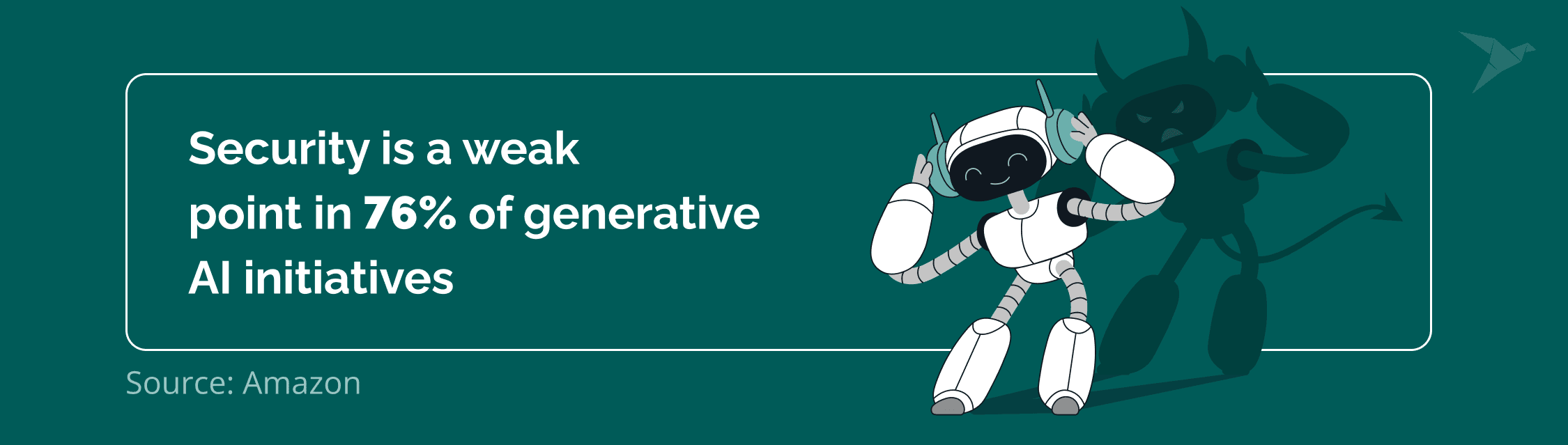
According to Amazon, security is a weak point in 76% of generative AI initiatives. That single statistic captures the reality most teams are now facing: AI adoption is accelerating faster than some security practices can keep up.
As organizations embed models into products, workflows, and customer experiences, the risks grow just as quickly.
This AI security posture management guide explains what AI security posture management (AI-SPM) is and why it matters now. You’ll learn how it helps you gain visibility across models, training data, and pipelines, and how a risk-first approach can prevent security issues before they escalate.
Key takeaways
- AI-SPM closes visibility gaps across AI models, data, AI workloads, and pipelines that traditional tools miss.
- It helps teams prevent issues like data leakage, model manipulation, and shadow AI.
- Knowing how to use AI security posture management enables risk-first decision-making.
- Continuous monitoring is essential as AI systems evolve and regulations expand.
- AI-SPM must be an ongoing practice, not a one-time setup for data protection.
- AI-SPM provides a holistic framework for continuously managing, monitoring, and improving the security of applications throughout the entire software development life cycle (SDLC).
- AI-SPM automatically maintains an up-to-date inventory of all application components, microservices, APIs, and third-party dependencies.
What Is AI Security Posture Management (AI-SPM)?
AI security posture management, or AI-SPM, is a practice focused on continuously identifying, assessing, and mitigating risks specific to AI and machine learning models. It extends the principles of traditional security posture management (proactive defence, visibility, configuration monitoring, and compliance) to the unique components of AI.
AI-SPM applies to AI models, training data, pipelines, inference environments, etc. In practice, AI-SPM solutions or frameworks help teams:
- Map and inventory all AI assets, including models, datasets, and APIs.
- Continuously assess AI configurations and dependencies for security misconfigurations.
- Detect data and model integrity threats that can compromise performance or fairness.
- Enforce compliance with evolving AI security and governance standards (e.g., NIST AI RMF, EU AI Act).
- In the event of a security incident, it provides historical and contextual data for root cause analysis and remediation guidance.
AI-SPM is a crucial layer of cybersecurity because AI systems now play a central role in business logic and decision-making. This approach ensures the reliability of AI/ML models, helps protect sensitive data, ensures data integrity and user trust, and facilitates regulatory alignment.
We are happy to share our expertise

What Are the Core Risks in AI Systems That AI-SPM Addresses?
As organizations integrate AI into critical processes, they face new classes of risks that traditional tools can’t address. These include data poisoning, model theft, adversarial inputs, insecure model deployment, and compliance gaps related to AI governance frameworks. Let’s take a closer look at some of the most disturbing issues.
Shadow AI
With AI/ML tools evolving so quickly, it’s hard to keep track of what employees are using – new releases prompt immediate experimentation, often without approval. Without visibility, unapproved systems slip into workflows, creating blind spots, data-handling risks, and potential exposure to vulnerable or outdated models.
AI-SPM gives you a full inventory of AI technologies in use, flags unapproved tools and outdated systems, and highlights vulnerabilities or version gaps before they become an issue.
Data-related risks
In many cases, we observe how PII and sensitive business data are shared with AI/LLMs accidentally or by intent. This opens the door to data leakage, data breaches, compliance violations, and loss of customer trust. Another important aspect is the training data that is used to fine-tune AI systems. Without proper knowledge of its structure, you risk training data poisoning, which can negatively impact the implemented solution.
AI-SPM monitors data flows, detects when private information is shared with AI systems, and identifies risky or poisoned training datasets before they influence model outputs.
Supply-chain risks
Modern AI stacks rely on a fast-changing ecosystem – AI agents, orchestration layers, APIs, MCP servers, and third-party models. Each component introduces dependencies you must trust. AI-SPM continuously scans your AI supply chain, monitors integrations, and surfaces vulnerabilities or misconfigurations across the entire pipeline.
Lack of proper monitoring
AI systems generate high-volume, dynamic interactions. Tracking misuse, anomalous behavior, or prompt injection attempts manually isn’t realistic at scale. AI-SPM provides continuous monitoring across AI and LLM usage, helping you detect unusual activity, unsafe outputs, and emerging threats before they escalate.
Why Is AI-SPM Implementation Important?
Traditional security checklists can’t keep pace with the speed, complexity, and autonomy of modern AI systems. A risk-first approach is now essential to detect, prioritize, and mitigate real threats before they impact model integrity, data privacy, or business decisions, especially since traditional security tools may not suffice.
Here are four key reasons why AI-SPM is now a strategic imperative:
1. Static checklists can’t handle evolving AI risks
AI risks don’t stay still. Models update, data shifts, and new threat vectors emerge overnight. A compliance checklist might confirm that a system met yesterday’s standards. However, it can’t detect data poisoning, model drift, or prompt injection happening today.
According to Accenture’s 2025 report, 90% of organizations are not fully prepared to secure their AI systems, and 77% still lack the fundamental data and AI security practices required to protect them effectively. And a survey by Oxford Economics, AWS, and IBM shows that over 70% of executives say that existing cybersecurity frameworks don’t adequately cover AI-specific risks.
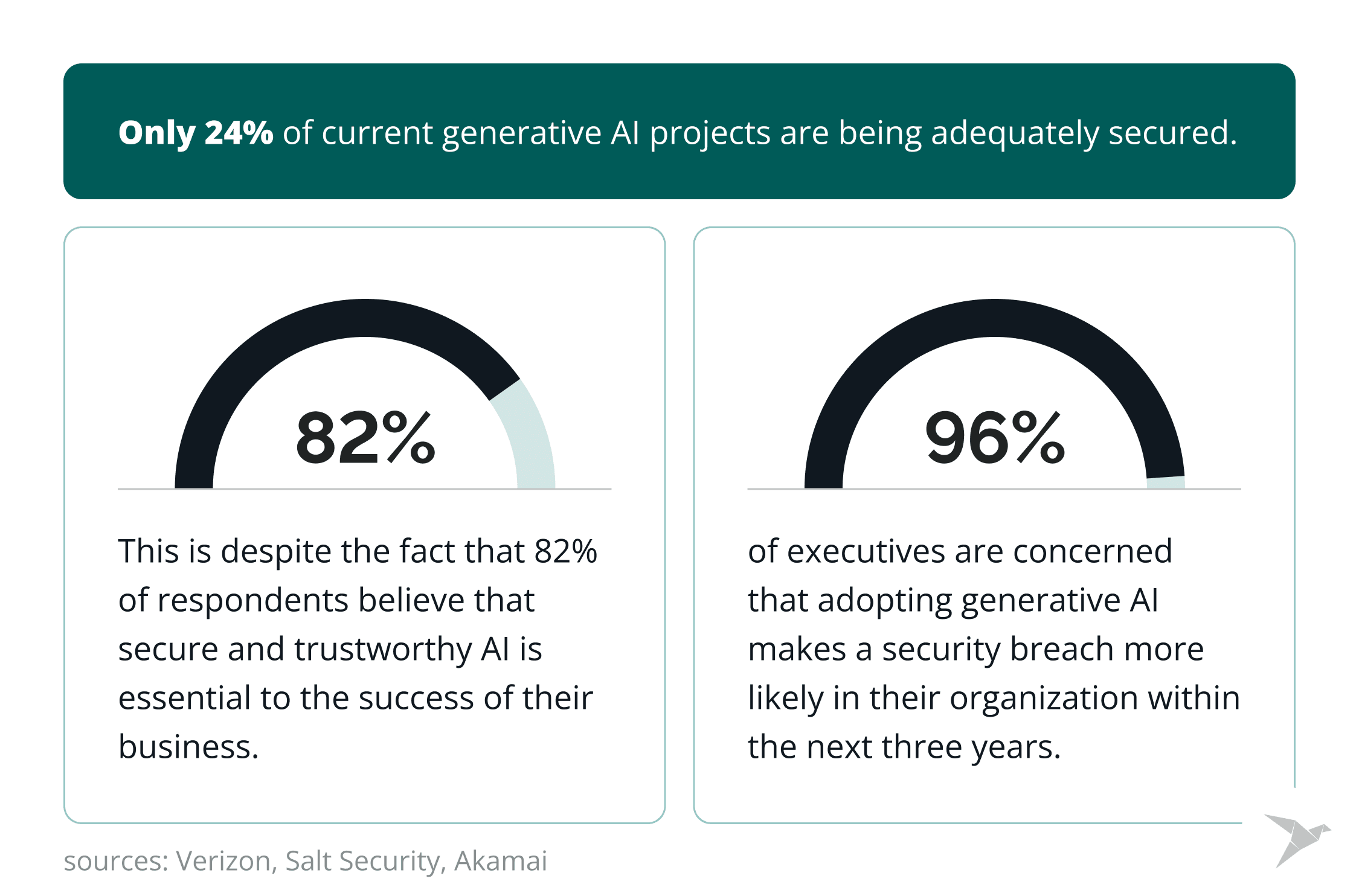
AI-SPM addresses this gap by continuously assessing risk across the model lifecycle. This highly focused security practice ensures that controls evolve with your systems, from data ingestion to deployment.
2. Risk-first AI-SPM preserves model integrity and trust
The accuracy and reliability of AI models depend on clean data and secure operations. Without proactive oversight, malicious actors can manipulate training data or exploit vulnerabilities to alter model behavior.
AI security posture management uses risk-based monitoring to detect and prevent attacks, such as:
- Data poisoning – inserting harmful data that distorts model learning.
- Adversarial examples – subtly modified inputs that cause false outputs.
- Prompt injection – exploiting LLMs to reveal sensitive information or override safety constraints.
The NIST AI Risk Management Framework (AI RMF) reinforces this need by recommending continuous monitoring to preserve the integrity and trustworthiness of AI systems.
3. It safeguards sensitive data
AI systems are built on valuable data, proprietary models, and unique algorithms. Without focused data security posture management for AI, attackers can perform:
- Model extraction – replicating your model through repeated queries.
- Model inversion – using predictions to reveal training data.
- API exploitation – leveraging unsecured endpoints to access private model logic.
AI model theft and data exfiltration attempts have risen compared to the previous year, so preventive measures like AI-SPM are important.
4. It restores visibility and governance across AI ecosystems
AI adoption has outpaced governance. Teams frequently deploy or experiment with models outside approved frameworks, creating “shadow AI.” This unmanaged activity increases compliance, privacy, and operational risks.
AI security posture management restores control by providing centralized visibility over all AI assets and data flows. It also ensures continuous compliance checks aligned with the EU AI Act and ISO/IEC 42001 standards and enforces policy across on-premise, cloud, and hybrid AI environments.
CyberSecurity services for Elements.Cloud
How to Implement AI-SPM in Your Organization Step by Step
Any strong security practice starts with a clear action plan. Below is a step-by-step roadmap to guide you through the AI-SPM implementation.
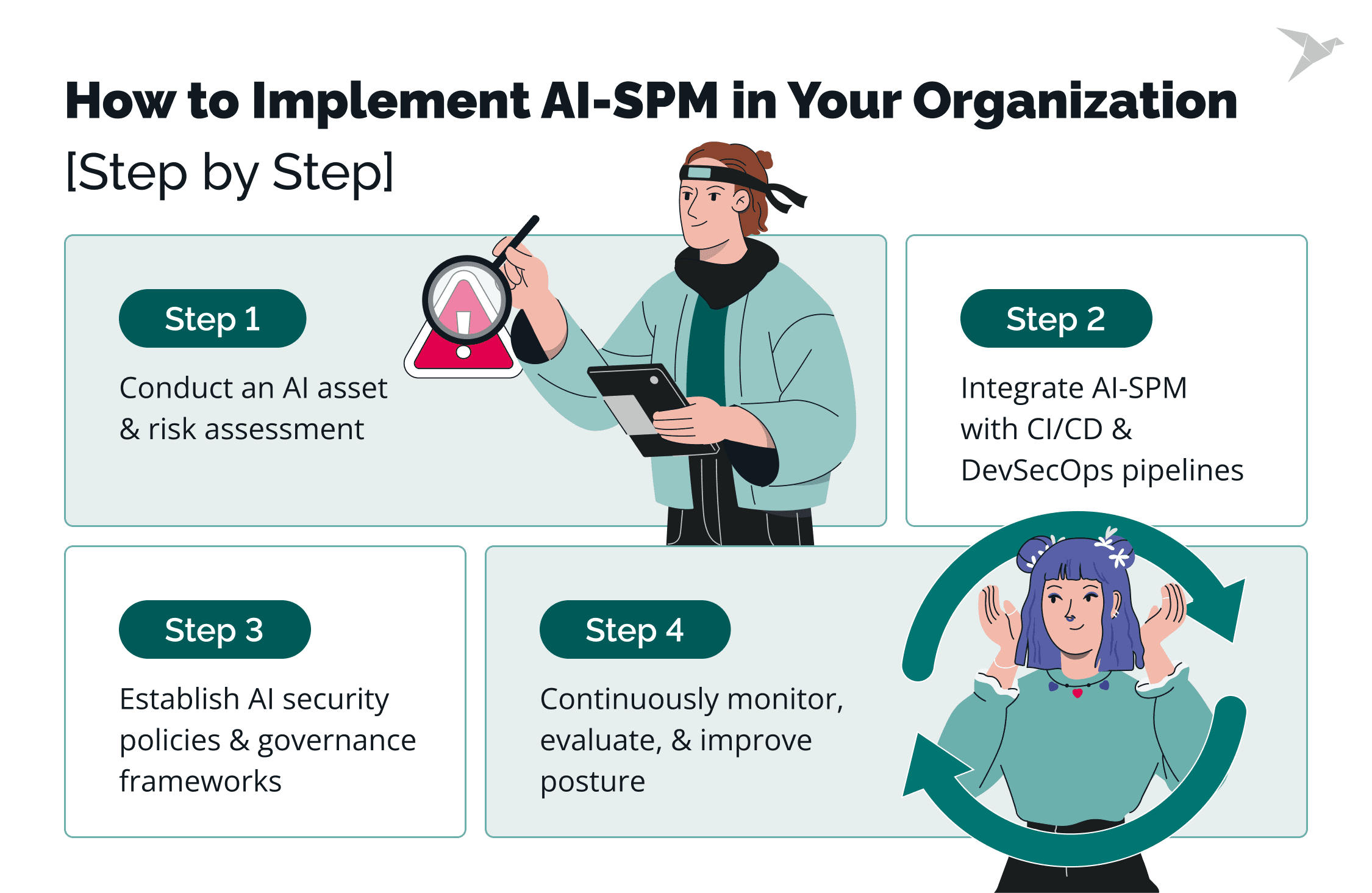
1. Conduct an AI asset and risk assessment
Begin by mapping all AI-related assets across your organization: models, datasets, APIs, tools, and cloud environments. Identify where sensitive data resides, how it’s used, and what business processes depend on it. This inventory helps you locate potential weak points, such as unsecured endpoints or unmonitored models.
Next, assess risks specific to AI systems, including data poisoning, model drift, adversarial attacks, and compliance gaps. Use frameworks like NIST AI RMF, ISO/IEC 23894, or EU AI Act risk categories to structure your assessment and prioritize remediation efforts based on impact and likelihood.
2. Integrate AI-SPM with CI/CD and DevSecOps pipelines
AI security must evolve alongside development. Integrate AI-SPM tools and practices into your CI/CD and MLOps workflows to automatically detect and address vulnerabilities before deployment.
Key actions include:
- Embedding automated model scanning, data validation, and API security checks.
- Setting guardrails for third-party model imports and open-source dependencies.
- Establishing continuous validation for model performance, data integrity, and access control.
This integration ensures that every new model version is reviewed, tested, and deployed securely and without slowing innovation.
3. Establish AI security policies and governance frameworks
AI-SPM depends on consistent governance. Develop organization-wide policies that define the development, validation, deployment, and monitoring of AI models.
Core elements include:
- Roles and responsibilities: Assign ownership for AI security, governance, and compliance.
- Data management policies: Enforce strict security controls for training data collection, labeling, and storage.
- Access controls: Limit privileges to sensitive AI environments using identity-based security and zero-trust principles.
- Compliance alignment: Map governance practices to evolving standards such as NIST AI RMF, ISO/IEC 42001, and the EU AI Act.
These policies create accountability and provide auditors and regulators with clear visibility into your AI security program.
4. Continuously monitor, evaluate, and improve posture
AI security is a moving target. Establish continuous monitoring to track threats, anomalies, and model behavior in real time. Set up dashboards that correlate alerts from across data pipelines, APIs, and model endpoints.
Use performance and security metrics to evaluate posture. These may be model drift indicators, data lineage integrity, or adversarial detection rates. Adopt a continuous improvement loop: review incidents, retrain staff, and update governance policies as your AI environment and threat landscape evolve. And finally, do not forget about regular AI pentesting.
Penetration testing of a cloud-native hospital management system before the annual ISO 27001 audit

What Are the Biggest Challenges in Implementing AI-SPM?
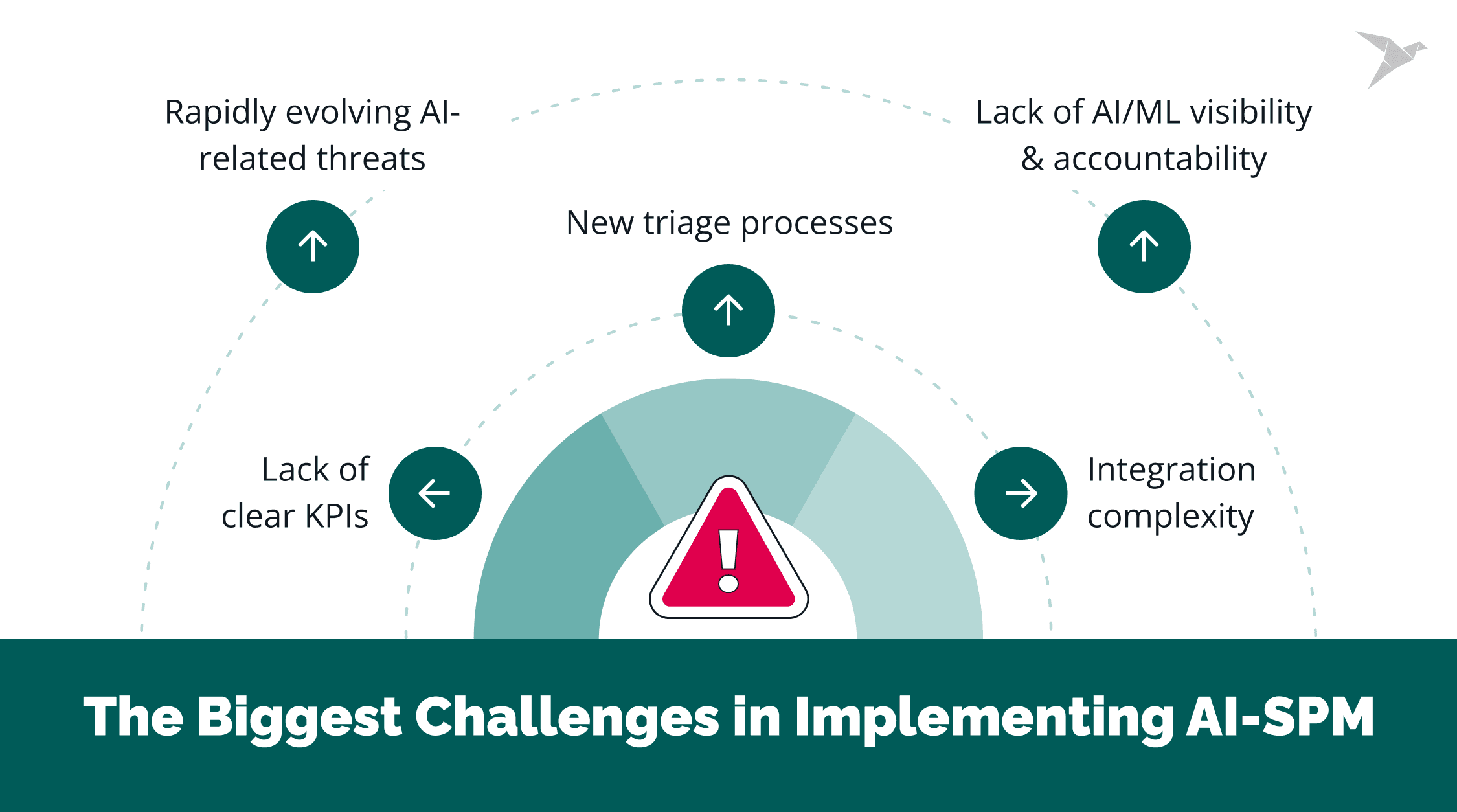
Implementing AI-SPM can significantly strengthen your AI security posture, but most organizations hit similar hurdles along the way. Here are the key challenges to expect and plan for.
Lack of AI/ML visibility and accountability
Many teams start without a clear inventory of the AI and ML systems they already use. Versions, data sources, deployment environments, and ownership are often undocumented - an extension of the Shadow AI problem. Bringing this information together is one of the first steps in AI-SPM, but it can take time and extra effort to eliminate blind spots.
Rapidly evolving AI-related threats
AI shifts fast, and so do the threats around it. New vulnerabilities, attack techniques, and misuse scenarios appear constantly. Security teams without strong in-house AI expertise may struggle to keep up, leading to slower response times and higher resource demands.
Lack of clear KPIs
Measuring progress requires metrics, but AI security is still emerging and lacks widely adopted benchmarks. Teams often don’t know what “good” looks like or how to track improvement over time. Until industry standards mature, defining the right KPIs remains a challenge and can complicate planning and reporting.
Integration complexity
Organizations already rely on tools like CSPM or ASPM. Introducing AI-SPM adds another layer, and without thoughtful integration, teams can end up juggling disconnected systems and duplicate alerts. The fear of operational overload is common, especially when workflows need to be redesigned to accommodate AI-specific insights.
New triage processes
AI-related vulnerabilities behave differently from traditional cloud or application security issues. Effective triage requires AI domain knowledge, context understanding, proper AI model penetration testing services, and new decision-making criteria. While existing processes can be adapted, teams need time to refine them and build confidence in how they evaluate and prioritize AI-specific issues.
Conclusion: What’s Next for AI-SPM?
AI-SPM is becoming a core part of how organizations secure their AI systems and AI applications. It brings structure to fast-moving environments, reduces blind spots, and gives security teams the context they need to make informed decisions regarding AI threats.
AI-SPM capabilities provide comprehensive visibility into AI data and components, reduce risk exposure, strengthen compliance alignment, and build trust in model behavior. It helps teams manage AI with the same discipline they expect from any other critical technology.
As AI development and adoption accelerate, these capabilities will only grow in importance. AI-SPM offers the foundation for safe, reliable, and accountable AI across the business.
The future of AI-SPM
The next phase of AI-SPM will be shaped by more automation, stronger integration, and clearer standards. Based on current trends, here’s where the field is heading.
Smoother operational integration
Teams still face gaps when first adopting AI-SPM: from missing inventories to unclear triage procedures. The next wave of tooling will include built-in operational playbooks, best practices, and guided onboarding to help organizations integrate AI-SPM into existing security ecosystems with less friction.
Convergence with other posture-management domains
AI security won’t remain a standalone category. AI-SPM is already moving toward deeper integration with CSPM, DSPM, ASPM, and other posture-management frameworks.
Organizations will expect a unified posture view that spans data, cloud, AI infrastructure, and models, not separate dashboards. Vendors are beginning to offer cross-domain risk scoring and combined workflows to support this shift.
Runtime and behavioral monitoring
As AI components and systems become part of everyday operations, monitoring will extend beyond static assets. Future AI-SPM solutions will track model drift, anomalous inference patterns, prompt misuse, and agent behavior in real time.
Some tools are already starting to secure AI agents, autonomous components acting across cloud environments, indicating how quickly this capability will mature.
Clearer standards, metrics, and compliance modules
Regulatory frameworks like the EU AI Act, NIST AI RMF, and emerging industry guidelines will push organizations toward stronger AI governance. AI-SPM platforms will evolve to include regulatory compliance automation, model lineage tracking, fairness and bias checks, and explainability dashboards.
Over time, AI posture will be assessed against established benchmarks similar to today’s cloud-security standards.
More automation and proactive defense
As threat actors use AI to scale attacks (prompt injection, model theft, generative malware), defensive teams will rely on automated, AI-driven protection. Expect AI-SPM to embed automated mitigation workflows, SOAR/SIEM integrations, and self-defending model capabilities.
The shift will move from “monitor and alert” to “detect, prioritize, and respond.”
Coverage for agentic and autonomous AI
Autonomous agents and wider AI usage introduce new risk surfaces: external system access, decision-making chains, and model-to-model interactions. AI-SPM will extend to discover agent flows, assess permissions, evaluate behavior, and secure the full agent lifecycle.
FAQ

The main goal of AI Security Posture Management (AI-SPM) is to continuously identify, assess, and mitigate potential threats and data security risks specific to AI systems. It helps organizations maintain visibility into their AI assets ( including Large Language Models), monitor vulnerabilities, and ensure that models, data, and data pipelines involved remain secure and compliant throughout their lifecycle.
In short, AI-SPM aims to make AI systems and AI services trustworthy, resilient against potential security threats, and aligned with security and governance standards.
AI-SPM helps prevent threats like data poisoning, model extraction, data exposure, and prompt injection. It protects against manipulated training data, cloned models, and malicious inputs that trick AI systems or expose sensitive data. Continuous monitoring of model behavior and sensitive or regulated data integrity keeps these attacks from compromising your AI.
Absolutely. AI-SPM is not limited to large enterprises. Smaller organizations and startups often adopt AI faster and integrate third-party APIs or open-source models, so they are equally exposed to AI-specific security risks.
A lean version of AI security posture management is focused on asset and AI resources inventory, risk prioritization, and automated monitoring. It aids in protecting data and helps mid-size tech teams strengthen their security posture, fine-tune AI models, and secure data without heavy infrastructure costs. Many cloud-native and open-source tools now support scalable AI-SPM practices suitable for teams of any size.