















How Much Does Penetration Testing Cost in 2026: What You're Actually Paying For
Last updated:16 October 2025


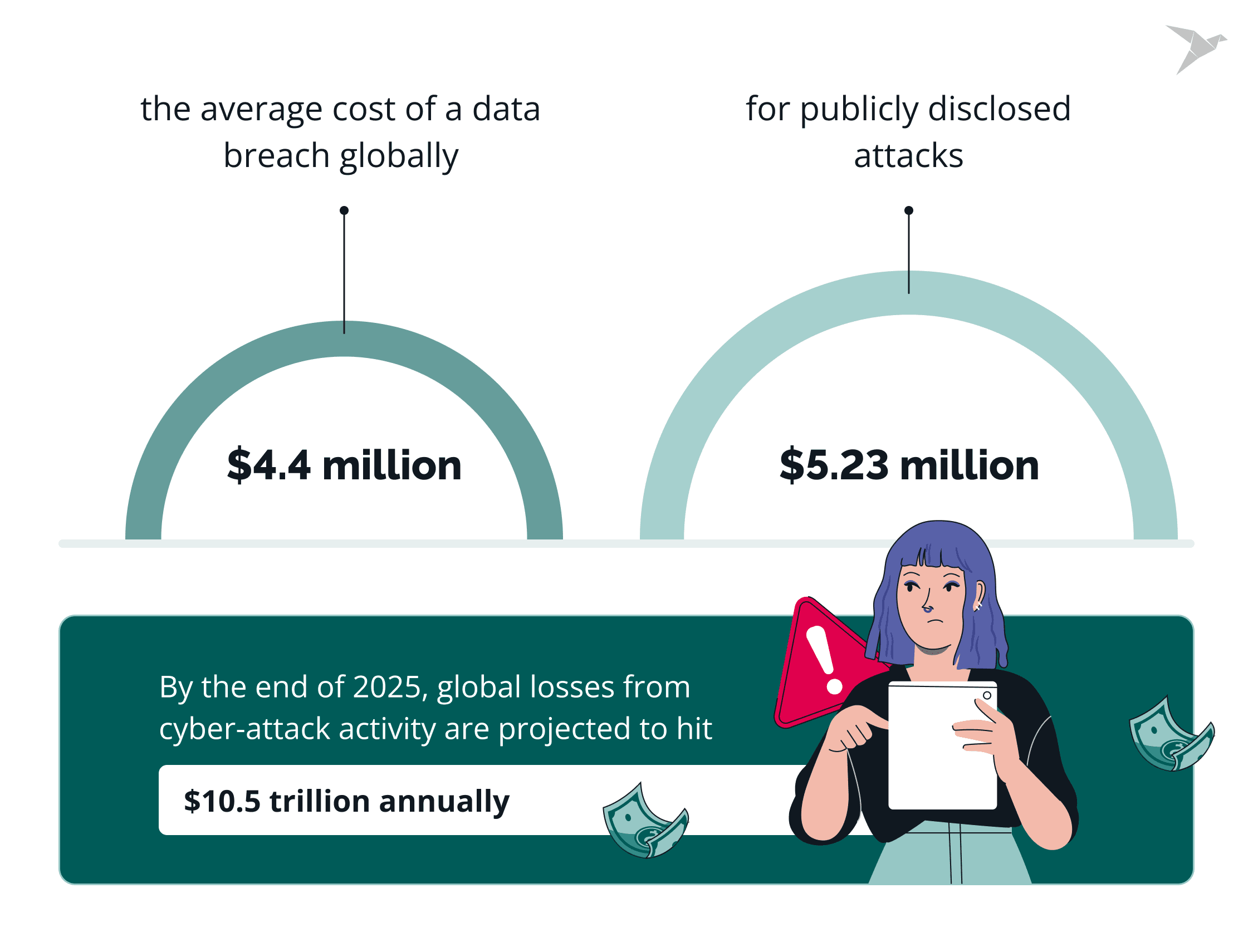
Cyberattacks are growing more frequent, sophisticated, and costly. No organization is immune. As attack surfaces expand across cloud platforms, APIs, and third-party integrations, the pressure to find vulnerabilities before attackers do has never been higher.
Penetration testing is how serious security teams answer that pressure. Unlike automated scans, it uses manual techniques to simulate real-world attacks and surface the vulnerabilities that tools miss. But knowing you need a pentest and knowing what to budget for one are different problems.
How much does penetration testing cost depends on scope, test type, tester experience, and compliance requirements, and two quotes for "the same test" can differ by tens of thousands of dollars. This article breaks that down. You'll learn how pricing varies by test type and engagement model, what pushes final costs above the initial estimate, and how to tell whether a low quote is a good deal or a red flag.
Key takeaways
- Penetration testing helps identify security gaps and exploitable vulnerabilities before attackers do at every layer of your environment, from web apps to cloud infrastructure.
- Pen test cost ranges from $5,000 to $50,000+ for most engagements, depending on scope, test type, and the depth of manual work involved.
- Pricing models vary: fixed-fee, hourly, retainer, and subscription. The right one depends on how often you need testing and how well-defined your scope is.
- The penetration test cost you see in a quote doesn't always reflect what you're getting. Methodology, tester seniority, and report quality matter as much as the number.
- Effective testing relies on manual analysis, not just automated scanning. Complex vulnerabilities like logic flaws, chained attacks, and authentication bypasses only surface when a skilled tester is looking for them.
Factors Affecting Penetration Testing Cost
Several variables determine what you'll actually pay. Understanding them helps you read quotes critically and avoid getting burned by a low number that doesn't hold up.
Scope and asset complexity
Scope is the single biggest cost driver. The more assets in play (hosts, endpoints, applications, user roles, API integrations), the more hours the testing process takes. Vendors who don't ask detailed scoping questions before pricing are guessing or padding. A poorly defined testing scope is the most common source of hidden costs.
Undocumented assets make this worse. When testers find systems that weren't declared upfront, the scope expands mid-engagement. More time, more cost, delayed report.
Type of penetration test
The test type affects how much does pen testing cost because it sets the baseline price before any other variable applies. Web application, network, cloud, API, and mobile testing each carry different methodologies, toolsets, and time requirements.
A web app test for a SaaS platform looks nothing like an external network test for a 50-host environment. Comparing quotes across different test types without scope context is meaningless.
Make sure every quote you receive covers the same test type and asset count; otherwise you're not comparing vendors, you're comparing different engagements. If your environment spans multiple surfaces, discuss a combined engagement with a vendor offering penetration testing services that cover several vectors at once.
Manual vs. automated testing
Automated vulnerability scanning finds known vulnerabilities fast — missing patches, weak configurations, public CVEs. But it has a hard ceiling. Logic flaws, chained vulnerabilities, and business-context attacks don't appear in vulnerability scan reports.
Manual penetration testing costs more because it takes more time and experienced testers. If the result needs to hold up under scrutiny, pay for the manual work. Less experienced testers working from automated output alone won't surface the findings that matter.
The pen test price difference between automated and manual testing reflects that gap.
Tester credentials and experience
A junior analyst working from a checklist and a senior exploit developer holding an Offensive Security Certified Professional (OSCP) or CREST certification are not the same. Seniority affects hourly rates and what gets found. Senior penetration testers chain findings, recognize non-obvious attack patterns, and write reports your engineering team can act on.
Certifications aren't a guarantee, but they're a signal. OSCP demonstrates hands-on exploitation ability. CREST is a recognized benchmark in the UK and beyond. GPEN indicates a structured methodology. When reviewing vendors, ask who will actually run the test. The name in the proposal isn't always the person doing the work. That gap is where quality quietly disappears.
Compliance and regulatory requirements
Penetration testing engagements scoped to PCI DSS, SOC 2, or ISO 27001 require documentation, evidence artifacts, and specific methodologies that go beyond standard security testing.
One distinction worth keeping clear: compliance testing confirms you meet a minimum bar for security controls. It doesn't tell you where your highest-risk exposures are. If your goal is to uncover security weaknesses, scope to your risk profile.
Reporting depth and remediation support
The report is the deliverable. Scans and exploitation attempts produce evidence, and the report is what you act on. So it also affects how much does a penetration test cost.
Quality varies widely. At the low end: a tool-output dump with a CVE reference. At the high end: a findings document with exploitation evidence, CVSSv3 ratings, clear remediation steps, and an executive summary your board can read.
A debrief call matters too. Walking engineers through findings, attack chains, and fix priorities reduces misinterpretation and saves time.
Check whether retesting after remediation is included or billed separately. Many vendors charge for retest cycles. If you're verifying fixes across ten findings, that adds up. Factor it into total cost.
Vendor location and market rates
Geography affects day rates significantly. US and UK-based firms charge the most, and Eastern European vendors, many with strong technical talent, sit in the middle. Offshore providers typically come in lower.
Some teams split the difference with penetration testing as a service, which bundles ongoing testing into a subscription model rather than one-off engagements. That structure can reduce per-test costs while keeping coverage consistent.
Pen Testing Cost By Types
Test type is one of the first questions any vendor will ask, because it shapes everything else. The target system, the expertise required, and the tools involved all vary significantly across test types.
A complex network environment and mobile application security needs broader tooling and deeper experience than a single web application. A cloud test requires different skills than a social engineering campaign. Costs reflect that. Before comparing quotes, confirm you're comparing the same test type. Otherwise, the numbers mean nothing.
Penetration Testing Pricing Models
Penetration testing services are offered through several pricing models. The right one depends on how often you need testing, how well-defined your scope is, and how you prefer to budget. The table below breaks down each pentest pricing model, what it typically costs, and when it makes sense.
Learn how each type helps uncover vulnerabilities in different environments

What Can Increase Your Final Penetration Test Cost
The quote you receive at scoping is not always the number on the final invoice. Several conditions reliably push costs above the initial estimate. Knowing them upfront lets you budget accurately.
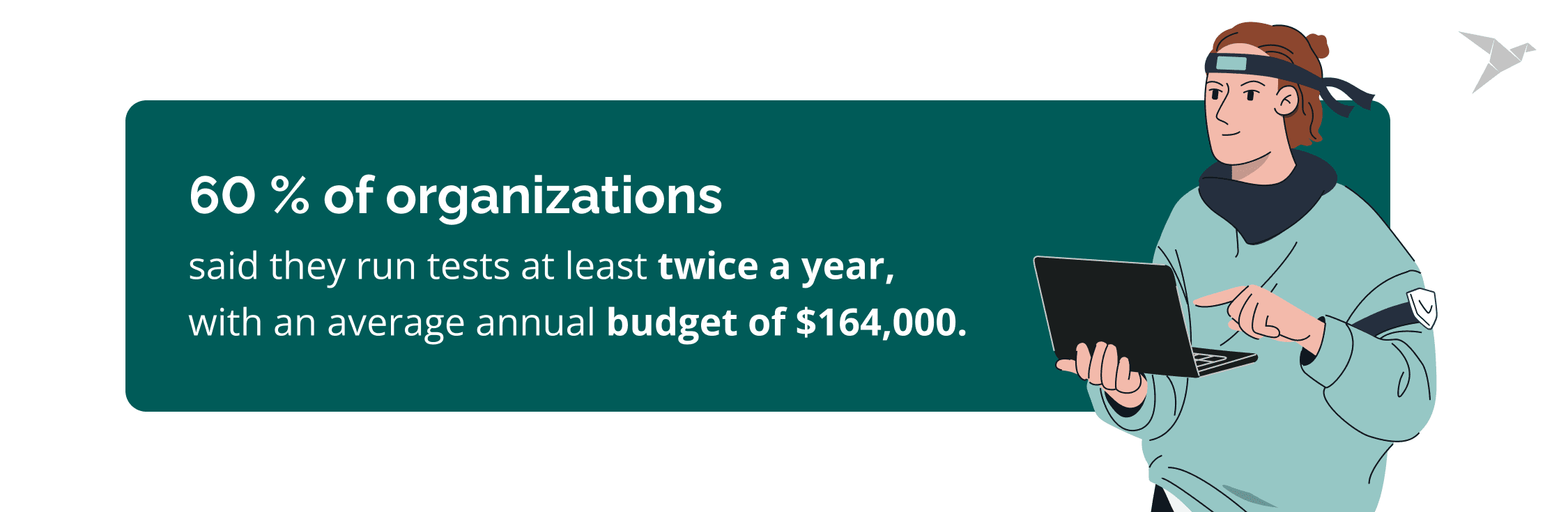
A good rule of thumb: build a 15–25% contingency into any pentest budget before you sign.
Here's what typically triggers it.
Undocumented assets discovered during testing
Testers sometimes find systems, endpoints, or services that weren't declared in scope. Each one is a decision point: ignore it and leave a gap, or expand scope and add hours. Most teams choose to cover it. That's the right call, but it costs more.
Mid-engagement scope changes
Stakeholders sometimes add targets after testing begins. A new environment, an additional application, a recently acquired subsidiary. Mid-engagement additions are more expensive than scoping them upfront. The team has to re-plan, re-tool, and in some cases restart portions of the engagement.
Complex authentication environments
SSO, MFA, federated identity, and multi-tenant role structures all add testing time. Each authentication flow needs to be tested separately. The more user roles in scope, the more scenarios to validate.
Legacy systems requiring custom tooling
Older infrastructure often doesn't respond well to standard testing tools. Testers may need to build or modify tooling to interact safely with legacy systems, and that time is billable.
Tight timelines requiring additional testers
If you need results faster than the standard engagement window allows, vendors staff up. More testers working in parallel means more hours billed simultaneously. Urgency has a price.
Compliance-specific reporting formats
A findings report written for your engineering team looks different from one written to satisfy a PCI DSS auditor or SOC 2 reviewer. Compliance-formatted reports require additional documentation, evidence packaging, and sometimes a formal debrief. That's extra time on the back end of every engagement.
Why the Cheapest Penetration Test Is Often the Most Expensive Mistake
Vulnerability scanning services are fast and inexpensive, but they're not flexible. A penetration testing company relying primarily on automated tools will miss the chained attack that a skilled penetration tester finds in the first hour.
This leads to a weakened security posture and false assurance, which is more dangerous than no assurance at all. Data breaches that follow low-quality assessments are a well-documented pattern in offensive security post-incident reviews.
Automated scanners with minimal manual validation
Scanning tools are fast and inexpensive to run. They find known CVEs, flag missing patches, and surface common misconfigurations. What they don't do is think. Business logic flaws, chained vulnerabilities, and authentication bypasses require a tester who understands how your application actually works.
Junior testers working from checklists
A checklist-driven test covers the expected. Skilled testers find the unexpected. The difference shows up in the findings, in what gets caught precisely. A junior tester following a methodology will miss the subtle privilege escalation that a senior tester spots in the first hour.
Thin reports that restate tool output
A real findings report includes exploitation evidence. This is the proof that the vulnerability was actually exploited, not only detected. It includes CVSSv3 ratings in context, a clear remediation path, and an executive summary that a non-technical stakeholder can act on.
A low-cost report often pastes scanner output into a template, adds a logo, and calls it done. That output doesn't help your engineering team fix anything.
No remediation guidance
Finding a vulnerability is half the job. Explaining how to fix it, specifically in the context of your stack, is the other half. Cheap tests skip this. You get a list of problems with no actionable path forward.
The business risk here is specific. A pentest that misses exploitable vulnerabilities doesn't leave you where you started. It leaves you worse off with a report that gives false assurance to your board, your auditors, and your team. That false assurance is what's expensive.
An undetected vulnerability costs nothing until it's exploited
After that, it costs significantly more than any pentest would have. The ISO Certification preparation services and compliance frameworks that mandate testing exist precisely because a missed vulnerability under audit is a legal and financial issue.
When evaluating vendors, ask three questions: How much of the engagement is manual versus automated? Who specifically will run the test? What does a sample report look like? The answers will tell you more than the price will.
Join our upcoming webinar to get practical guidance before your next audit
The Actual Average Cost of a Penetration Test Based on Our Experience
At TechMagic, we offer flexible penetration test price models. Before any engagement starts, you get a detailed quote based on scope, test type, and complexity with no open-ended billing. Each engagement is staffed by a team of two to three people: a Technical Delivery Manager and security engineers, depending on the scope. The full process of preparation, testing, reporting, and results overview typically runs three to five weeks.
Based on experience across the industry and our market observation, here's what penetration tests typically cost for the most common test types.
Web application tests are the most common engagement, particularly for SaaS products and FinTech platforms. A tightly scoped single-application test starts around $5,000–$8,000. A multi-role SaaS platform with APIs, SSO, and payment flows sits closer to $15,000–$25,000.
API security tests are frequently scoped alongside web app engagements. Standalone API tests that cover authentication, authorization, input validation, and business logic typically run $5,000–$15,000, depending on endpoint count and complexity.
Mobile application tests covering a single platform (iOS or Android) start around $5,000–$8,000. Dual-platform engagements with backend API coverage move into the $12,000–$25,000 range.
Network tests vary the most by environment size. An external network test for a small environment starts around $5,000–$7,000. Internal network assessments with privilege escalation, lateral movement simulation, and Active Directory review run $10,000–$30,000 for mid-sized environments.
Cloud infrastructure tests (AWS, Azure, or GCP) are typically the highest-cost category. Misconfiguration reviews, IAM analysis, and access control testing across a multi-account environment, in most cases, start at $10,000 and reach $30,000–$50,000 for complex deployments.
Social engineering engagements are the most contained. Phishing simulations and awareness testing for most organizations fall in the $4,000–$10,000 range.
Most of our clients scope two or more test types in a single. Combined engagements cost less per test type than separate ones, and the findings are more actionable because testers see how the surfaces interact.
See how we helped Unimed prepare for its ISO 27001 certification
Final Thoughts
Periodic testing is non-negotiable for organizations with a robust cybersecurity strategy. Testing frequency should reflect your release cycle, compliance requirements, and how often your attack surface changes.
Key factors are who runs the test, how much is manual, and what the report contains, and they matter more than the number on the quote. Risk reduction is the outcome you're buying. Make sure the engagement and testing methodology are designed to deliver it.
Pen testing services vary widely in what they actually include. Before signing, confirm whether security weaknesses identified during the testing process come with remediation guidance, retest cycles, and a debrief, or whether those are billed separately as testing expenses.
Black box testing starts with no prior knowledge of the target environment, simulating an external attacker. Grey box testing provides partial access reflecting a more realistic threat model for many organizations. White box testing gives testers full access to source code, infrastructure, and documentation, enabling the most thorough evaluation of security weaknesses and sensitive data exposure paths.
Cloud penetration testing across AWS, Azure, or GCP, including cloud services configuration, IAM analysis, and access control, tends to be the highest-cost category. Cloud testing requires different expertise than application or network testing, and the overall cost reflects that specialization.
Internal penetration test engagements simulate a threat actor already inside the perimeter, assessing lateral movement, privilege escalation, and security controls around sensitive data. Internal tests consistently surface vulnerabilities that external assessments miss entirely.
A few practical points before you start scoping
- Map your assets before you request a quote. Undocumented scope is the most reliable source of cost overruns.
- Build a 15–25% contingency into any pentest budget.
- Ask every vendor the same three questions: How much is manual? Who runs the test? Can I see a sample report?
And finally, know whether you're buying compliance coverage, risk-driven testing, or both. They're not the same engagement and affect pentest cost.

FAQ
The number of how much does a pentest cost depends on scope, test type, and who runs it. Most single-engagement tests fall between $5,000 and $30,000. Web app and API tests sit at the lower end of that range.
Cloud infrastructure and comprehensive network assessments push higher. If you're running multiple test types in one engagement, expect $20,000–$50,000+. The number on the quote reflects hours, seniority, and methodology.
For a small business with a defined scope like a single web application, a limited network, or a straightforward API, the average cost of a penetration test sits between $5,000 and $15,000. A vague scope inflates cost at any company size.
Small businesses with compliance requirements (PCI DSS, SOC 2) should budget toward the higher end, since framework-specific reporting adds billable hours regardless of environment size.
Because the engagements are often not the same. One vendor prices a mostly automated scan with a templated report. Another prices 40+ hours of manual testing by a certified engineer with a full findings report and a debrief call.
Both call it a penetration test. The price gap reflects what's actually happening: who runs it, how much is manual, and what you receive at the end. Comparing quotes without comparing methodology is comparing different products.
A low-cost test typically means heavy reliance on automated scanners, junior testers working from checklists, and a report that restates tool output without exploitation evidence or remediation guidance.
The risk lies not only in wasting money but also in the fact that you now have a document that tells your board, your auditors, and your team that you've been tested, when critical vulnerabilities may still be sitting undetected. False assurance is more dangerous than no assurance. If you want to understand what you're actually buying before signing, start by asking for a sample report.