 Software Development
 Security Services
 Cloud Services
 AI Services
 Other Services















 TechMagic Academy


Top 10 Outsourcing Problems and How to Avoid Them
Last updated:30 June 2026


Outsourcing gives you access to a larger talent pool and lets your own team focus on its core competencies. It has become a talent acquisition strategy as much as a way to reduce costs. It also carries real risk, and most of that risk is manageable once you know where it hides.
Companies will spend about $634 billion on information technology outsourcing by the end of 2026, according to Statista. Cost savings used to be the main draw, but the reasons have shifted. In Deloitte's 2024 Global Outsourcing Survey, access to specialized talent has overtaken cost as the top reason companies hand work to an outside partner.
That makes outsourcing a mainstream business practice, from software development and technical support to outsource manufacturing and back-office business operations. Done well, it can be a source of competitive advantage and increased efficiency across your core functions. Done badly, it drains time and money. In our new article, we cover the 10 most common outsourcing problems, why they happen, and how to avoid each one.
In our new article, we will take a closer look at the most important outsourcing problems, their root causes and ways to solve these issues in a most efficient way.
Key takeaways
- Most outsourcing problems trace back to three root causes: the wrong outsourcing partner, an unclear scope, and thin oversight on your side.
- Two risks have grown sharply: data security and privacy compliance, and how much a vendor relies on AI coding tools.
- You can prevent most of these problems with a clear contract, effective communication, and steady quality control.
- Choose a partner for the specific work you need, not for the lowest hourly rate.
Our Methodology
We built this list from our own experience, on both sides of the outsourcing relationship. TechMagic has delivered software development and security projects since 2014, working as an outsourcing partner and hiring outsourced teams of our own. That work spans several engagement models, including dedicated teams, fixed-price projects, and time and material.
Being on both sides shows us where an outsourcing project breaks down. We see the risks a client carries, and we also see what goes wrong inside the vendor's team. The 10 problems below are the ones that come up most often in that work, not a generic list.
We then checked those patterns against public data from Statista, Deloitte, and Gartner to confirm they still match the wider market in 2026. Where a problem has changed since we first published this article, we updated it.
What Are the Most Common Problems of Outsourcing?
The most common problems of outsourcing are choosing the wrong vendor, vague scope and cost overruns, weak oversight, communication challenges, security and compliance exposure, unclear use of AI-generated code, poor intellectual property protection, weak knowledge transfer, inconsistent quality, and the wrong outsourcing strategy. Each one has a practical fix, and the sections below cover them in order.
Problem 1: Choosing the wrong outsourcing partner
The single biggest risk in outsourcing is picking the wrong partner. A vendor that is too small may not scale with you. A large enterprise vendor may treat a startup account as an afterthought and charge well above your budget.
Solution: do real due diligence, and match the vendor to your stage.
Assess your own size, growth plans, and budget first, then shortlist outsourcing companies that fit that profile. Compare a shortlist of potential outsourcing partners and other outsourcing vendors against a consistent set of criteria so your decision making stays objective. Read verified reviews on Clutch and G2 rather than the testimonials on an outsourcing provider's own site, and check each service provider's track record with references from clients whose work looked like yours.
Sometimes the safest route is to trial more than one external provider on a small, paid task before you commit. Keeping two potential partners in play early also protects you if one falls through.
Problem 2: Vague scope and unrealistic cost estimates
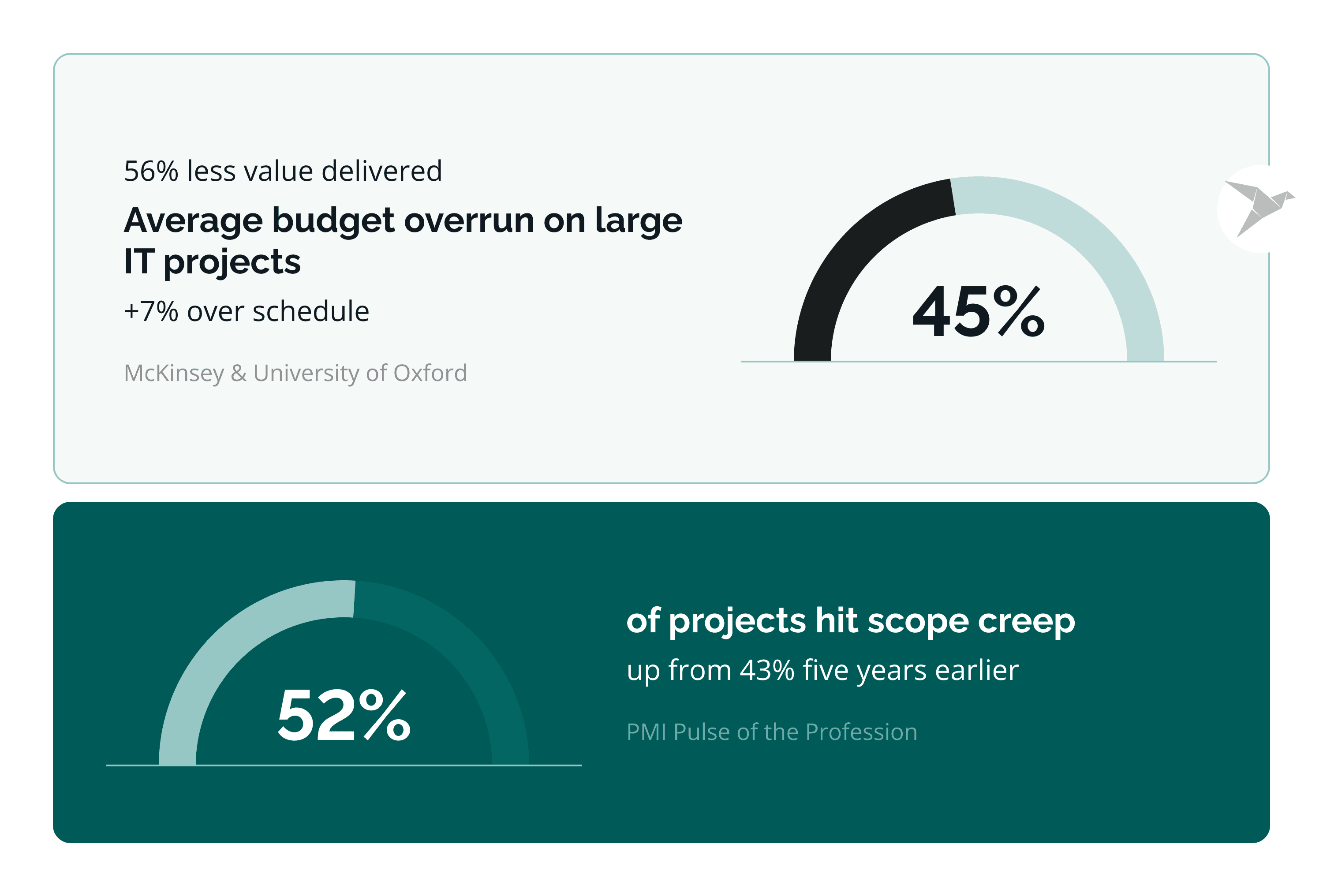
You cannot estimate cost without a clear scope, and a vague scope is where budgets go wrong. When requirements are loose, the vendor guesses, and those guesses turn into change requests and surprise invoices later.
Solution: define the scope before you ask for a price.
Write down the requirements, the timeline, and the constraints so the outsourcing arrangement is clear to both sides. Ask exactly how pricing works, what triggers extra charges, and how changes are handled, then put those terms in the outsourcing contracts you sign. Access to lower labor costs can reduce costs and improve cost efficiency, but only when the scope is firm enough to hold the estimate.
Problem 3: Gaps in your own technical oversight
If no one on your side understands the work, you cannot judge whether it is good. This is common when a founder with a small in house team outsources a full build and has no way to assess the code, the architecture, or the security choices.
Solution: keep enough oversight and internal resources to check the work.
Set clear performance standards and acceptance criteria at the start, so you can measure the vendor's performance against them. If your internal teams lack the technical capabilities or specialized expertise to review the output, bring in a fractional technical lead to do it. Independent testing gives you an objective read on service quality that does not depend on the vendor's word.
Problem 4: Communication, culture, and time zones
Communication problems cause more failed engagements than any technical issue. Different working cultures, languages, and time zones add friction, and small misunderstandings early on tend to grow. Poor communication is the top internal challenge many teams report in any outsourcing relationship.
Solution: build effective communication into the workflow.
Agree on core overlap hours, a primary channel, and a regular cadence of calls before work starts, so external teams and your own staff stay in sync across time zones. Cultural differences and language barriers shrink when you write decisions down and keep a shared record in project management tools like Jira. Clear communication skills on both sides, and honest project management, prevent most communication challenges.
Problem 5: Data security and privacy compliance
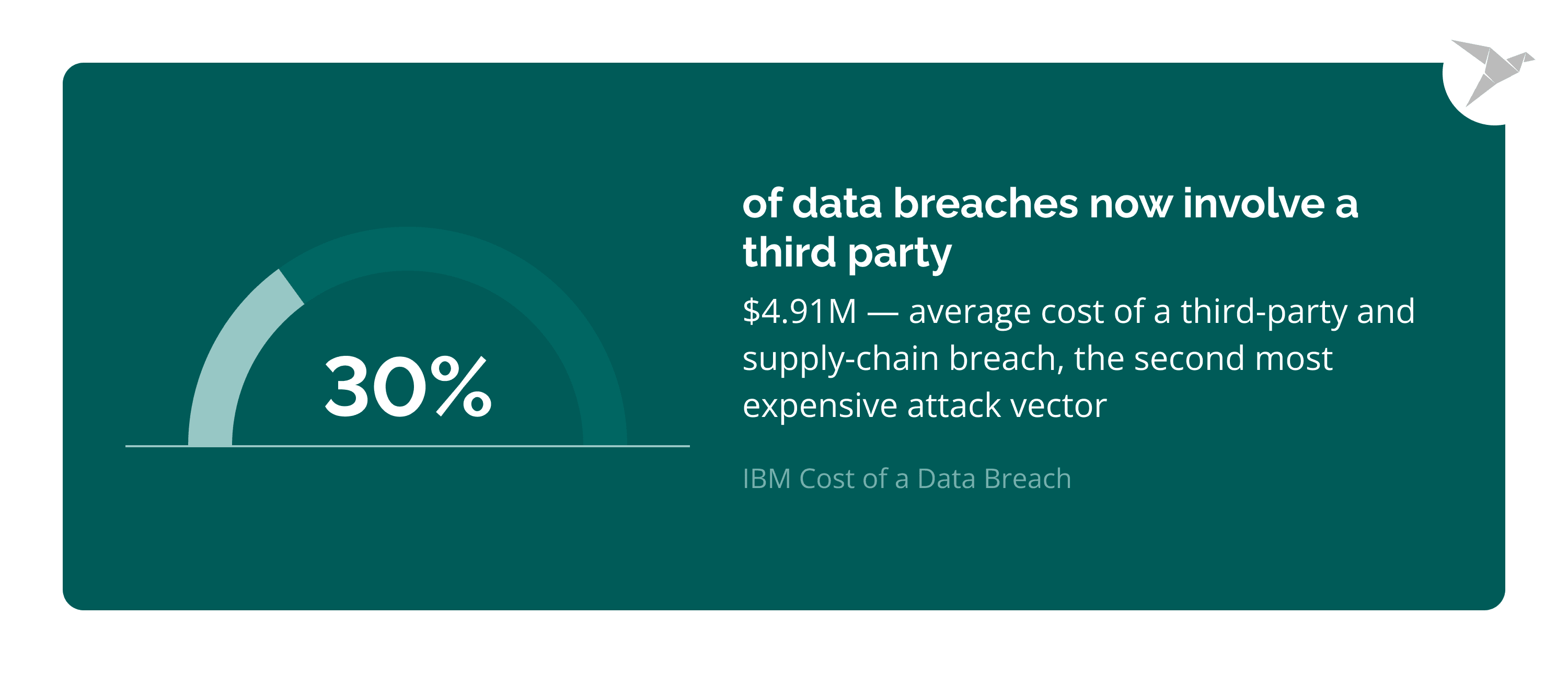
Handing data to an outside team widens your attack surface and your compliance obligations. During the recent years, regulators and enterprise buyers have raised the bar, and a vendor's security posture now weighs heavily in who wins the contract.
Solution: write security into the contract from the start.
Confirm the vendor holds recognized certifications such as SOC 2 or ISO 27001, and ask how they handle access control and data residency. Put data security, data protection, and breach notification terms in the agreement, along with audit rights. If you work under GDPR, HIPAA, or similar rules, make the vendor's obligations explicit.
Problem 6: Unmanaged AI use and unclear code provenance
Many development teams now use AI coding assistants, and that changes what you are buying. Gartner expects worldwide AI spending to reach $2.59 trillion in 2026, up 47% in a year, according to Gartner, so the tooling is everywhere in information technology work. AI-generated code can carry security flaws, licensing issues, or quality problems that a rushed reviewer misses.
Solution: ask how the vendor uses AI, and apply the same best practices to the output.
Find out which AI tools the team uses, whether your code or data is sent to third-party models, and how AI-written code is reviewed before it ships. Require human review, security scanning, and test coverage for all code, whatever produced it. Strong review here protects service quality and keeps AI from quietly lowering it.
Problem 7: Weak IP protection and contract gaps
The outsourcing legal process is less standardized than in-house hiring, and it varies by the vendor's location. Ownership of the code, the design, and any models you pay for should belong to you, but that only happens if the contract says so clearly.
Solution: protect intellectual property in writing.
Sign an NDA before you share sensitive details, and state in the contract that all deliverables and intellectual property transfer to you on payment. Spell out intellectual property rights, confidentiality, the use of open-source and AI-generated code, and what happens if either side ends the engagement. A short review by a lawyer familiar with cross-border contracts is worth the cost.
Problem 8: Poor knowledge transfer and vendor lock-in
Knowledge transfer fails in two directions. When an outsourced team leaves without clear documentation, you inherit code no one understands. When a vendor picks up your project with no proper handover, they miss context and underdeliver.
Solution: require documentation as a deliverable.
Ask for up-to-date docs on the architecture, the deployment process, and the client's processes, written well enough that a new team could take over. Schedule handover calls at key milestones, not just at the end. Clear documentation and simple contingency plans keep you free to switch partners, which protects the long term success of the product.

Problem 9: Inconsistent quality and no accountability
Quality drifts when no one agreed on what "good" means. This applies as much to code as it does when you outsource manufacturing, where quality control on the production floor decides the outcome.
Solution: define quality up front and measure it.
Agree on acceptance criteria and a definition of done before work starts, then track a few objective signals such as defect rates and on-time delivery. Regular reviews identify weaknesses early, whether the work is software or outsourcing manufacturing with its own production processes. The same discipline applies to supply chain management: clear standards across your supply chain keep outsourced tasks accountable, and spreading work across multiple vendors reduces the potential risks of depending on one.
Problem 10: The wrong engagement model
Even a strong vendor disappoints under the wrong contract model. The three common models suit very different outsourcing needs, and mismatching them creates avoidable friction.
Here is how the main options compare:
- Fixed price: you provide a full scope and set a firm budget and deadline. It fits small, well-defined work, but its rigidity can force teams to cut features or charge extra when requirements change.
- Time and material: you pay for the work actually done, and the scope can flex as you go. It suits longer, evolving projects.
- Dedicated development team: the vendor supplies engineers who act as an extension of your team, so you keep control while filling a skills gap.
Solution: choose the model from your goals.
Match the model to how stable your requirements are, and make that choice part of a deliberate outsourcing strategy rather than an afterthought. A clear model turns scattered outsourcing efforts into a focused outsourcing initiative and sets up successful outsourcing that scales your outsourcing services over time.
Golden Rules to Avoid Problems of Outsourcing
If you remember nothing else, these habits prevent most outsourcing problems:
- Do real due diligence on any vendor, using verified reviews and a checked track record.
- Define requirements, timeline, and budget before you ask for a price.
- Put data security, intellectual property, and AI use in the contract.
- Keep documentation current and require it as a deliverable.
- Set clear quality control standards and measure them.
- Build steady, effective communication into the schedule.
Check what we gave to offer

Final Thoughts
Outsourcing works when you treat it as a managed relationship, not a handoff. The outsourcing problems above are predictable, and each one has a practical fix that costs far less than the failure it prevents. Choose a partner for the specific work you need, agree clearly on scope, security, and ownership, and stay involved as the work goes on.
Where is this heading?
The market will keep growing, so vendor choice matters more, not less. Statista expects the IT outsourcing market to reach about $806 billion by 2030. More outsourcing companies means more variance in quality, and sharper due diligence becomes your main defense.
AI will be standard in outsourced work, and governance will separate good vendors from risky ones. In Deloitte's 2024 survey, 83% of executives already use AI as part of their outsourced services. The vendors worth hiring will be the ones who can show how they review and secure that AI output.
Nearshore and hybrid models will keep gaining ground. Buyers increasingly want partners in similar time zones for closer collaboration and tighter data protection. Expect more teams to blend an in-house core with nearshore partners to keep their competitive edge.
If you want to talk through an outsourcing decision, our team is ready to help.

FAQ

The most common outsourcing problems are choosing the wrong vendor, vague scope and cost overruns, weak technical oversight, communication and time-zone gaps, data security and compliance exposure, unclear use of AI-generated code, weak intellectual property protection, poor knowledge transfer, inconsistent quality, and the wrong engagement model.
You avoid most software development outsourcing problems with three habits: vet the outsourcing partner with verified reviews and references, define the scope and budget before agreeing a price, and keep enough technical oversight in-house to judge the work. A clear contract that covers security, intellectual property, and AI use prevents most of the rest.
AI-generated code can carry security vulnerabilities, licensing conflicts, and quality issues that surface only in production. To reduce these risks, ask which AI tools a vendor uses, whether your data is sent to third-party models, and require human review, security scanning, and test coverage for all code.
The biggest risk in outsourcing is choosing the wrong vendor, because that decision drives most other problems, from missed deadlines to poor quality. You reduce it with verified reviews on Clutch and G2, references from clients with similar projects, and a short paid discovery engagement before committing to a full build.
Outsourcing can lower costs, but the savings depend on scope control and vendor fit. It is most cost-effective when it fills a genuine skills gap and the requirements are clear, because vague scope and rework erase the savings. Many companies now outsource for access to talent rather than for cost alone.
You choose the outsourcing engagement model based on how stable your requirements are. A fixed-price contract suits a small, well-defined project with a firm scope. Time and material or a dedicated development team suits longer work where the scope will change as you go.