
 Software Development
 Security Services
 Cloud Services
 AI Services
 Other Services















 TechMagic Academy


Shift Left and Right: Vulnerability Remediation Best Practices in Action
Last updated:29 January 2026


Nearly half of organizations are learning about their security failures the hard way. According to a Deloitte report, 40% of respondents publicly disclosed six to ten cybersecurity breaches in a single year. In most cases, the issue was slow, fragmented fixing.
Vulnerabilities were known, tracked, and discussed, but not resolved fast enough where it mattered.
In our article, we explain what is vulnerability remediation in practical terms, and why it breaks down so often in modern software environments. We look at how shift left and right remediation actually happen across the lifecycle, why fixing everything “later” doesn’t work, and how these approaches change the outcome.
You’ll see the difference between managing vulnerabilities and reducing real risk, how production context reshapes priorities, and why remediation must continue long after release as systems evolve and exposure changes.
Key takeaways
- Vulnerability remediation reduces risk only when fixes or mitigations are applied through a structured remediation process, not when issues are documented.
- Shift left addresses vulnerabilities early, when fixes are cheaper and safer to implement within the remediation process.
- Shift right adds production context that helps teams focus on issues that are actually exploitable and that attackers can exploit vulnerabilities in real conditions.
- End-to-end remediation is necessary because software, dependencies, and cloud environments keep changing, which reshapes the attack surface and reinforces that not all vulnerabilities carry the same real-world risk.
- Teams that align remediation across the lifecycle close gaps faster and avoid repeat exposure, especially across critical systems, supported by a clear vulnerability remediation workflow and a practical vulnerability remediation plan.
- An ongoing process that teams use to perform vulnerability remediation within an agreed vulnerability remediation timeline and repeatedly focus on fixing security weaknesses.
What Is Shift Left and Shift Right in Vulnerability Remediation?
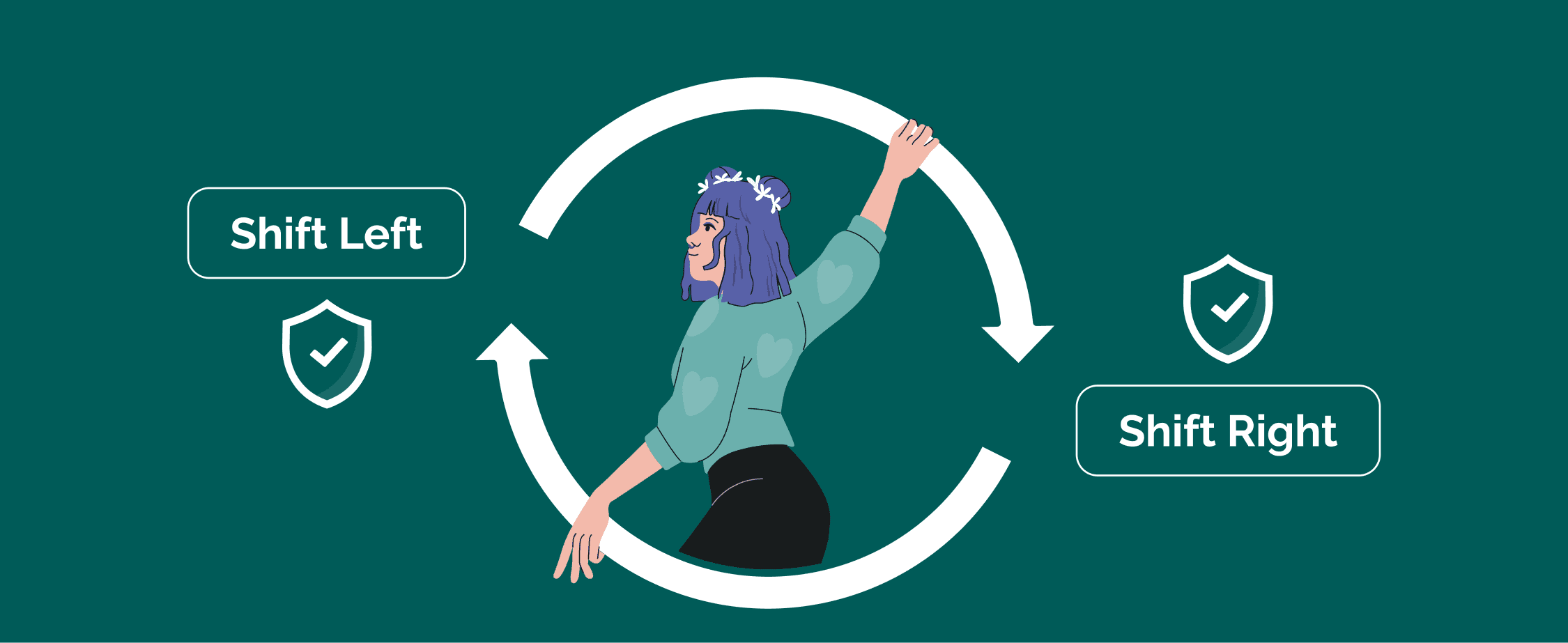
Shift left and shift right in vulnerability remediation describe when fixes happen across the software lifecycle.
Shift left and vulnerability remediation means applying fixes during design, coding, review, build, and testing.
Shift right and vulnerability remediation means applying fixes after deployment, in production or near-production environments, where changes must account for uptime, rollout safety, and real exposure.
In remediation work, “left” and “right” help teams decide where a fix belongs.
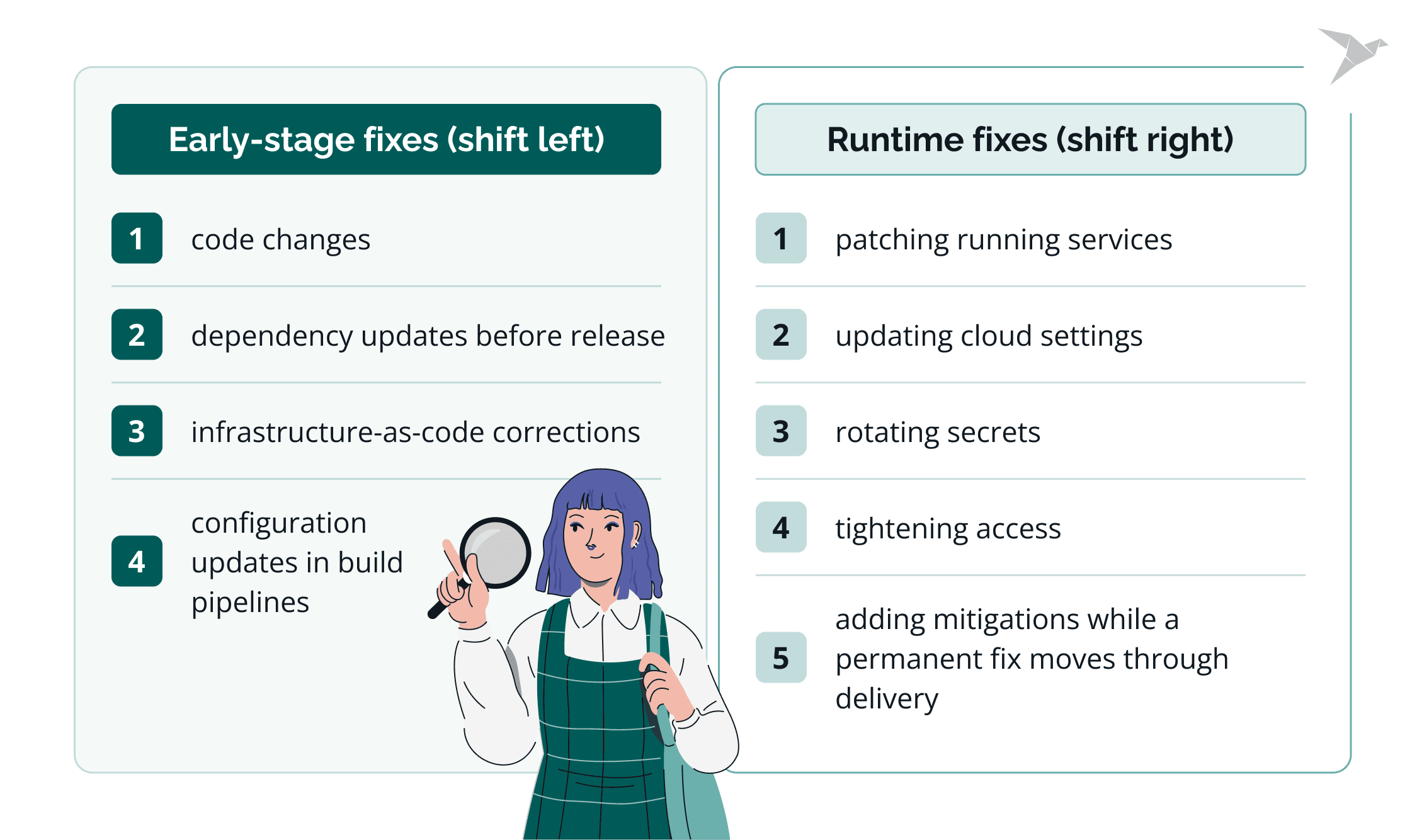
Remediation needs this end-to-end coverage because software keeps changing after release. New code ships, dependencies update, environments drift, and new exploit paths appear. A lifecycle view reduces gaps and supports consistent decisions in vulnerability remediation.
Vulnerability management and remediation: core differences
Vulnerability management and remediation may seem similar, but they have important distinctions. Vulnerability management focuses on identifying, tracking, and assessing security issues over time, while vulnerability remediation focuses on fixing or mitigating those issues in real systems. Management answers questions about visibility, status, and risk. Remediation answers questions about ownership, timing, and corrective action.
This distinction matters because risk does not change when vulnerabilities are only documented or prioritized. Risk is reduced when fixes are applied, mitigations are enforced, or exposure is removed. Treating remediation as a continuous activity helps teams connect security findings to concrete outcomes.
Why Is Vulnerability Remediation a Core Cybersecurity Challenge?
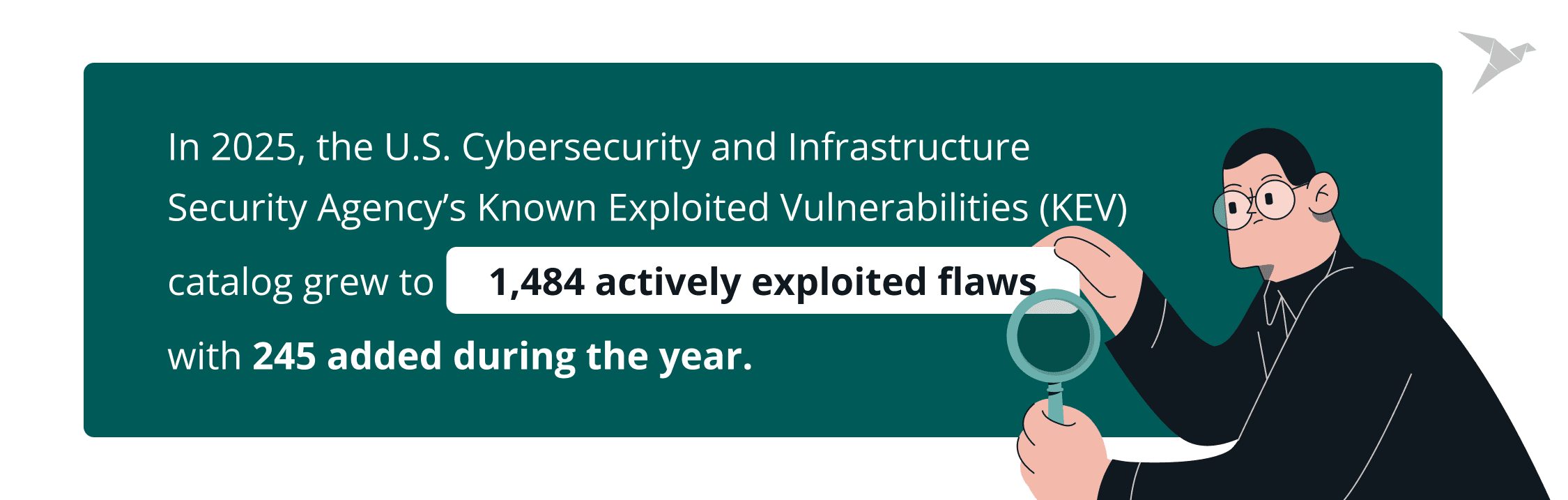
In 2025, the U.S. Cybersecurity and Infrastructure Security Agency’s Known Exploited Vulnerabilities (KEV) catalog grew to 1,484 actively exploited flaws, with 245 added during the year. You can see how many vulnerabilities are confirmed to be used by attackers.
In this context, vulnerability remediation is a core challenge because turning large volumes of identified issues into durable fixes requires sustained effort across teams, systems, and environments under real operating constraints.
High volume of detected vulnerabilities
Teams grapple with thousands of findings across codebases, dependencies, cloud services, and third-party products. Tracking, validating, and planning fixes across this scale is operationally heavy and easy to fall behind.
Limited engineering bandwidth
Remediation competes with product delivery, reliability work, and urgent operational tasks in an ongoing process. Fixing code or infrastructure often requires time for design, testing, approvals, and staged deployment windows, while new vulnerabilities keep arriving and limit progress on fully closing out resolved vulnerabilities.
Poor signal-to-noise ratio
Not all findings carry equal real-world risk. Duplicates, context-dependent issues, and false positives make prioritization difficult. They consume time that could go toward high-impact fixes that strengthen security measures and improve the overall security posture, especially when threat intelligence points to active exploitation and likely cyber attacks.
Gaps between security and engineering teams
Remediation spans ownership boundaries: security teams identify risks, engineering teams implement changes, platform teams manage shared components, and operations control production environments. Without clear handoffs and shared criteria for success, work can stall or be fragmented, leaving new vulnerabilities open longer and delaying confirmation of resolved vulnerabilities.
Change risk in production environments
Many fixes carry operational risk: downtime, broken integrations, or performance impacts. Mitigating that risk often pushes remediation into planned maintenance windows or longer release trains.
It also extends exposure during periods of elevated cyber attacks and shifting priorities informed by threat intelligence, while teams balance delivery with protecting the overall security posture through practical security measures.
Weak remediation becomes costly
Slow, inconsistent remediation increases the chance that known issues are exploited in the wild and can lead to expensive consequences for organizations. In 2025, the global average cost of a data breach was $4.44 million, according to IBM’s annual Cost of a Data Breach Report.
Our expertise is at your disposal

What Are Vulnerability Remediation Best Practices?
Vulnerability remediation best practices come from repeatable ways of reducing risk through consistent fixing and mitigation. This list reflects our own practical experience working with security and engineering teams on remediation workflows across applications, cloud, and hybrid environments.
Risk-based remediation prioritization
Prioritization works best when it combines a few inputs that map to real risk. We typically use these signals to decide what to fix first:
Clear ownership and accountability
Remediation moves when each item has an owner who can drive it to completion. In practice, ownership aligns to where the change happens: application team for code, platform team for shared services, cloud/infra team for configuration and patching. Clear completion criteria help teams close work without rework.
Automation where it makes sense
Automation is most useful for routine, repeatable changes. Common examples include dependency update workflows, standard patch pipelines, and configuration enforcement. Changes that affect availability or core behavior still benefit from human review and controlled rollout.
Continuous and iterative remediation
Teams get better results when remediation runs as a steady process. Regular cycles keep the backlog from ballooning and reduce the need for emergency fixes when a vulnerability becomes urgent.
Learning loops that prevent repeat issues
Recurring fixes often point to missing guardrails or inconsistent engineering standards. Feeding patterns back into secure defaults, reusable templates, and review checklists reduces reintroduction and makes remediation more predictable.
All of the above reflect best practices of vulnerability remediation we use in real remediation programs to keep work consistent, risk-focused, and repeatable. However, every project is unique, so we always work with the client’s specific cybersecurity risks and objectives.
How Does Shift Left Improve Vulnerability Remediation?
Shift left improves vulnerability remediation because teams fix issues while changes are small and the context is fresh. In our practice, this reduces production spillover and cuts the coordination effort that comes with late-stage fixes.
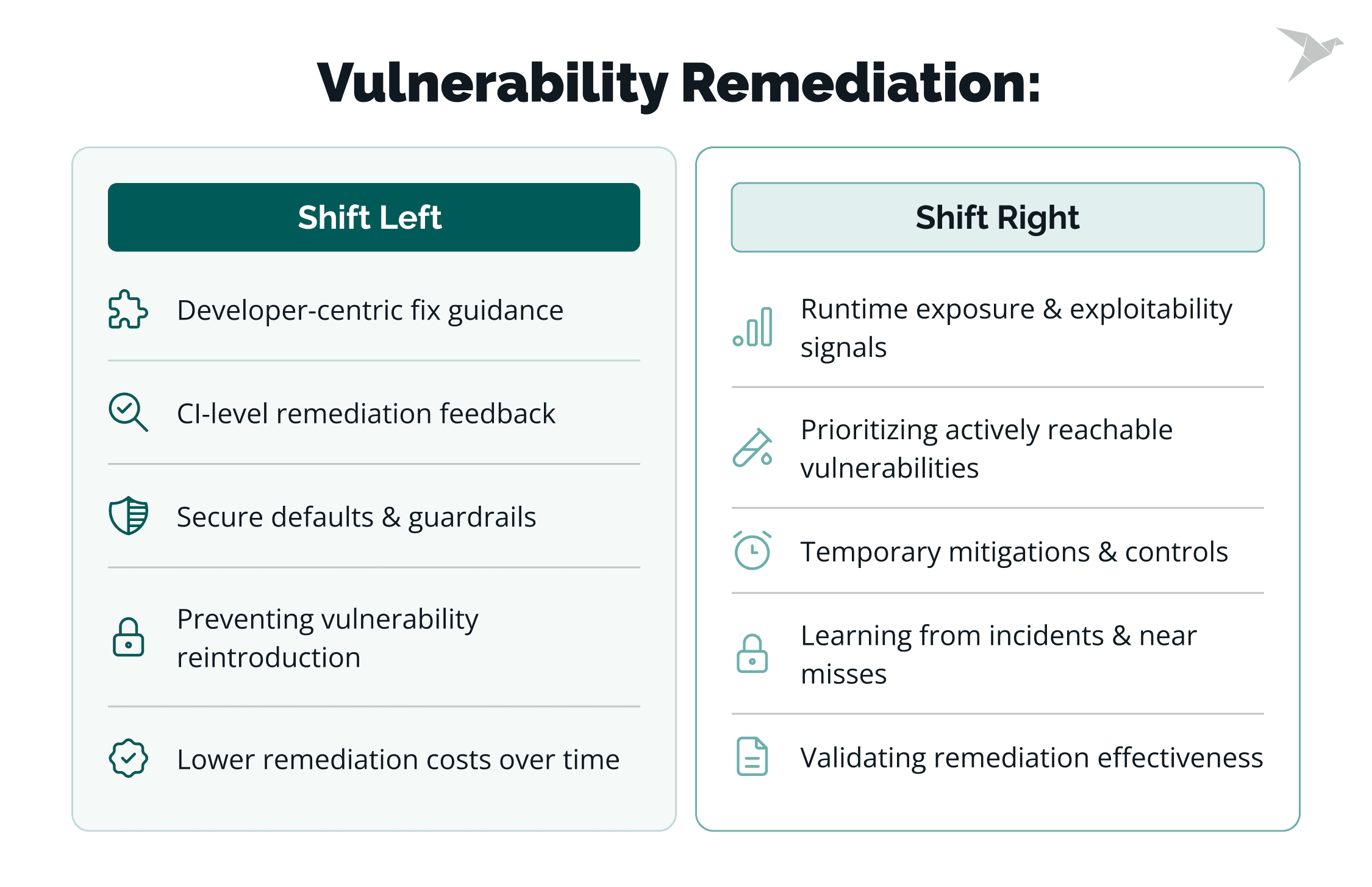
Developer-centric fix guidance
Remediation works better when developers receive clear, actionable guidance close to the code they own. Effective guidance explains what needs to change, where the issue lives, and how to fix it safely. This shortens feedback cycles and reduces back-and-forth between security and engineering.
CI-level remediation feedback
Providing remediation feedback in CI helps teams address issues before deployment. Build-time checks surface problems while context is fresh and changes are still small. This approach turns remediation into part of normal delivery rather than a post-release interruption.
Secure defaults and guardrails
Many recurring issues trace back to insecure defaults or inconsistent setup. Secure base images, hardened templates, and approved libraries reduce the number of vulnerabilities introduced in the first place. Guardrails help teams move fast without repeatedly creating the same risks.
Preventing vulnerability reintroduction
Shift-left remediation supports long-term risk reduction by preventing fixed issues from coming back. Tests, policy checks, and reusable patterns reinforce prior fixes and make regressions visible early, before they spread across environments.
Lower remediation costs over time
Fixing issues earlier reduces the operational cost tied to patching live systems, coordinating emergency changes, and managing production risk. Development-stage remediation also improves the signal quality for downstream vulnerability assessment services, allowing them to focus on real exposure rather than avoidable defects.
Taken together, these practices make security vulnerability remediation more predictable by aligning fixes with how software is built, reviewed, and delivered.
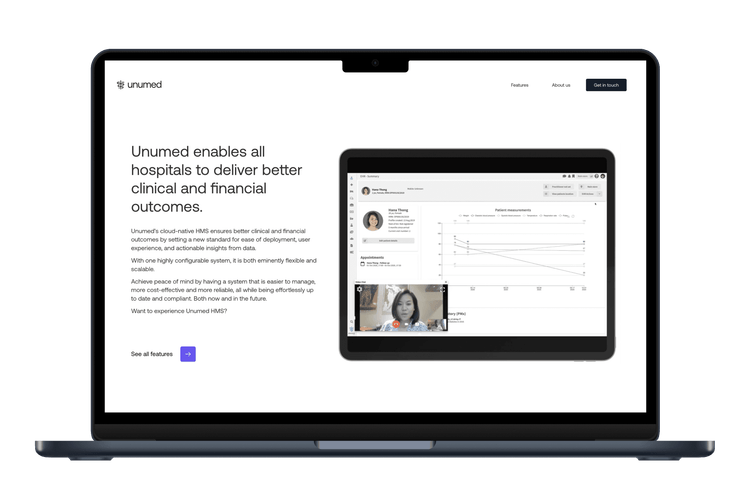
Penetration testing of a cloud-native hospital management system before the annual ISO 27001 audit
How Does Shift Right Strengthen Vulnerability Remediation?
Shift right strengthens vulnerability remediation by grounding fixed decisions in production reality. In our experience, runtime context helps teams focus effort on issues that are actually reachable, exploitable, and impactful in live environments.
Runtime exposure and exploitability signals
Production signals such as network reachability, identity paths, traffic patterns, and service dependencies clarify which vulnerabilities can be exercised in practice. These signals help teams separate theoretical issues from ones that require action.
Prioritizing actively reachable vulnerabilities
We consistently see better outcomes when teams prioritize vulnerabilities on assets that are exposed to untrusted networks or privileged identities. Reachability data and real usage patterns improve accuracy beyond static severity scores.
Temporary mitigations and controls
Some fixes cannot be deployed immediately without risking availability. Runtime controls, such as configuration changes, access restrictions, feature flags, or rate limits reduce exposure while permanent fixes move through development.
Learning from incidents and near misses
Production incidents and blocked attacks provide high-value input for remediation decisions. Teams use this feedback to adjust priorities, close gaps, and refine response playbooks.
Validating remediation effectiveness
Shift-right practices allow teams to confirm whether fixes actually reduce exposure. Observing post-fix behavior in production helps catch partial remediation and prevents false closure.
What Is the Step-by-Step Guide to Vulnerability Remediation Using Shift Left and Right?
This guide outlines a practical way to build a vulnerability remediation process that grows with team maturity. The steps reflect what we see work in real programs when remediation spans both development and production.
Define remediation standards and SLAs
Start by agreeing on what “fixed” means and how fast different risk levels require action as part of remediation is the process teams follow to reduce exposure. Clear standards and timeframes reduce debate, cut false-positive discussions, and help teams plan remediation work alongside delivery using consistent inputs from vulnerability reports.
Assign ownership across the SDLC
Map each class of issue to the team that can apply the fix, based on vulnerability identification from vulnerability scans. Code-level issues belong to application teams, shared services to platform teams, and runtime changes to operations.
Ownership tied to the lifecycle prevents gaps and stalled handoffs, especially for most critical vulnerabilities and risks like privilege escalation across apps and operating systems.
Integrate remediation into CI/CD
Introduce remediation checks into build and deployment workflows using existing security tools and signals from vulnerability scans. Early feedback keeps fixes small, supports fixing security vulnerabilities, and prevents avoidable issues from reaching production without blocking teams with excessive noise.
Add runtime context and validation
Use production signals to refine priorities and confirm impact as part of effective vulnerability remediation. Reachability, usage patterns, and identity paths help teams focus on issues that matter and validate that fixes reduce exposure, including verification that resolved vulnerabilitieі stay resolved.
Automate, track, and iterate
Automate repeatable remediation tasks through automated vulnerability remediation and a vulnerability remediation tool, and track progress over time as part of vulnerability remediation efforts.
Regular review of outcomes helps teams adjust standards, improve guardrails, and keep remediation consistent as systems evolve, supported by patch management and reliable patch management workflows to resolve security vulnerabilities.
CyberSecurity services for Elements.Cloud

How Do Shift Left and Shift Right Work Together in Cybersecurity Programs?
Shift left and shift right work together when remediation decisions flow continuously between development and production. In practice, teams get stronger results when early fixes, runtime signals, and lessons learned reinforce each other over time through consistent remediation workflows and repeatable remediation strategies, with input from threat intelligence and feedback from real cyber attacks.
Shared visibility across teams
Effective programs give security, engineering, and operations a common view of remediation status and risk as part of addressing vulnerabilities.
Shared visibility helps teams understand where issues originate, how they are addressed, and whether fixes hold up in production, which supports the IT security team and strengthens the overall security posture.
Prevention and containment balance
Shift left reduces the number of issues that reach production, while shift right limits impact when issues do appear, including cases where attackers can exploit a security flaw for data theft.
Teams balance prevention through design and code changes with containment through runtime controls and mitigations, supported by patch management systems, patch management tools, and consistent vulnerability patching as part of addressing vulnerabilities.
Continuous improvement cycles
Production findings feed back into development standards, templates, and checks, which help teams respond to newly discovered vulnerabilities with better risk-based vulnerability prioritization.
Over time, this loop reduces repeat issues and improves fix quality, which strengthens remediation consistency across releases and supports automated remediation tools alongside manual review and vulnerability patching.
Aligning security outcomes with business goals
When remediation spans the full lifecycle, teams can reduce risk without disrupting delivery or availability. This alignment helps security work support reliability and growth, which is often a core objective of applications security services in mature programs.
Together, shift left and shift right form a single remediation strategy that adapts as systems, threats, and priorities change.
Final Thoughts
Vulnerability remediation works when it spans the full lifecycle. Shift left reduces the number of issues that reach production by fixing them where change is cheapest and fastest, guided by regular vulnerability assessment and frequent vulnerability scans from vulnerability scanners and other security tools.
Shift right sharpens decisions by adding runtime context, exploitability, and operational reality, which helps threat actors' paths stand out and keeps vulnerability scans aligned with real exposure. Together, they support effective vulnerability remediation and turn remediation into a continuous, risk-reducing practice rather than a reactive cleanup task.
The article shows a clear pattern we see in practice: teams that treat remediation as shared, lifecycle-wide work close gaps faster, avoid repeated fixes, and make better trade-offs between speed and safety, including clearer ownership for vulnerability remediation efforts, stronger security measures, and repeatable processes for fixing security vulnerabilities across services and operating systems.
Key numbers and what they signal
1,484 known exploited vulnerabilities were listed in CISA’s KEV catalog in 2025, with 245 added in a single year. This confirms that exploitation of known issues is persistent and ongoing, and that threat actors continue to target critical vulnerabilities and other high-risk vulnerabilities identified through vulnerability scans.
The average global cost of a data breach reached USD 4.44 million in 2025 (IBM), reinforcing that unresolved vulnerabilities carry real financial impact. This holds even when teams run frequent vulnerability scans and penetration testing, because delays often concentrate around critical vulnerabilities and high-risk vulnerabilities that remain open while new vulnerabilities keep appearing.
Most remediation delays we encounter are driven by coordination, prioritization, and change risk, not by lack of detection, even with regular vulnerability scans, mature vulnerability assessment, and the right vulnerability remediation tool in place.
What to expect next
Shorter disclosure-to-exploit windows will continue to pressure teams to act faster after release, especially as threat actors capitalize on new vulnerabilities soon after disclosure, and as vulnerability scans surface exposure across fast-changing environments.
Runtime context will matter more as environments grow more dynamic and exposure changes frequently, which will increase reliance on vulnerability scans plus a vulnerability remediation tool that supports triage and response.
Preventive remediation through secure defaults and guardrails will become a primary way to control scale, rather than chasing fixes downstream, with more emphasis on automated vulnerability remediation and faster workflows to resolve security vulnerabilities as part of ongoing automated vulnerability remediation.
If you don’t want to spend weeks figuring out how to organize all of this inside your company, a managed security service provider can help you operationalize the process end-to-end.
We can guide you through setting up the remediation workflow, selecting and implementing the right tools, training developers, defining policies and SLAs, and then regularly validating that the process works in practice and keeps improving over time.
Teams that connect shift left and shift right into a single remediation strategy are better positioned to reduce risk steadily, even as systems and threats evolve.

FAQ

Vulnerability remediation best practices focus on consistently reducing real risk, not just closing tickets. In practice, this means prioritizing issues based on exploitability and asset criticality, assigning clear ownership for security teams, using automation for repeatable fixes, and running remediation as a continuous vulnerability management process rather than a one-time effort.
Vulnerability management is about identifying vulnerabilities, tracking, and assessing issues over time as part of a broader vulnerability management program.
Vulnerability remediation is about taking action to remediate vulnerabilities or apply vulnerability mitigation in real systems. Management provides visibility and context into security risks and known vulnerabilities; remediation is what actually reduces exposure and improves security posture.
Shift left improves remediation by fixing issues early, but it cannot address everything. Some vulnerabilities depend on production context, real traffic patterns, or runtime exposure.
Without shift right, teams miss security weaknesses that only become relevant after deployment, risk paths that can help attackers gain unauthorized access, or fail to validate whether fixes work in live environments with the right security controls and continuous monitoring.
Shift right improves prioritization by adding runtime signals such as reachability, identity paths, and actual usage. These signals help teams focus remediation vulnerability efforts on issues that are actively reachable or exploitable, instead of relying only on static severity scores like the common vulnerability scoring system that can miss real-world exposure from cyber threats.