
 Software Development
 Security Services
 Cloud Services
 AI Services
 Other Services














 TechMagic Academy


Best SOC 2 Compliance Companies in 2026: Who To Trust for Audit Readiness
Last updated:27 January 2026

If you are reading this, you are not trying to understand what SOC 2 is. You are trying to decide who you can trust to prepare your organization to be truly audit-ready for SOC 2, without last-minute surprises.
That distinction matters because when preparation breaks down, and an organization fails to demonstrate control maturity under scrutiny, the impact goes well beyond a delayed report. It directly affects customer trust and commercial credibility.
Among digital companies selling to US enterprise clients, SOC 2 delays routinely push deals by one to two quarters. When you look closely, those delays are rarely caused by auditors. They are caused by decisions made months earlier: overscoped systems, controls designed for theory rather than operations, and consultants who optimized for documentation instead of audit reality.
This guide is written for executives and senior technical leaders who want to reduce audit risk, timeline uncertainty, and internal distraction: not to “get compliant,” but to make outcomes predictable and protect customer relationships when audits matter most.
*You will not see companies such as Drata or Vanta on this list. The list focuses exclusively on SOC 2 consultants who are tool-agnostic and do not sell their own compliance automation software.
SOC 2 Preparation vs. SOC 2 Audit: What's the difference?
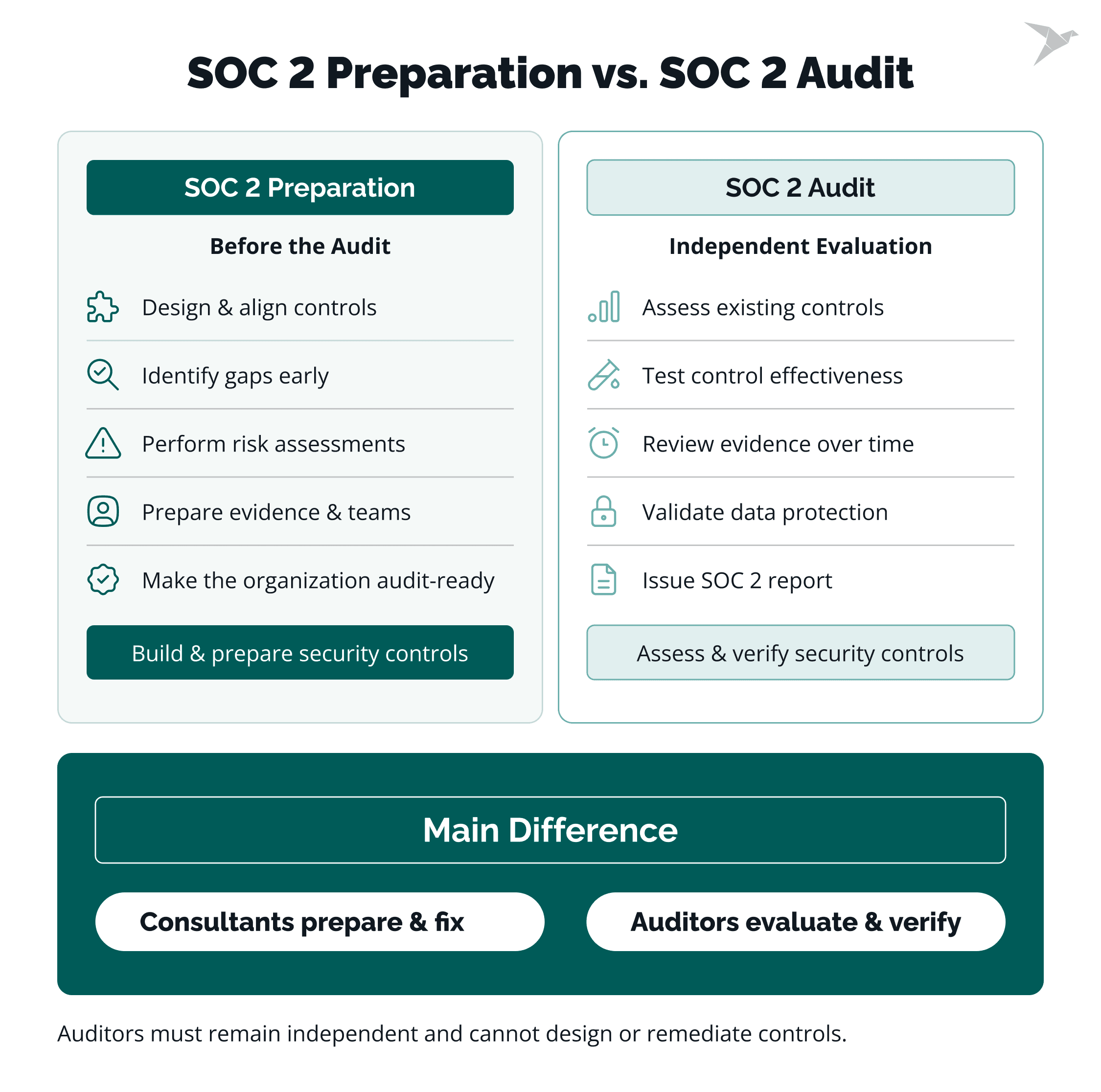
In short, SOC 2 auditors exist to independently evaluate an organization’s security controls and data security. SOC 2 consultants exist to prepare those controls, close gaps, and ensure the organization is audit-ready before that evaluation begins.
SOC 2 auditors are bound by independence requirements. Their responsibility is to assess what already exists: the organization’s security controls, the effectiveness of those controls in practice, and how well they protect sensitive data over time. Auditors evaluate the organization’s security posture as it stands; they do not design controls, perform risk assessments on the organization’s behalf, or fix weaknesses in data security.
SOC 2 consultants operate before that line. Their role is to help organizations become audit-ready by translating the Trust Services Criteria into controls that fit actual systems and operating realities. This includes conducting practical risk assessments, identifying gaps in the organization’s controls early enough to remediate without time pressure, and preparing teams for walkthroughs, sampling, and inquiry because successful audits depend on how controls function and how they are demonstrated.
How We Selected SOC 2 Consulting Firms
This list was built by evaluating how SOC 2 consultants perform under real audit conditions, not by brand recognition or service breadth. We focused on firms that consistently help organizations become audit-ready with fewer surprises, lower internal disruption, and predictable outcomes.
Our evaluation was based on four core criteria:
- Audit realism. Demonstrated understanding of how SOC 2 auditors test controls in practice, including walkthroughs, sampling, and evidence scrutiny.
- Execution capability. Ability to move beyond assessments and support real remediation, control implementation, and evidence preparation.
- Scoping discipline. Proven ability to define defensible system boundaries that reduce unnecessary audit scope and ongoing compliance burden.
- Sustainability. Focus on controls and evidence that remain effective over time, particularly for Type 2 audits.
The Top 10 SOC 2 Compliance Companies
- TechMagic
- IS Partners
- RSI Security
- Strike Graph Advisory Services
- Schellman Advisory Services
- Insight Assurance
- A-LIGN Advisory
- BDO Advisory Services
- Sensiba San Filippo Consulting
- Advisera
TechMagic
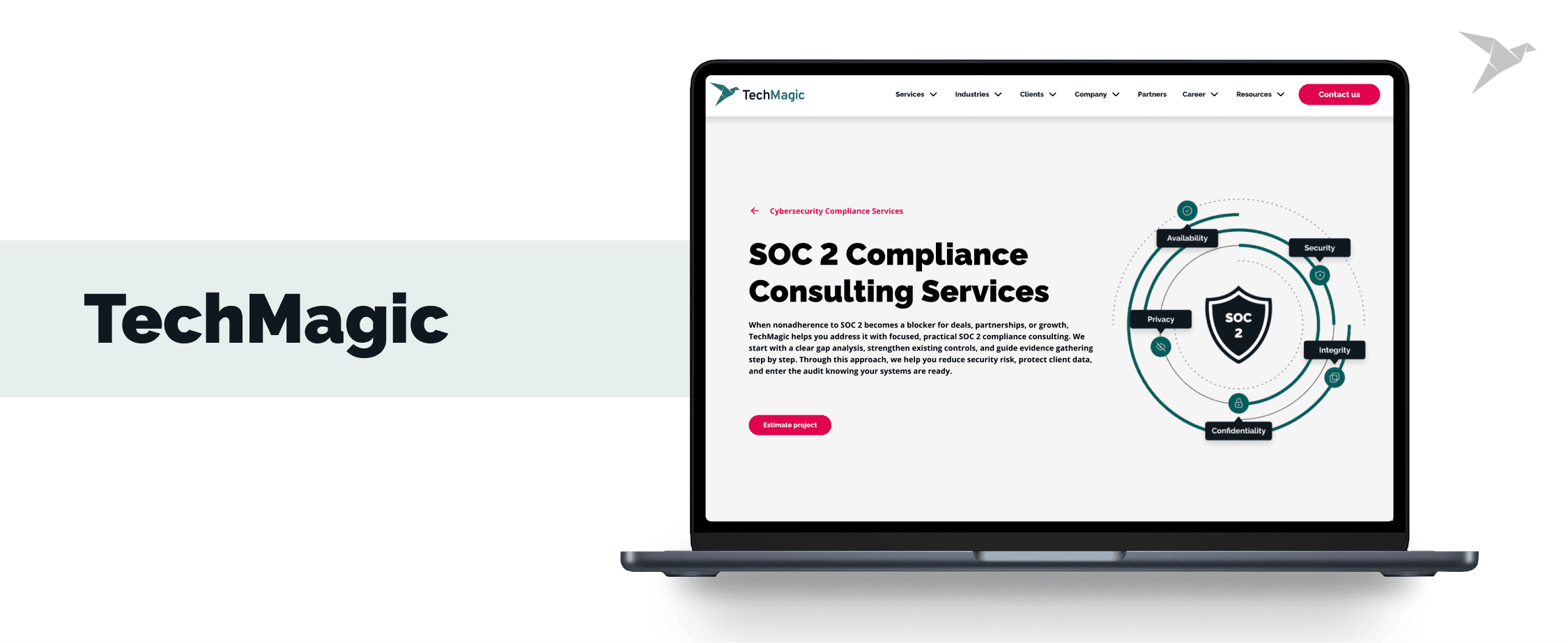
TechMagic provides SOC 2 preparation services for both Type 1 and Type 2 audits, supporting organizations from initial gap assessment through audit readiness and coordination. The team includes experienced and certified SOC 2 implementers who take end-to-end responsibility for the engagement, combining expert guidance with hands-on execution rather than advisory-only output.
TechMagic is a strong fit for companies operating in highly regulated environments, particularly healthcare organizations and financial services, where data protection, rigorous security assessments, and the ability to maintain compliance over time are critical. The firm brings deep technical expertise in cloud security and modern infrastructure, which allows controls to be designed around real systems and operating constraints, not abstract frameworks.
Importantly, TechMagic aligns SOC 2 preparation with clients’ business objectives. The team does not push specific tools or products; instead, it recommends approaches that match the organization’s risk profile, maturity, and budget, helping leadership achieve audit readiness without overengineering or unnecessary spend.
Common fit
- SaaS
- Healthtech
- Fintech
- Data and AI platforms

IS Partners
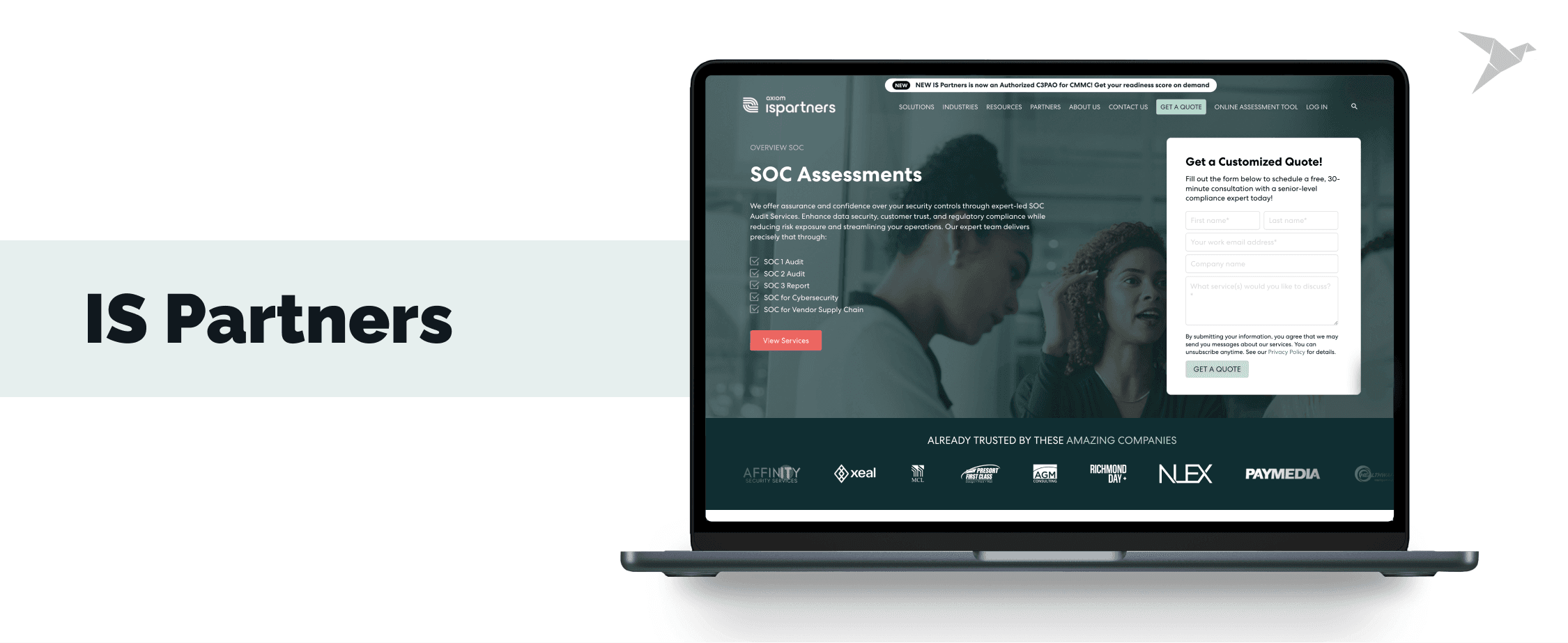
They are a US-based consultancy with deep experience in SOC 2 Type 1 and Type 2 readiness, and they tend to approach preparation in a highly structured, auditor-aligned manner. For executives who have limited tolerance for surprises, this structure is the appeal.
Their readiness assessments tend to map cleanly to how auditors test controls, which reduces friction during fieldwork. Policy and control design are methodical rather than innovative.
The trade-off is that this approach can feel rigid in fast-moving or highly experimental environments. IS Partners optimizes for predictability over flexibility.
Common fit
- B2B SaaS providers and cloud platforms
- Fintech companies with moderate complexity
- Technology services firms that value audit process discipline
RSI Security
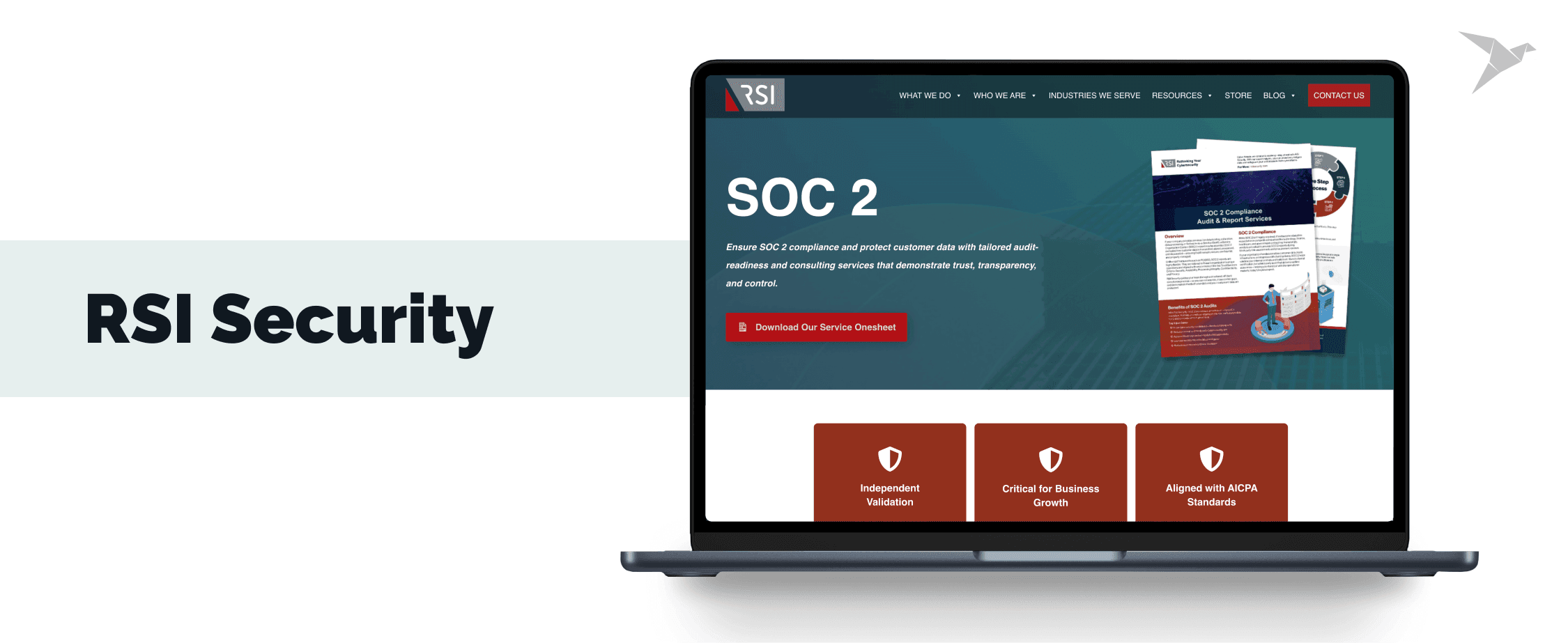
They are most often brought in when leadership knows, upfront, that documentation alone will not survive audit scrutiny. Their strength lies in hands-on security engineering and control implementation, particularly in complex or messy environments. Evidence preparation is strongly audit-focused, which reduces surprises later but requires more engagement from engineering teams earlier.
Executives tend to choose RSI when:
- infrastructure is non-trivial,
- access models are complex,
- or there is known security debt that cannot be papered over.
Common fit
- Infrastructure-heavy SaaS
- Fintech and payments platforms
- E-commerce and marketplace businesses
Strike Graph Advisory Services
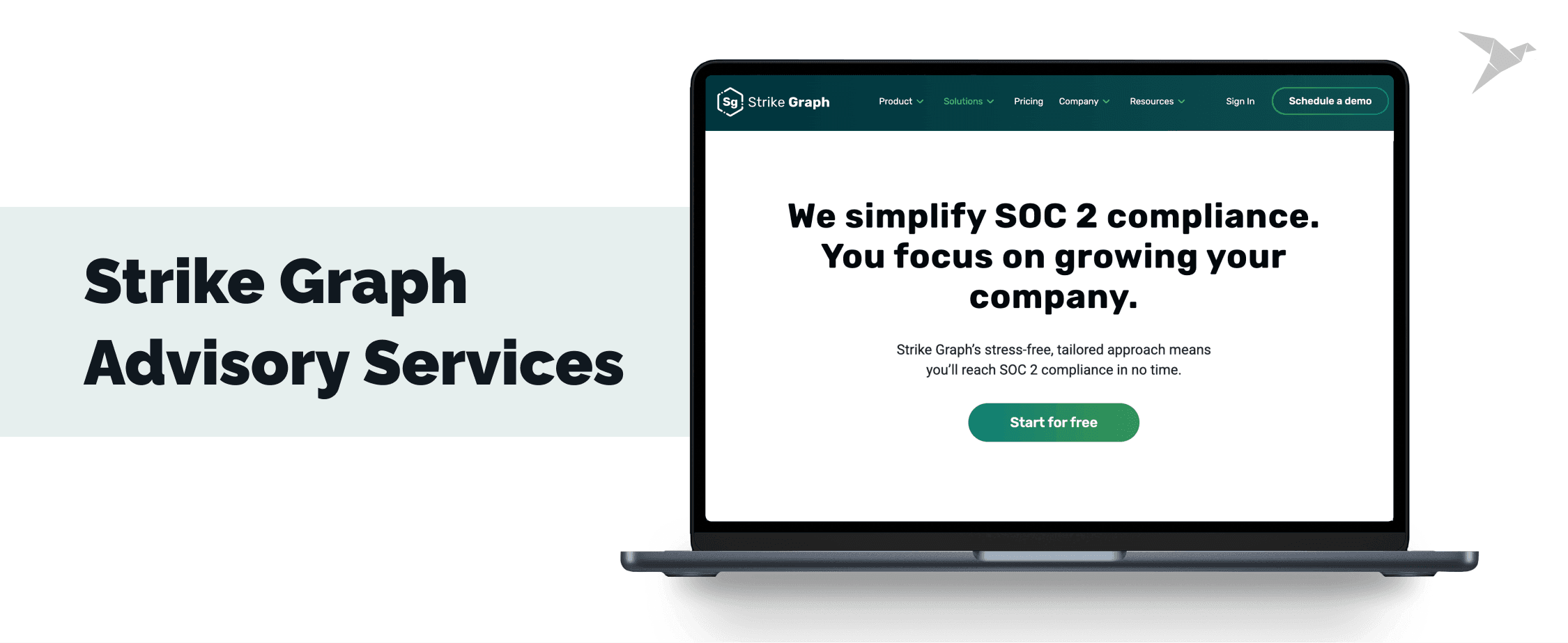
Their consulting emphasizes scoping discipline and sustainable controls. While Strike Graph is associated with tooling, their advisory work can be delivered independently and tends to focus on making existing practices auditable rather than redesigning everything.
Common fit
- Scaling B2B SaaS
- Developer platforms
- Digital product companies moving into mid-market enterprise sales
Schellman Advisory Services
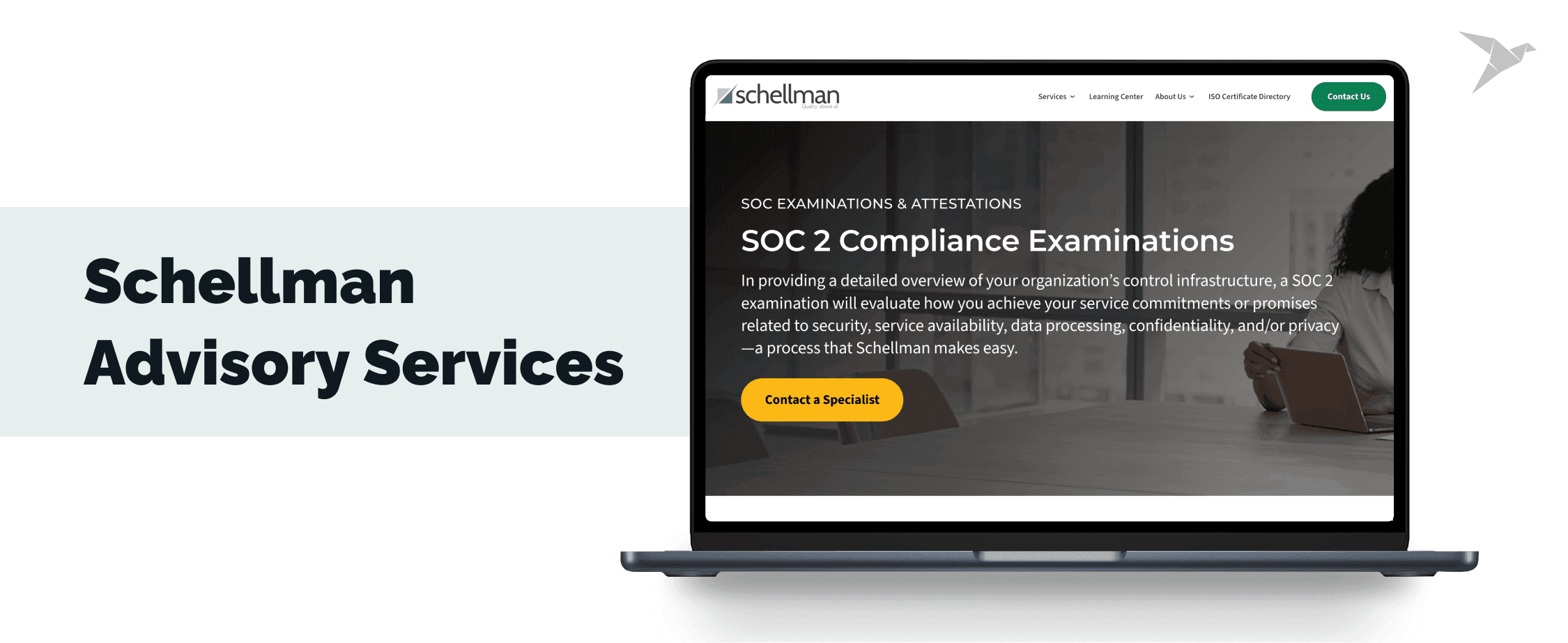
Schellman’s advisory practice is chosen by organizations that view SOC 2 as audit-critical, not just a sales checkbox. They bring deep technical rigor and an unusually strong understanding of how auditors actually test controls.
Common fit
- Enterprise SaaS
- Cloud infrastructure providers
- Data and platform companies with high audit exposure
Insight Assurance
Insight Assurance tends to appeal to executives who are explicitly trying to avoid overengineering. They focus on SOC 2 readiness that is defensible but not bloated, with an emphasis on sustainability across audit cycles. Their work often involves careful scoping, realistic control design, and hands-on audit preparation.
Common fit
- B2B SaaS
- Fintech platforms
- Professional technology services
A-LIGN Advisory
A-LIGN’s specialized services are designed for organizations that want process discipline and maturity. They bring structured methodologies, clear milestones, and strong Type 2 experience. This makes them a good choice for companies that already have some governance in place and want to formalize SOC 2 preparation without improvisation.
Common fit
- SaaS
- Healthtech
- Financial services
BDO Advisory Services
BDO’s advisory arm is typically selected by mid-market and enterprise organizations where SOC 2 is part of a broader risk and governance landscape. Their strength lies in governance, internal controls, and executive-level reporting. They are effective when SOC 2 must align with board oversight, enterprise risk management, or multiple compliance frameworks.
Common fit
- Enterprise SaaS
- Financial services
- Technology and data platforms
Sensiba San Filippo Consulting
Sensiba is well known in the startup and scale-up ecosystem for balancing audit rigor with practical timelines. They are often chosen by venture-backed companies that need SOC 2 to support growth but cannot afford months of disruption. Their readiness programs are pragmatic, and their walkthrough preparation is particularly strong.
Common fit
- Venture-backed SaaS
- B2B platforms
- Technology services
Advisera
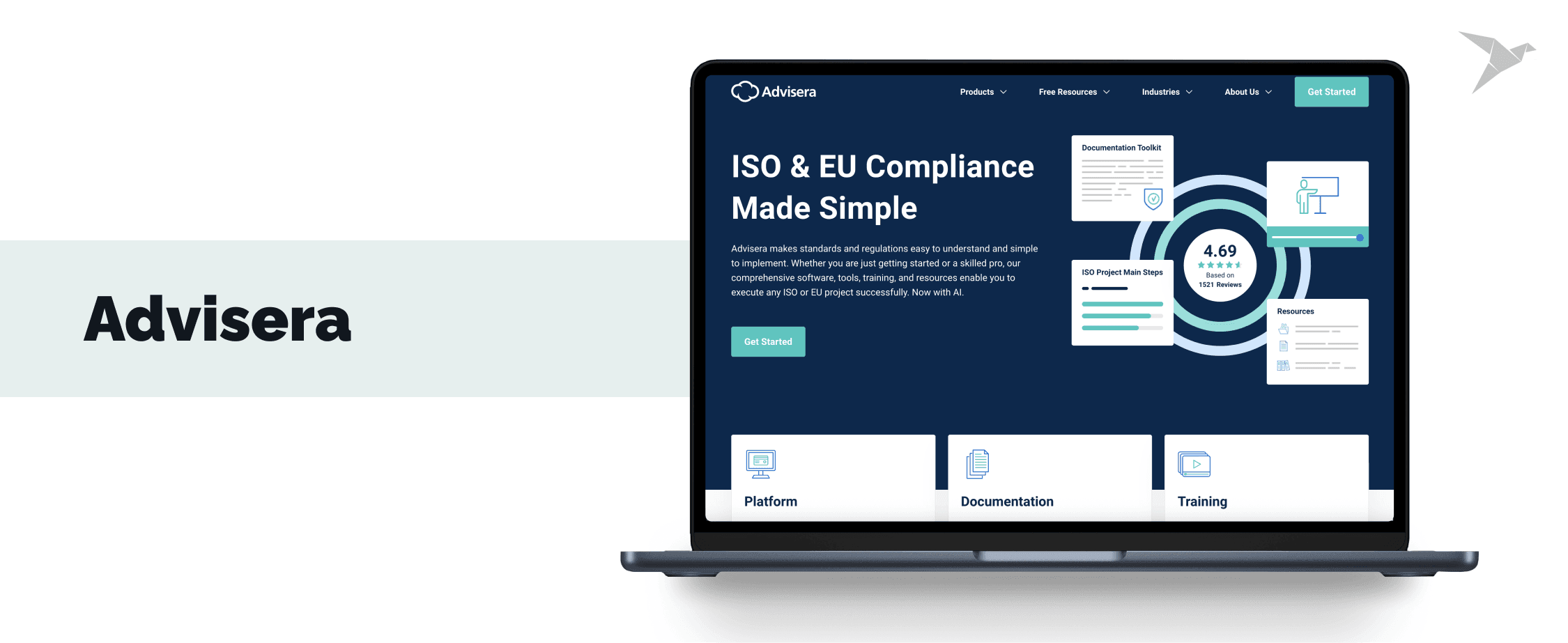
Advisera is often chosen by organizations that want a framework-driven, methodical approach to SOC 2 as part of a broader compliance program. Their strength is clarity: clear roadmaps, strong documentation practices, and experience working with international teams. This makes them suitable for companies building formal compliance functions.
Common fit
- SaaS providers
- IT services
- Global digital platforms
What High-Quality SOC 2 Consultants Actually Do
Most experienced executives have seen a SOC 2 gap assessment or a set of compliance assessments. The document itself is rarely the problem. What matters is what happens next: when recommendations meet real systems, real teams, and real audit pressure over a defined period.
The difference between a mediocre SOC 2 consultant and a strong one becomes visible after that point. High-quality consultants distinguish themselves not by how polished their assessments look, but by how effectively they help an organization strengthen its security posture, refine its internal execution. Robust operational controls are essential to this process, as they help ensure compliance with SOC 2 requirements.
Additionally, organization controls are critical for assessing both financial and operational systems, demonstrating a company's overall compliance, security, and operational effectiveness, and preparing for an assessment that can genuinely assure clients. Let’s now see what SOC 2 consultants do a bit closer.
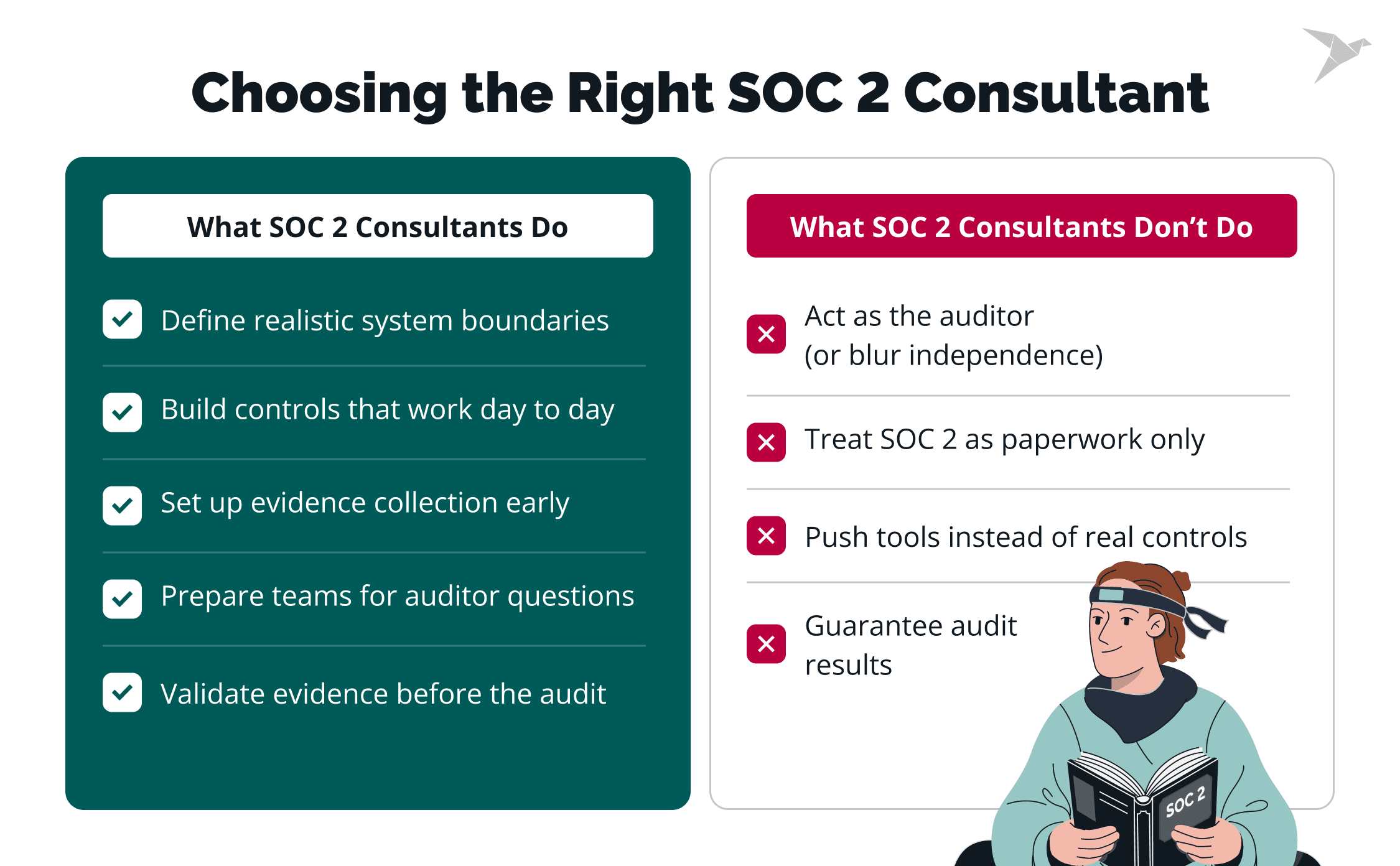
They define system boundaries that reflect reality, not theory
One of the earliest decisions that determines the success or failure of a SOC 2 engagement is system scoping. Weak consultants default to theoretical completeness, including every system that might touch sensitive customer data “just in case.” While this may appear conservative, it often inflates scope, increases evidence collection requirements, and creates ongoing compliance obligations that are difficult to sustain.
Strong consultants take a more disciplined approach. They invest time early to understand how the organization’s security measures actually operate, focusing on:
- Which systems truly support customer-facing services
- Where sensitive data genuinely flows (not where it might flow in the future)
- Which components are operationally critical versus peripheral
This often leads to uncomfortable conversations, because it requires excluding systems that feel important but are not audit-relevant. Experienced consultants are willing to have these discussions because they understand the trade-off: a smaller, defensible scope produces stronger operating effectiveness and more predictable compliance outcomes.
They design controls that survive real operations
Compliance audits rarely fail because a policy is missing. They fail because the organization’s security controls are not executed consistently under normal operating conditions.
Consultants without sufficient industry knowledge often design controls that look correct in isolation but collapse under pressure. Common examples include:
- Access reviews that depend on a single, overloaded owner
- Change approvals that require manual steps no one follows at scale
- Incident response plans that exist but have never been exercised
High-quality SOC 2 consultants start from how internal processes actually function. They test assumptions by asking practical questions, such as:
- Who realistically owns this control on a day-to-day basis?
- What happens when that person is unavailable?
- What evidence will exist if this process runs during a busy release cycle?
The objective is not theoretical compliance, but operational effectiveness: controls that continue to function when priorities compete, because that is exactly when auditors evaluate them.
They engineer evidence instead of scrambling for it
Another clear signal of consultant quality is how they approach evidence collection. Weak preparation treats evidence as a by-product, assembled manually near the audit window. This frequently results in rejected samples, follow-up requests, and extended audit timelines.
Strong consultants treat evidence as something to be engineered into daily operations. They define upfront:
- What evidence is required for each control
- Where that evidence originates
- How often it should be produced
- Who validates it before an auditor ever sees it
This approach supports ongoing compliance and reduces disruption during compliance audits. Over time, it also enables continuous improvement by making gaps in execution visible early rather than during fieldwork.
They prepare teams for inquiry, not just documentation
Many SOC 2 failures occur during conversations, not document review. Auditors probe edge cases, test assumptions, and follow inconsistencies across samples.
High-quality consultants prepare teams for these interactions by rehearsing:
- Walkthroughs that trace controls end to end
- Sampling questions that test consistency over time
- Follow-up discussions that explore exceptions and anomalies
This preparation may appear informal, such as mock walkthroughs or challenge sessions, but it materially improves audit outcomes by ensuring teams can explain how controls operate in practice, not just how they are documented.
They validate evidence before the auditor does
Experienced consultants understand that an independent assessment will surface weak evidence if it exists. Rather than leaving that risk to the audit phase, they act as the first line of review, validating that evidence:
- Supports the control as written
- Covers the full defined period
- Is consistent across samples
This step reduces late-stage surprises, protects credibility during compliance audits, and helps organizations maintain a stable compliance posture over time.
What High-Quality SOC 2 Consultants Deliberately Do Not Do
Equally important is what strong consultants avoid. They do not:
- Act as the issuing auditor or blur independence boundaries
- Guarantee audit outcomes in a process that is explicitly independent
- Push specific tools as substitutes for sound organization’s security controls
- Treat SOC 2 as a documentation exercise disconnected from real operations
As strong consultants avoid these shortcuts,they ensure that organizations achieve ongoing compliance, drive continuous improvement, and maintain a security posture that stands up to scrutiny.
Why the Big Four Are Not Part of This List
Big Four firms such as Deloitte or KPMG can be the right choice when SOC 2 is one component of a broader governance or regulatory program, rather than a standalone audit-readiness effort. This is most common in large or highly regulated organizations where SOC 2 must align with enterprise risk management, internal audit, SOX, or sector-specific oversight.
In these environments, SOC 2 work is often led by a licensed CPA firm staffed with certified public accountants who are accustomed to managing complex compliance audits across multiple business units and regions, where coordination and standardization matter more than speed of preparation.
The Big Four firms are preferred SOC 2 providers for large global enterprises due to their brand recognition. Their extensive global network of experts is a key advantage, enabling them to provide comprehensive SOC 2 compliance services and support clients internationally.
It is also important to acknowledge that Big Four firms are major SOC 2 auditors of record and routinely act as the issuing firms conducting audits. Because of independence requirements that apply to certified public accountants, this limits how deeply they can engage in hands-on control design or remediation if there is a possibility they will later perform the audit themselves. As a result, their readiness work tends to focus on advisory guidance, frameworks, and governance structures, with execution and evidence preparation largely owned by internal teams.
Big Four firms are well-suited when the hard problem is enterprise-level governance, consistency, and regulatory defensibility under formal compliance audits, and when internal teams have the capacity to implement controls independently. When the hard problems are operational readiness, evidence quality, and preparing teams for audit scrutiny under time pressure, specialist SOC 2 consultants typically deliver greater practical value.
How To Choose the Right SOC 2 Consultant: An Executive Playbook
Most SOC 2 consulting failures do not come from choosing the “wrong” firm in absolute terms. They come from choosing a firm that does not align with where the organization actually is, the risks it faces, or what it is trying to achieve right now. Choosing a provider that offers personalized service ensures a tailored, client-centric approach to SOC 2 audits and cybersecurity solutions, addressing each organization's unique needs.
Customization and automation are key considerations when selecting a SOC 2 compliance provider, as they can significantly impact the efficiency and effectiveness of the compliance process. The consequences are rarely theoretical: unresolved compliance gaps, delayed audits, and, in the worst cases, weakened customer confidence following control failures or data breaches.
Experienced executives approach this decision the same way they would a major systems migration or security redesign. They ground the conversation in reality, pressure-test assumptions, and look for consultants who can provide valuable insights into how the organization’s controls perform against industry standards and real audit scrutiny. High-quality audits are the outcome of disciplined preparation, not optimistic planning.
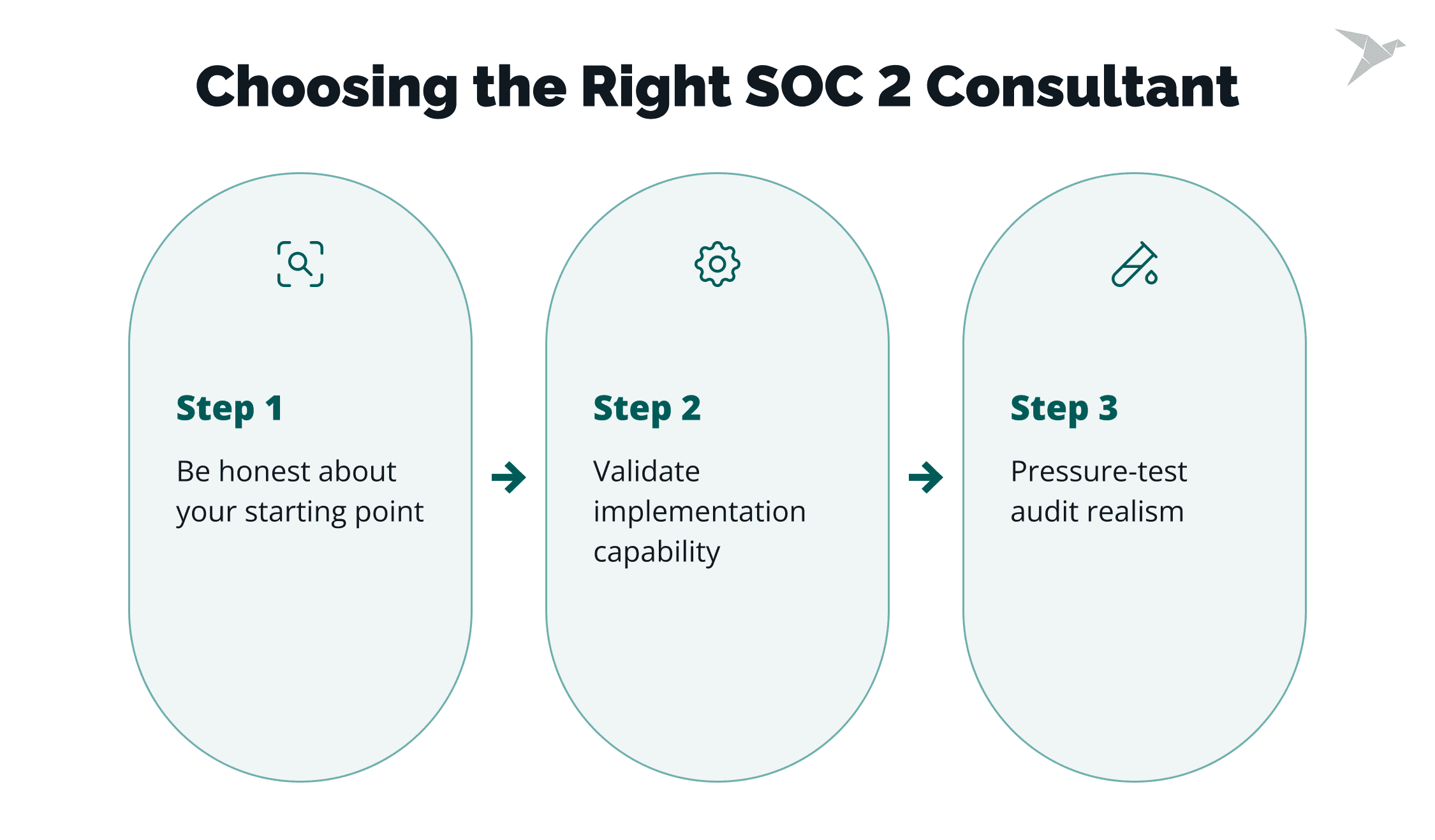
The three steps below are where that discipline shows up.
Step 1: Be honest about your starting point (this is not a moral judgment)
Before evaluating consultants, leadership needs a shared, realistic view of the organization’s current compliance posture and overall security posture.
Most organizations fall into one of two categories:
- Greenfield controls, where policies exist informally, practices are tribal, and evidence has never been produced consistently.
- Inherited controls, where processes exist but were built for a different scale, architecture, or set of security frameworks.
Both scenarios are normal. Problems emerge when teams misrepresent maturity and underestimate the effort required to close compliance gaps. That misalignment becomes visible quickly during audits, particularly when controls are tested over time rather than reviewed at a single point.
The same honesty applies to audit intent. A Type 1 audit driven by a single enterprise deal is fundamentally different from a Type 2 audit that will test operating consistency for six to twelve months. Timeline pressure amplifies this distinction. Sales-driven deadlines often force trade-offs, such as a narrower scope, phased remediation, and deferred optimization, while long-term compliance and continuous improvement demand the opposite.
Strong consultants surface these key considerations early and explicitly. Weak ones defer the conversation until changing course is expensive.
Step 2: Validate real implementation capability (not just advice)
Many SOC 2 proposals sound reasonable. Far fewer are explicit about who is responsible for execution.
A common failure pattern looks like this: a consultant delivers a polished assessment aligned to security frameworks, but remediation quietly becomes the client’s problem. Engineering and IT teams absorb the work under time pressure, evidence collection drags on, and leadership is surprised by the internal resource cost.
Experienced executives validate implementation capability by asking direct questions, such as:
- Who actually implements controls: your team or ours?
There is no universally correct answer, but ambiguity here almost always leads to delays. - What does remediation look like week by week?
Strong consultants can describe cadence and dependencies, not just end states. - How do you validate evidence before the auditor sees it?
This reveals whether the firm takes responsibility for audit-quality outcomes or treats quality as a client-side issue.
The trade-off is clear. Hands-on consultants reduce execution risk and internal strain but require closer collaboration. Advisory-only models can work, but only when internal ownership, capacity, and technical depth are already in place.
Step 3: Pressure-test audit realism (this is where experience shows)
Many consultants understand SOC 2 conceptually. Fewer understand how auditors actually behave during real audits.
That difference surfaces during walkthroughs, sampling, and follow-up rather than during documentation review. Consultants with genuine audit realism can explain how controls are tested against industry standards, how exceptions are handled, and where organizations most often stumble.
Experienced executives pressure-test this by asking questions with no scripted answers:
- How do auditors actually test access controls in practice?
- Where do organizations most often fail: control design, operating consistency, or evidence quality?
- What types of evidence are most frequently rejected, and why?
Strong consultants answer these questions comfortably and concretely, drawing on patterns from multiple high-quality audits. Weak consultants generalize, deflect, or fall back on framework language. Over time, that difference directly affects audit outcomes, the organization’s ability to assure customers, and its resilience against future compliance challenges.
Ongoing Compliance: Staying Audit-Ready Year After Year
SOC 2 compliance is not a one-time achievement. It requires ongoing vigilance and continuous improvement to remain audit-ready. Organizations must regularly monitor and assess their internal and security controls, as well as the operating effectiveness of their compliance program. This includes conducting periodic risk and readiness assessments, identifying control gaps, and ensuring alignment with the AICPA’s Trust Services Criteria and evolving regulatory requirements.
Relying on the expertise of certified public accountants and specialized compliance professionals can help organizations maintain a strong compliance posture, adapt to new industry standards, and address emerging risks. Organizations that embed continuous monitoring and improvement into internal processes and security frameworks can ensure ongoing compliance and be prepared for any audit, year after year.

FAQ
In theory, many organizations could handle SOC 2 preparation internally. In practice, this only works when several conditions are already true simultaneously: system boundaries are clearly defined, the control environment is stable, internal processes are documented and followed consistently, and evidence is produced as part of normal operations. It also assumes that internal resources have prior experience working with experienced auditors and understand how the AICPA’s Trust Services Criteria are interpreted. Most organizations discover during preparation that at least one of these assumptions does not hold. Controls may exist, but they are not executed consistently. Security frameworks may be referenced, but not fully embedded into daily operations. Or the organization’s compliance posture may not yet reflect the regulatory requirements or complex compliance requirements imposed by enterprise customers. In these cases, the value of a SOC 2 consultant is not that they understand the framework better than your team, but that they reduce uncertainty early by stabilizing scope, strengthening the control environment, and aligning preparation with how audits are actually conducted. The cost of discovering gaps late, during an audit, often exceeds the cost of preparation support.
The distinction is fundamental. A SOC 2 auditor, typically part of a service organization operating under professional standards, provides an independent evaluation of whether controls are designed and operating effectively against the AICPA’s Trust Services Criteria. SOC 2 audits are conducted in accordance with the AICPA's Trust Services Criteria, which guide the evaluation of a company's controls related to security, privacy, and other trust principles. SOC 2 audits are typically conducted annually to ensure ongoing compliance. These audits assess the effectiveness of a company's non-financial reporting controls in relation to security, availability, processing integrity, confidentiality, and privacy. They assess what exists; they do not design controls, remediate gaps, or adapt internal processes to meet compliance expectations.
Experienced teams almost always hire a consultant first. Consultants influence the most consequential decisions in a SOC 2 engagement: what systems are in audit scope, how the organization’s security controls are designed, and how evidence is produced over time. Auditors then perform an independent assessment of that work. Choosing an auditor too early can lock an organization into assumptions about scope or control design that are difficult to unwind later, particularly in environments with complex compliance requirements or evolving internal processes. Preparing first allows the organization to approach experienced auditors with a stable scope, a clearer compliance posture, and greater confidence that its control environment will withstand scrutiny.
For mid-market technology companies, SOC 2 Type 1 preparation typically takes between eight and sixteen weeks when done properly. Type 2 preparation depends less on documentation and more on how consistently controls operate over time within the organization’s internal processes. Many teams underestimate this and assume Type 2 is simply a longer version of Type 1. In reality, preparation often needs to begin several months before the audit period starts, particularly for organizations aligning SOC 2 with multiple security frameworks or broader regulatory requirements.
Despite best intentions, many organizations encounter challenges that lead to SOC 2 audit failures. The most common reasons include weak or inconsistent internal controls, insufficient evidence collection, and a lack of technical expertise to implement and maintain effective security controls. Organizations often underestimate the complexity of compliance requirements, especially when juggling multiple frameworks or adapting to changing regulatory requirements. Gaps in risk management, failure to conduct regular readiness assessments, and inadequate continuous monitoring can all undermine the ability to maintain compliance. To avoid these pitfalls, organizations should prioritize robust internal processes, invest in ongoing compliance efforts, and ensure that their security controls are both well-designed and consistently executed in line with the Trust Services Criteria.