
 Software Development
 Security Services
 Cloud Services
 AI Services
 Other Services















 TechMagic Academy


Penetration Testing vs Vulnerability Scanning: What Does Your Project Need?
Last updated:25 February 2026


A single missed vulnerability can turn into a breach costing millions, but not every security issue needs the same kind of testing. Teams often struggle to decide where to focus: continuous automation or deep, manual validation.
That is where the confusion between penetration testing and vulnerability scanning usually starts.
Both approaches aim to reduce risk, but they answer very different questions. Choosing the wrong one or relying on only one can leave critical gaps in your security posture.
In our new article, we explain what vulnerability scanning and penetration testing really do, how they differ, and when each makes sense depending on your product stage, delivery speed, and compliance needs.
Key takeaways
- Vulnerability scanning provides visibility into known issues across fast-changing systems.
- Penetration testing validates real-world exploitability and business impact.
- The differences between vulnerability scanning vs penetration testing lie in focus and depth.
- The right choice depends on product maturity, data sensitivity, and release cadence.
- Relying on only one approach creates blind spots in risk assessment.
- Combining automation with human-led testing delivers clearer, more actionable security decisions.
What Is Vulnerability Scanning?
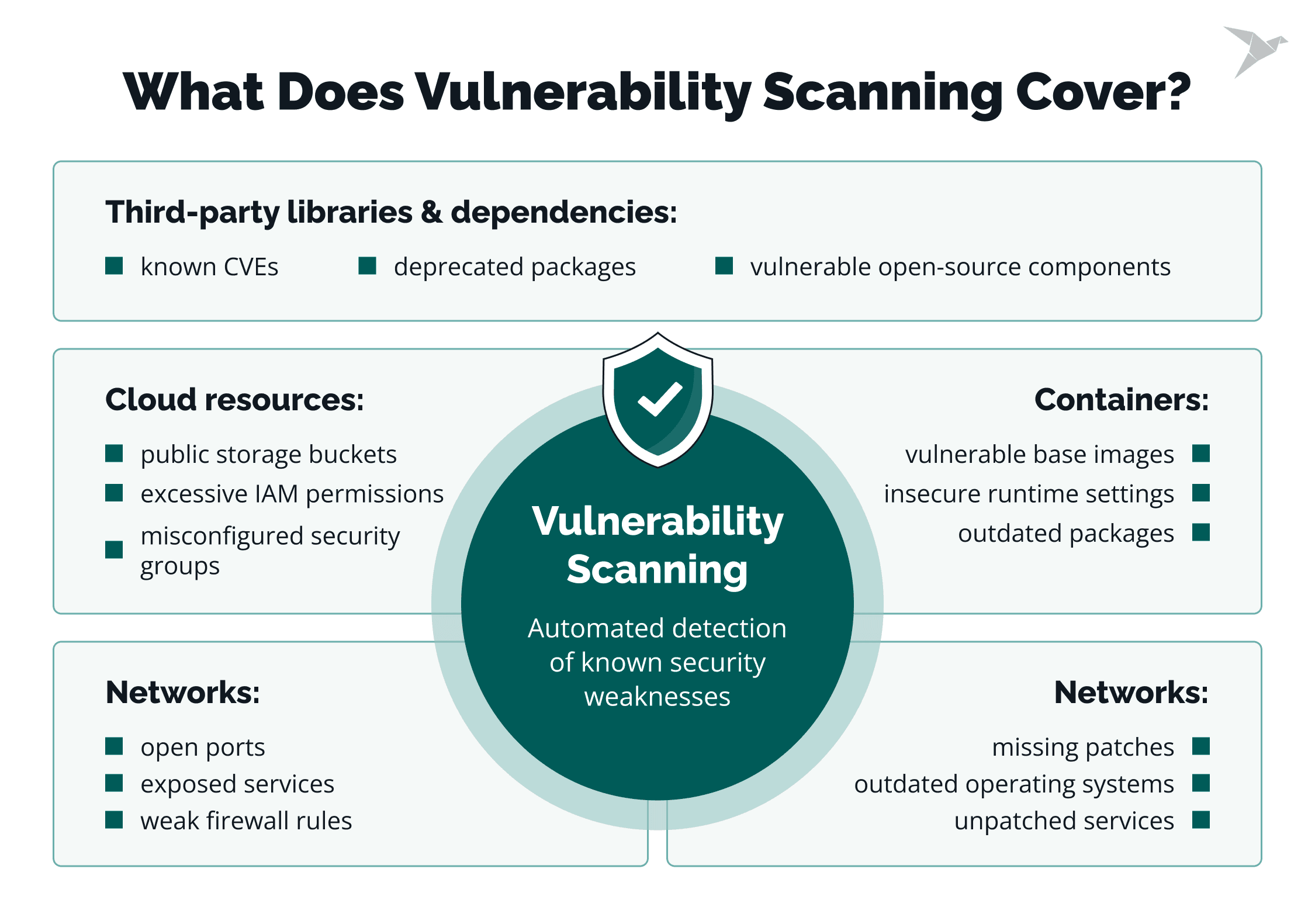
Vulnerability scanning is an automated way to find known security weaknesses in systems, applications, and infrastructure. It works by regularly scanning assets such as servers, cloud resources, networks, containers, and dependencies, and comparing them against known vulnerability and misconfiguration rules, including CVEs.
It is designed to detect issues such as:
- missing patches and outdated software;
- vulnerable third-party libraries;
- risky configurations, like open ports or weak TLS settings;
- common cloud and container misconfigurations.
The main value of vulnerability assessment services lies in their frequency and consistency. Scans can run on a schedule or after changes, helping teams maintain ongoing security hygiene. Because it focuses on known patterns, vulnerability scanning is usually combined with manual verification to identify deeper, context-specific risks.
What Is Penetration Testing?
Penetration testing is a human-driven security assessment that simulates real-world attacks to identify how vulnerabilities can be exploited in practice. It goes beyond automated scanning by testing systems the way an attacker would, using intent, context, and decision-making.
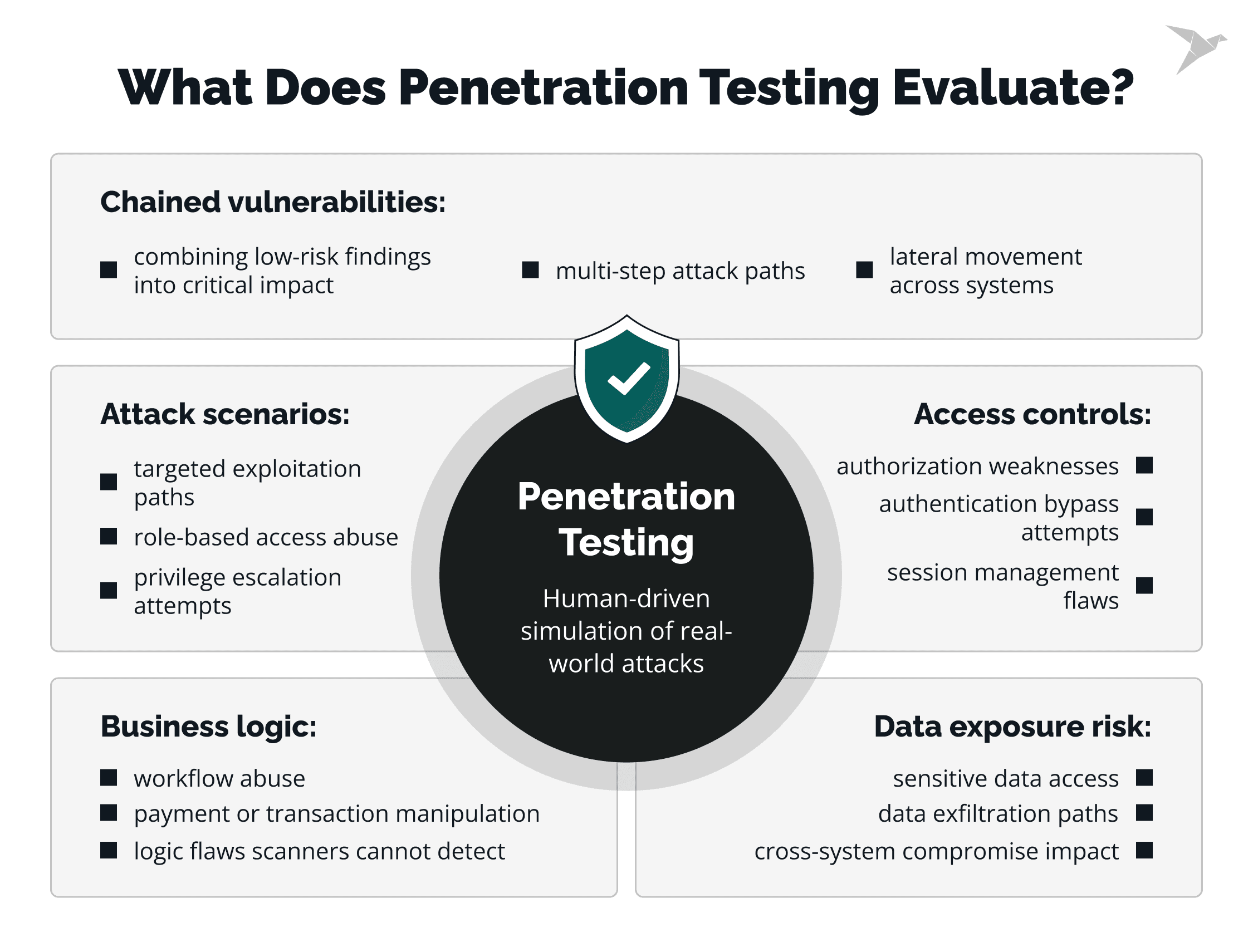
During a penetration test, security specialists follow defined attack scenarios based on the system’s architecture, threat model, and business logic. They chain together weaknesses, test access controls, and explore how a compromise could spread across systems or expose sensitive data. There are different penetration testing types for every specific situation.
Penetration testing validates business risk, not only technical findings. It helps teams understand:
- which issues are actually exploitable;
- how severe the impact would be;
- where defenses fail under realistic conditions.
This makes it a critical complement to automated scans, especially as systems grow more complex and compliance requirements increase.
We are pleased to answer

What Should You Consider Before Choosing Between Penetration Testing And Vulnerability Scanning?
As our experience shows, the best option is to choose what gives the clearest risk signal for the current stage of the product, delivery pace, and compliance needs. However, using only one option can’t ensure full security posture coverage across a computer system, especially as potential threats keep evolving.
Automation vs. real-world attack simulation
Do you need continuous, automated coverage for known software vulnerabilities, or do you need to see how an attacker could actually break in? Scanning scans systems to detect weaknesses at scale and surface likely findings fast. Penetration testing simulates realistic break-in attempts and real world attack scenarios, showing how malicious attackers could move through your specific setup and what they could actually achieve.
Depth of security validation
Whether you’re trying to catch common gaps early or prove your defenses hold up under real pressure, for most teams it starts with automated checks: SAST scanners and code analysis during development, plus vulnerability assessments that often include DAST scans against running apps. These tools highlight likely issues based on rules, signatures, and observed behavior, helping you identify weaknesses early.
Pen tests go further by attempting to identify weaknesses that are truly exploitable, chain findings, and validate real impact across access boundaries, especially important when you want confidence beyond the list of flagged issues.
Testing frequency
How often do you need results, and what triggers testing in your process? Scanning fits continuous schedules and can run after deployments, configuration changes, and during high-risk releases, even for non critical systems where you still want early visibility. Pen testing is usually done at key moments: before a major release, after a redesign, or to meet audit requirements.
Risk visibility for business stakeholders
Do you need a list of technical findings or a clear explanation of business impact? Scanning outputs are often security-engineering focused and require triage. Pen testing tends to produce clearer “what could happen” narratives tied to impact, supported by a detailed report with actionable insights that help teams prioritize remediation based on real risk.
What Are the Key Differences Between Penetration Testing And Vulnerability Scanning?
The main difference between penetration testing and vulnerability scanning comes down to how risk is identified, validated, and communicated.
Automation vs. human expertise
Vulnerability scanning relies on automated scanners that check systems against known vulnerability patterns as part of a repeatable testing process.
Penetration testing, on the other hand, is driven by ethical hackers who use judgment, experience, and creativity to simulate real attacks and adapt their approach based on what they uncover, including how your defense mechanisms respond under pressure. This combination gives a clearer view of the system's resilience than automation alone.
Type and quality of findings
Scanning produces a broad list of potential issues, often tied to specific CVEs or configuration rules. Sometimes scan results are clear, but penetration testing produces deeper findings because it validates real exploit paths and how controls fail in practice. Many teams use scanning for coverage and regular penetration testing for depth and confidence in production readiness.
False positives vs. validated risks
Automated scans can include false positives or low-impact issues that still require manual review. Penetration testing validates risk by confirming whether an issue can actually be exploited in the given environment, which helps teams focus remediation on what truly threatens business operations.
Business impact understanding
Comparing vulnerability scanning vs penetration testing, scanning results are typically technical and focused on individual components. Penetration testing connects technical weaknesses to real-world outcomes, helping teams understand potential impact on data, operations, and users.
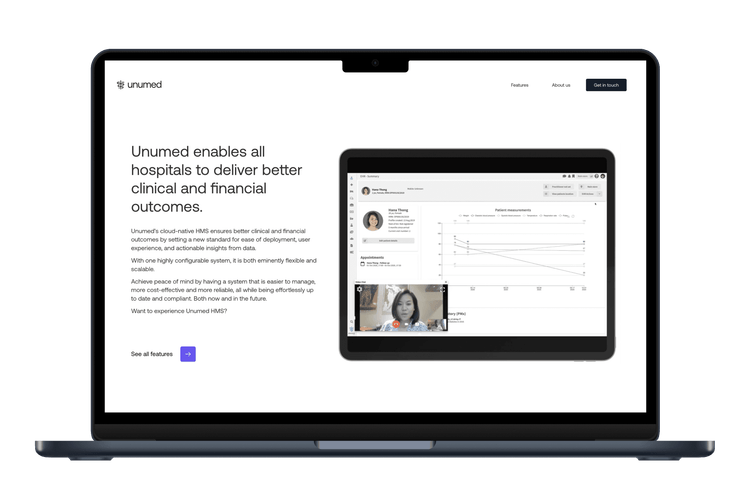
Penetration testing of a cloud-native hospital management system before the annual ISO 27001 audit
When Is Vulnerability Scanning the Right Choice for Your Project?
Vulnerability scanning is the right choice when teams need fast feedback, broad coverage, and repeatable results with minimal operational overhead.
Early-stage or fast-growing products
Comparing vulnerability scanning vs pentesting, for early-stage teams and rapidly evolving products, vulnerability scanning provides quick visibility into common security gaps. It helps identify known issues without slowing down delivery or requiring dedicated security resources.
Continuous monitoring needs
When systems change frequently, scanning supports ongoing visibility. Scheduled or change-triggered scans help detect newly introduced vulnerabilities and regressions as part of day-to-day operations.
Internal security baselines
Vulnerability scanning works well for defining and maintaining internal security baselines. It consistently checks configurations, dependencies, and patch levels across environments and helps enforce minimum security standards.
Vulnerability scanning is usually sufficient when:
- The main risk comes from known vulnerabilities and misconfigurations.
- Changes are frequent and need regular verification.
- The goal is early detection rather than attack simulation.
- It helps the product team stay aware of security risks during development and fix issues before they grow. It’s simply good practice to have regular checks in place so security stays visible, not reactive.
It becomes less effective once risk depends on complex interactions, business logic, or real attack paths, which typically require human-driven testing. Vulnerability scans are also less effective without other security activities - pentest, code checks, dependency scans, security reviews.
Penetration testing for Coach Solutions web application
When Does Your Project Need Penetration Testing?
Penetration testing becomes necessary when the main question is not what could be vulnerable, but what can actually be exploited. In these cases, vulnerability scanning alone does not provide enough insight into real risk.
Before launch or major releases
Before a public launch or a significant architectural change, pen testing helps validate security under realistic attack conditions across your organization's systems. It identifies exploit paths that automated tools often miss, especially when new features, integrations, or access models are introduced.
And, when new threats emerge faster than rule-based checks can keep up. This is a common decision point in the vulnerability vs penetration testing discussion because your security needs often change at release time.
Handling sensitive or regulated data
Projects that process sensitive, personal, or regulated data face a higher impact if controls fail. Penetration testing helps confirm whether data can be accessed, modified, or exfiltrated by an attacker, whether possible vulnerabilities exist in general. It brings the human element into validation, which matters most when the consequences are high.
After incidents or suspicious activity
If there are signs of compromise, unusual behavior, or failed security controls, penetration testing helps assess real exposure. It helps teams understand plausible attacker paths and prioritize fixes based on what could be leveraged in practice, including issues that require manual exploitation rather than automated detection.
Pen testing is usually needed when:
- The release changes auth, permissions, data flows, or external integrations in your organization's systems.
- You store or process sensitive or regulated data, where impact is high and security needs are strict.
- You need validated, exploitable risk, not a list of possible vulnerabilities.
- There are incident indicators, and you need to confirm exposure, especially as new threats evolve.
- You have infrastructure changes or migrations that can introduce hidden gaps.
- You need to meet regulatory expectations (HIPAA, etc.).
- You’re going to production for the first time or planning an official release, where the human element of attacker thinking and manual exploitation can reveal what automation misses.
This is where vulnerability vs penetration testing becomes a practical choice: scanning maintains continuous coverage, while pen testing confirms real attack paths and business impact.
Can Penetration Testing and Vulnerability Scanning Be Used Together?
Vulnerability scanning is often part of a penetration test (unless the infrastructure can’t handle heavy scanning or the client asks to limit it). But it’s still best to pair a periodic pen test with regular automated scans as part of one security strategy, because scans catch new issues continuously while a pen test validates real-world impact and exploitability.
Continuous scanning + periodic pentests
Vulnerability scanning provides continuous visibility into known issues as systems change. CI/CD vulnerability scanning extends this by checking for weaknesses automatically during builds and deployments. Pen testing, including AI penetration testing where appropriate, adds depth by validating real attack paths at key moments, such as before major releases or compliance assessments.
Layered security approach
Scanning establishes a baseline by continuously or regularly checking for known weaknesses across environments and pipelines. Pentesting builds on that baseline by exploring how those weaknesses could be exploited in practice. AI penetration testing can help scale certain attack simulations, while human testers validate findings and assess context-specific risk.
Cost vs. coverage balance
Automation delivers broad coverage with low operational effort, which is often sufficient in early stages. As products mature, handle more sensitive data, or fall under regulatory scope, adding targeted pen testing improves risk confidence without replacing existing CI/CD vulnerability scanning workflows.
At different stages of business development, teams may rely only on scanning or combine it with deeper testing. The most effective strategy balances automation and human expertise to match current risk, scale, and compliance needs.
CyberSecurity services for Elements.Cloud

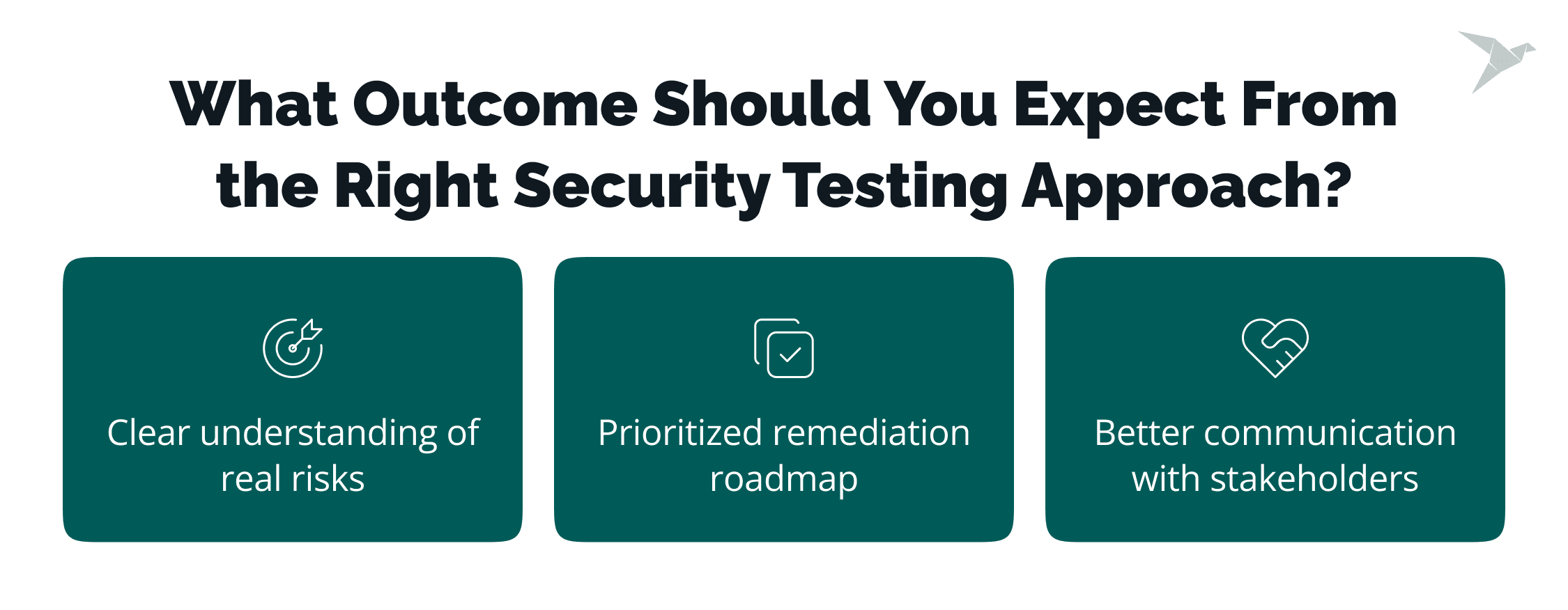
What Outcome Should You Expect From the Right Security Testing Approach?
The right security testing approach results in clearer risk signals, focused remediation, and more predictable security operations.
Clear understanding of real risks
You should know which issues matter in practice.. Whether you choose pentesting vs vulnerability scanning, the outcome should clearly show what can actually be exploited in your environment, reducing uncertainty during releases and infrastructure changes.
Prioritized remediation roadmap
Results should translate into a focused remediation plan. Findings are ranked by real impact and exploitability, which reduces noise and helps teams spend less time triaging and more time fixing issues that actually lower risk.
Better communication with stakeholders
Effective testing improves how risk is shared across teams. Engineers get actionable technical detail, while leadership gets a clear view of impact and tradeoffs. This shared understanding supports planning, audits, and ongoing work, especially for cloud migration companies operating in fast-changing environments.
When the right method is applied, the outcome is not more reports, but clearer decisions and a steadily improving security posture.
Final Thoughts
The choice between penetration testing vs vulnerability scanning isn’t binary. Modern security practices treat them as complementary tools within a continuous risk management strategy.
Scanning provides ongoing visibility into potential vulnerabilities, especially when integrated with CI/CD workflows and a vulnerability scanner. Enhanced by human insight and AI-assisted assessments, pen testing shows how real cyber attacks could exploit vulnerabilities.
It helps teams identify vulnerabilities that actually change risk and deliver more comprehensive security coverage. In practice, this combination sharpens vulnerability analysis, improves your organization's security posture, and keeps remediation efforts focused on what matters most.
Security outcomes in context
The average global cost of a data breach in 2025 is roughly $4.44 million, with U.S. organizations facing even higher costs (about $10.22 million).
Third-party and supply chain breaches have surged, with around 30% of breaches involving third parties, showing how interconnected existing systems and vendors expand exposure.
At the macro level, Statista’s Market Insights estimate the global cost of cybercrime rises from $9.22T (2024) to $13.82T (2028).
These trends show that attackers are increasingly targeting weak links. Whether through known software vulnerabilities that automated scanning catches, or through chained, exploitable vulnerabilities that only realistic testing reveals.
Future threats and challenges
Looking ahead, the threat landscape will keep evolving in ways that challenge traditional testing models:
- Rapid exploitation of disclosed flaws. A growing share of known exploited issues is weaponized within a day of disclosure, leaving minimal time for patching without proactive detection, triage, and testing.
- Stealthier attack methods. Credential theft and identity-based intrusion remain dominant, so validation must cover authentication paths and access boundaries.
- AI-powered attacks and defenses. As attackers use AI to scale phishing and adapt exploits, defenders need skilled security professionals who can combine automation with real-world attacker thinking and conduct penetration testing that validates impact.
- AI inside products. More organizations are embedding AI tools into products and workflows, which increases the need to test how models, integrations, and data access behave under abuse.
In short: regular scanning helps you track what’s known, while experienced penetration testers help you confirm what’s truly exploitable, including unknown and exploitable weaknesses that scanners may miss.
Expect pressure points where change is constant: cloud architecture shifts, third-party dependencies, and integration-heavy systems. In healthcare and adjacent SaaS, healthcare data integration (APIs, interoperability layers, shared services) expands the attack surface and increases the blast radius of a single weak control. Pairing frequent scanning with periodic, scenario-based testing is how teams keep pace without relying on assumptions.
For most security teams, that includes a clear vulnerability assessment process that uses vulnerability scanning tools and targeted vulnerability testing to identify security weaknesses, then prioritize vulnerabilities based on real business impact and exposure.
Here it also matters who you trust to run that testing. We provide penetration testing services as a CREST-accredited provider, which means our methods, reporting, and quality controls meet globally recognized standards. Our penetration testers look for unknown and exploitable weaknesses that can become serious security vulnerabilities in production.
Our team holds specialized certifications in AI/ML security testing, allowing us to assess modern systems that rely on machine learning models and automated decision-making. We also have hands-on experience working in highly regulated industries, including FinTech and HealthTech, where compliance, data sensitivity, and real-world risk tolerance are non-negotiable.
That combination of accreditation, advanced expertise, and regulated-industry experience is why teams turn to us when they need security testing results they can actually rely on.
Our expertise is at your disposal

FAQ

It depends on the regulation and scope. Some standards explicitly require pen testing, while others require evidence of regular security testing without mandating a specific method. In practice, penetration testing is often expected for systems handling sensitive or regulated data, external-facing applications, and high-risk environments, especially during audits.
In terms of scanning for vulnerability vs pentesting, no. Vulnerability scanning and penetration testing serve different purposes. Scanning identifies known issues continuously, while pen testing validates whether those issues can actually be exploited in your environment.
For most teams, scanning alone is not sufficient once risk depends on business logic, access paths, or real attacker behavior.
Pen testing is typically performed annually, before major releases, or after significant architectural or security changes. Additional testing is common after incidents or when compliance, data sensitivity, or external exposure increases. The right frequency depends on risk and rarely on calendar timing.