
 Software Development
 Security Services
 Cloud Services
 AI Services
 Other Services















 TechMagic Academy


API Penetration Testing Services

We provide wide API penetration testing services and run structured, manual penetration tests against your APIs – REST, GraphQL, gRPC, SOAP, and WebSocket – using the OWASP API Security Top 10 and OWASP Web Security Testing Guide as our testing frameworks. Our team includes a contributor to that standard.
Save costs
Mitigate risks
Ensure the robustness of your APIs
Stay compliant with regulations

API Types We Test
Client-defined queries introduce risks absent in REST. Introspection enabled in production exposes your full schema. Query depth and batching attacks can exhaust server resources with a single request. Authorization logic applied per-resolver is often inconsistent.
What we test: introspection abuse, query depth attacks, batching attacks, field-level auth bypass, alias-based rate limit bypass, server side request forgery (SSRF) in GraphQL APIs.
XML parsing makes SOAP vulnerable to XXE injection. Crafted payloads can cause the server to read internal files or make outbound requests. Signature wrapping can forge auth tokens. WS-Security is frequently misconfigured, especially on long-lived systems.
What we test: XXE injection, XML signature wrapping, WS-Security misconfigurations, WSDL exposure, SOAP action spoofing, command injection (during in-depth white box assessments).
Binary protobuf encoding means standard scanners parse nothing. In our API pentesting services, we decode and inspect messages directly. Authentication is opt-in per method – easy to leave gaps. We also check for internal services exposed to the internet without hardening.
What we test: protobuf tampering, missing auth enforcement, insecure service exposure, Reflection API abuse, TLS misconfiguration.
Persistent connections change the threat model. Origin validation is often skipped, enabling cross-site WebSocket hijacking. We test for message injection through the open channel and for authorization checks that apply at handshake but not throughout the session.
What we test: connection hijacking, insufficient origin validation, message injection, authorization drift, cross-site WS hijacking, SQL injections.
Our Certificates



Why API Penetration Testing Is Crucial

Supports safe integration
API penetration tests are essential for secured integration with third-party services. Secure APIs prevent exploitation through third-party integrations and maintain the security of the entire application ecosystem.

Ensures data protection
Through identifying and mitigating vulnerabilities, API pentesting protects against data breaches and unauthorized access, ensuring the integrity and confidentiality of user information.
Maintains compliance standards
API pentesting is crucial for maintaining compliance with industry standards and regulations. Conducting thorough API testing ensures adherence to compliance requirements like SOC 2, HIPAA, GDPR, and PCI-DSS. This proactive approach safeguards your organization from potential fines and legal consequences.

Enhances application performance
API pentesting enhances overall application performance and reliability. Identifying and fixing security vulnerabilities through pentesting leads to more robust and stable application programming interfaces. This results in improving the user experience and operational efficiency.

Protects brand reputation
API testing is vital for protecting a company's brand reputation. Proactive addressing of security vulnerabilities prevents potential breaches that could damage a company's reputation and erode customer trust.
Identifies business logic flaws
An API pentest uncovers logic vulnerabilities that automated tools might miss and ensures the processes within the application work as intended.
Supports safe integration
API penetration tests are essential for secured integration with third-party services. Secure APIs prevent exploitation through third-party integrations and maintain the security of the entire application ecosystem.
Ensures data protection
Through identifying and mitigating vulnerabilities, API pentesting protects against data breaches and unauthorized access, ensuring the integrity and confidentiality of user information.
Benefits of Choosing TechMagic for API Pentesting

Common API Vulnerabilities We Find
Our API Penetration Testing Methodology
We start by mapping what you've built, and what we have access to depends on the type of engagement.
In white box tests, we review your OpenAPI or Swagger spec, Postman collections, authentication flows, and API versioning history. This tells us where the documented surface ends and where the undocumented one likely begins.
In black box testing, we have no access to documentation or source code. We begin from the attacker's position to discover endpoints, infer authentication logic, and map the attack surface from the outside in.
In grey box tests, we work with partial information: typically, credentials and a high-level architecture overview, but no internal documentation. This reflects how a compromised user or a malicious insider might approach your API.
The scoping call determines which model fits your objectives and what materials, if any, we'll need from you before we start.
We catalog every endpoint, including undocumented, deprecated, and hidden ones that don't appear in your spec. For each endpoint, we map the authentication requirement, accepted parameters, and HTTP methods. Shadow endpoints and old API versions are a frequent source of critical findings.
We test every layer of your access control: how tokens are issued and validated, whether role boundaries hold under adversarial conditions, and whether one authenticated user can reach another’s data or functions. This covers OAuth 2.0, JWT handling, API key security, session token management, multi-factor authentication, and role-based access controls.
We test manually against ten OWASP API Security Top 10 vulnerability categories and relevant Web Security Testing Guide techniques as active exploitation attempts. Our manual testing simulates real-world attacks to uncover vulnerabilities that could be exploited by malicious actors.
Our team includes a contributor to the OWASP API Security Top 10, so this isn’t applied from the outside. We helped define it. We also address emerging threats by staying current with the latest attack techniques, ensuring your APIs are protected against evolving security challenges. This step is central to how we deliver our API penetration testing service.
The most damaging API vulnerabilities often lie in the logic. We test your API workflows for flaws that automated scanners can't detect: price manipulation via parameter tampering, privilege escalation through chained requests, and rate limit bypass techniques specific to your implementation.
Every finding is mapped to the OWASP API Security Top 10, rated by severity (Critical/High/Medium/Low/Informational), and accompanied by a proof-of-concept showing exactly how it was exploited. You receive a prioritized remediation roadmap ordered by risk, with actionable guidance to help your developers efficiently fix vulnerabilities.
Our Team

Ihor is a certified security specialist with experience in penetration testing, security testing automation, cloud and mobile security. OWASP API Security Top 10 (2019) contributor. OWASP member since 2018.








Roman is an AWS Expert at TechMagic. Helps teams to improve system reliability, optimise testing efforts, speed up release cycles & build confidence in product quality.



Victoria is a certified security specialist with a background in penetration testing, security testing automation, AWS cloud. Eager for enhancing software security posture and AWS solutions



API Penetration Testing Process
We identify every endpoint in scope, documented and undocumented, and collect the information needed to understand how your APIs behave under normal conditions. In white box engagements, this means reviewing OpenAPI specs, Postman collections, and authentication flows.
In black box engagements, we begin API discovery from the outside, with no prior knowledge. Either way, this stage produces a complete attack surface map and a testing plan specific to your architecture, tools, and schedule to protect APIs.
We combine automated scanning with manual techniques to surface security issues across the entire API. Automated tools handle known misconfigurations, missing headers, and insecure data transmission.
Manual testing covers what scanners miss: broken or weak authentication, authorization gaps between user roles, and business logic flaws that only appear when you understand how the API is meant to work. This is where comprehensive testing matters most.
When we find a vulnerability, we exploit it safely, in a controlled way, to demonstrate real impact of API threats. This moves findings from theoretical to proven: what data is exposed, which accounts can be accessed, and what operations can be performed without authorization.
After exploitation, we analyze the chain of consequences to give you an accurate picture of risk and evolving threats.
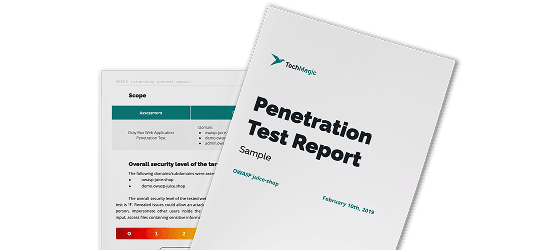
Every finding includes the affected endpoint, proof-of-concept evidence, OWASP API Top 10 mapping, severity rating, and a developer-ready remediation recommendation — delivered in both a technical report and an executive summary.
For robust API security over time, pair periodic pentests with continuous monitoring that catches new request patterns, configuration changes, and emerging security threats as they appear. The result is API protection that holds up across your application security lifecycle. We can advise on tooling and cadence based on your release cycle and risk profile.
Trusted by Teams That Put Security First

A.J. Arango — VP of Security and acting Chief Information Officer at Corellium



and leverage our industry-leading expertise to stay ahead of the curve in the fast-moving market landscape!
Discover Our Featured Case

In-depth VPN server pentest for a software development company
See how we helped Blackbird enhance the security of their VPN server infrastructure


To ensure the security of existing functionality TechMagic provided BlackBird with security testing service, including one Black Box VPN Server pentest in accordance with best practices, PTES, OWASP testing guide, and Penetration testing methodologies. The team's project management was effective and fast. They delivered the project adhering to strict deadlines and expected outcomes. Their professionalism and transparency were impressive.
Orest Kutiuk
Technical Project Manager, BlackBird Lab

Conducting a pentest for a Danish software development company
See how we helped Coach Solutions improve the security of their web application

In-depth VPN server pentest for a software development company
See how we helped Blackbird enhance the security of their VPN server infrastructure
To ensure the security of existing functionality TechMagic provided BlackBird with security testing service, including one Black Box VPN Server pentest in accordance with best practices, PTES, OWASP testing guide, and Penetration testing methodologies. The team's project management was effective and fast. They delivered the project adhering to strict deadlines and expected outcomes. Their professionalism and transparency were impressive.
Orest Kutiuk
Technical Project Manager, BlackBird Lab
Conducting a pentest for a Danish software development company
See how we helped Coach Solutions improve the security of their web application
What You Get After an API Pentest
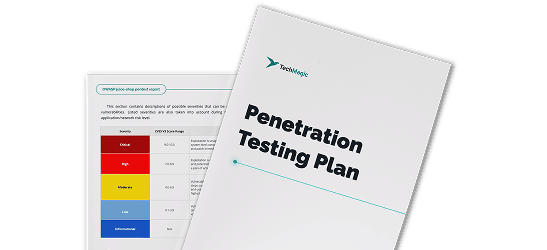
Every engagement includes the following deliverables, all specific to your API environment.
Discover What Kind of Pentest Reports You Will Receive
Why TechMagic for API Security Testing
Our lead security engineer, Ihor Sasovets, contributed to the OWASP API Security Top 10 in 2019 – the standard your APIs are tested against. Most vendors use the framework. We helped build it.
CREST accreditation means our testing quality and ethics have been independently verified. It's required by enterprise buyers and financial regulators, and it's not self-certified.
001
/003
002
/003
003
/003
Industries We Perform Penetration Tests For

FinTech
FinTech is a highly regulated industry, which requires robust security and compliance with regulations. Our API testing services ensure your financial applications are secured from vulnerabilities. Protecting sensitive financial data and maintaining compliance with industry standards are our priorities.

HR Tech
HR Tech platforms handle vast amounts of personal and sensitive employee data. Our thorough API pentesting identifies and mitigates potential protection risks. Our services help safeguard employee information and ensure your HR solutions remain safe and reliable.

HealthTech
Solid safety measures are essential for HealthTech solutions to safeguard patient data and adhere to healthcare regulations. Our penetration testing services help uncover and remediate vulnerabilities and guarantee the security and reliability of your healthcare applications.

MarTech
Marketing technology platforms collect and process extensive user data. Our API penetration testing services help safeguard these platforms and protect user privacy to provide the integrity of your marketing operations.

Your industry
Regardless of your field, our proficiency in API penetration testing can be adapted to address your particular safety concerns. We acknowledge that every industry has distinct challenges and demands, and we're prepared to deliver custom-built solutions to ensure your APls are consistently secured.
FAQs
Explore Our Trending Publications

Security
Cloud
10 min read
Security
Startups
Cloud
11 min read

AWS
Cloud
Security
12 min read

AI
Security
15 min read

Security
11 min read

Security
20 min read
Let’s safeguard your project

VP of business development

Trusted by: