

















Here's the number that reframes every conversation about digital banking. In the FDIC's National Survey, 48.3% of banked US households named mobile banking as the primary way they reach their accounts, up almost ninefold in a decade. Over the same period, teller use more than halved and online banking through a browser fell by over a third.
Read that again. The bank branch didn't just lose to the internet. It lost to a phone, and desktop online banking lost alongside it.
That shift is the backdrop to everything below. The digital banking trends worth your attention in 2026 aren't about whether customers will go digital. They already have. They're about what financial institutions build now that the mobile banking app is the bank, for most people, most of the time.
Key Takeaways
- Mobile is the primary channel, not a channel. Nearly half of US households bank mainly through an app.
- Generative AI has a credible number attached: McKinsey puts the annual opportunity for global banking at $200–340 billion.
- Open banking crossed from policy into habit. The UK passed 15 million users in July 2025, roughly one in three adults.
- 146 countries are exploring central bank digital currencies. Three have actually launched one.
- ESG reporting is becoming a data problem before it's a marketing one.
- The hard part is rarely the technology. It's the core system underneath it.
Where Digital Banking Actually Stands
Traditional banks spent a decade adding digital channels on top of unchanged core systems. That worked while digital was supplementary. It stops working when digital is the relationship.
Meanwhile digital only banks and fintech companies kept taking the customers who were easiest to serve profitably, competing on the things legacy cores make slow: account opening in minutes, instant notifications, savings accounts and money market accounts that reprice without waiting on a mainframe release.
Traditional banking institutions responded, and their mobile banking apps are mostly decent now. So the gap moved. It's no longer about interface quality, which has largely converged across the banking industry. It's about how fast each side can change what the app does.
That's the real competitive line in 2026. Not who has a better mobile banking app, but who can ship a new product to it this quarter.
Worth saying plainly: this is an architecture problem wearing a strategy costume. Banks losing on speed usually know exactly why. The core won't let them move, and replacing it is a multi-year programme nobody wants to sponsor. Our overview of digital transformation in banking covers the ways teams work around that.
Generative AI Gets a Business Case
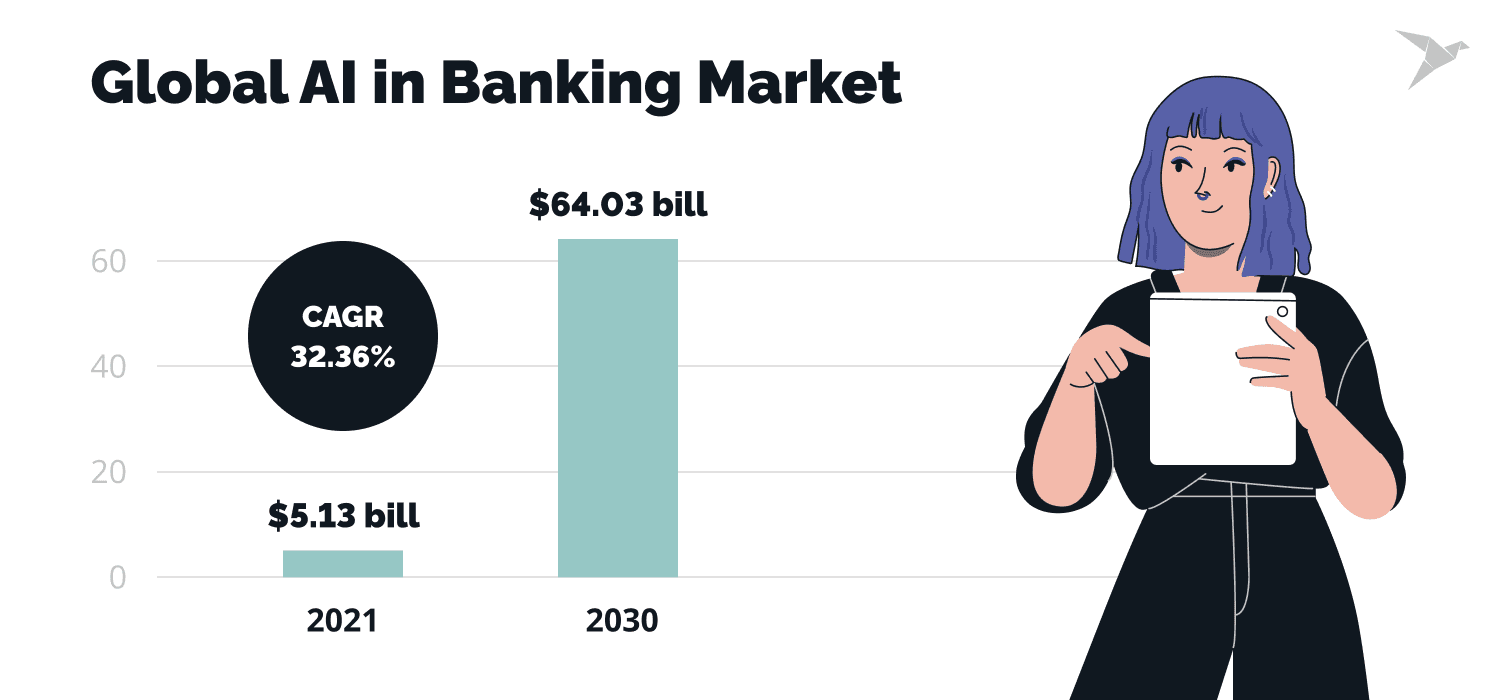
The hype phase is over and the numbers arrived. McKinsey estimates generative AI could add $200-340 billion annually across global banking, equal to 9-15% of operating profits. That's the largest opportunity of any sector they modelled, which tells you something about how much manual process still sits inside the banking sector.
Where it's actually landing:
- Customer interaction. Assistants that answer account questions, explain a charge, or help someone transfer money without a queue. The good ones escalate to a human quickly instead of pretending.
- Fraud and risk. Advanced analytics reading transaction patterns in real time. This is the most mature use case, and it predates the generative wave.
- Internal productivity and operational efficiency. Drafting credit memos, summarizing regulation, generating code. Unglamorous work, and where most of the near-term value actually sits.
- Personalized services. Nudges built on customer data. Flagging a subscription price rise, say, or a balance that won't cover Tuesday's direct debit.
One caution from our own projects. Artificial intelligence in banking fails on data quality far more often than on model quality. If customer data is scattered across six systems with no common identifier, no model will save you. Fix the plumbing first. Our guide to AI banking use cases covers what separates the two.
Open Banking Becomes Infrastructure
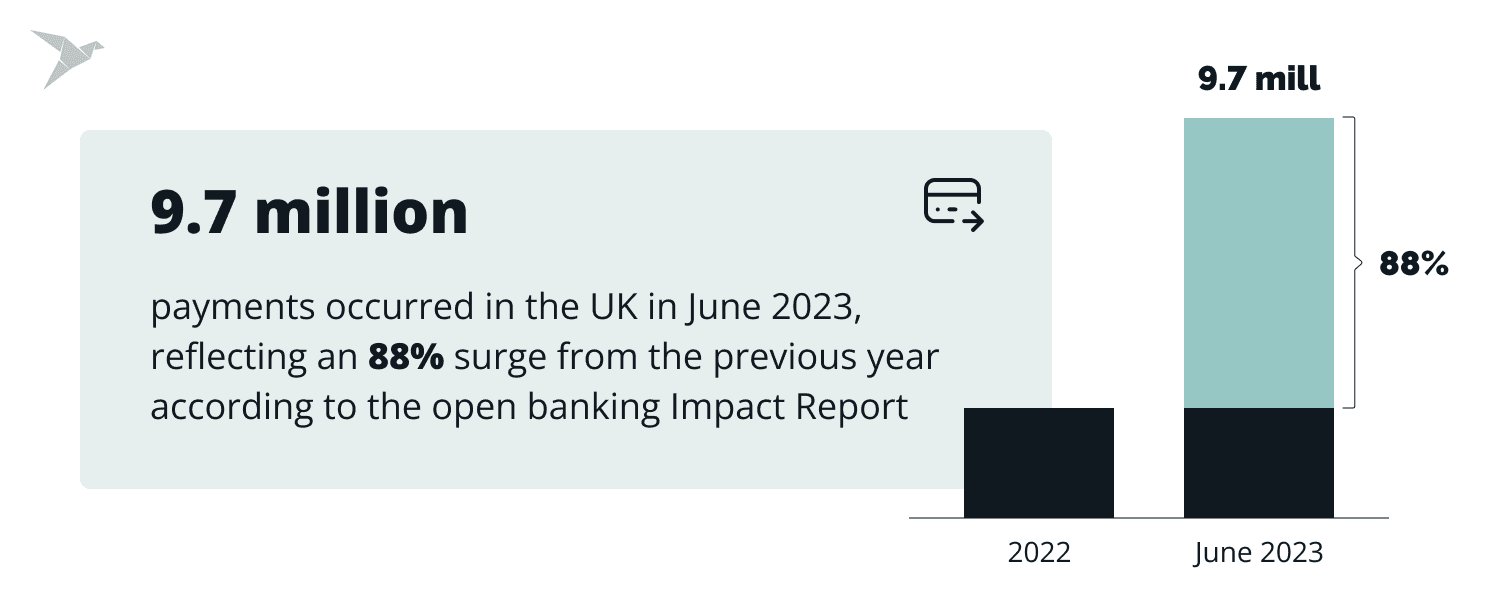
Open banking stopped being a compliance exercise somewhere around 2024. In the UK it now runs at scale: 15.16 million users in July 2025, close to one in three adults, according to Open Banking Limited. Growth was 34% year on year, with 2.04 billion API calls in that month alone.
The mechanism is straightforward. Application programming interfaces let customers authorize third party providers to see their bank accounts or initiate payments. What's changed is the use case mix. Variable recurring payments now make up over 14% of open banking transactions, which means people are using it for regular commitments rather than one-off transfers. HMRC took £4.7 billion in tax payments this way in January 2025.
For financial institutions, this cuts both ways. Open banking exposes your data to competitors and opens new revenue streams through services built on other people's data. Banks treating it purely as a regulatory cost are the ones losing ground. We covered the practical side in our roundup of the best open banking apps.
Embedded Finance Moves Banking Out of the Bank
Embedded finance puts banking services inside non-financial digital platforms. A loan offered at checkout, insurance inside a booking flow, a merchant account inside accounting software.
The strategic question it raises is uncomfortable. If the customer never opens your app, what exactly is your brand worth? Some banks have answered by becoming the infrastructure behind other people's products, earning on volume rather than relationship. Others are defending the direct channel hard. Both are viable. Drifting between them isn't.
The practical entry point is usually narrower than the strategy decks suggest. Most banks start by exposing one product through a partner's checkout, learn what breaks, and expand from there. That beats a platform build with no distribution attached to it.
Central Bank Digital Currencies: Slower Than Advertised
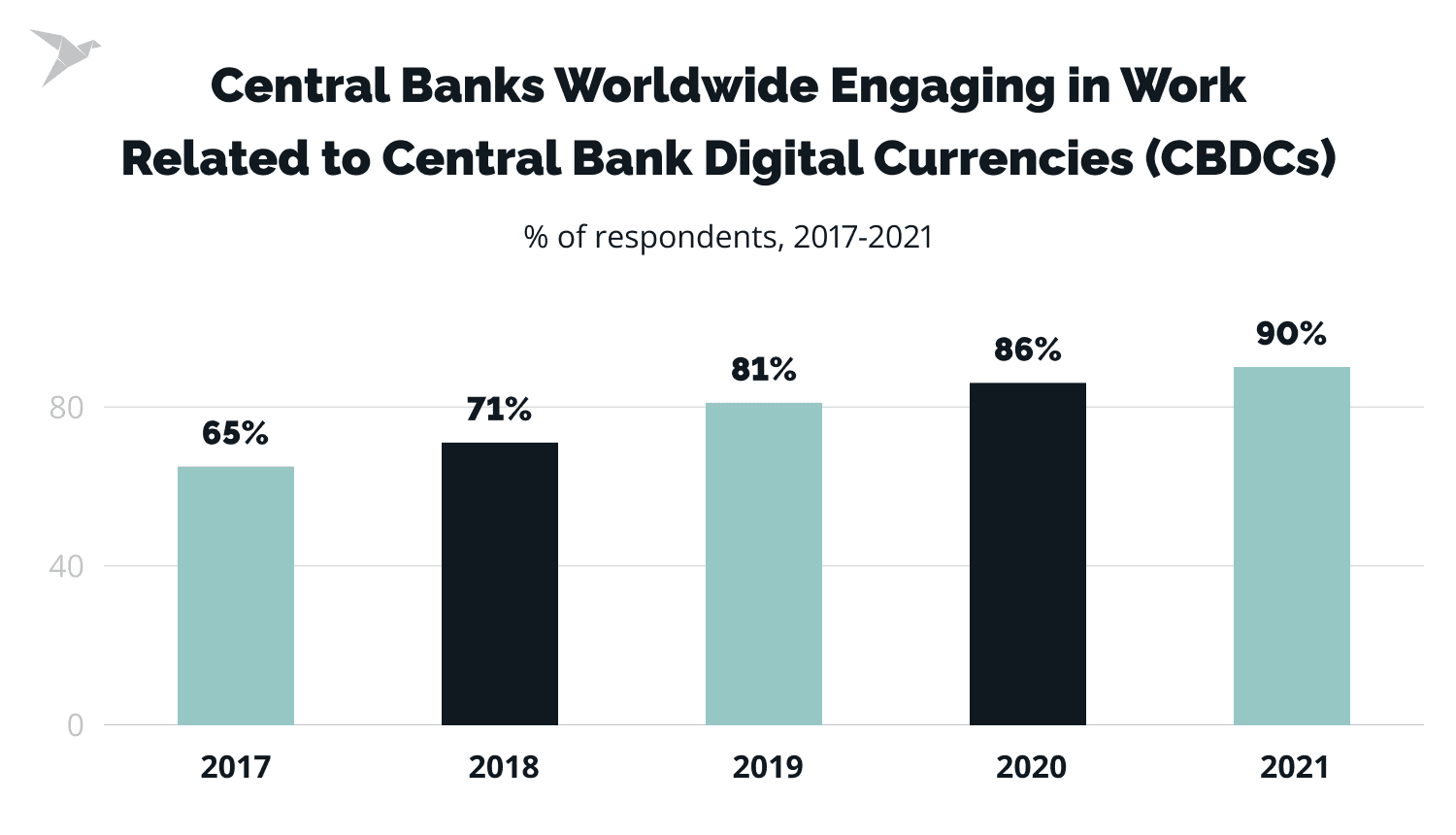
Central banks are busy here, and results are thinner than the coverage suggests. The Atlantic Council's CBDC Tracker counts 146 countries and currency unions exploring a CBDC, representing over 98% of global GDP, with 77 in an advanced phase and 41 running pilots.
Three have fully launched: the Bahamas, Jamaica and Nigeria. That gap between exploration and launch is the story. The ECB has moved the digital euro into preparation, and China's e-CNY remains the largest pilot by volume.
Our honest read: CBDCs will matter for wholesale settlement sooner than for retail digital payments. Retail adoption asks people to change how they pay for no obvious personal benefit, and that's a hard sell. Watch this, but don't build for it yet.
ESG Reporting Turns Into a Data Problem
ESG in banking has moved past positioning. Reporting obligations now require the financial services industry to evidence what it finances, and that evidence has to come out of transaction systems never designed to produce it.
The customer-facing layer is the visible part: carbon footprint estimates on card spending, sustainable savings account options. The harder work sits behind it: classifying counterparties, tracking exposures, and producing numbers that survive an auditor. Banks that built this into their data architecture are finding the reporting cheap. Banks that bolted it on are rebuilding.
Customer Experience and Digital Identity
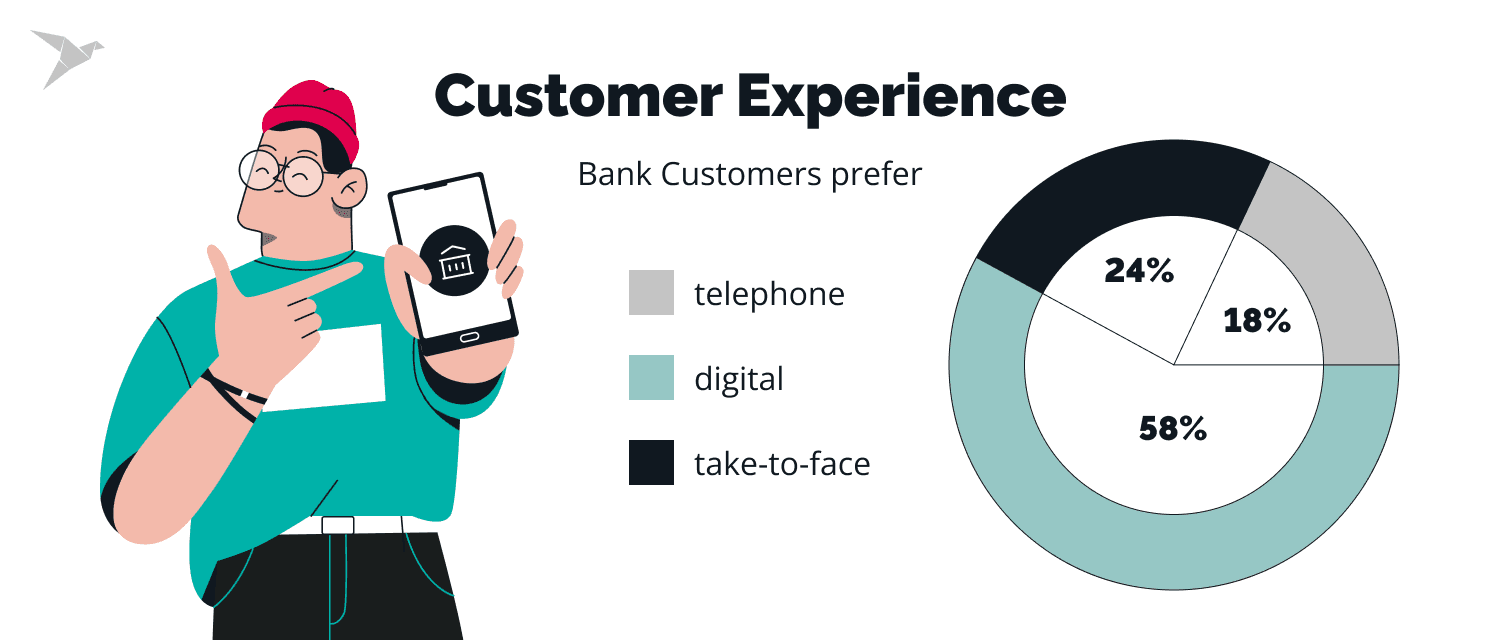
Customer expectations in banking are set by whatever app people used most recently, which is usually not a bank. That's an unfair comparison and it's the one you're being judged against.
Three things separate good digital banking services from adequate ones:
- Continuity across digital channels. Start on the app, finish on the web, call support, and nobody asks you to explain it again from the start.
- Genuinely personalized services. Not "Hello, [FIRST NAME]", but a product suggestion reflecting someone's actual financial goals and behaviour.
- Authentication that doesn't punish people. Multi factor authentication and reusable digital identities are now table stakes. Done well, they're nearly invisible; done badly, they're the top driver of abandoned applications.
Getting there usually means untangling the core, which is where most digital transformation initiatives stall. We wrote about that in more depth in retail banking digital transformation.
What This Means for Your Roadmap
Every trend above depends on the same foundation: clean customer data, an API layer that lets you connect things without a project, and a core you can change without a twelve-month release cycle. That's the unglamorous work, and it's what determines whether you can act on any of this.
If your digital banking transformation keeps stalling at integration, that's a solvable problem and a common one. TechMagic builds banking solutions for financial services teams working through exactly this: modernizing digital processes, connecting legacy cores to modern digital services, and shipping the products those cores were blocking.
We start with what you already run rather than what we'd like you to buy, because digital solutions that ignore the existing estate tend to enhance the demo and nothing else. We'll also tell you when a trend isn't worth chasing yet.

FAQ

They compete on speed rather than scale. Without a branch network, digital banks open accounts in minutes and change products in weeks, which pressures traditional banks on cost and pace. Most incumbents have responded by improving their own mobile apps, so the differentiation has moved to how quickly each side ships.
Fraud detection and credit risk are the mature applications. Generative AI is newer, and so far it mostly delivers internal productivity: drafting, summarizing, coding, plus better customer interaction through assistants. McKinsey values the total banking opportunity at $200–340 billion a year.
Consumers get to move data and initiate financial transactions across providers instead of being locked to one. Banks get reach into customers they don't hold accounts for, and new revenue streams from services built on shared data. The UK's 15 million users show what adoption looks like once the plumbing works.
They replace repeated document checks with one verified credential a customer reuses. Combined with multi factor authentication and behavioural signals, this cuts account takeover risk while removing friction. That matters, because security steps are where most digital applications get abandoned.
Core modernization, though nobody puts it on a conference agenda. Generative AI, open banking and embedded finance all assume you can access your own data and connect systems quickly. Banks that fixed that first are executing on every other trend. The rest are still running pilots.
