
 Software Development
 Security Services
 Cloud Services
 AI Services
 Other Services










 TechMagic Academy




For most SaaS companies, an enterprise deal can be won on the product and still get held up afterward. A forty-page security questionnaire lands, or a vendor risk review drags on for weeks with no clear end date. A six-figure deal can then sit in review while your engineering team answers questions about encryption, access control, and data handling.
Having the right SaaS security certifications before a questionnaire arrives gets you through this much faster: your controls already meet recognized security best practices, so your clients spend less time verifying your security posture before they can move the deal forward.
This article covers what SaaS cybersecurity certifications are, which matter most for SaaS providers, how to sequence them into a roadmap rather than pursuing them all at once, how to choose based on your buyers and data, what they cost, and how they shorten the enterprise sales cycle.
Key Takeaways
- SOC 2 and ISO 27001 anchor almost every roadmap: SOC 2 fits US-first companies, ISO 27001 fits EU- or global-first ones, and the two share enough control overlap that finishing one speeds up the second.
- Data type and customer type trigger each certification: HIPAA once protected health information enters the product, PCI DSS once card data does, and FedRAMP or CMMC only once a genuine federal or defense deal is in the pipeline.
- Sequence certifications one at a time, adding the next only when a real deal in your pipeline asks for it, rather than building a general compliance program upfront.
- Certifications compress security reviews: a current SOC 2 report or ISO 27001 certificate can turn a multi-week vendor risk review into a same-week approval.
What Are SaaS Security Certifications?
SaaS security certifications are independent, third-party attestations confirming that a SaaS provider meets recognized standards for data protection and information security, issued by outside auditors or accredited bodies rather than the vendor itself, which makes them credible to a buyer's security team.
SaaS security certifications now play a growing role in enterprise sales and compliance, with buyers increasingly treating them as a requirement rather than an optional extra. Most SaaS providers need only a handful: SOC 2 and ISO 27001 for general enterprise trust and broad security and compliance expectations, plus a short list of data- or industry-specific certifications for the rest.
Certifications vs. attestations vs. frameworks
Founders often use "certification," "attestation," and "framework" interchangeably, but auditors and enterprise buyers do not.
SOC 2 is an attestation report, issued by a licensed CPA firm, that tests an organization's controls over a period of time.
ISO 27001 is a formal certification, issued by an accredited body, confirming that a company's information security management system meets a recognized international standard.
NIST CSF and the CSA Cloud Controls Matrix are security frameworks: reference structures for organizing security controls and security protocols, not certificates you hand to a buyer.
That distinction matters during a sales cycle: a procurement team asking for "your SOC 2" expects a specific report format, not a framework mapping document, and knowing the difference saves weeks of back-and-forth once a deal is moving.
Why they matter for enterprise sales
Enterprise buyers cannot take a vendor's security on faith. Certifications give procurement teams and cybersecurity professionals a recognized, third-party signal that a vendor meets real security standards. That's why SOC 2 and ISO 27001 function as the entry ticket for companies selling upmarket.
Which Security Certifications Matter Most for SaaS Providers?
The cybersecurity certifications for SaaS that matter most depend on your buyer, data type, and region.
Major SaaS security certifications cluster around two questions:
- Who is buying?
- What data does the product touch?
SaaS security compliance looks very different for a solution selling to small US businesses than for one selling to European banks or US hospitals, even with a similar underlying product.
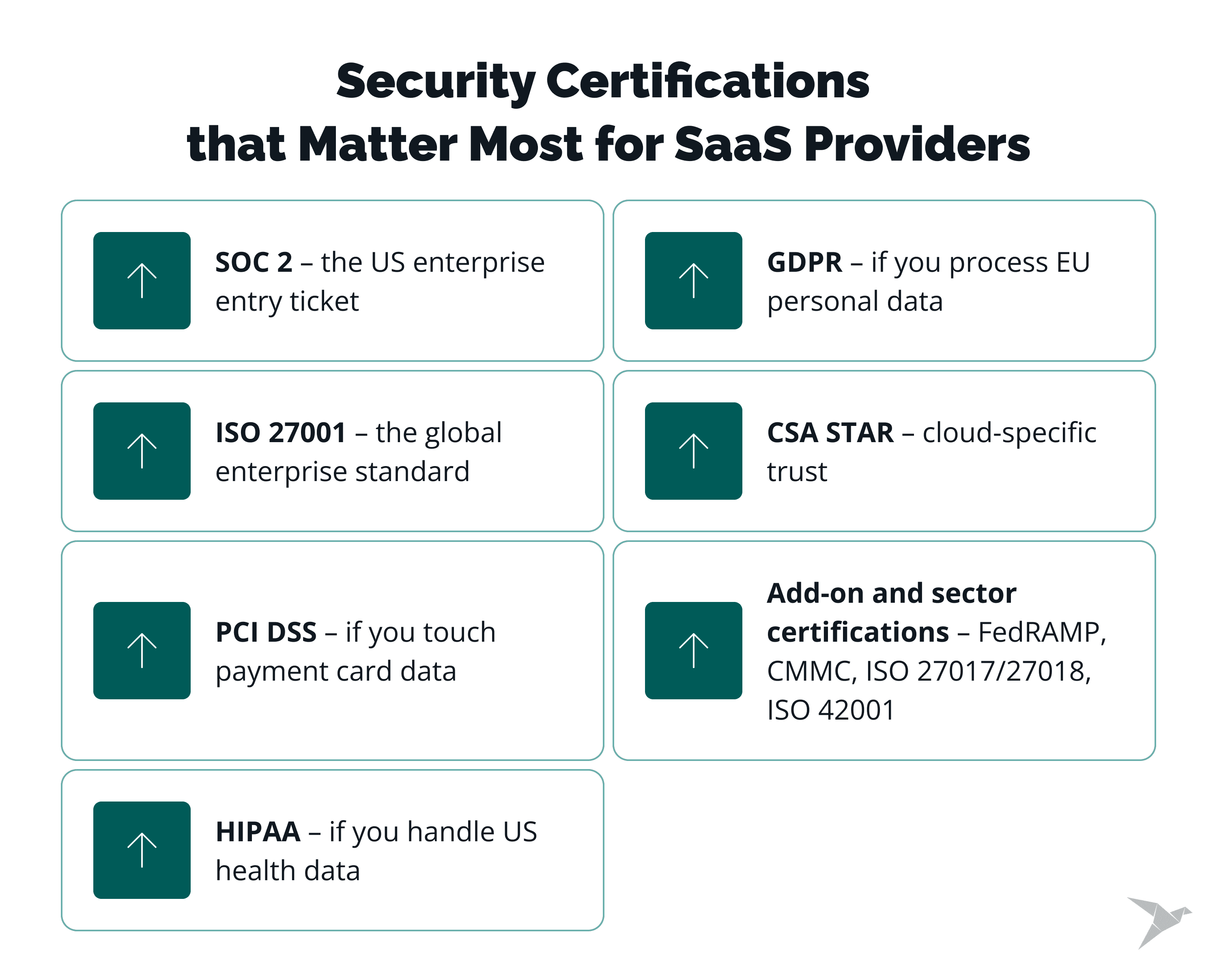
SOC 2 – the US enterprise entry ticket
SOC 2 is the most-requested standard for US SaaS providers. It attests to controls over security, and optionally availability, processing integrity, confidentiality, and privacy. Most companies scope their first report to security alone and add the rest only when a buyer asks.
A Type 1 report confirms controls are designed correctly at a single point in time; a Type 2 report confirms they worked over three to twelve months, which is why most enterprise buyers ask for Type 2 before signing. SOC 2 touches customer data, financial data, and other sensitive data directly, so see our detailed breakdown of SOC 2 compliance requirements before scoping an audit.
ISO 27001 – the global enterprise standard
ISO 27001 is an internationally recognized certification built around an information security management system rather than a single point-in-time audit. European, Asian, and public-sector buyers often require it, even when a vendor already holds SOC 2.
Building the ISMS forces a company to formalize risk assessment, risk management, and security posture reviews as ongoing processes, which auditors expect to see in day-to-day security practices, not only in a policy binder.

PCI DSS – if you touch payment card data
PCI DSS is mandatory for any SaaS company that stores, processes, or transmits cardholder data, regardless of size or sales stage. Auditors assess it against the standard's twelve requirements, from network segmentation to access logging and data integrity controls. Once a payment feature ships, PCI DSS applies. Payment processors are frequent targets for cyber threats and data breaches, and that's exactly what it protects against.
HIPAA – if you handle US health data
HIPAA, the Health Insurance Portability and Accountability Act, is required for any SaaS product handling protected health information and acts as a hard gate for selling into US healthcare.
Once patient data enters a product, healthcare providers and business associates expect a signed BAA and documented technical safeguards, protecting sensitive customer information well beyond passing an initial audit. Our healthcare cybersecurity services page covers the security work specific to that industry.
You may need

GDPR – if you process EU personal data
GDPR, the General Data Protection Regulation, works differently from SOC 2 or ISO 27001: enterprise buyers verify it directly, through a data processing agreement and evidence of how a vendor handles data privacy requests.
Many SaaS companies pair GDPR compliance with ISO 27701, a standalone privacy management certification since the October 2025 revision, which no longer requires ISO 27001 first, or rely on contractual commitments once EU personal data enters the product. Treat GDPR as a compliance requirement, alongside a wider set of EU security regulations, including NIS2 and DORA, that increasingly reach SaaS vendors indirectly through their enterprise customers.
CSA STAR – cloud-specific trust
The Cloud Security Alliance's STAR program signals cloud-specific security maturity, and cloud vendor reviews increasingly cite it alongside SOC 2 and ISO 27001. STAR runs at two levels. Level 1 is a self-completed questionnaire published to CSA's public assurance registry, visible, but not independently validated. Level 2 adds a third-party audit layered onto a SOC 2 attestation or an ISO 27001 certificate, and that is the version enterprise cloud reviews treat as evidence.
Whether a company is a cloud provider offering cloud services to regulated industries, or a smaller player selling cloud based solutions into a larger platform, a Level 2 STAR assessment gives buyers a standard way to compare cloud computing security postures and shortens due diligence.
Add-on and sector certifications (FedRAMP, CMMC, ISO 27017/27018, ISO 42001)
A few certifications apply only once a specific deal enters the pipeline: FedRAMP and CMMC for the US public sector and defense supply chain, ISO 27017 and ISO 27018 for cloud- and PII-specific controls on top of ISO 27001, and ISO 42001 for AI governance in SaaS products built around large language models.
FedRAMP 20x is a newer, faster version of FedRAMP authorization. It relies on continuous monitoring and automated evidence instead of a single annual audit, and early pilot programs have earned authorization in weeks instead of the twelve to eighteen months the old process took.
CMMC is the Department of Defense's cybersecurity certification requirement for its supply chain. A rule under 48 CFR made it enforceable in Department of Defense contracts as of November 10, 2025, so a defense deal that once felt far off now follows a fixed compliance schedule tied to specific industry regulations.

How Do You Turn Certifications Into a Roadmap?
A practical security certifications roadmap for SaaS sequences each certification to a real business trigger, a deal, a market, or a data type entering your pipeline, rather than chasing every certification in the industry at once.
One certification answers one blocker: you are not building a compliance program for its own sake, but removing the specific thing standing between your team and revenue, then stopping until the next blocker appears.
Each stage should be pulled by your pipeline, a deal that actually asked for it, rather than pushed by a roadmap drawn up a year ago, so sequence by whichever certification unblocks revenue first.
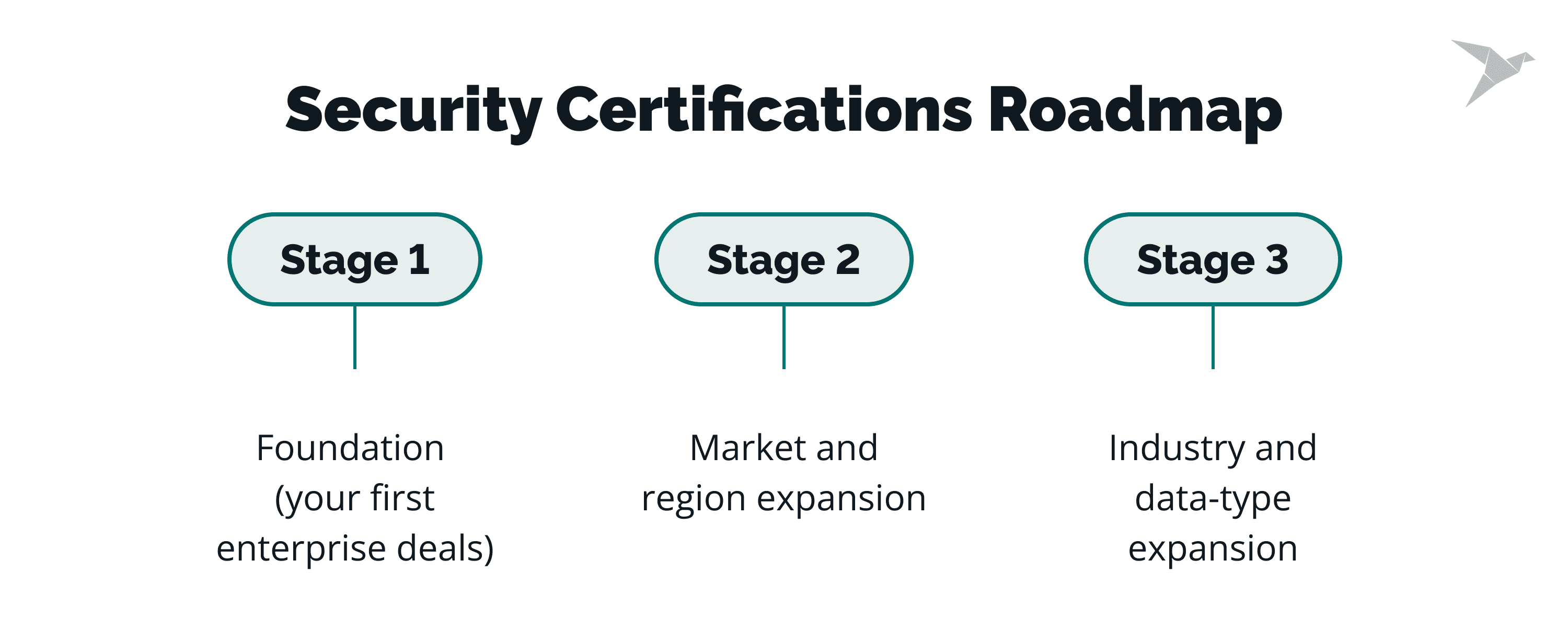
Stage 1 – foundation (your first enterprise deals)
For most US-focused providers, SOC 2 Type 1 followed by Type 2 is the foundation, forcing the documentation, secure access controls, and change management discipline every later certification builds on.
EU- or global-first providers often start with ISO 27001 instead, since it is the standard those buyers recognize first, and either way the controls built for the first audit carry forward as your SaaS infrastructure grows.
Stage 2 – market and region expansion
Layer ISO 27001 on top of SOC 2, or the reverse, as you sell internationally, and address GDPR once the product handles EU personal data. Regulations like NIS2 and DORA also start reaching SaaS vendors indirectly here: DORA requires EU financial institutions to vet the security of the cloud service providers in their supply chain.
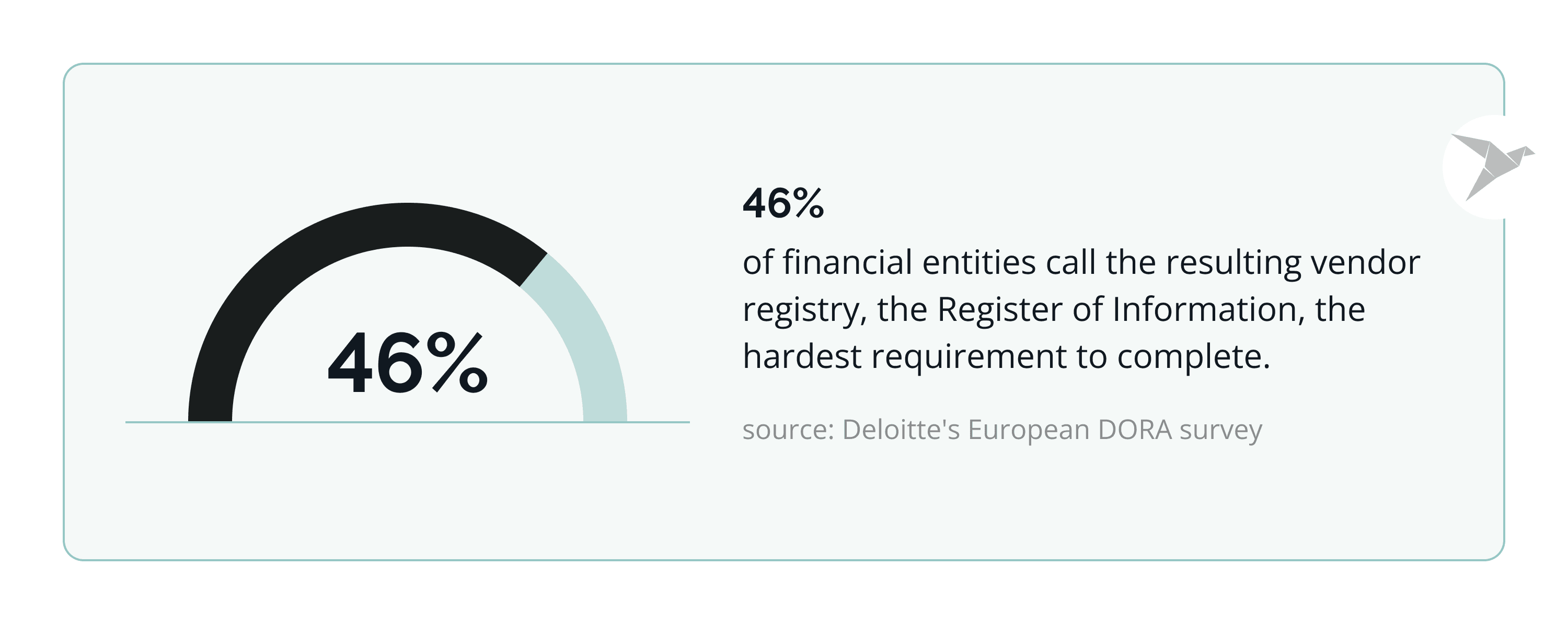
Deloitte's European DORA survey found that 46% of financial entities call the resulting vendor registry, the Register of Information, the hardest requirement to complete. For an EU bank or insurer buyer, that lands on your desk as a vendor questionnaire regardless of your own regulatory status.
Stage 3 – industry and data-type expansion
Add HIPAA, PCI DSS, or FedRAMP and CMMC only once your pipeline actually moves into those segments, not before. A fintech company selling into the EU shows how this plays out: SOC 2 for its earliest US deals, ISO 27001 as European sales grow, GDPR once EU personal data enters the product, and PCI DSS only once it touches card data.
Our client Disco, an EdTech platform, followed the same pattern: it built its security foundation on SOC 2, then added FERPA, the US federal law governing student education records, once it moved into higher education. In both cases, the certification followed the customer, not the other way around, since adding one early is budget spent on controls no current customer requires.
How Do You Choose the Right Certifications for Your SaaS?
Picking security certifications for SaaS starts with your buyers' actual requirements, your data, and the regions you sell into, not a generic "top five" list, which keeps audit scope and audit cost proportional to what your business actually needs.
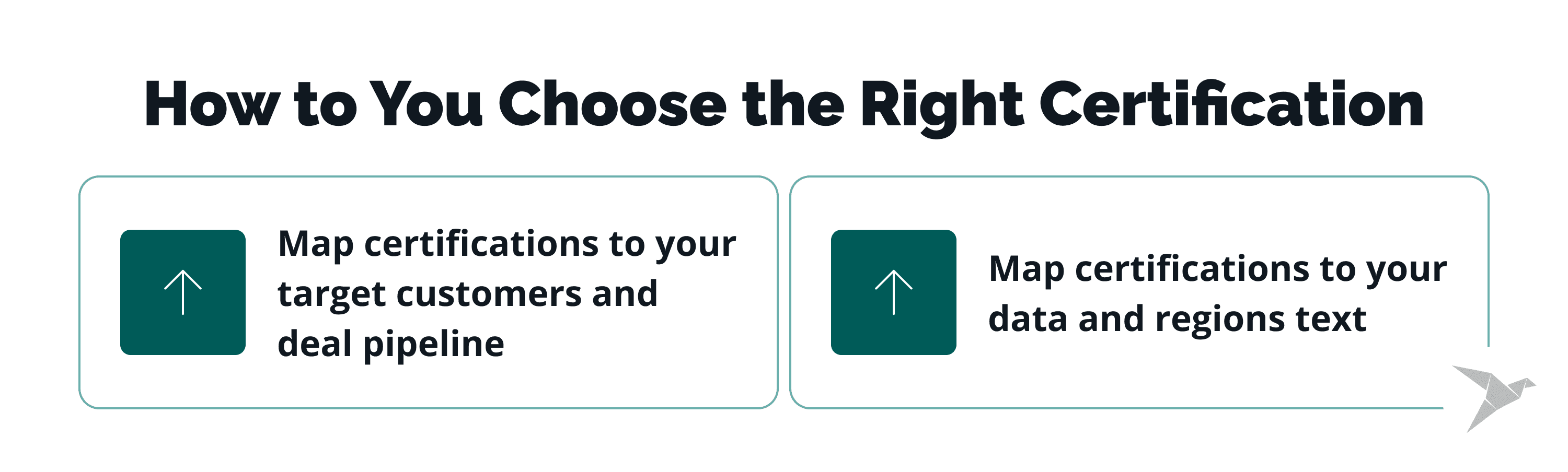
Map certifications to your target customers and deal pipeline
Look at what your stalled or open enterprise deals are actually asking for in their security questionnaires and RFPs. If three of your last five stalled deals cited a missing SOC 2 report, that is a clearer signal than any generic industry checklist. Run a quick due diligence process on your pipeline by asking sales which deals are requesting which evidence.
Map certifications to your data and regions
Match your data types and geographies to the right standards: health data to HIPAA, card data to PCI DSS, EU personal data to GDPR, global enterprise sales to ISO 27001. Because SOC 2 and ISO 27001 share a large share of underlying controls, teams that hold one can reuse existing evidence and client data handling documentation to speed up the second.
Your buyers' own regulators matter too: rules like NIS2 and DORA increasingly push their regulatory requirements onto you as vendor requirements, even in markets that used to feel unregulated for a company your size.
Check our
How Do Security Certifications Speed Up Enterprise Sales?
Security certifications pre-answer the security review, satisfy procurement gates, and cut a weeks-long vendor assessment down to a quick check. Buyers treat strong security measures on your side as less for their team to verify from scratch.
Security questionnaires, RFPs, and vendor risk reviews
A current SOC 2 report or ISO 27001 certificate lets a buyer's security team approve a vendor faster. It answers most of a standard questionnaire before anyone has to type a response. It also cuts the volume of custom questionnaires a sales team routes through engineering, since a security lead can point to an existing report instead of drafting new answers about security risks, security threats, and vulnerability management every quarter.
Trust centers and shareable reports
Publishing a public trust page and sharing full SOC 2 reports under NDA lets a vendor get ahead of security questions before a deal even opens. It puts your approach to data security and safeguarding sensitive information in front of procurement from the first sales call, rather than something they have to ask about twice. It also protects client confidentiality, since sensitive report details stay behind the NDA.
What Does Each Certification Cost, and How Long Does It Take?
Costs and timelines vary, but a few patterns hold across most SaaS companies.
SOC 2 Type 1 typically takes six to ten weeks and costs around eight thousand to twenty-five thousand dollars for a narrow scope, largely driven by auditor fees. SOC 2 Type 2 adds an observation window, usually three to twelve months, on top of similar audit fees, since the auditor has to test controls over time rather than at a single point.
ISO 27001 usually takes six to twelve months from gap assessment to certificate, with cost commonly running from twenty thousand to well over one hundred thousand dollars, depending on company size and the complexity of the information security management system being certified.
PCI DSS costs and timelines scale with transaction volume and merchant level, from a self-assessment questionnaire completed in weeks to a full Level 1 assessment taking several months.
HIPAA has no formal certificate, but a serious readiness program, covering risk assessment, policy writing, and technical safeguards, typically takes two to four months before signing a BAA.
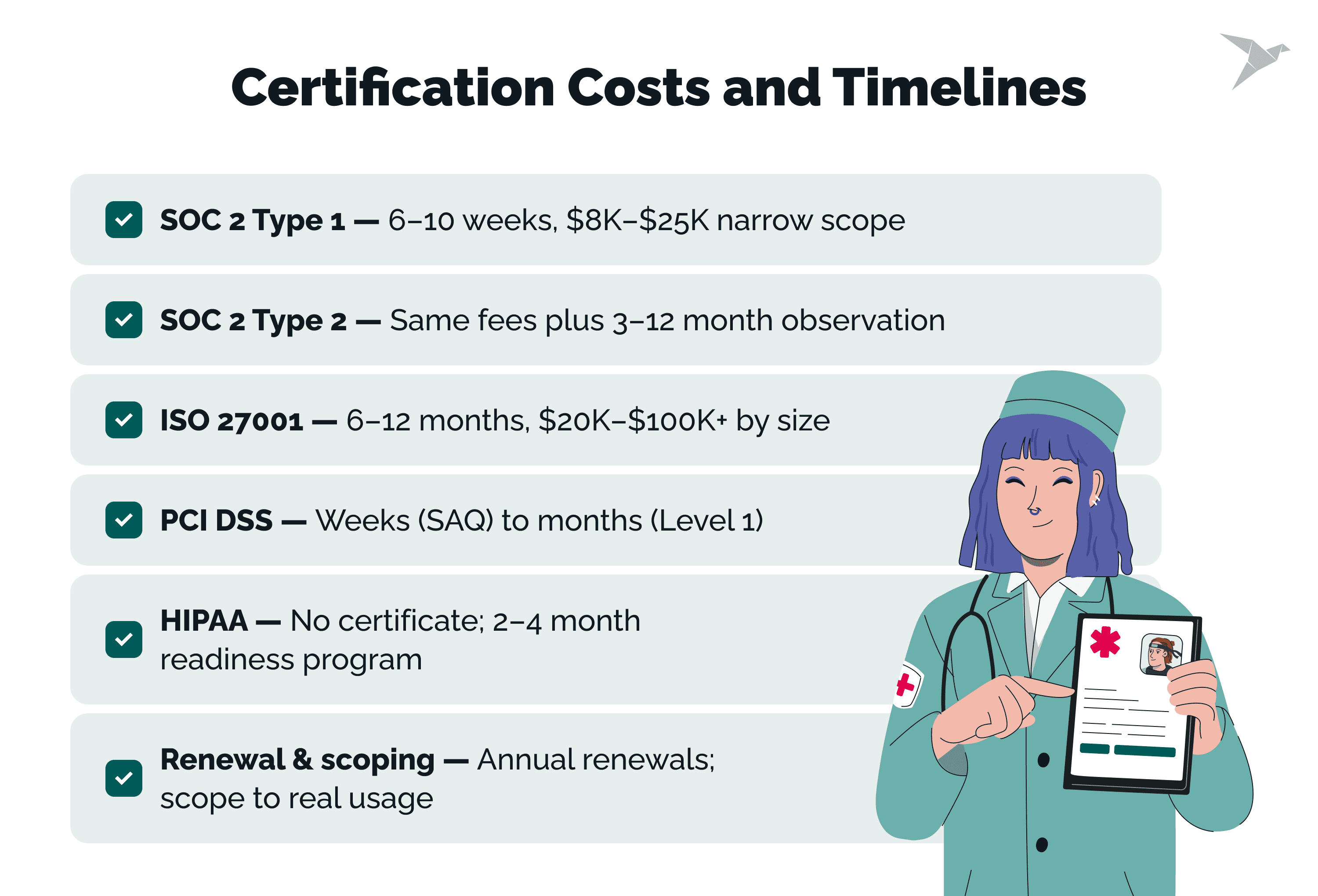
Renewal matters as much as the first pass: SOC 2 Type 2 reports are typically renewed annually, ISO 27001 certificates run on a three-year cycle with annual surveillance audits, and PCI DSS requires annual reassessment.
Audit scope should reflect your actual software usage and data flows, not a worst-case reading of your architecture. Over-scoping is one of the fastest ways to inflate cost without adding real protection; basic security best practices during scoping avoid most of it, and overlap between frameworks lowers the cost of a second certification meaningfully. For detailed figures specific to SOC 2, see our breakdown of SOC 2 audit cost.
What Are Common Mistakes When Planning a Certification Roadmap?
The biggest mistakes are chasing certifications before there is a real enterprise pipeline to justify them, and treating a certification as something you earn once instead of an operating program. A closer look at each:
- Starting too late: SOC 2 Type 2 needs months of observation before an auditor can issue a report.
- Scoping too broadly: including systems or data flows no current buyer cares about inflates audit cost and timeline for no benefit.
- Ignoring framework overlap by rebuilding controls from scratch instead of mapping existing SOC 2 or ISO 27001 evidence.
- Pursuing certifications no buyer asked for: one that never comes up in a real questionnaire or RFP is simply a cost center.
- Letting certifications lapse: skipping vulnerability assessments and control reviews between audit cycles lets the same finding reappear, and a lapsed certificate can stall a renewal deal as badly as never having one.
- Neglecting upkeep between audits: teams that maintain compliance year-round avoid last-minute scrambles, and ensuring compliance stays intact between audits keeps a certification from quietly expiring unnoticed.
Our Experience Helping SaaS Teams Get Certified
When we scope security certifications for SaaS projects, we start with:
- A gap assessment against the framework a client needs, mapping architecture and data flows to its real requirements instead of a generic template
- Flagging what's already documentable versus what needs real technical work
- Building a readiness roadmap with clear ownership
We run compliance programs for regulated cloud SaaS – HealthTech, FinTech, and AI-heavy platforms, usually Series B and later. In every one, the work started because a live deal already required it. We work alongside the client's engineering team on the technical gaps behind SOC 2, ISO 27001, and HIPAA readiness, and prepare evidence packages, policies, and control documentation an auditor will accept.
That is what professional services should look like for a certification push: embedded with the client's team from start to finish.
TechMagic is ISO 27001-certified, and our ISMS internal audit for Quizrr reflects the same information security management system discipline that certification depends on. We are also CREST-accredited for penetration testing, a credential auditors and enterprise teams recognize.
A roadmap works only if it keeps pointing at the next real deal, whatever the framework: SOC 2, ISO 27001, HIPAA, or something more specialized like ISO 42001 for AI-heavy products. That's why we treat a certification push as continuous improvement that runs well past the day the auditor signs off.
Need Expert Help With Your SaaS Security Certification Roadmap?
Mapping the right sequence of certifications to your buyers, your data, and your growth plans is easier with a partner who has done it across multiple frameworks and industries.
We will come back with a gap assessment scope and a sequenced roadmap for the underlying frameworks

Final Thoughts: Building Your SaaS Security Certifications Roadmap
There is no universal best certification, only the right sequence for your buyers, your data, and the markets you are entering, usually anchored by SOC 2 or ISO 27001. Certifications function best as a sales-enablement roadmap that keeps expanding alongside your pipeline, keeping the budget aligned with the deals actually on the table.
Where is this heading?
Security spending keeps climbing, and audits ride along with it. Statista projects the global cybersecurity market will reach $211.69 billion in 2026, growing 7.72% year over year, with security services alone, the audits, assessments, and consulting behind every certification, making up $106.13 billion of that.
Federal procurement is about to open up to more vendors. FedRAMP 20x enters wide-scale adoption in 2026, with a public submission pipeline planned for Q3 and a pilot for high-impact Class D authorizations expected in FY27, replacing the old sponsor requirement and eighteen-month timeline with something faster and more predictable.
AI governance is moving from optional to expected: enterprise questionnaires now ask for training-on-customer-data policies and model governance evidence as SaaS platforms embed large language model features, and ISO 42001 is emerging as the standard buyers point to.
FAQ
A single SaaS security certification that satisfies every buyer does not exist. Enterprise SaaS companies need SOC 2 or ISO 27001 as a foundation, then add HIPAA, PCI DSS, GDPR, or CSA STAR only when their data or customers require it.
The best security certification for a SaaS company is the one its buyers actually request, most often SOC 2 Type 2 for US sales or ISO 27001 for European and global sales. A generic list of the top SaaS security certifications overlooks that buyers, industries, and regions differ.
A SaaS startup selling primarily to US buyers should pursue SOC 2 first, since it is the most requested standard there; one selling into Europe, Asia, or public-sector accounts should pursue ISO 27001 first. SOC 2 and ISO 27001 share significant control overlap, so completing either one first makes the second faster.
As many as its buyers, data types, and markets require, with no fixed number that fits every business. Most providers operate well with one foundational certification, SOC 2 or ISO 27001, plus one or two additions such as HIPAA or PCI DSS.
SaaS security certifications cost anywhere from a few thousand dollars for a narrow SOC 2 Type 1 audit to well over one hundred thousand for a broad ISO 27001 certification or FedRAMP authorization, depending on audit scope, control maturity, and whether a company can reuse controls from a certification it already holds.
Enterprise buyers most often require SOC 2 or ISO 27001 as a baseline, then add HIPAA for healthcare data, PCI DSS for payment data, or CSA STAR for cloud-specific assurance. Government and defense buyers require FedRAMP or CMMC instead, and EU buyers frequently add GDPR evidence regardless of the baseline certification held.
