 Software Development
 Security Services
 Cloud Services
 AI Services
 Other Services















 TechMagic Academy


vCISO and CISO: Detailed Analysis and Main Differences
Last updated:3 September 2025


Cyberattacks are forecast to cost the world $10.5 trillion in 2026 – a massive leap from $6 trillion in 2022. That’s a 75% surge in just three years, and the stakes keep rising. Choosing the proper cybersecurity leadership is critical under such circumstances.
In our new article, we break down the main difference between a virtual Chief Information Security Officer (vCISO) and a traditional Chief Information Security Officer (CISO): what each one does, where they fit, and how to decide which your business needs.
Key takeaways
- The core difference vCISO vs CISO : a vCISO gives you part-time or contract-based security leadership, while a CISO is a full-time executive who owns your entire security program.
- Roles: a CISO runs daily operations, incident response, and long-term strategy. A vCISO comes in for strategic guidance, compliance support, and targeted risk management, on demand.
- Who needs which: a vCISO suits startups, SMBs, or companies that want expert input without a full-time cost. A CISO fits large, regulated organizations that need constant oversight.
- Business impact: a vCISO brings flexibility, cost savings, and cross-industry experience. A CISO brings deep organizational alignment and continuous risk management.
- Base your decision on budget, company size, risk level, and regulatory requirements.
What is vCISO?
A virtual Chief Information Security Officer (vCISO), or CISO as a service, is a part-time or contract-based cybersecurity expert who gives you strategic guidance on a flexible basis. From our experience, they’re a strong fit for organizations that need senior security input without committing to a full-time hire, usually helping with risk assessments, compliance, and security strategy.
The pull toward vCISOs is growing, especially among SMBs, mostly because they’re affordable and flexible. Remote work and cloud computing have only added to the need for that kind of guidance.
But vCISOs aren’t only for small companies. Larger businesses use them too, like manufacturing firms that never built a strong digital foundation. Many of these organizations grew without dedicated security leadership and let cybersecurity slip. As they scale, they finally have to put those processes in place, and a vCISO is a practical way to do it.
For heavily regulated industries, such as healthcare (HIPAA), finance (PCI DSS), or any business handling personal data, a vCISO can bring focused compliance expertise. Hiring one part-time keeps costs down while you still meet the requirements that matter.
Some stats
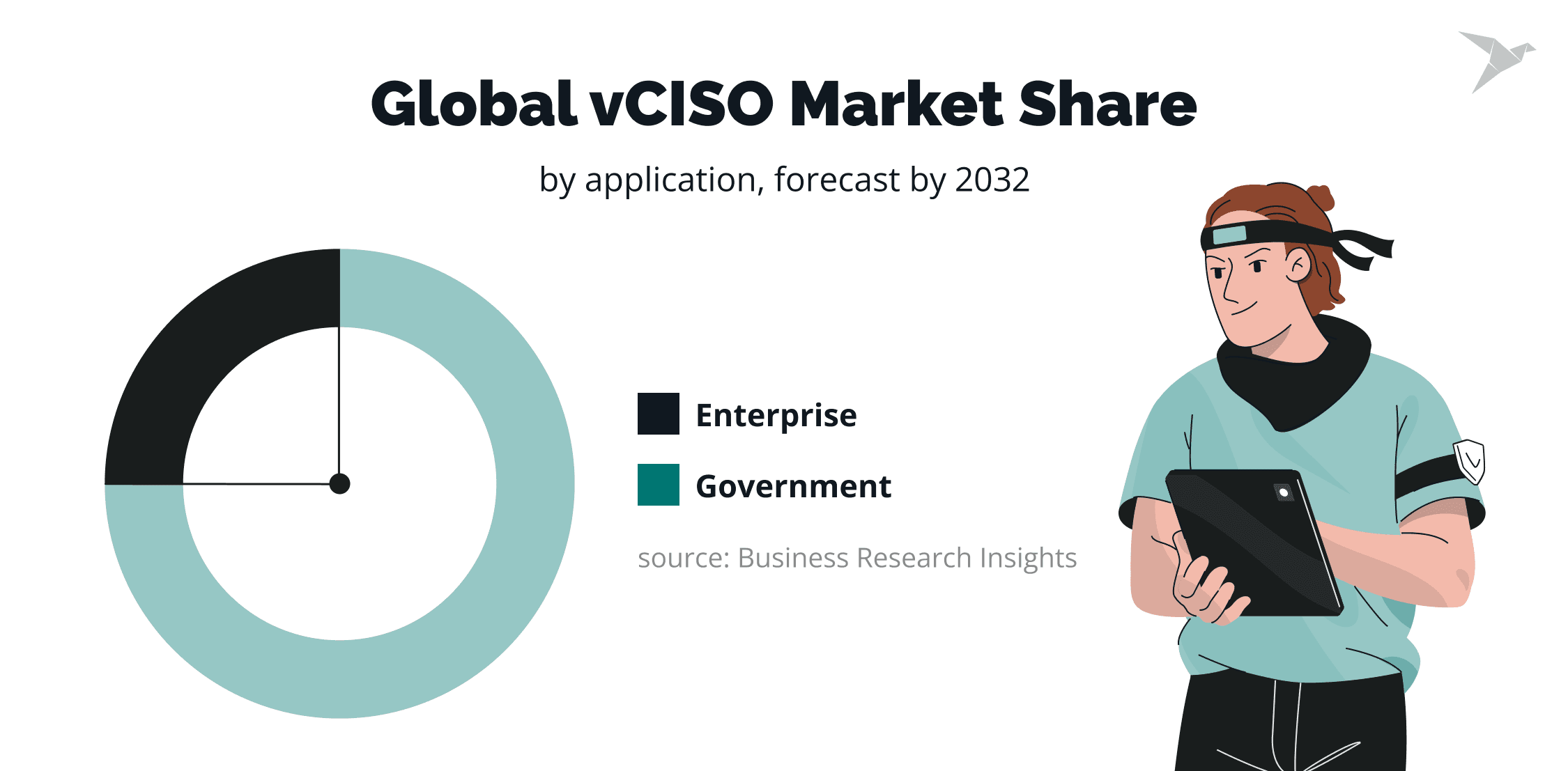
The global vCISO market was worth $1.06 billion in 2024 and is projected to reach $1.48 billion by 2032, a CAGR of 6.3%, driven largely by SMB demand, according to BusinessResearchInsights.
What is CISO?
A Chief Information Security Officer (CISO) is a full-time, in-house executive who builds and runs your information security program. They handle day-to-day operations, incident response, and reporting to leadership, and this is the kind of constant presence that larger companies with complex security needs typically need.
Larger organizations in regulated sectors like healthcare, financial services, or government usually need a CISO on staff full-time, and on-call engagements don’t work for them. In their case, only a permanent leader can keep frameworks like HIPAA, PCI DSS, FedRAMP, or regional data protection laws running without gaps.
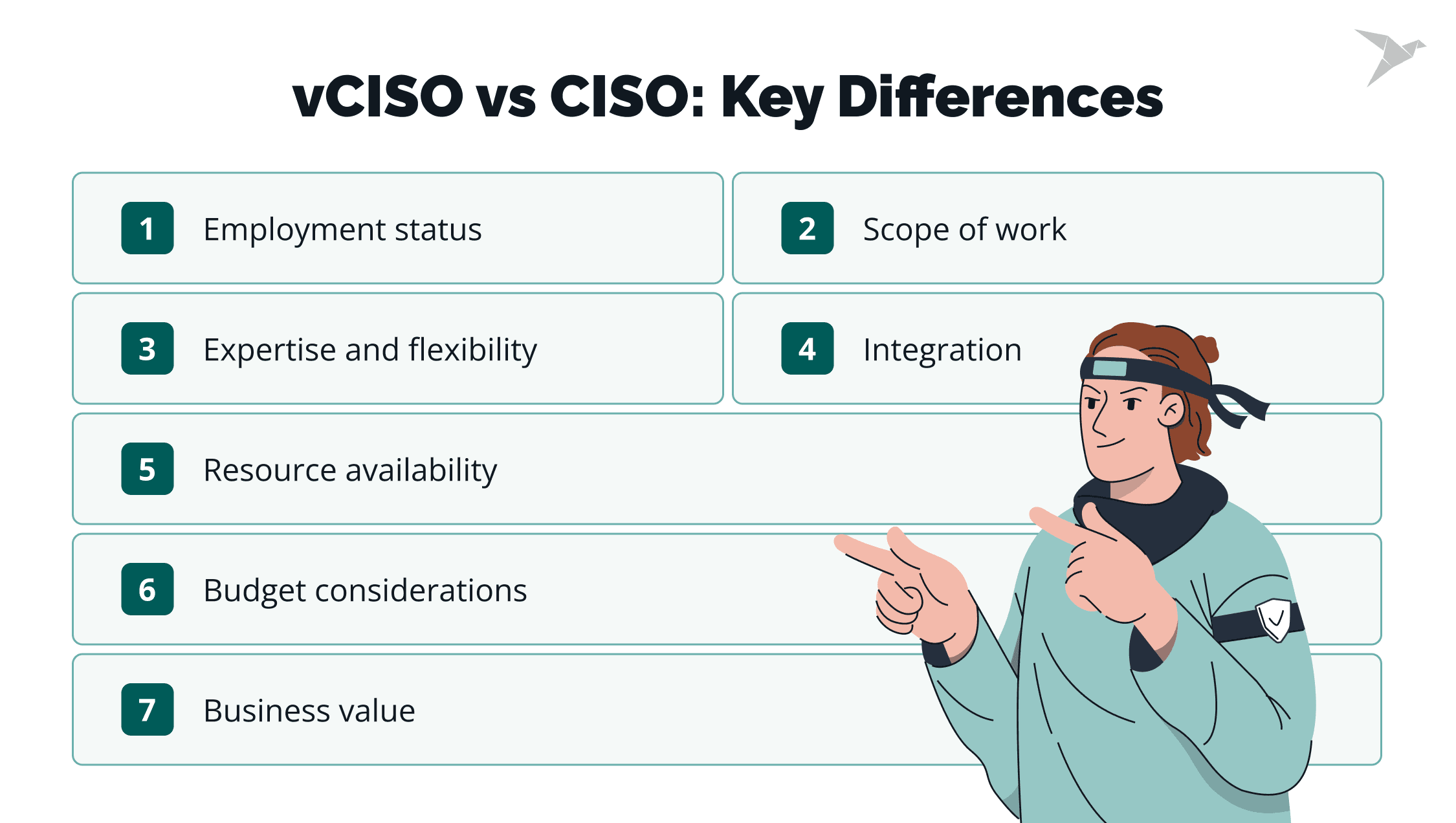
vCISO vs CISO: Key Difference
So what else sets these two roles apart?
Employment status
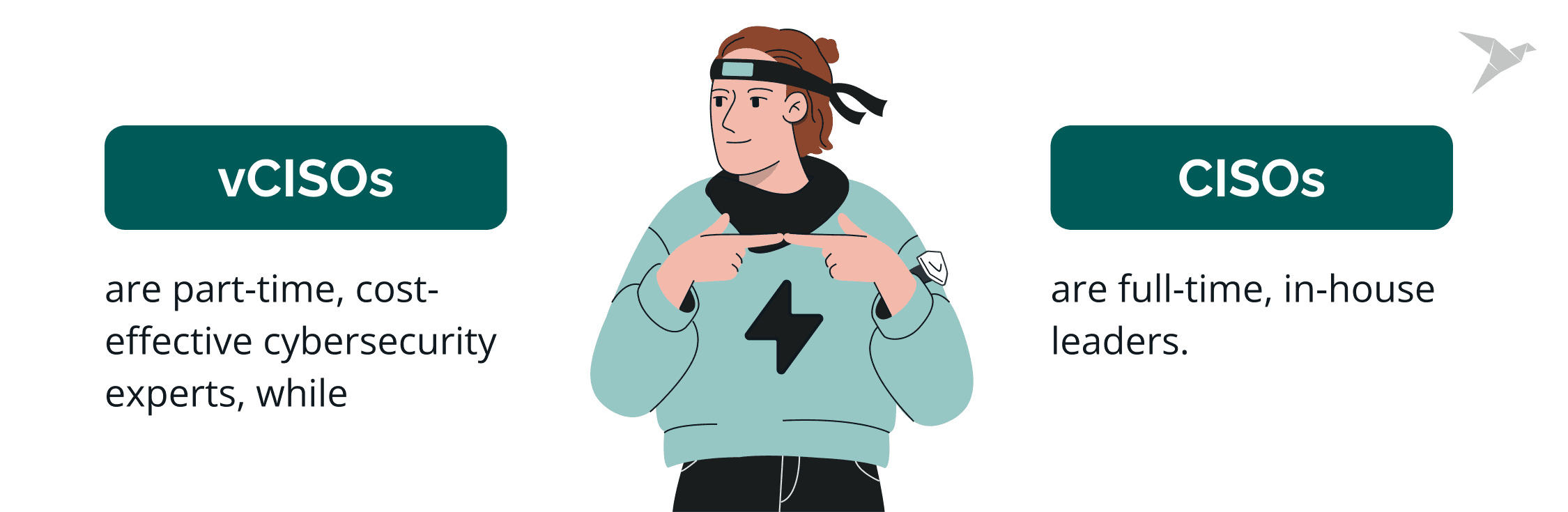
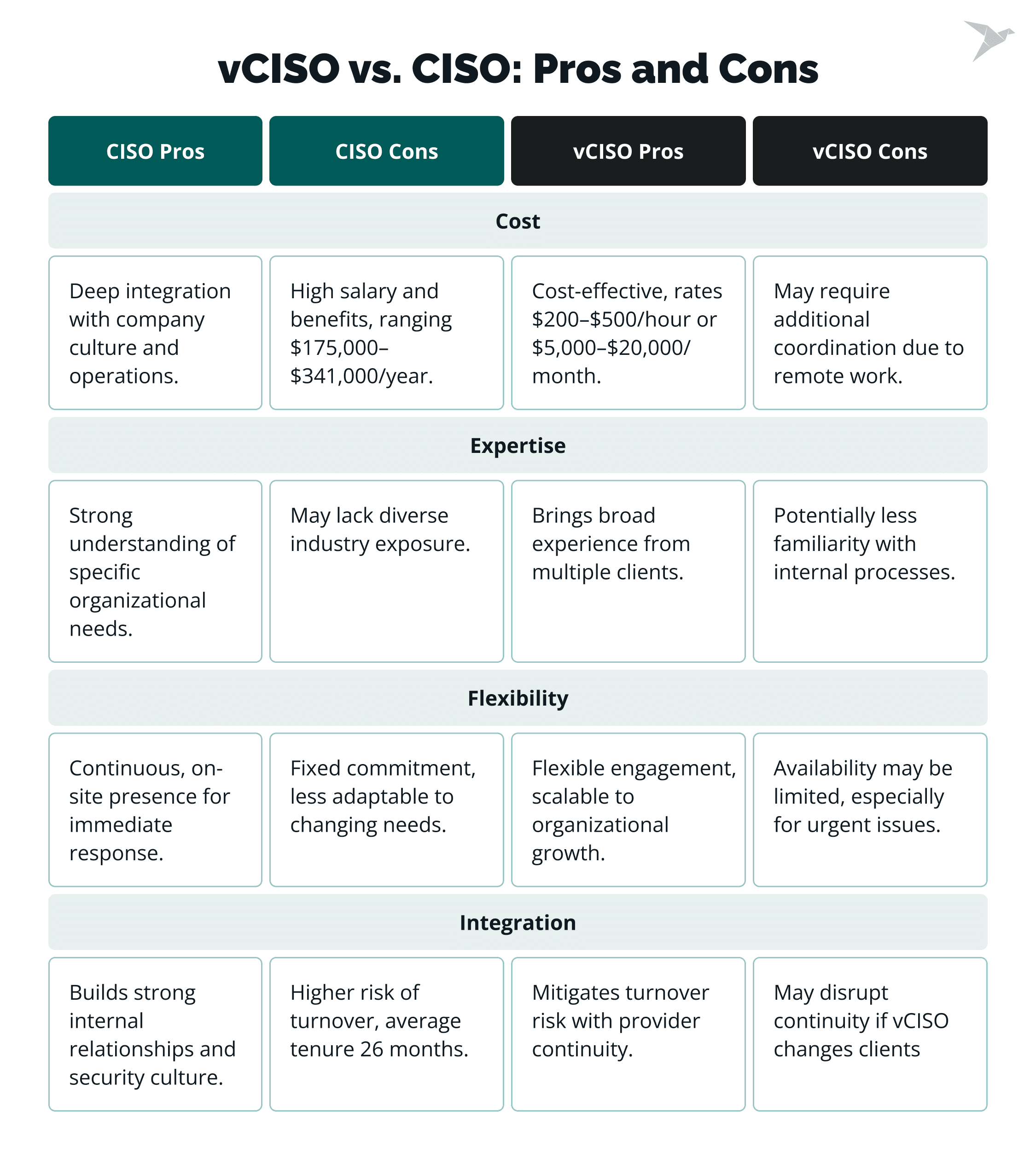
A CISO is a full-time employee, on staff and focused on the organization's long-term protection. A vCISO, on the other hand, works part-time or on contract, often through an outside firm, and usually splits time across several clients.
Scope of work
A CISO's role is broad and constant. They lead everything from daily operations to crisis response and report to the executive team. A vCISO works with a narrower focus: strategic advice, risk assessments, or compliance checks. They step in for specific work and step back out once it's done.
Expertise and flexibility
Here, the tale twists. Expertise and flexibility pull in opposite directions here. A CISO offers steady, in-house leadership. Their knowledge runs deep because it's built inside one organization, though that focus can leave them with less visibility into what's happening elsewhere.
A vCISO works across many industries, so they bring a wider range of experience and can spot risks from angles an in-house leader might miss. The trade-off is a lighter tie to any single company.
Budget considerations
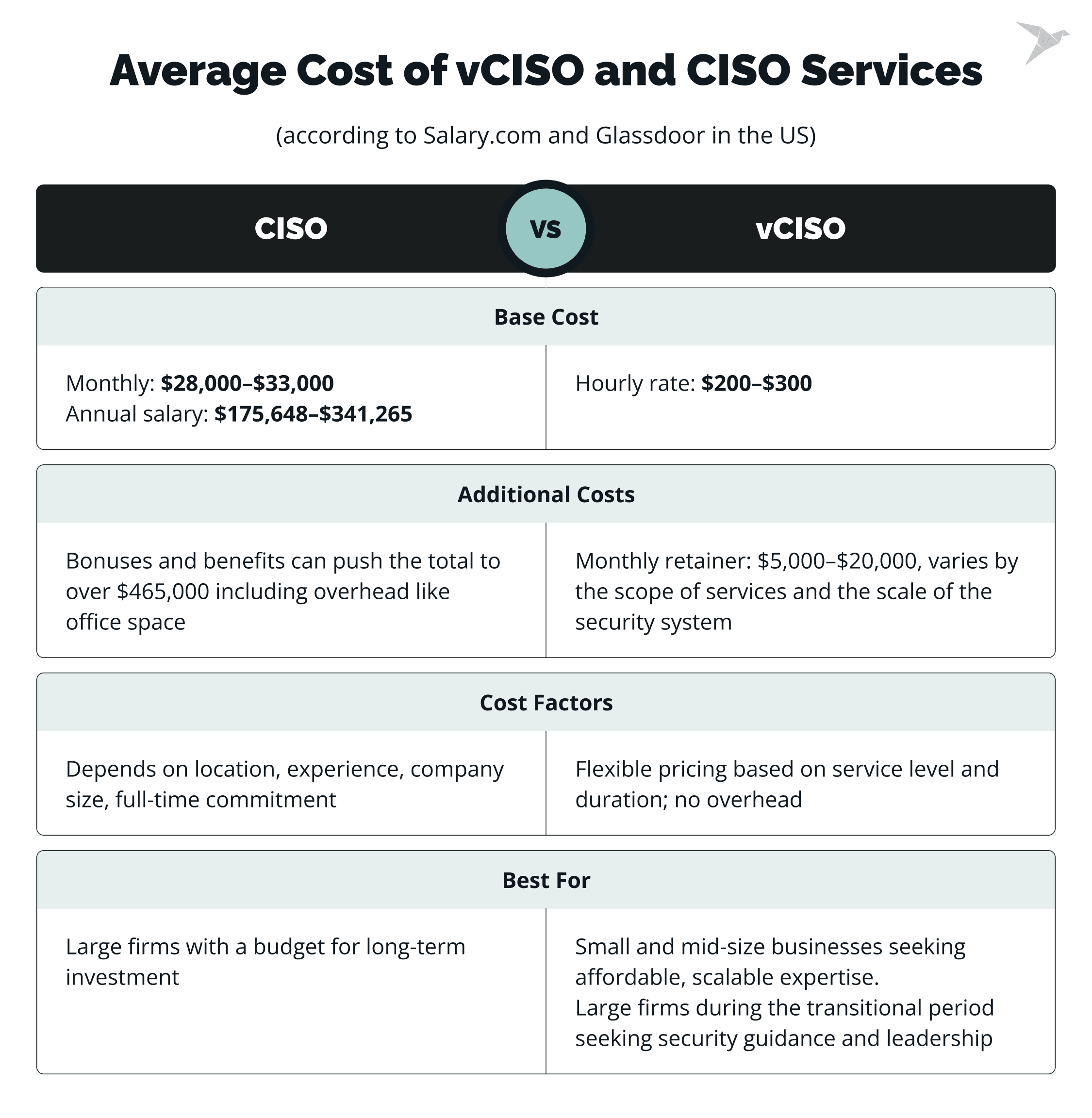
Money writes its own chapter, and budget is often the deciding factor. A CISO's salary, benefits, and overhead can run into hundreds of thousands a year, which is heavy for a smaller budget. A vCISO is easier to plan for, with flexible pricing like hourly rates or monthly retainers you can match to what you can spend.
Resource availability
Hiring a CISO takes time to recruit, train, and retain, and average tenure is only about 26 months, so turnover is really risky. A vCISO eases that. The provider backs them up, so if one expert leaves, another steps in without leaving you exposed.
Integration
A CISO is deeply embedded in the company culture and builds trust across teams over time. A vCISO is an outsider by design, so they integrate less, but, on the other hand, their objectivity and breadth come from this distance.
In practice, both work with cross-functional teams like IT, DevOps, and AppSec. The main difference here is cadence: a vCISO usually coordinates on specific, time-bound work, like a compliance project or an incident, while a CISO is involved day-to-day across every security process.
Business value
Both defend against the same threats. A CISO’s value is depth: continuous management that high-stakes industries rely on, with incident response and compliance handled from the inside. A vCISO’s value is access: cost-effective, flexible security for companies that would otherwise go without, plus cross-industry ideas that help SMBs keep up.
Advantages of vCISO over CISO
Comparing the two, the virtual option has a few clear strengths. Here’s a closer look.
Diverse experience
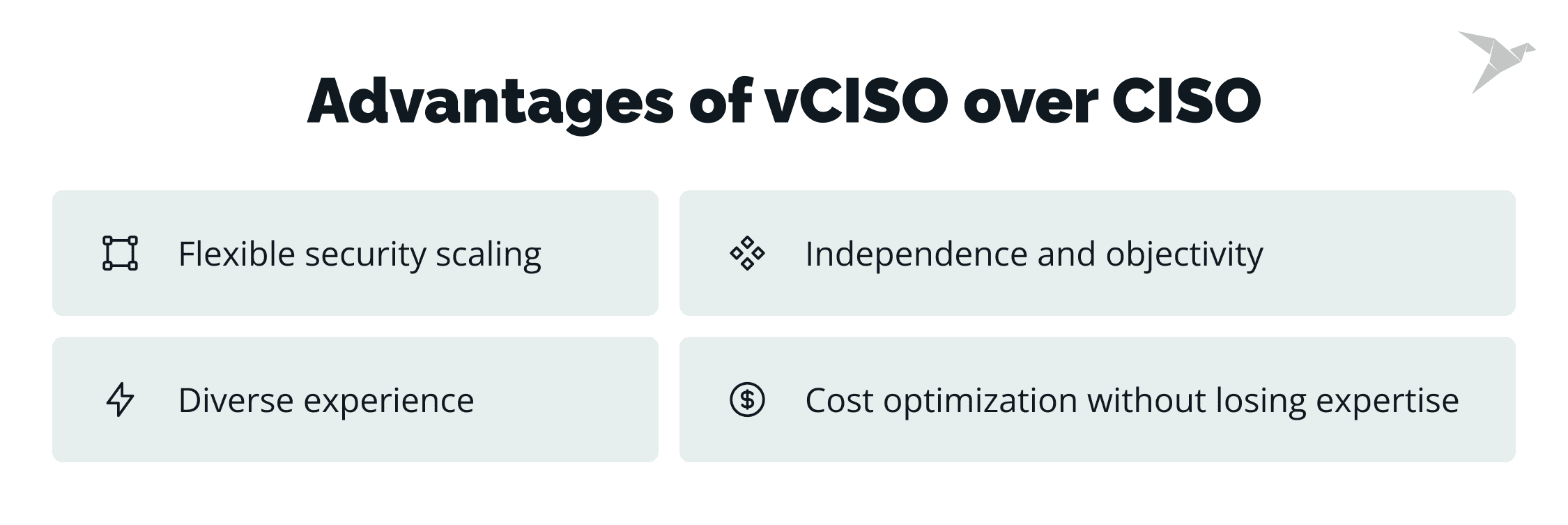
A vCISO brings knowledge from working across many industries. Where a CISO goes deep on one organization, a vCISO pulls lessons from many clients, so they can apply approaches that have already worked elsewhere to your situation.
You get current, practical security thinking tuned to today’s risks.
Flexible security scaling
Your security needs aren’t static; they rise and fall with the business. A vCISO scales their support to match. Whether it’s a quick risk check or a full compliance plan, you get the right level of protection when you need it, without the cost of a full-time role.
Cost optimization without losing expertise
A tight budget shouldn’t mean weak security. A vCISO costs far less than a CISO’s yearly salary, and you still get senior expertise. For cost-conscious organizations, that balance is what makes the model work.
Independence and objectivity
A vCISO gives you an outside view. Free of internal politics, they often catch risks and gaps an in-house leader might miss, which helps a lot with compliance and audits. You get a clear, independent read on your security.
Get experienced cybersecurity guidance

Traditional CISO vs vCISO: What Do You Need?
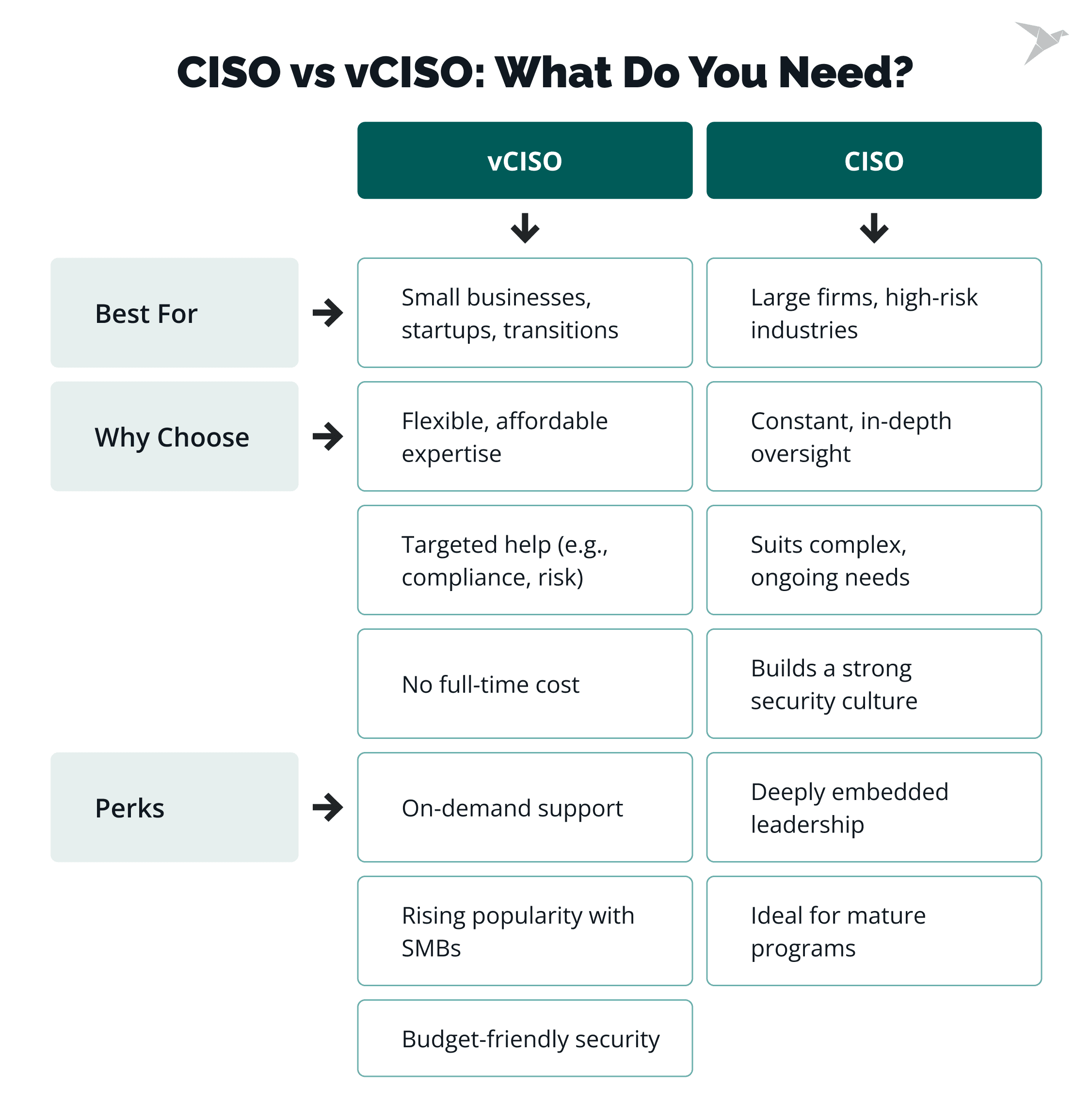
A CISO makes sense when you need constant, in-house oversight. A vCISO is the better fit when agility and value come first, for small businesses, startups, or companies in transition, like those filling a temporary gap or running a specific project.
For example, an established healthcare organization under HIPAA may need a full-time CISO to keep compliance running without a break. A growing SaaS startup preparing for SOC 2, on the other hand, might get more value from a vCISO for periodic audits and strategy.
vCISOs are good at targeted support, like a compliance plan or a risk assessment, without a full-time cost, and their flexible pricing is a big reason they’re catching on with SMBs. Need extra expertise for your team for a while? A vCISO gives you that on demand.
A traditional CISO suits larger organizations with complex, ongoing needs, think big financial firms or healthcare providers where constant oversight is non-negotiable. If your security program is already mature and cybersecurity drives your strategy, a CISO embeds deeply and builds a strong security culture.
What to choose for your organization's cybersecurity?
It comes down to your needs. A CISO anchors large organizations that need relentless protection. A vCISO is the leaner, more flexible option, and a strong pick for anyone weighing cost and adaptability.
Its growing use among SMBs is a trend worth watching. For many smaller companies, the virtual route wins on being effective, affordable, and built for fast-moving threats.
Cost Comparison: vCISO and CISO Services
Can You Switch from CISO to vCISO?
If your budget tightens or you need specialized skills, a vCISO can step in without leaving security thinner. This kind of switch is common, especially once full-time oversight is no longer critical.
How to do it
Here’s the transition, step by step.
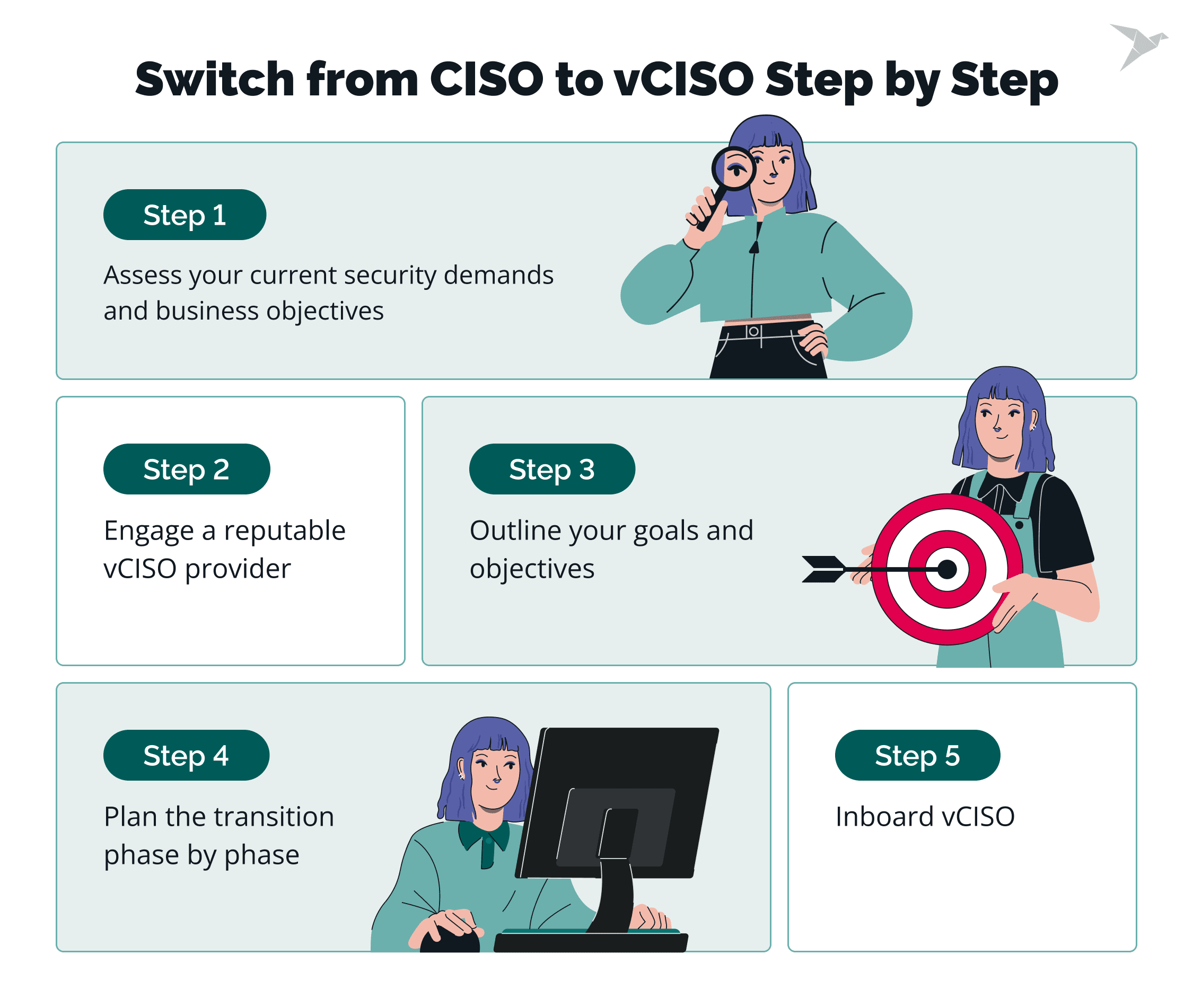
- Assess your current security demands. Are daily operations steady? Do you mainly need strategic help, like compliance support or a risk audit? If so, a vCISO could fit.
- Engage a reputable vCISO provider. Look for a firm with a solid track record, and check reviews or ask peers so you know you're working with people who deliver.
- Outline your precise goals. Be specific about what you need, whether that's a compliance roadmap or ongoing strategic advice. Clear goals set the work up to succeed.
- Plan the transition. Map out how responsibilities shift, when the CISO role phases out, and how the vCISO takes over. Keep it simple so nothing overlaps or falls through.
- And finally, bring the vCISO in. Share your goals, give access to key systems, and let them start on the targeted work. A good provider makes the handoff smooth.
Hybrid option
You don't always have to pick one. A growing option blends both: keep a CISO for core leadership and add a vCISO for specific projects. The hybrid model works well for complex needs, like a new regulation or a major tech upgrade. It's a practical way to pair steady guidance with on-demand expertise.
Switching or mixing roles lets you line security up with your budget and goals. A vCISO brings outside perspective at a lower cost, and a hybrid setup covers both bases. Either approach gives you room to adjust as threats change.
TechMagic is Your Trusted Partner in vCISO Services
Need solid cybersecurity without a full-time CISO? TechMagic can help. We offer vCISO services that bring expertise and flexibility to your business, whether you’re a startup watching costs or a company facing new risks. Our team works with you to find solutions that fit, keeping things simple and affordable.
We’re not just a service but a security team you can count on. Our vCISO experts have experience across industries and handle everything from compliance to risk assessments. No long contracts, just the support you need when you need it, starting with a few hours or a monthly plan. We’ve got a strong history of getting results, so you know you’re in good hands.

Final Thoughts
Choosing vCISO or CISO comes down to what your business needs. Both roles tackle cybersecurity, but the difference between CISO and vCISO is drastic. A vCISO offers part-time, affordable expertise. It is perfect for startups or small businesses wanting flexibility. A CISO, though, is a full-time leader, best for big companies with complex, ongoing demands.
Trends show vCISOs gaining ground, especially among SMBs, with their market set to hit $1.48 billion by 2032. They bring diverse skills and quick solutions. CISOs, on the other hand, provide steady, profound control, but their price and narrower focus can weigh heavy.
For smaller firms, a vCISO’s cost savings and adaptability often win out. Larger organizations might lean on a CISO’s constant presence. Either way, both keep threats at bay. Weigh your budget, size, needs of internal teams, and goals – then pick the option that fits.
FAQ

A vCISO, or virtual Chief Information Security Officer, gives you part-time cybersecurity expertise. They focus on strategic work like risk assessments, compliance, and security planning, so you get senior guidance without a full-time hire.
A vCISO handles cybersecurity: risk management, security strategy, and threat protection. A vCIO, or virtual Chief Information Officer, handles broader IT strategy, like tech planning and operations. The vCISO secures; the vCIO steers.
A vCISO costs less: roughly $200–$300 an hour or $5,000–$20,000 a month, against a CISO’s $28,000–$33,000 a month. You get flexibility, cross-industry expertise, and quick solutions without a long-term commitment. A vCISO can also help oversee internal security teams, sharpen security policies, support compliance, and strengthen your overall security posture.
Choose a virtual CISO/vCISO for smaller businesses, startups, or temporary needs like compliance projects, improving security practices, or filling a gap. It is more about strategic leadership and bringing new expertise to internal security teams. An in-house CISO fits larger firms with multiple clients and more complex executive management or high-risk industries needing constant, on-site leadership. It’s about budget and scale.