
 Software Development
 Security Services
 Cloud Services
 AI Services
 Other Services















 TechMagic Academy




What if your hotel's greatest competitive advantage lies in how well you embrace digital transformation?
Imagine this: a guest walks into your hotel expecting a flawless digital experience from check-in to check-out. They want personalized recommendations, instant support, and the ability to control everything from room temperature to room service right from their phone. Now ask yourself: is your hotel ready to meet these customer expectations?
Digital transformation is a must-have today. Yet, this journey can be hard. That's why having a solid digital transformation plan is necessary: to keep guests coming back.
This article covers the following:
- Definition of digital transformation in the hotel industry
- The detailed guide on hotel digital transformation journey for hotels
- Practical ideas, examples, and tips on implementing digital transformation in your hotel
Ready? Let's start.
What Is Hotel Digital Transformation?
Digital transformation in the hotel industry refers to the strategic integration of digital technologies into all phases of hotel operations. Simply put, it is about reimagining traditional services, processes, and guest experiences to keep up with modern technologies.
A quick example: If a hotel uses AI chatbots to provide 24/7 guest support, it can improve customer satisfaction and reduce the need for constant staff availability. According to Deloitte, more than 50% of hospitality leaders are implementing technology to reduce labor shortages while increasing guest satisfaction.
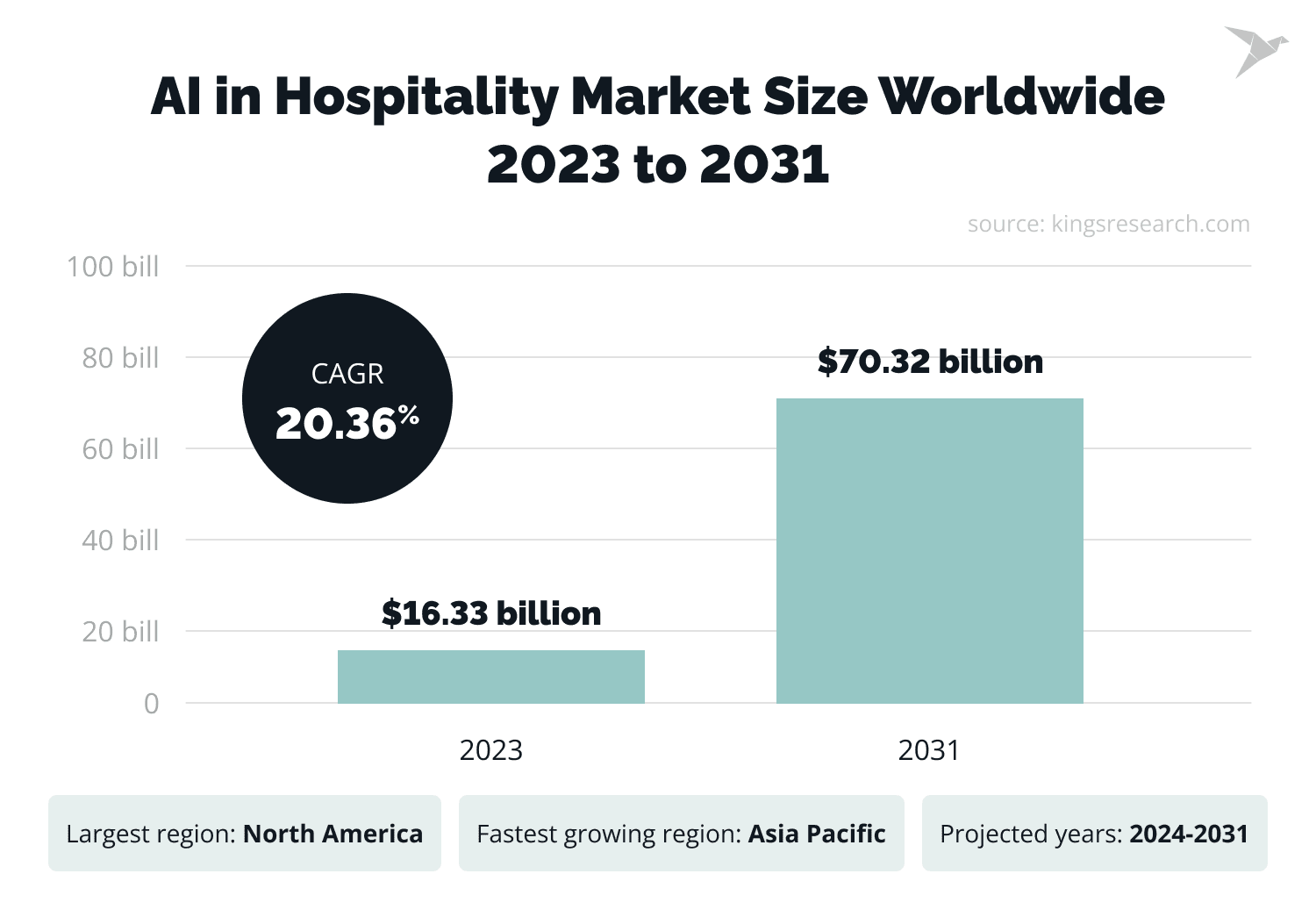
The growing adoption of AI is reflected in statistical figures. Thus, the AI in hospitality market size worldwide reached $16.33 billion in 2023 and is expected to hit $70.32 billion by 2031, with a CAGR of 20.36% from 2024 to 2031.
Still hesitating if your hotel needs it? Let’s see the key benefits of hotel digital transformation:
- Guest experiences get better. Technologies like virtual tours, contactless check-ins, and AI personalization result in smooth interactions and a fantastic satisfaction rate.
- Revenue increases. Hotels can maximize profitability if they optimize pricing strategies with data analytics and personalized offerings.
- Operational costs decrease, efficiency grows. Smart energy management and process automation reduce overhead costs and, at the same time, improve productivity.
7 Steps Roadmap to Hotel Digital Transformation
Before the steps, one number that reframes all of them. In Hospitality Technology's 2024 Lodging Technology Study, covering more than 10,000 properties worldwide, 63% of hotel IT budgets went to maintaining and optimizing existing systems. Only 30% funded new implementations.
So digital transformation isn't competing with doing nothing. It's competing with keeping the property management systems alive. Plan accordingly.
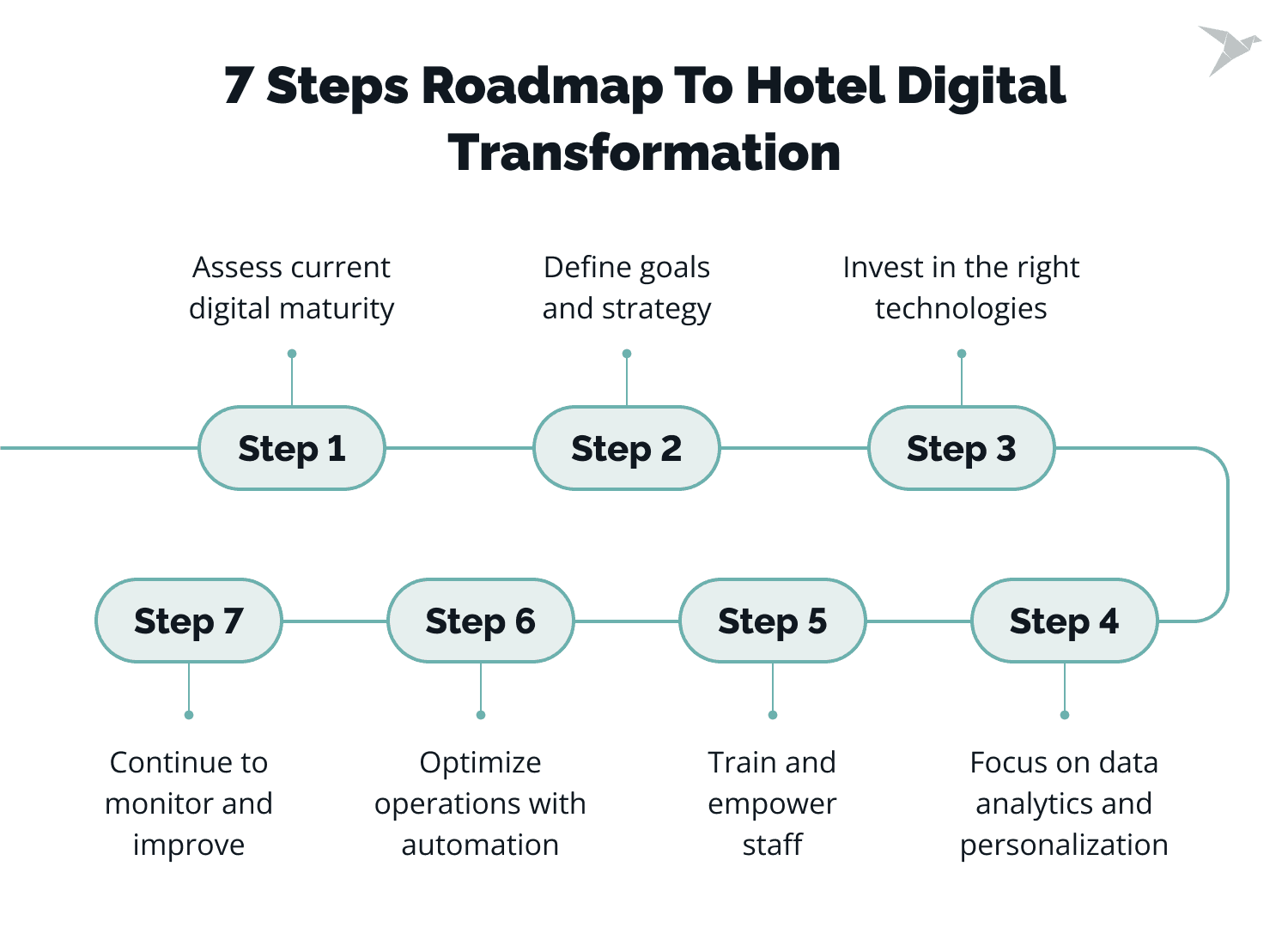
Step 1: Assess current digital maturity
Start with an honest inventory. What runs your bookings, your PMS, your point of sale, your key cards, your guest messaging? More importantly: what talks to what?
Most hotels discover the same thing here. The systems work individually and share almost nothing. Guest data sits in four places with four versions of the same person, which is why personalization efforts stall before they start.
Ask your front desk team what they retype every day. That list is your integration backlog, and it's more accurate than any vendor audit.
Score each system on three things: does it have an API, is it still supported, and can you get your own data out of it? Anything failing two of the three is a blocker on every project that follows, no matter how much modern technology you layer on top.
If you want a hand structuring that assessment, our digital transformation services team does this as a discovery exercise.
Step 2: Define goals and strategy
Pick outcomes rather than technologies. "Reduce check in queues at peak arrival" is a goal. "Implement a mobile app" is a purchase.
Tie each goal to a number you already track: average check-in time, ancillary revenue per stay, housekeeping turnaround, direct booking share. If nobody currently measures it, that's your first project.
And sequence ruthlessly. A hotel that fixes guest messaging before fixing its guest data will do the second project twice.
Step 3: Invest in the right technologies
This is where budgets go astray. The temptation is to buy the visible thing, whether that's the smart room or the branded mobile app, while the integration layer underneath stays broken.
Priorities from the same study are telling: 80% of hotel operators name driving guest loyalty as a top technology objective, 76% say employee productivity, and 76% say data security. Notice that two of the three are internal.
That's the honest picture of where operational efficiency actually comes from. Guests notice the app; the P&L notices the systems nobody photographs. Clean, seamless integration across your PMS, booking engine and CRM will improve operational efficiency more reliably than any single guest-facing purchase, and it's what makes the guest-facing purchases work when you get to them.
Our practical rule: buy guest-facing digital tools only after the systems behind them can supply the data those tools need. A mobile check in that can't see the reservation status is worse than a friendly human.
Step 4: Focus on data analytics and personalization
Personalization runs on data you already collect and probably don't use. Past stays, room preferences, spend patterns, guest feedback.
Start narrow. One segment, one offer, one measurable outcome. Returning business guests get their usual room type held automatically, or repeat leisure guests get a spa offer timed to when they historically book. That beats a platform-wide personalization programme nobody can evaluate.
Revenue management is the other side of the same data. Dynamic pricing works better when it knows who's booking and why, rather than only how full you are.
Guest feedback belongs in the same pipeline. Review scores, post-stay surveys and complaint logs tell you which hotel services are underperforming long before the numbers do, and feeding them back into the same guest profile is what turns reporting into action.
Step 5: Train and empower staff
Hotel staff will decide whether any of this works. They're also the group most often handed new technology on a Monday with no context.
Two things matter. Explain what problem the tool solves for them rather than for the guest. A system that saves the front desk fifteen minutes per shift gets adopted. A system that only helps head office does not. And pick internal champions per department, because peer training beats vendor training every time.
Expect a productivity dip for a few weeks. Budget for it rather than being surprised by it.
Step 6: Optimize operations with automation
Automation earns its keep in the places guests never see. Housekeeping assignment. Energy management in empty guest rooms. Inventory reordering. Night audit. Shift scheduling against occupancy forecasts.
Guest-facing automation is trickier. 71% of hotel operators believe guests see guest-facing technology as putting them in control. But 21% think it creates friction, and both groups are right depending on execution. The test is whether the automated path is genuinely faster than asking a person. If it isn't, guests will find the person.
Step 7: Continue to monitor and improve
Here's the uncomfortable finding: only 32% of hotel professionals say technology ROI is easy to measure, 61% say traditional ROI metrics don't capture it, and 78% would like better ways to measure.
That's not a reason to skip measurement. It's a reason to define what success looks like before you buy, while you still have negotiating room with the vendor. Track adoption rates rather than installations. A digital key nobody uses is a cost. It only becomes a capability once guests actually reach for it.
Review quarterly. Kill what isn't working. Hotels are unusually reluctant to switch off technology they've already paid for, and that sunk-cost instinct gets expensive.
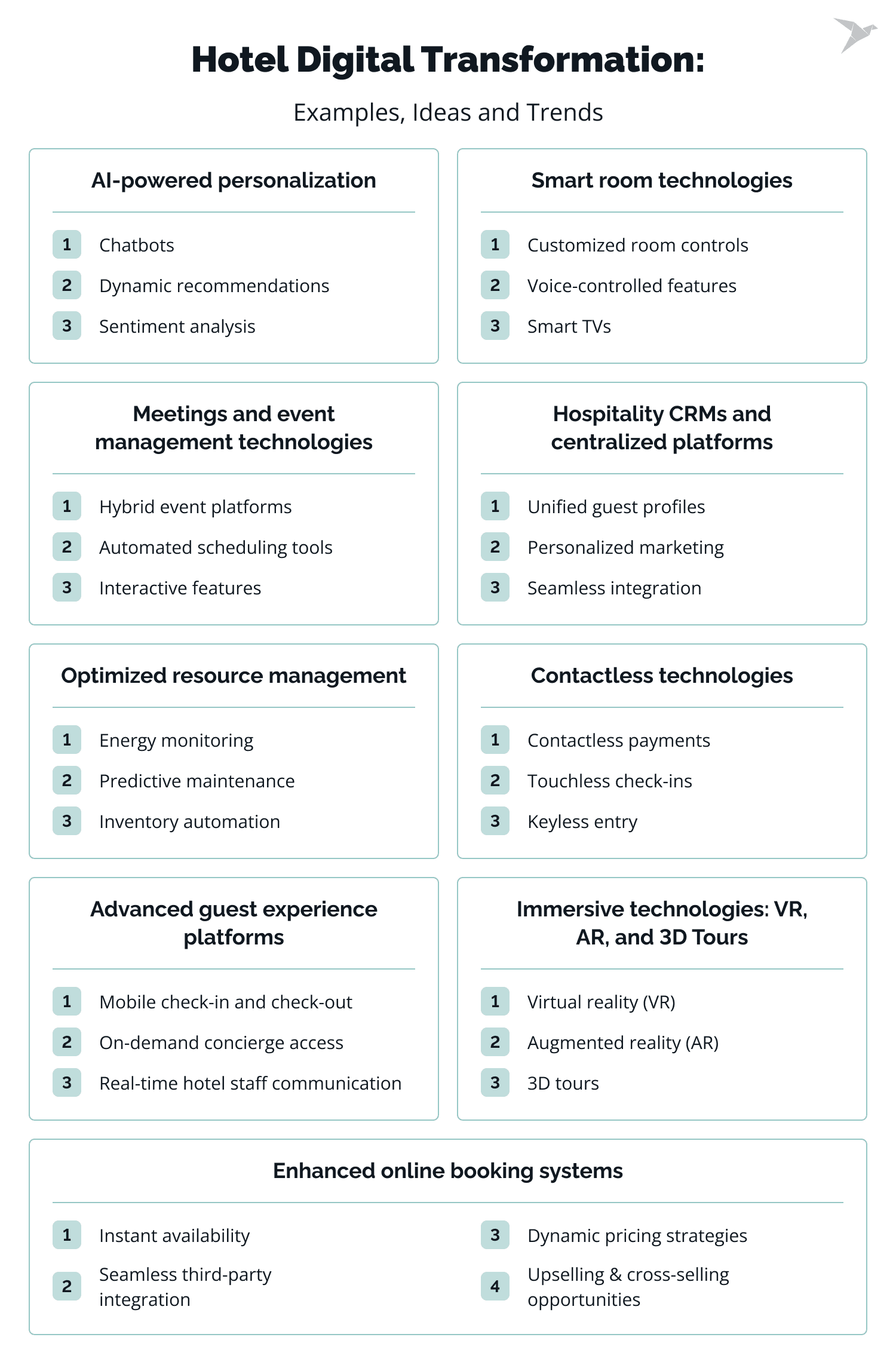
Examples, Ideas, and Trends of Hotel Digital Transformation
Let's see what's actually being deployed, and what it's worth.
Contactless check-in and digital keys
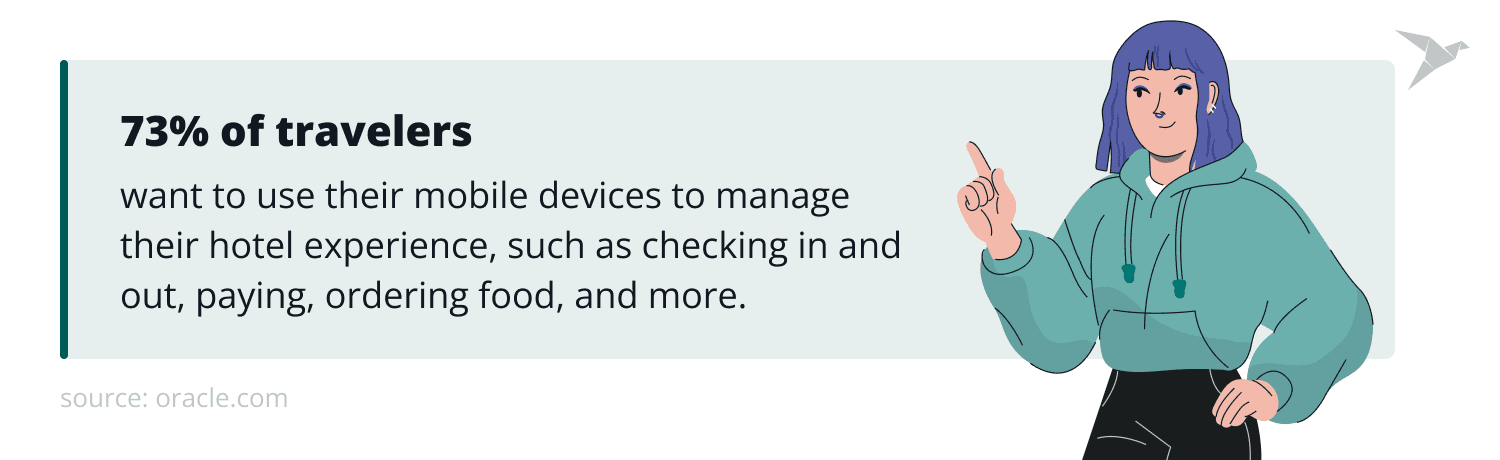
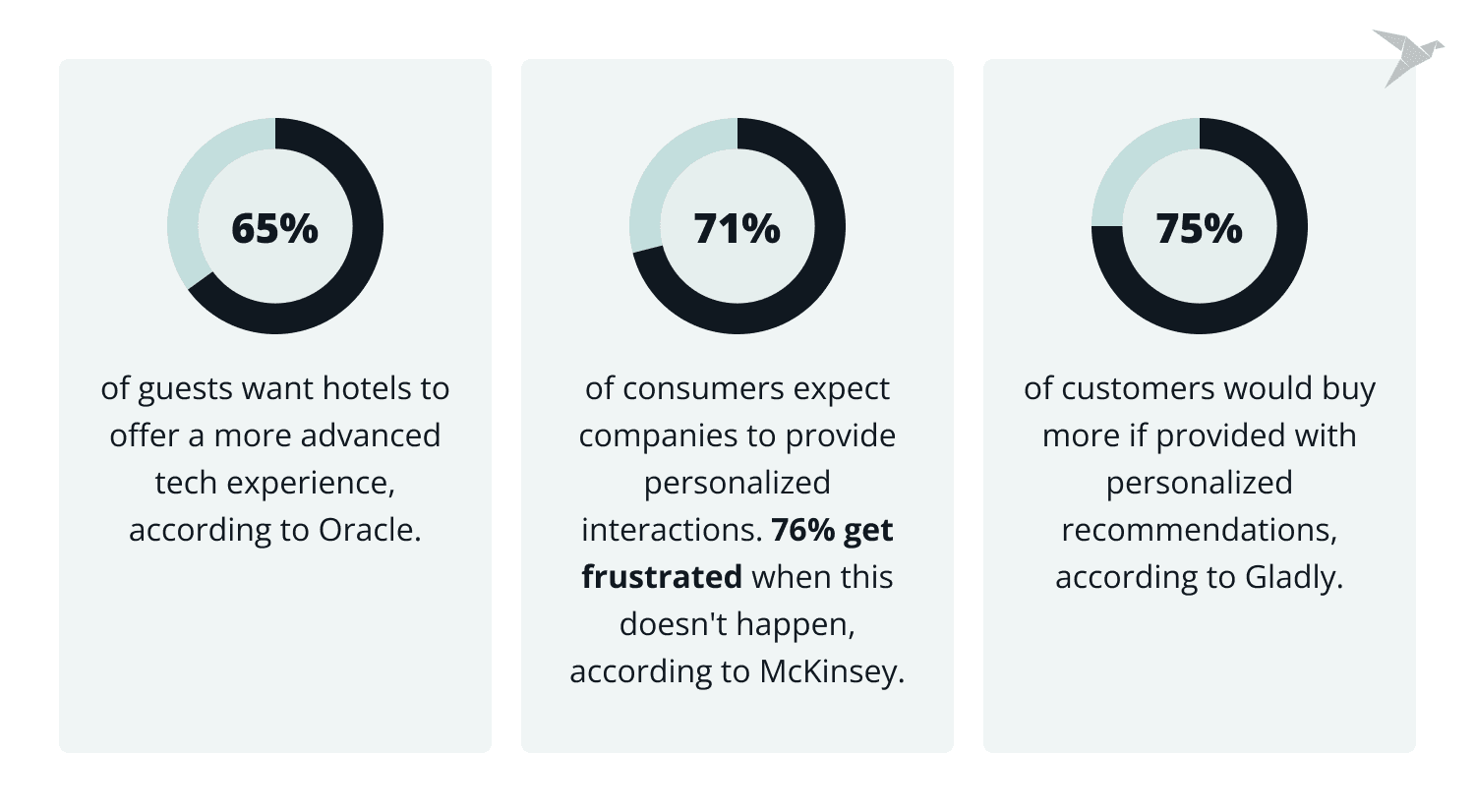
The clearest guest-demand signal in hospitality. Oracle Hospitality and Skift research found 73% of travelers are more likely to choose hotels offering self-service technology like mobile check in and check-out.
The value isn't only speed. It's that arrival stops being a bottleneck at 4pm when three coaches land at once. Mobile check works best as an option alongside a staffed front desk rather than a replacement. The guests who want it really want it. The rest still want a person.
AI-powered personalization and guest services
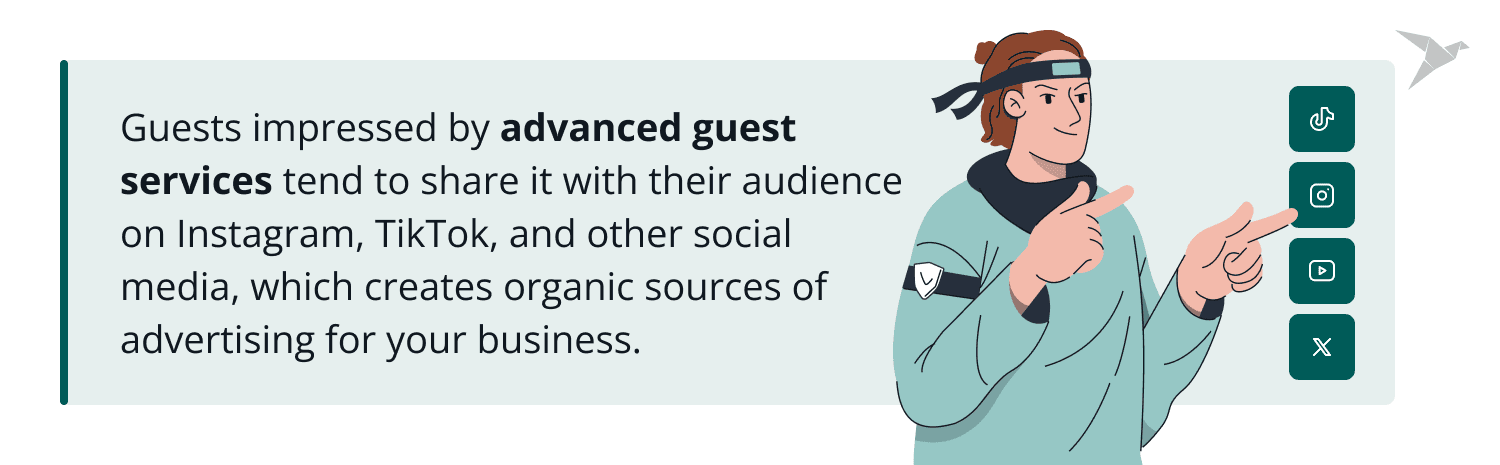
Chatbots handling the 2am questions. Recommendation engines suggesting restaurants based on prior stays. Dynamic upsell offers priced against remaining inventory.
Phocuswire reported that 65% of global travel tech investment went into AI, much of it aimed at smarter pricing. Our own read: the guest-facing chatbot gets the attention, while the revenue management model quietly earns more.
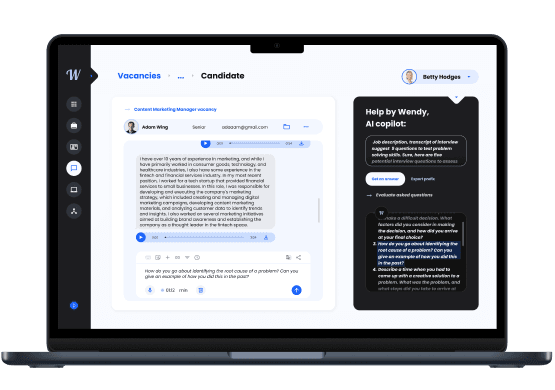
Learn how we built an AI-powered recruitment assistant using OpenAI stack
Smart room technology and in room entertainment
Lighting, climate, blinds and in room entertainment controlled from a phone or a panel. Casting from a guest's own streaming accounts, which now matters more than the TV channel lineup.
Two cautions from experience. Every smart control needs an obvious manual override, because the guest who can't turn off the lights at midnight writes the review. And smart room hardware ages faster than the room does, so factor replacement into the business case.
Enhanced booking and property management systems
The booking engine is where direct revenue is won or lost against the OTAs. Fewer steps, honest pricing, and a mobile-first flow that doesn't ask for the same information twice.
Behind it, modern property management systems with real APIs are the difference between a hotel that can add capability and one that can't. This is the least exciting item on this list and the one most likely to block the others.
Hospitality CRM and centralized guest profiles
Everything above depends on knowing who the guest is, and that only works when one profile follows them across booking, stay, spend and feedback. A hospitality CRM is what holds that together.
Most properties already have the raw material scattered across systems. The work is consolidation and matching, which is unglamorous and pays back further than anything else on this list. Without it, personalized services stay theoretical and every campaign targets the same undifferentiated list.
One caution: consolidating guest data pulls privacy obligations along with it. Decide your retention rules and consent handling as part of the build. Doing it once legal has read the spec costs a great deal more.
Event management and group business
Event management technology handles enquiries, floor plans, catering, room blocks and billing in one place. For properties where conferences and weddings carry the P&L, this is often a bigger commercial lever than anything on the guest app.

Immersive technology: virtual reality, augmented reality, virtual tours
Virtual tours have become standard for group and event sales, and they shorten the sales cycle because planners stop flying out to see rooms. Virtual reality walkthroughs suit large venues; augmented reality has found narrower use in wayfinding and in-room information.
Being straight about it: for most limited-service hotels this is still marketing rather than operations. Worth doing well if group business matters to you, worth skipping if it doesn't.
Optimized resource and energy management
Occupancy-linked HVAC, predictive maintenance on lifts and boilers, laundry and inventory forecasting. Modest individually, meaningful across a portfolio, and the payback period is usually the easiest to calculate in this entire article.
This is also where smart technology earns trust internally. A maintenance team that watched predictive alerts prevent two boiler failures will back the next project without a business case, which is worth more than it sounds.
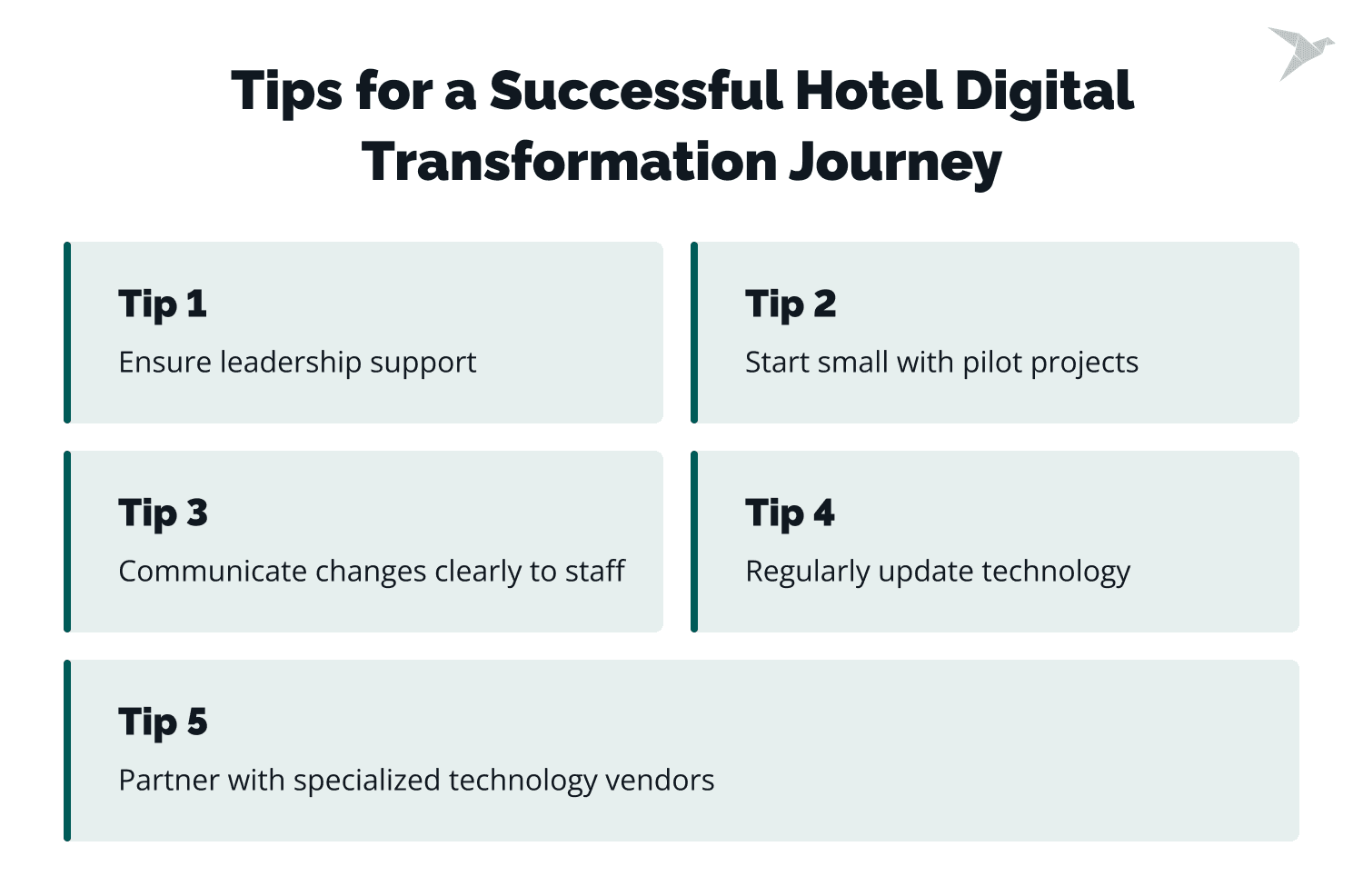
Expert Tips for a Successful Hotel Digital Transformation Journey
Tip 1: Get genuine leadership support
Not a signature on a budget. Someone senior who will make the call when two departments disagree about whose process changes. Transformation projects rarely fail on technology; they stall when nobody can settle an argument.
Tip 2: Start small, with a real pilot
One property, one problem, one measurable result. A pilot that succeeds gives you the internal case study you need for the rollout, and a pilot that fails costs you a quarter instead of a year. New technologies rarely behave the way the demo suggested, and you want to find that out at one property.
Choose the pilot property carefully. You want a capable GM who actually wants the project, rather than whichever site has the worst numbers.
Tip 3: Partner with specialized technology vendors
Hospitality has particular constraints. Round-the-clock operations, high staff turnover, guests who won't read instructions, and integration with systems that predate the smartphone. Generalist software teams learn all of that on your money.
Ask any prospective partner how they'd handle a PMS integration failing at 6pm on a Friday. Their answer tells you most of what you need to know.

Tip 4: Communicate changes clearly to staff
Tell people what's changing, when, and what it means for their shift. Then tell them again. The most common failure we see is a well-built system nobody explained, quietly worked around by the team it was meant to help.
Tip 5: Keep technology current
Software you stop updating becomes the legacy system your successor complains about. Build maintenance and licensing into the operating budget from day one rather than treating each upgrade as a fresh capital request.
Wrapping Up
The hospitality industry is heading toward $5.8 trillion by 2027, and guest expectations are being set by whichever app someone used before they opened yours.
But the roadmap above works in order for a reason. Assess honestly, define outcomes, fix the data layer, then buy the visible things. Hotels that reverse that sequence end up with an impressive mobile app sitting on top of systems that can't feed it, which is an expensive way to disappoint people.
Done in the right order, this work becomes a genuine competitive advantage rather than a line item. The properties that enhance guest experiences consistently are rarely the ones with the longest technology list. They're the ones whose systems agree with each other.
If you're mapping out where to start, or stuck partway through, our team works with hospitality businesses on exactly this. We'll also tell you when a technology isn't worth your quarter.

FAQ

It's integrating digital technology across hotel operations, covering bookings, guest services, housekeeping, revenue management and guest communication, so that processes and guest experiences work the way modern guests expect. The key word is across. Adding a mobile app to unchanged back-office systems is digitization wearing a bigger word.
Start with an audit of what you run and what connects to what. Set goals tied to numbers you already track. Fix guest data and integrations before buying guest-facing digital solutions. Then pilot on one property, train staff properly, and measure adoption rather than installation. Most hotels get further by sequencing this well than by spending more.
It's moved the competitive line. Guests now compare your check in process against every other app on their mobile devices, and hotel staff expect systems that reduce work rather than add it. The winners aren't the properties with the most technology. They're the ones whose systems talk to each other, which is what makes personalized services and smooth guest experiences possible at all.