 Software Development
 Security Services
 Cloud Services
 AI Services
 Other Services















 TechMagic Academy


How TechMagic Made Elements.cloud's Salesforce Org Intelligence Agent-Ready With Claude
Last updated:28 September 2026


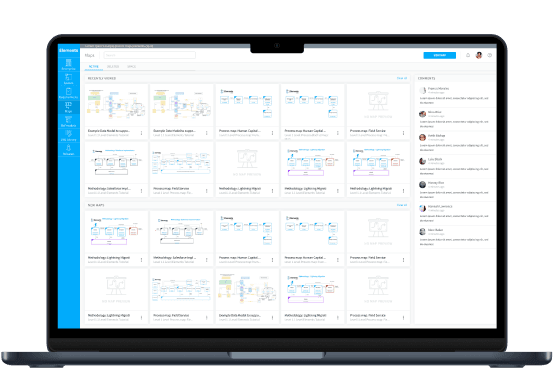
Elements.cloud gives Salesforce teams deep insight into their orgs: metadata, dependencies, change impact, tech debt, compliance. Reaching that insight wasn't always easy, and adoption showed it.
TechMagic partnered with Elements to close that gap, building a custom MCP server that connects Claude directly to the platform. Here's what our engineers built, how they built it, and what changed for Elements' customers once it shipped.
The Challenge: Deep Insight Behind a Steep Learning Curve
A product capped by Salesforce know-how
How much value a user got out of the platform depended on how well they already understood Salesforce. A steep learning curve kept plenty of that value out of reach.
A hypothesis: let users ask Claude instead
Elements had a hypothesis worth testing: expose the platform to an AI agent, and users could reach outcomes they'd never find by clicking through screens. Instead of learning the product, a user could just ask Claude.
The Build: An MCP Server That Respects User Permissions
Building that meant giving Claude real access to a customer's Elements Space and Salesforce org. It couldn't have any more access than the user already had.
An OAuth 2.1 connector built with Elements' architect
TechMagic engineers worked alongside Elements' lead architect to build the Elements MCP Server. It's an OAuth 2.1 connector that lets Claude query a customer's Elements Space and Salesforce org directly. Every tool call runs through the same services and permission checks as the Elements UI, so Claude never operates outside the permissions of the user it's acting for.
What a user can do with it
In practice, a user can ask Claude to trace the impact of a change, run an org health check, diagnose an Agentforce agent, or turn what it finds into process maps and user stories. The server ships as a claude.ai connector and a one-command Claude Code plugin. Its capabilities come packaged as agent skills, so teams reach it wherever they already work with Claude.
Claude Code as our own engineering tool
Our own engineers used Claude Code as their core tool throughout the build. They used it for planning, implementation, and code review, and for drafting the security and permission-parity documentation the release needed.
a BPM app using JavaScript stack and Serverless on AWS
Delivery: Three Releases in Six Weeks
A core team of two TechMagic engineers built the server in 14 weeks flat.
From first commit to v3
From the first commit, v1 reached production at week 8 with 26 tools, v2 followed at week 12 with 36, and v3 shipped at week 14 with 52. Three production releases landed within six weeks.
Today: 65 tools across four instances
The server now runs 65 tools across all four Elements instances: US, EU, JP, and ME.
The Result
Elements measured the impact by comparing each customer's activity in the month before and the month after adopting the MCP server.
Usage more than tripled
- 3x usage of Elements across all MCP customers
- +60% weekly active users per account
- +127% median per-customer adoption
The hypothesis held
Once Claude could work with Elements directly, customers used far more of the platform. More people in each account came back to it every week.
"Elements MCP server is proving to be a game changer," says Xavery Lisinski, CEO and CPO at Elements.cloud.