














Digital Concierge in Hotels: Revolutionising Guest Services in 2026
Last updated:27 March 2025



The hospitality industry has always prioritized excellent customer service, constantly adapting to meet guests' evolving needs. As technology advances, more hotels are turning to innovative solutions to enhance both the guest experience and their operations.
One of the most exciting of these innovations is the digital concierge.
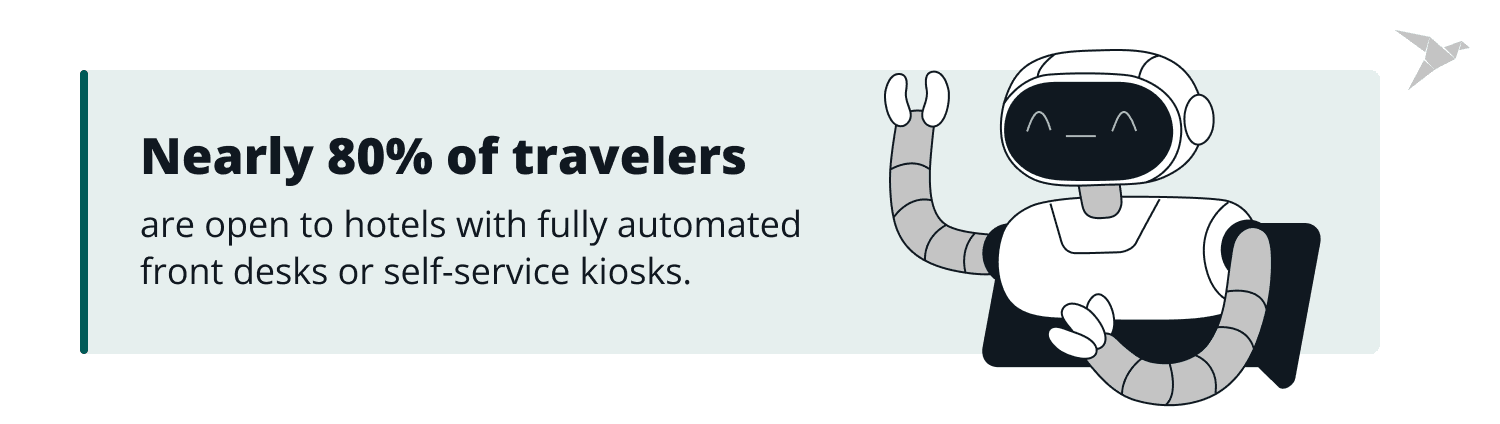
In recent years, travelers have increasingly preferred self-service options during their hotel stays. A survey by Mews and OnePoll discovered that nearly 80% of travelers are open to hotels with fully automated front desks or self-service kiosks. As you can see, the numbers show how important it is for hotels to adopt and understand digital concierge services to meet modern guest expectations.
Key Takeaways
- A hotel digital concierge is an AI assistant for guests. It handles questions, bookings, room service, and recommendations, right from a phone or in-room device, any time of day.
- Nearly 80% of travelers now want self-service options at hotels, per a Mews and OnePoll survey. This is now an expectation, not an extra.
- You can pick the format that fits: guestroom tablets, messaging apps, branded hotel apps, contactless check-in, or AI chat.
- Personalization drives loyalty. The concierge remembers a guest's past choices, like a vegan order or an outdoor activity, and tailors the next stay around them
What is a Hotel Digital Concierge?
A hotel digital concierge, sometimes called a virtual concierge, is a virtual assistant that helps guests with tasks and requests during their stay. Under the hood it runs on Artificial Intelligence (AI), messaging platforms, and mobile apps, and the point is simple: convenient, on-demand service that feels personal. It's available around the clock. Hotel information, booking options, local recommendations, all of it is a tap away, and none of it requires flagging down a staff member.
So guests handle their own requests from a smartphone, tablet, or in-room device, and skip the wait. As a part of digital transformation services for hospitality, the same technology takes routine tasks off hotel staff, freeing them for the things that actually need a person.
Another thing you must know about hotel digital concierge is that it eliminates the traditional barriers between guests and hotel services. Rather than relying on front desk personnel to handle all requests, guests can use their gadgets anytime and anywhere. With travelers increasingly seeking personalized and efficient services, offering this feature has become essential for hotels to stay competitive.
Statistics insights
- AI and mobile apps are what's driving these systems forward.
- The market for digital concierge systems is projected to grow with a 7.4% CAGR from 2025 to 2033.
- Chatbots and virtual concierge tools can cut staff workload by up to 70%.
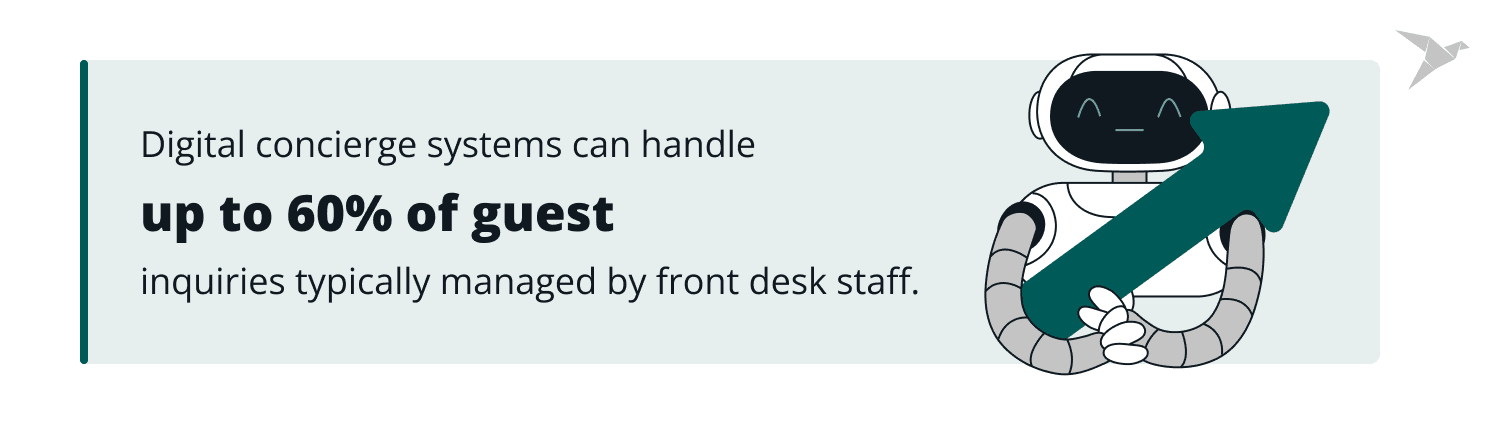
- These systems can field up to 60% of the guest inquiries a front desk would normally handle.
Digital concierge in action
At Virgin Hotels, guests meet Lucy, the virtual assistant built into the hotel's app. Lucy doubles as a contactless mobile key, unlocking the room and setting the lights, thermostat, and TV. She takes room service orders and answers questions about the stay, too.
Behind the scenes, Lucy plugs into Virgin's property management system (PMS), which tracks bookings. She also connects to the point-of-sale (POS) system for food and beverage, the smart controls for in-room appliances, and the guest management software that turns requests into staff checklists. All those integrations let her cover a lot of ground across Virgin Hotels, and remember what each guest likes along the way.
How Does Hotel Digital Concierge Work: Key Features
Virtual concierge solutions offer a range of features that improve the guest experience, streamline hotel operations, and boost efficiency. The main goal of these functions is to make each guest's stay smoother and more enjoyable. Of course, every hospitality business has its unique challenges and needs, so the functionality of your custom hotel smart concierge may include some distinctive features. We’ll take a closer look at some core options.
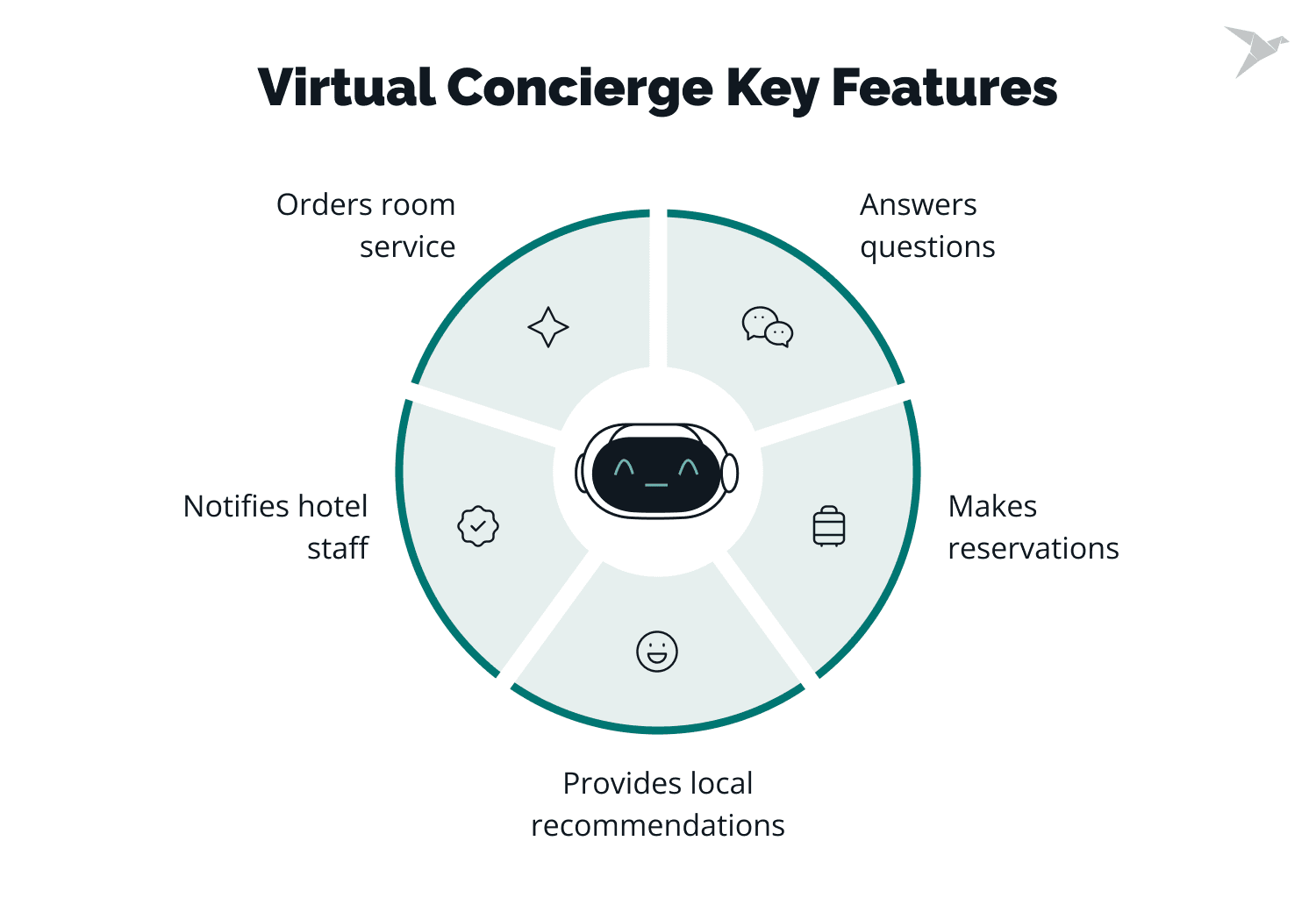
Answers questions
Answering questions is the bread and butter of a hotel virtual concierge. Ask about hotel services, room features, or a nearby attraction, and you get a quick, accurate answer.
No queue at the front desk, no phone call. The answer comes back in seconds, straight to a phone or an in-room tablet. Say a guest wants breakfast hours, or the nearest grocery store. The system answers on the spot, and the stay feels that much smoother.
Makes reservations
The digital concierge can also make reservations table reservations for hotel guests, book a spa slot, and even purchase tickets for a local tour. Beyond the booking itself, the concierge sends reminders and confirmations so nobody misses a reservation. And because it works from real-time availability, the hotel gets cleaner reservation data to plan around.
Orders room service
Room service is part of what people remember about a hotel, and a digital concierge makes it easier still. Guests order meals, drinks, or extras right in the app. No phone call, no paper menu.
A few taps and your guest can tweak an order or add a room upgrade. That frees staff from keying in manual orders, so their attention goes where it counts.
Provides local recommendations
You might notice that guests always want to know where to eat and what to do nearby. A digital concierge answers with recommendations shaped by what that guest actually likes.
Someone who likes the outdoors might get nearby trails or a tour. A guest who's into fine dining gets the best-rated restaurants around. It draws on past interactions and stated preferences, so the suggestions feel picked specifically for them.
Notifies hotel staff
The digital concierge also connects guests and staff. When someone asks for extra towels or housekeeping, the right team gets pinged automatically.
Types of Hotel Digital Concierge Solutions
Digital concierge solutions come in a few shapes, each built for a different guest or operational need. Here are the common ones and where each fits.
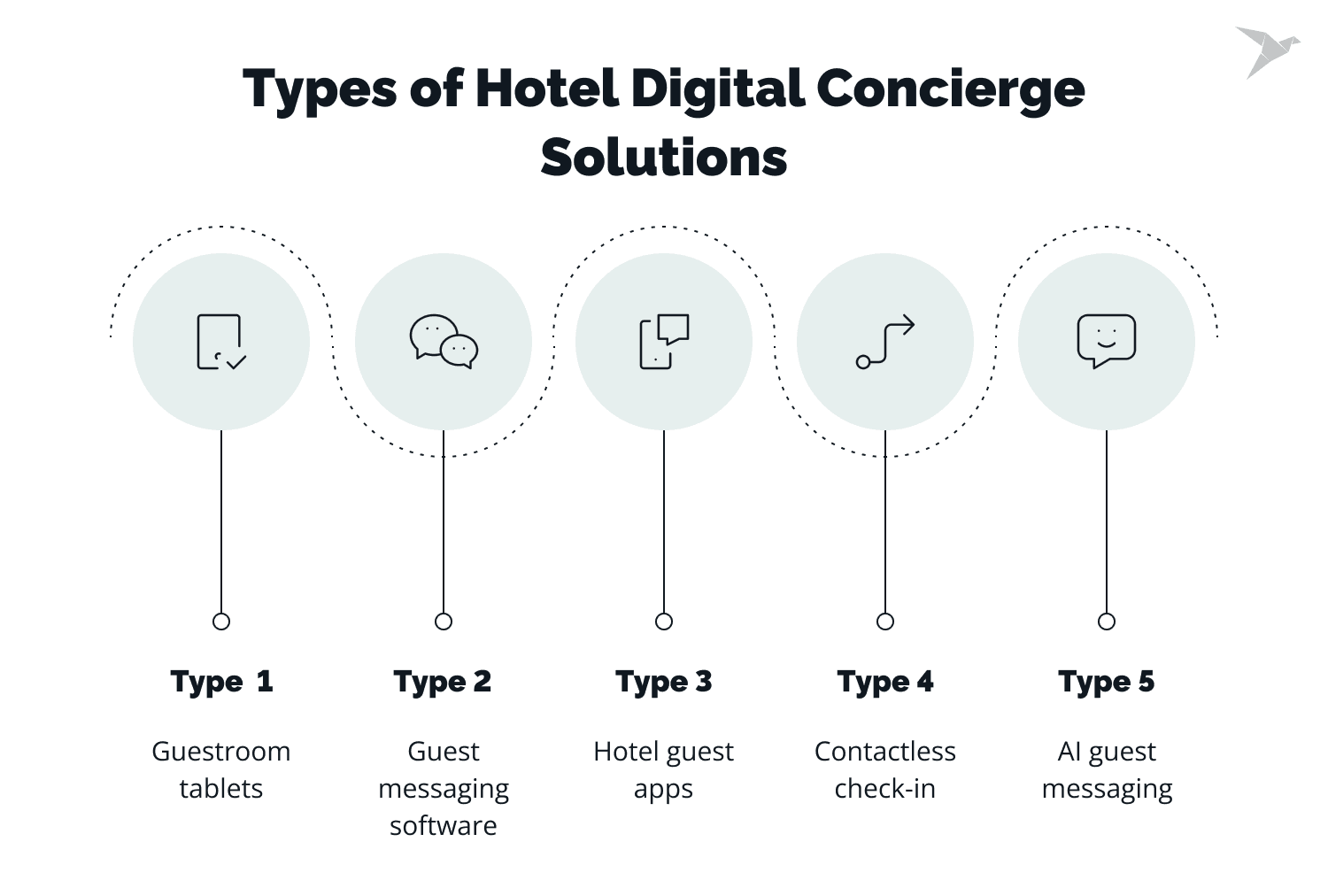
Guestroom tablets
A guestroom tablet is the in-room hub for everything. From it, a guest can order room service, request housekeeping, make a reservation, or browse hotel amenities. It'll also surface local attractions and adjust the room, temperature, lighting, and the rest, without anyone getting up.
It suits upscale hotels that want a high-tech, personal feel. The tablets are easy to use, and they can carry the hotel's own branding, so managing a stay feels like part of the experience rather than a bolted-on gadget.
Guest messaging software
Guest messaging software opens a direct line between staff and guests, over text, email, or in-app notifications. A guest can reach the hotel in a message instead of a queue.
Many of these platforms add an AI chatbot for the routine stuff, the simple questions and quick requests. Guests get an instant reply, and staff keep their time for the things a bot can't handle.
Hotel guest apps
Branded hotel apps are catching on because they pull everything into one place. Concierge services, reservations, remote check-in, even in-room controls for temperature, lighting, and entertainment, all in a single app.
They can also push notifications about a promotion, an event, or a change during the stay. Centralizing everything in one app is what makes it convenient, and what lets the hotel make it personal.
Contactless check-in
Contactless check-in took off during the health-and-safety years and stuck around. A guest checks in from a phone or a kiosk, no front-desk conversation required.
It's faster, and it cuts physical contact. For a hotel that wants check-in to feel quick and effortless, that's an easy win.
AI guest messaging
AI guest messaging is shifting how hotels talk to guests. Using natural language processing (NLP) and Machine Learning, these systems follow a conversation and answer in kind, so the exchange feels closer to talking with a person.
They handle a range of jobs, from FAQs to a room service order. And they get better with use: every past interaction sharpens the next response. That leaves employees free for the guest needs that genuinely call for a human.
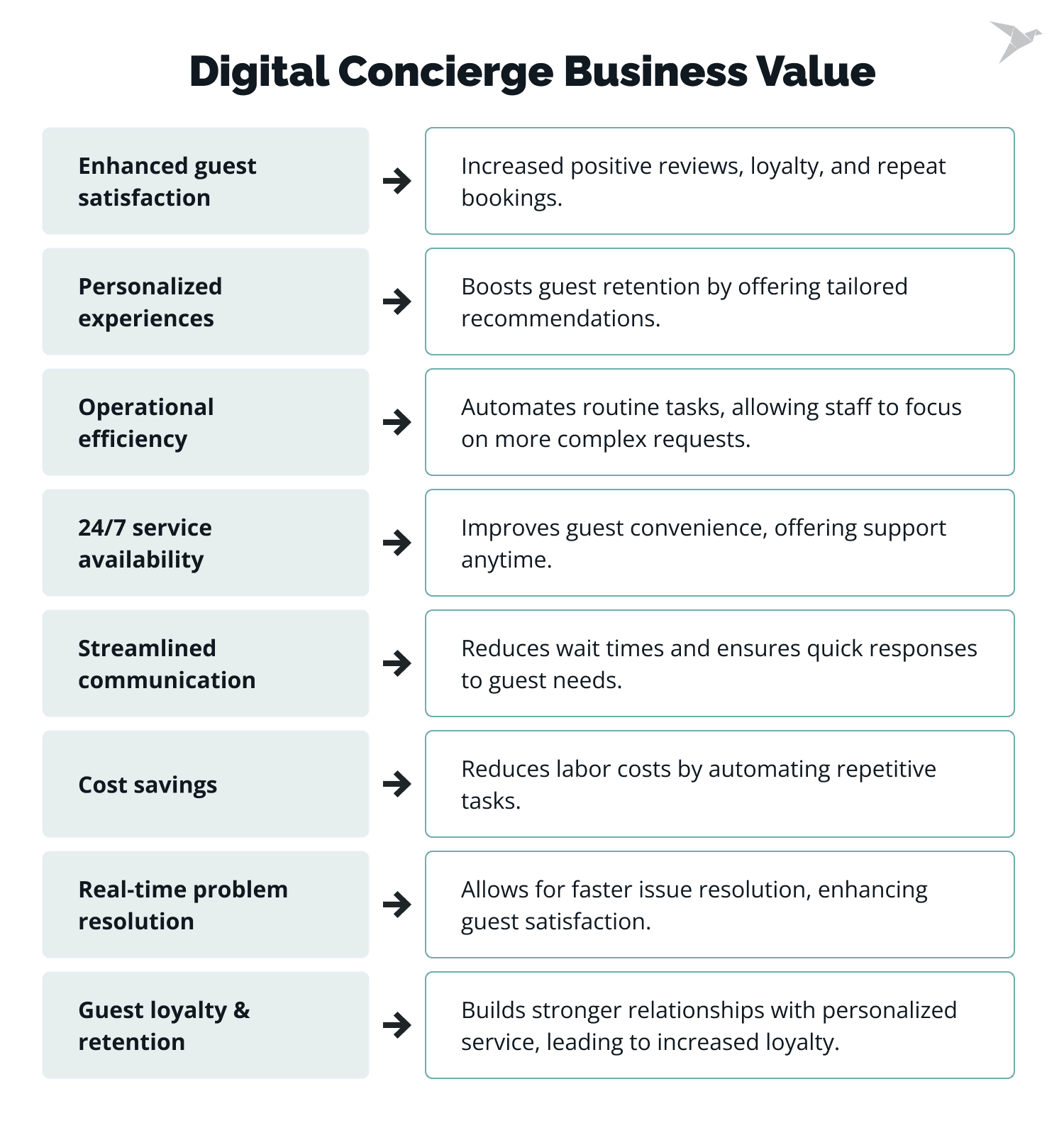
Benefits of Digital Concierge for Hotels: Why You Need It
The upside here is broad. Here's why the investment tends to pay off.
Higher guest satisfaction
Start with guest satisfaction, because exactly here, the effect shows up most. Travelers now expect service that's fast and frictionless, so you need to provide instant answers, suggestions that fit, hotel services a tap away. The stay just feels easier.
When information, reservations, and orders are all a few taps away, guests feel in control of their own stay. That feeling turns into better reviews for you and repeat bookings.
More personalized guest experiences
Personalization is the other big one. By learning a guest's preferences, the system can tailor its recommendations, preset the room, and suggest things to do that actually match the person.
Take, for example, a guest who ordered vegan last time. Next visit, they might see vegan spots nearby or vegan items on the hotel menu, no need to ask. Be sure that people remember small touches like that.
Cost savings
The software saves money when it takes the routine work off people's plates: answering questions, processing orders, handling bookings, and so on. Fewer hands on repetitive tasks means more hands on the work that needs a human. And smoother operations with fewer complaints head off expensive service failures before they happen.
Better efficiency
Hotels that roll these out usually run tighter. With the routine tasks automated, staff can put their energy into the harder responsibilities, and the whole operation moves more smoothly. When guests book and request through the concierge, the front desk stops being a bottleneck, and things actually happen on time.
Reduces workload for front desk staff
The front desk is the busiest spot in any hotel, and it's worst at check-in and check-out. Hand the basics to the concierge, the questions, the room service orders, the reservations, and that pressure eases a lot. Staff can then deal with the special requests and the genuinely tricky problems, which is what guests actually judge you on.
Provides easy access to information
A concierge system puts the useful information right in the guest's hands, about the hotel, its services, and the area around it. Amenities, transport, local attractions, they can find it themselves instead of hunting down a staff member.
Need to get to the airport? The concierge lays out the transport options and rough costs, and the guest just picks one.
Examples of Digital Concierge Apps: 10 Key Players
The digital concierge market is growing as hotels look for better ways to enhance guest experiences and improve operations. Below are some of the leading players in this market
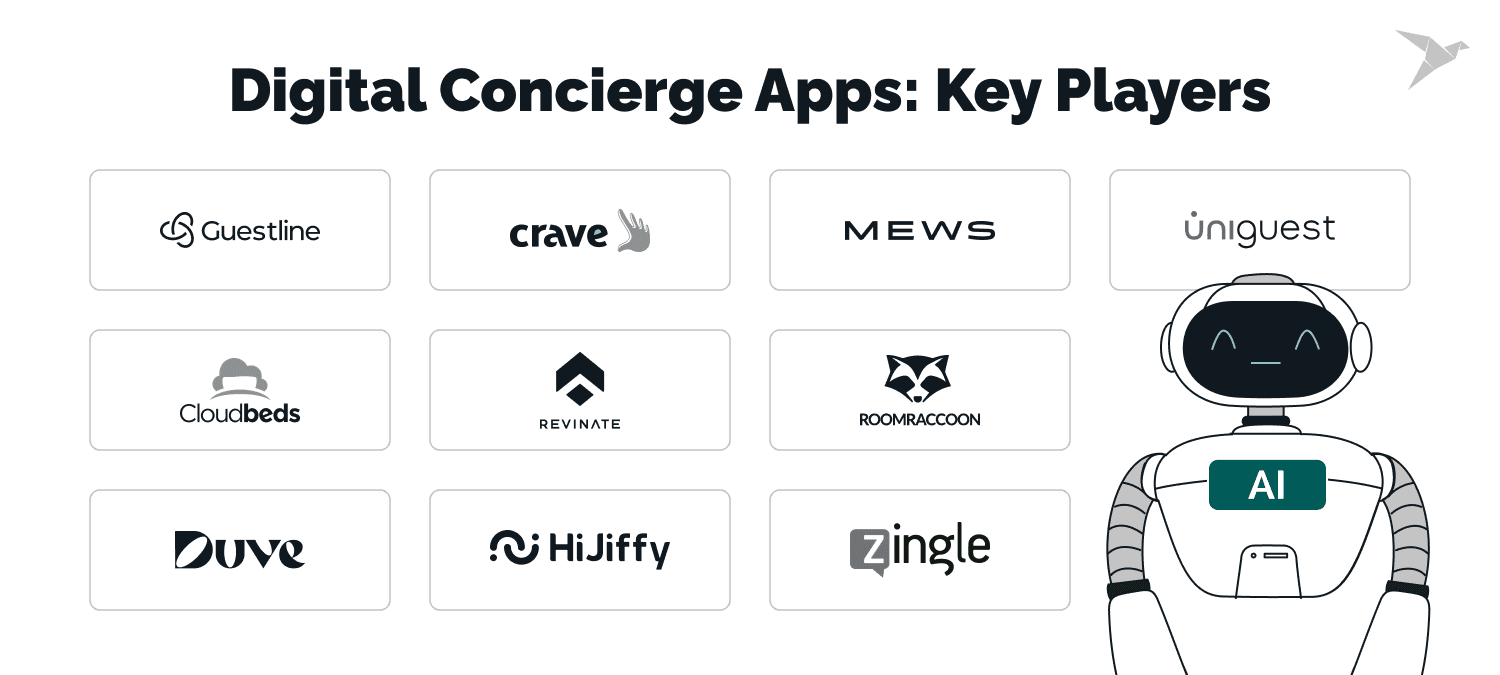
1. Mews Systems
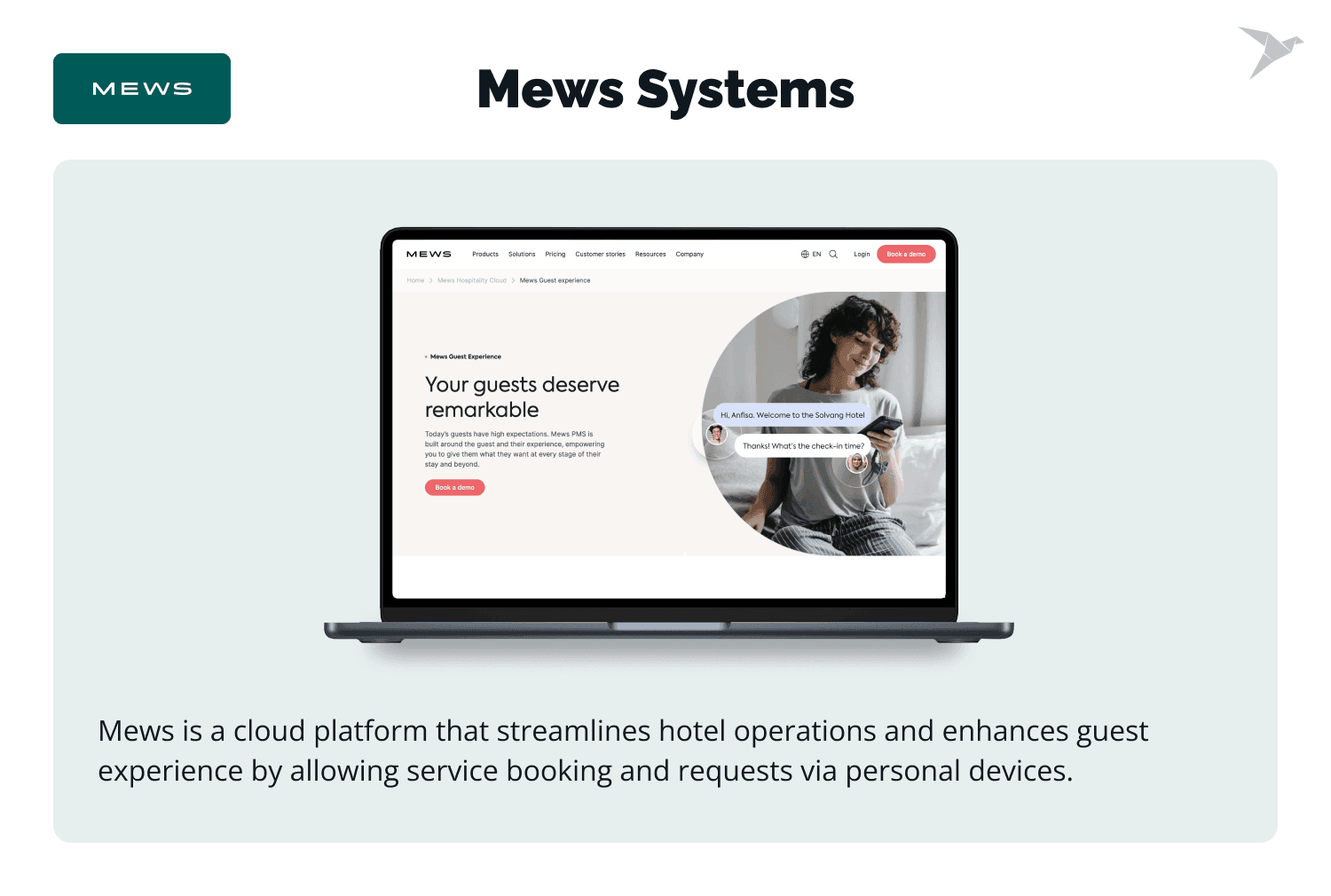
Mews is a cloud-based platform for running hotel operations without losing sight of the guest. Its concierge features let guests book services, send requests, and pull up information from their own devices, which keeps service quick and guest needs easy to manage.
2. Uniguest
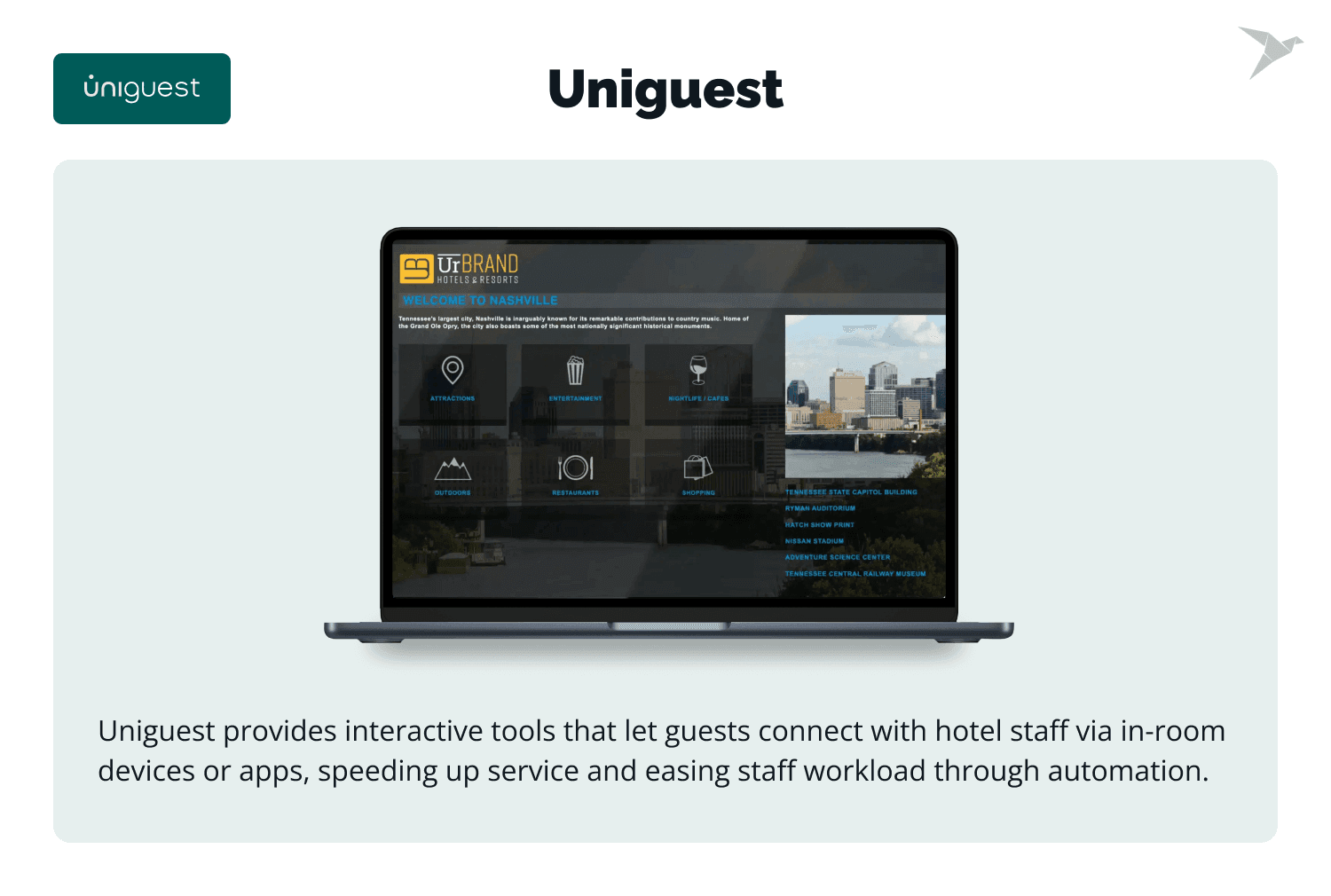
Uniguest builds interactive tools that connect guests to staff through in-room devices and mobile apps. Guests get what they need faster, and employees are freed for the harder requests.
3. HiJiffy
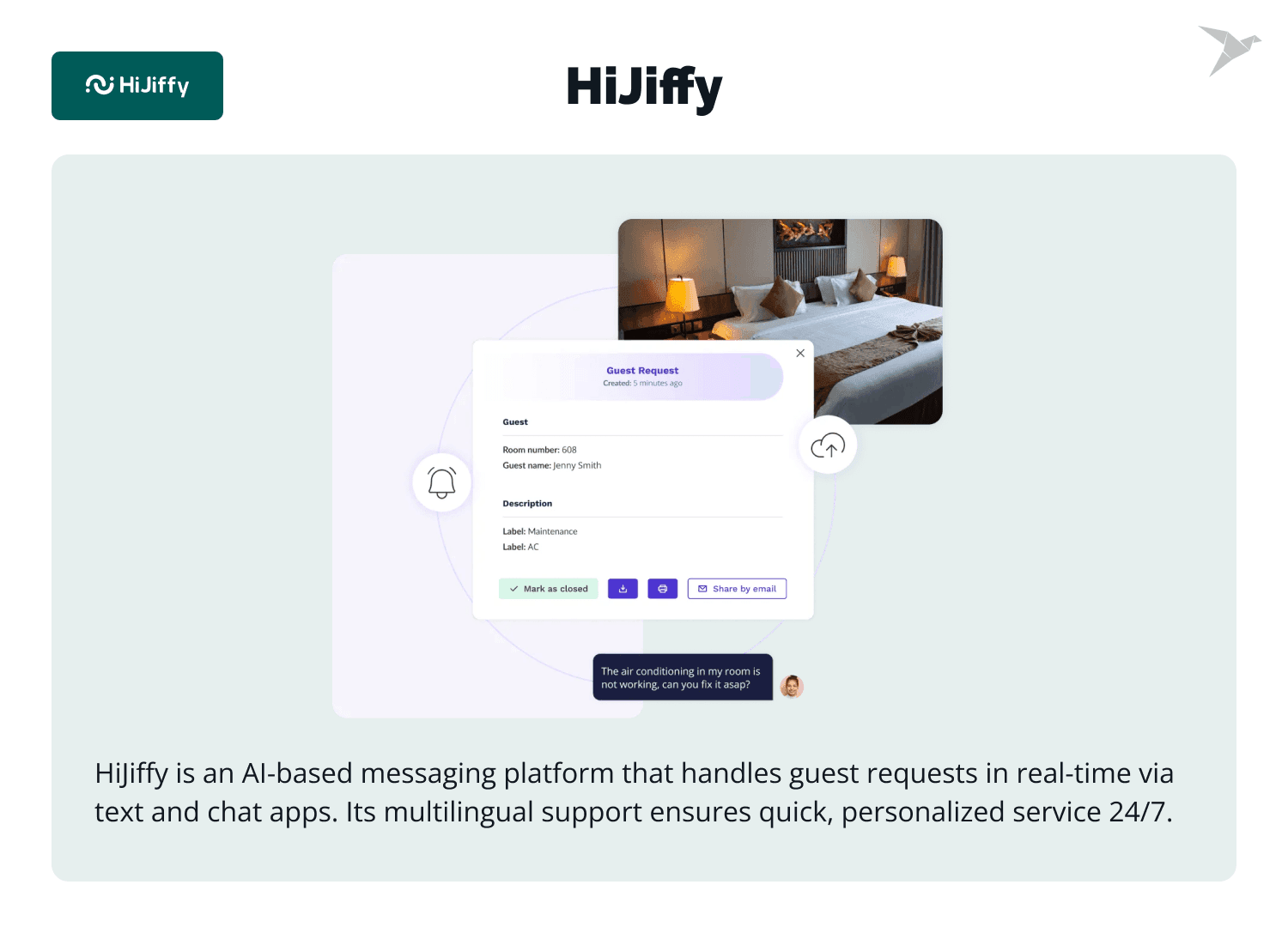
HiJiffy is an AI messaging platform that smooths the back-and-forth between guests and staff. It replies to requests in real time over text and chat apps. And thanks to its multilingual support, a hotel can serve guests in their own language at any hour.
4. Duve
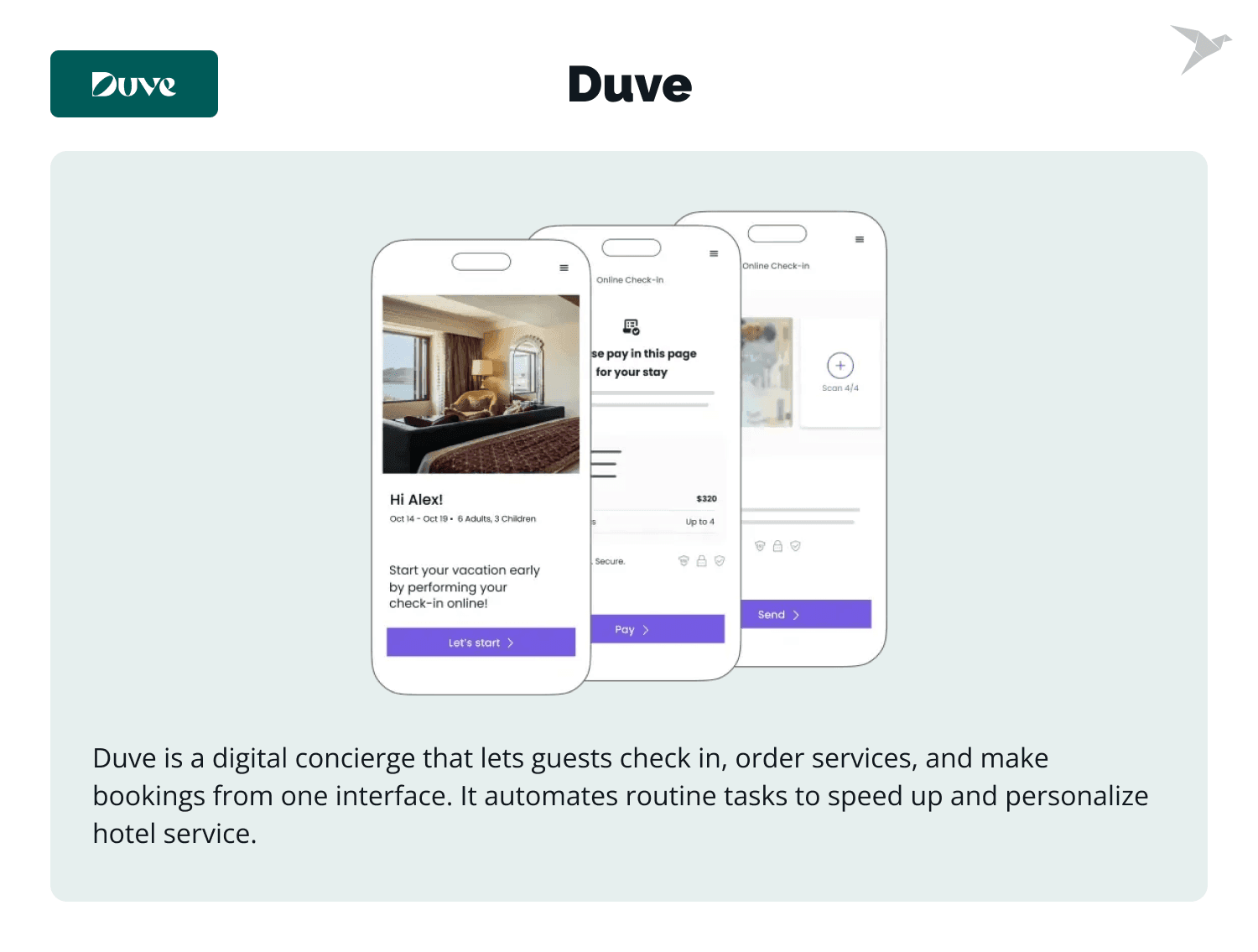
Duve is a concierge platform built around easier guest communication. From a single interface, guests check in, order room service, and book extras. It also automates routine work, so service comes back quicker and feels more personal.
5. Cloudbeds
Cloudbeds is a full hotel management system with concierge features baked in. Guests book services, request amenities, and find information from a phone or an in-room device. For the hotel, it keeps operations and guest experience in one place.
6. Revinate's Ivy
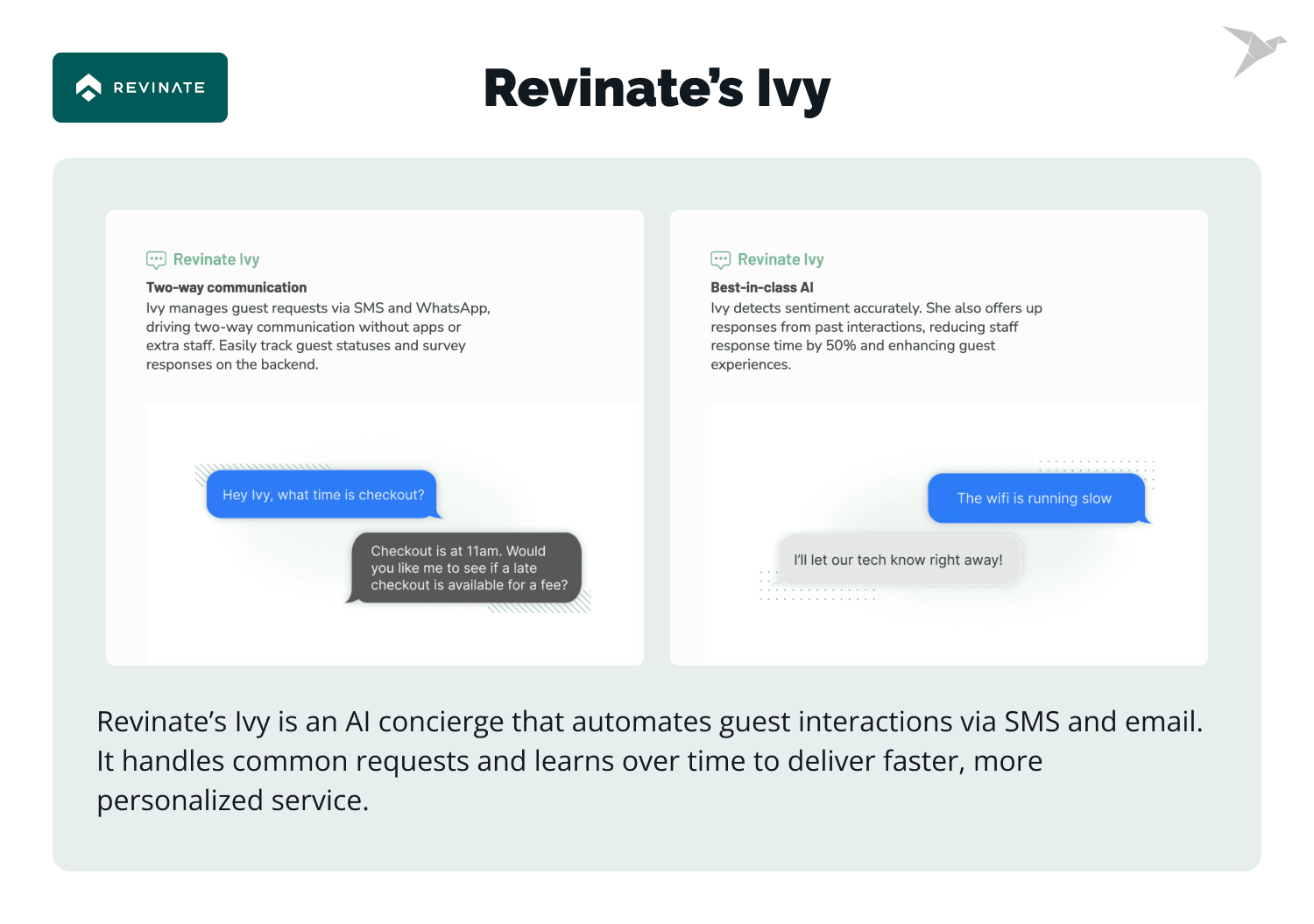
Revinate's Ivy is an AI concierge focused on communication and personalization. It automates guest interactions, fielding common questions and service requests over SMS and email. Ivy also learns as it goes, getting better at anticipating what guests want.
7. Guestline
Guestline is an all-round system with concierge features included. Guests book services, ask for information, and message staff through it. By taking care of the routine tasks, it lets hotels run leaner.
8. Crave Interactive
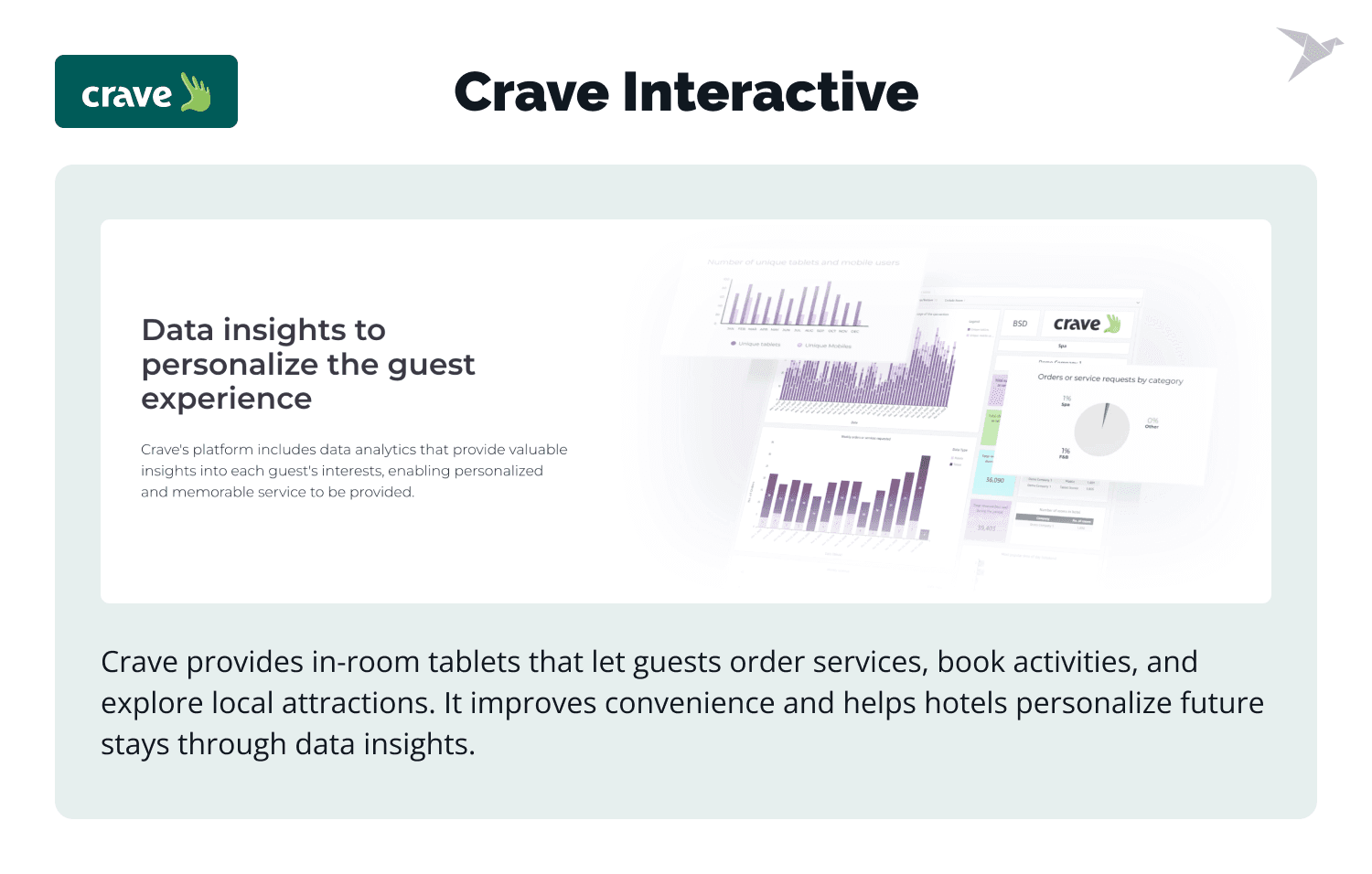
Crave puts the concierge on an in-room tablet. Guests use it to reach hotel services, order food, book activities, and find things to do nearby. It also quietly gathers data along the way, and uses it to personalize the next stay.
9. Zingle (Medallia)
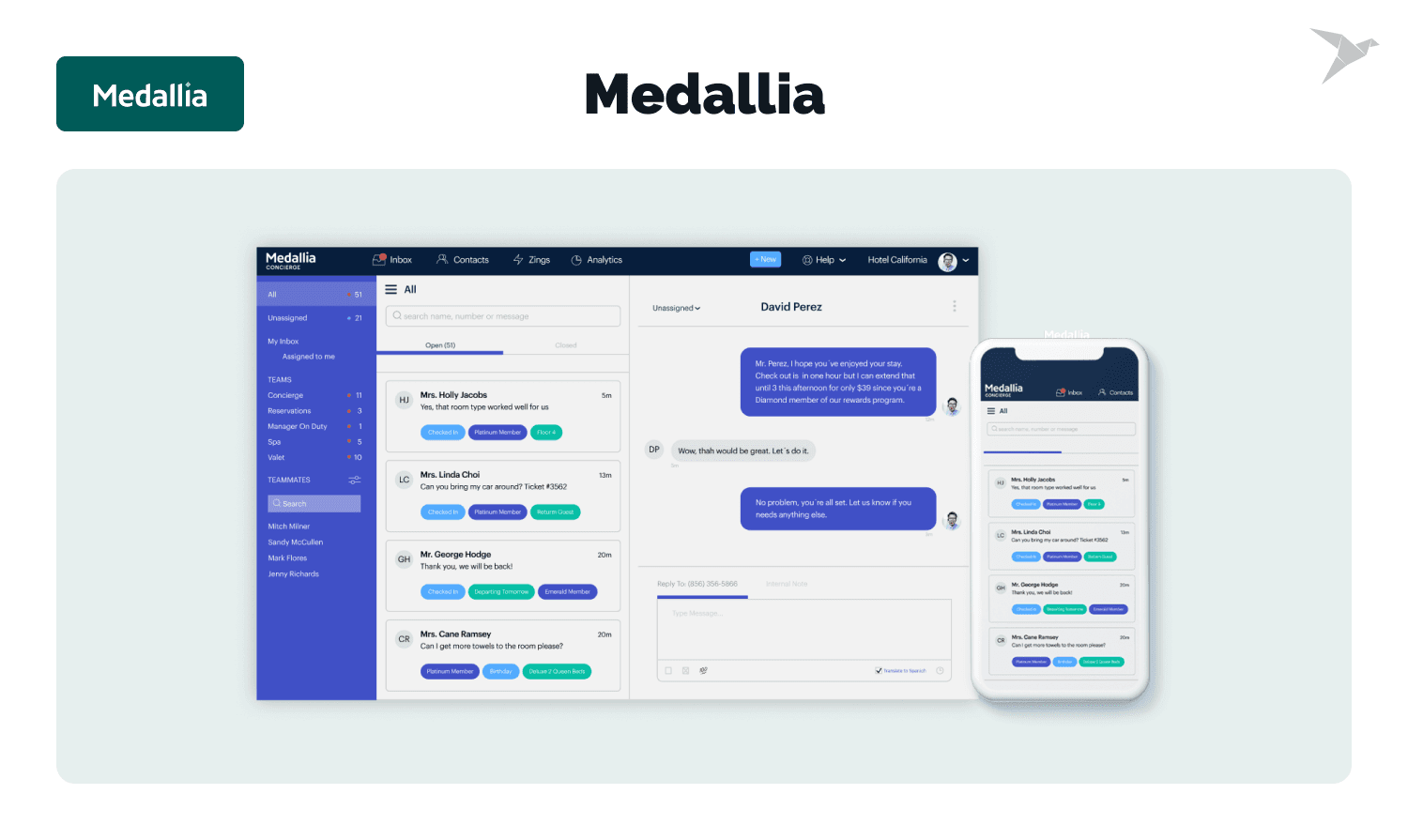
Zingle, which is now a part of Medallia, connects hotels with guests across email, SMS, and social channels. Guests request services wherever they already are, staff reply fast, and communication gets easier on both sides.
10. RoomRaccoon
RoomRaccoon is an all-in-one system that automates a broad slice of hotel operations, guest services among them. Guests make requests, book services, and look up information from a phone or an in-room device.
Take Your Guest Experience to the Next Level
Every guest wants to feel looked after. The hard part is standing out in a crowded market, and that's where the right technology earns its place. An AI-driven digital concierge gives guests a more personal stay, from setting their own room to getting an answer the moment they ask.
Bringing AI into the hotel lifts guest satisfaction and tightens operations at the same time. Picture contactless check-in, recommendations that fit, service that moves faster, and your team carrying a lighter load while it all happens.
If you're weighing how to use these tools well, let's talk. We help hotels put the right solutions in place, the kind guests actually remember. Reach out, and we'll map it to your property.

FAQ

A digital concierge is a virtual assistant that helps hotel guests with tasks and requests during their stay. It can assist with booking services, answering questions, ordering room service, and providing recommendations – all through an app or in-room device.
It depends on location and experience. On average, a virtual concierge working for a hotel chain or service provider earns somewhere between $30,000 and $50,000 a year, depending on the role.
A digital concierge usually handles reservations, room service orders, room settings like lights and temperature, local recommendations, and guest questions. It ties into the hotel's own systems to keep the experience personal and consistent.