 Software Development
 Security Services
 Cloud Services
 AI Services
 Other Services















 TechMagic Academy


The Black Box Trap: How to Build AI Agents for Decision-Making You Can Trust
Last updated:10 August 2026


An agent can recommend a loan, flag a patient, or reject a job candidate in milliseconds. Getting that speed is straightforward. The hard part comes later, when a rejected applicant asks why, an auditor wants the reasoning, or a regulator asks who signed off. That is the black box trap: a system that produces answers no one on your team can trace or defend.
The trap is easy to fall into because the demo works. Speed and a clean answer are what you see first; traceability is what you need months later, when a decision is questioned.
In this guide, we cover how to build AI agents for decision-making and do not fall into that trap. We build these systems for clients across hiring, analytics, and finance, so the focus here is on what makes an agent trustworthy in production, drawn from projects that put real decisions in front of users.
You will get a plain definition, an honest test for when an agent is the wrong tool, the core steps to build one. You'll also explore the mistakes we see most often, and how to keep decisions transparent and accountable.
Key takeaways
-
AI agents combine data, models, and logic to support or make a decision, which is more than a single model or a fixed automation rule.
-
Not every problem needs an agent. Fixed rules are cheaper, safer, and easier to explain where they already work.
-
Trust is a design choice. Explainability, human oversight, logging, and clear ownership are built in from the start, not added later.
-
The teams that succeed treat every decision as one they may have to defend. Gartner expects over 40% of agentic AI projects to be canceled by the end of 2027, usually for weak business value and thin risk controls.
What Are AI Agents for Decision-Making?
AI agents for decision-making are systems that combine data, a model, and logic to recommend or make a decision toward a goal. They sit above a plain Machine Learning model, which predicts or generates. The agent decides what to do with that output, gathers more input if needed, and acts.
That last part, the ability to act, is what separates an agent from the tools you already run. It is also where the black box trap starts: once a system acts on its own, you are on the hook to reconstruct why.
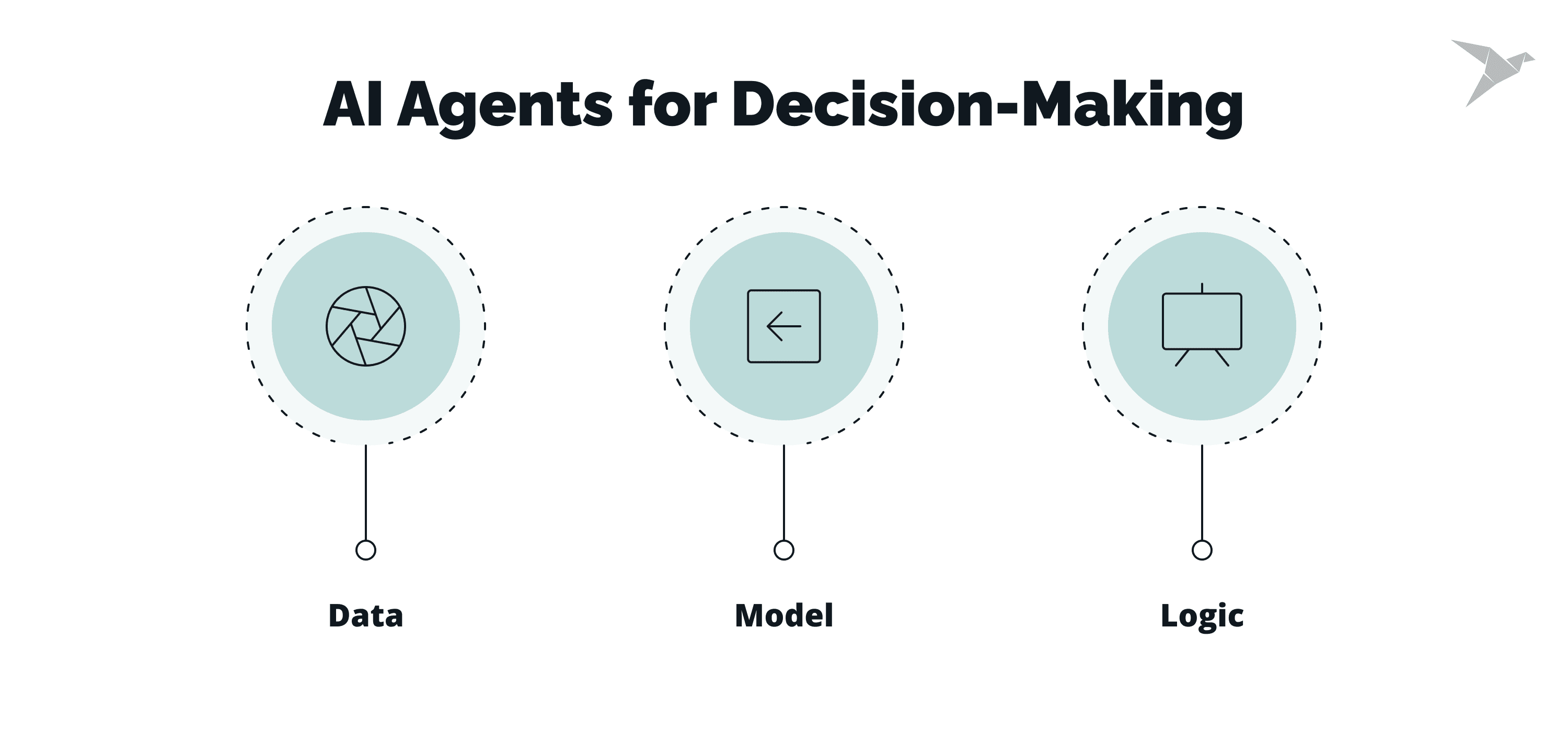
How AI agents differ from a model or automation
Fixed automation follows rules you write in advance, and those rules are easy to read back. AI agents plan across steps, make tool calls to pull data or trigger actions, and adjust their agent behavior as conditions change. That flexibility is the value, and it is also what makes the reasoning harder to see. Because they plan and act on their own, these systems are called agentic AI or agentic systems.
Key terms to know
A few terms are worth defining once, since vendors use them loosely. Autonomous agents can act without a person approving each step, and autonomy runs on a spectrum, from simple suggestions to independent action. A multi-agent system uses several agents that split a job, where one may plan and others handle sub-tasks. Natural Language Processing (NLP) is the field that lets an agent read and produce human language, so a request in plain English becomes something the system can act on.
How Do AI Agents Work?
An AI agent works by turning a goal into action: it reads the request, gathers the data it needs, reasons about the options, calls tools to act, and checks the result. That loop is how AI agents operate with limited supervision, and each stage in it is a place where reasoning can either be captured or lost.
The core components
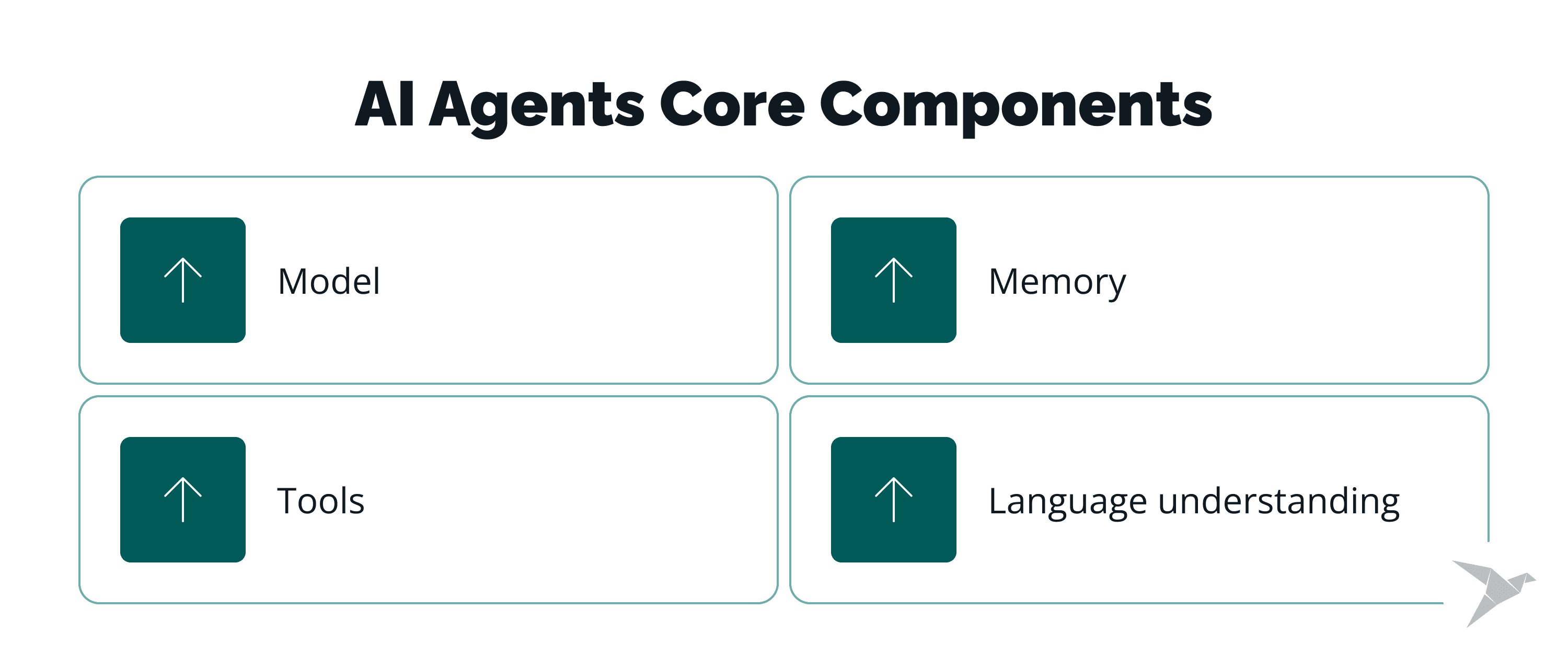
Most agents share the same building blocks:
-
A model. A Large Language Model or another Machine Learning model interprets the input and plans the next step.
-
Memory. Short-term memory holds history within a single task; long-term memory holds context across sessions and past interactions.
-
Tools. Tool use lets the agent reach external tools and other systems through tool calls, from a database lookup to an API that takes real-world actions.
-
Language understanding. NLP turns plain-English user inputs into something the agent can act on.
The model is also handed reference information, such as policies or product docs, at run time so its answers stay grounded. An answer tied to a named policy is one you can defend; an answer pulled from nowhere is one you cannot.
How agents gather and use data
Agents rarely start with clean input. They gather data from several data sources, take in raw data and large datasets, and run data collection and data processing before the model sees any of it.
Done by hand, that work is slow and time-consuming, which is part of why teams automate it. A capable agent also handles unseen data by recognizing patterns rather than following fixed rules, so the relevant data and its quality shape the outcome more than the model alone.
From inputs to actions
In production, an agent turns user requests, customer queries, and other user inputs into results. It can execute tasks on its own: answering questions, handling specific tasks, and taking over repetitive tasks that once needed a person.
A well-built agent returns real-time insights and can take real-world actions, while routing anything uncertain to a human. The same design supports real-world applications from hiring to analytics, each with different expectations for speed and accuracy. For example, a fraud check must be fast and cautious, while a research summary can take longer.

Why Are Companies Building AI Agents for Decision-Making?
Companies build AI agents to make routine decisions faster, more consistent, and at a scale people cannot match. A rules engine handles clean, predictable cases. An agent earns its place where inputs are messy, volume is high, and a small delay costs money.
Deloitte's State of AI in the Enterprise 2026 report finds that 23% of companies already use agentic AI at least moderately, a share Deloitte expects to rise sharply over the next two years. The value shows up in three places: repetitive decisions get automated, similar cases get the same answer every time, and large volumes of data get processed without adding headcount.
Consistency matters as much as speed. A well-scoped agent applies the same decision logic on a Monday morning and at midnight, which a tired team cannot. That reliability is one reason AI agent development now aims at systems that own a decision end to end, and why traceability cannot be an afterthought: a decision made thousands of times is one you will answer for that often.
When Should You Not Build an AI Agent?
You should not build an agent when a simpler tool already does the job. From our experience, agents pay off only where fixed rules break down, on decisions that involve judgment, exceptions, or messy unstructured inputs. Where a rules-based system or basic automation already works, that is the better, cheaper, and safer choice, and it is transparent by default.
The cost of ignoring this is visible in the numbers. Gartner predicts that over 40% of agentic AI projects will be canceled by the end of 2027, citing escalating costs, unclear business value, and inadequate risk controls, per Gartner. Most started because agents looked exciting, without a problem that genuinely needed one. A short checklist before you commit:
-
The decision involves judgment or exceptions that fixed rules keep getting wrong.
-
Inputs are unstructured or come from several data sources that a person now stitches together by hand.
-
The volume is high enough that speed and consistency change the business outcome.
-
You can state the decision, and how you will measure a good one, in a sentence.
If you cannot check at least two of these, automate with rules and revisit later. Every unit of autonomy you add is a unit of traceability you owe back, so add it only where it earns its place.
How Do You Build AI Agents Step by Step?
Building a decision-making agent is an iterative process. Treat what follows as a step-by-step guide, and expect to revisit the key steps as the agent meets real data.
Teams often ask how to build AI agents from scratch, but from scratch is rarely the right starting point. Most useful systems reuse existing models, often different models for different decisions, plus agentic frameworks, and the same approach applies to how to build custom AI agents for one specific workflow.
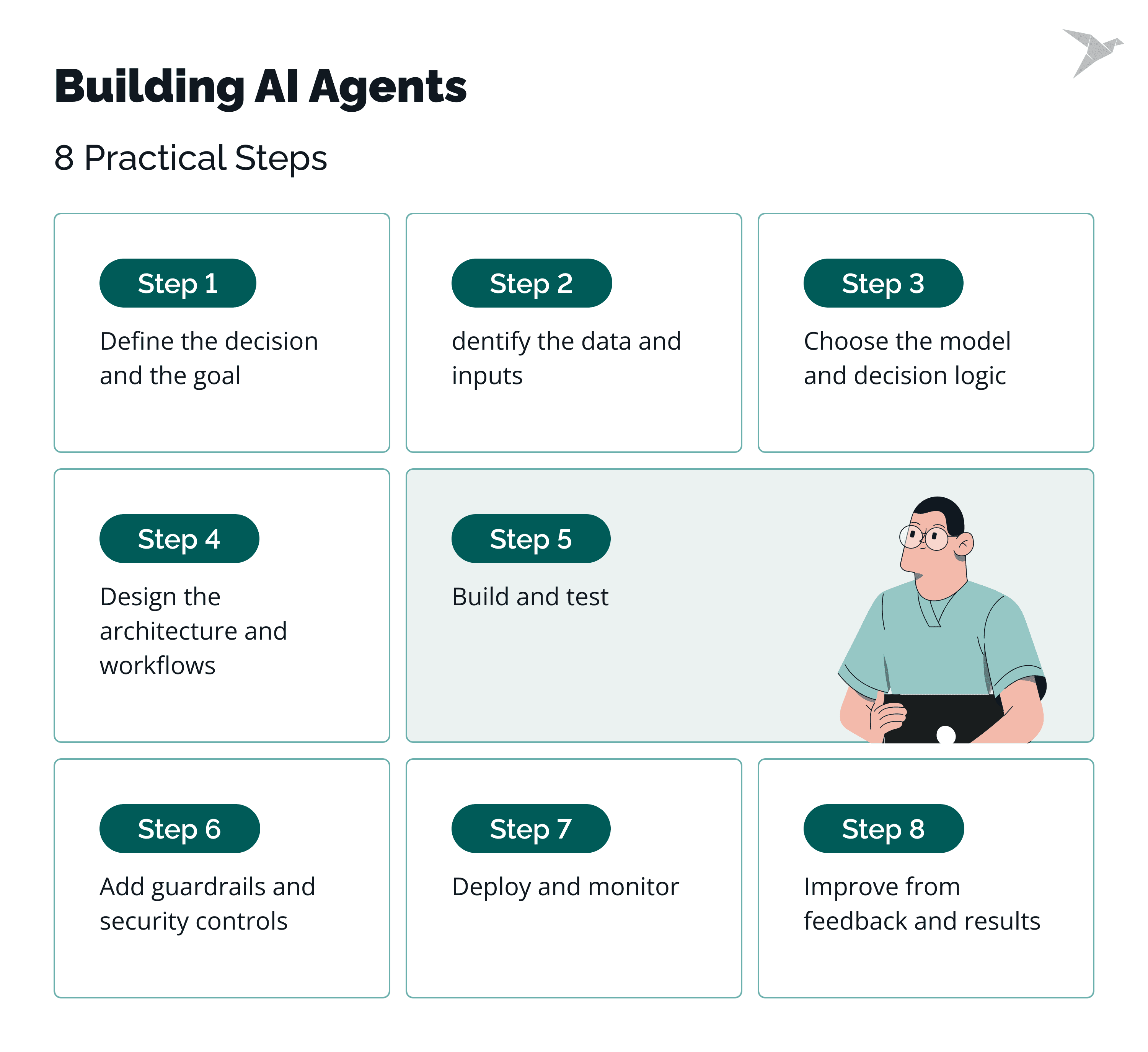
Here is how to build AI agents step by step, from idea to production:
-
Define the decision and the goal. Name the exact decision, the inputs, and how you will measure a good outcome. This is the step teams skip and regret.
-
Identify the data and inputs. List what the agent needs to see and where it lives. Quality here caps everything downstream.
-
Choose the model and decision logic. Let the decision drive the choice, using the table below.
-
Design the architecture and workflows. Define the core components and how they connect: memory, tools, and the steps the agent follows. Plan this with the people who own the decision, because building AI agents is a team effort that usually involves data scientists, ML engineers, and domain specialists.
-
Build and test. Start with the smallest version that makes one decision well, and give it a simple user interface so the tool stays user friendly for the people who rely on it. To build an agent you can trust, test it against real historical cases before it touches live ones.
-
Add guardrails and security controls. Set input and output checks, protect personally identifiable information (PII), and define who and what the agent may access. This is required, not optional.
-
Deploy and monitor. Release in a controlled way and watch performance. Production-ready agents need monitoring and ongoing maintenance the way any service does, and in enterprise environments that operational discipline is what earns lasting trust.
-
Improve from feedback and results. Feed outcomes back in and refine.
Steps six through eight are where you stay out of the black box trap: they make a decision reviewable after the fact, and they are the first parts cut when a timeline slips.
On step three, the choice is a trade-off between speed, cost, and accuracy. For decision-making, how reliably a model follows instructions and makes tool calls matters more than how smart it is.
You do not have to choose between a framework and a platform. They are not mutually exclusive, and some agent platforms are built to work with multiple frameworks, so many organizations start with a framework and add a platform as their agents grow to call other systems and other agents.
The stakes rise with autonomy. And, the question of how to build autonomous AI agents is really a question about control, because autonomy means the system acts before a person can check it. The more autonomy you grant, the more the later steps here carry the weight.
What Mistakes Should You Avoid When Building AI Agents?
The costliest mistakes are almost always design failures, and they are common. According to TechTarget, estimates of the AI project failure rate range from about three-quarters of initiatives to as high as 95%, and a leading reason is that agents are not fed the right data. Seven mistakes cause most of that waste, and most lead straight back to the black box trap.
Building without a clear decision
No measurable goal means no way to tell whether the agent works. Before you build your own AI agent, write down the decision it will make and the metric that defines a good one. An AI agent designed without that target optimizes for nothing.
Leaning on the model instead of the system
A strong model with weak workflows, data, and checks still fails. Good agent development is mostly system design, because how AI agents operate in production depends more on retrieval, tools, and guardrails than on the model itself. It is also where explainability lives: a traceable decision comes from the system around the model, not the model alone. Judge a pilot by how the agent performs on real cases, not on a polished demo.
Feeding the agent poor or irrelevant data
Poor inputs produce confident, wrong decisions, and those are the hardest kind to catch. Give the agent the relevant data for its task, and invest in the data processing pipeline that cleans and structures that data before the model sees it. This is where most accuracy is won or lost.
Treating every problem as an agent problem
This is the design-time version of the go or no-go question above. Not every task needs autonomy. A simple AI agent, or even plain rules, handles narrow, predictable jobs at lower cost and lower risk. Reactive agents that only respond to a single input rarely justify the overhead of a full agentic build, so match the tool to the decision.
Over-engineering with too many agents
A multi-agent system splits a job across specialized agents. Coordinating multiple agents adds latency, cost, and points of failure, and multi-agent collaboration pays off only when the work genuinely divides into distinct roles. Until then, one well-scoped agent is easier to test, trust, and trace.
Choosing tools before outcomes
Low-code and no-code agent builders and hosted agent platforms make it fast to build agents, and an AI agent builder can be a fine starting point. But tools do not set strategy: decide the outcome, the data, and the oversight first, then pick the builder that fits.
Skipping monitoring and feedback
Without monitoring, agent behavior drifts, and no one notices until a decision goes badly. By then you are explaining an outcome you never watched form. Track quality after launch and feed the results back, the same continuous loop the build steps end on.
Each of these traces back to treating the agent as a demo rather than a system that owns a decision, and has to answer for it.
How Do You Keep AI Agent Decisions Transparent and Accountable?
This is the antidote to the black box trap, and the part of the build most worth getting right. Transparency comes from designing the agent so every decision can be traced, reviewed, and, when needed, overridden by a person. An agent is only useful if your team can trust and defend its outputs, especially in regulated or high-stakes areas like finance, healthcare, and hiring.
Four practices deliver that, and each is a requirement before you trust an agent in production.
Explainability
Design the agent to show the data, rules, and reasoning behind each decision, rather than returning an answer with no context. This is what turns a black box into something a colleague or an auditor can follow.
Human oversight and human-in-the-loop
Human-in-the-loop (HITL) means a person reviews or approves a decision before it takes effect. Set thresholds so high-value, irreversible, or low-confidence actions escalate to a human, while routine calls run on their own.
Auditability and logging
Keep a record of the inputs, the model version, the decision, and who or what acted on it, so any decision can be reviewed later and a mistake traced to its cause. Without that log, you cannot explain what happened or fix it.
Accountability
Name who owns each decision. Clear ownership keeps responsibility with people, and human oversight is what makes that ownership meaningful.
Map the level of oversight to the risk of the decision, rather than applying one rule everywhere:
These practices reduce risk. They do not remove it, and no honest guide should promise otherwise.
What Escaping the Black Box Looks Like in Production
Most agents we see demo beautifully and then stall in pilot for a year. The cause is usually unclear scope, thin data, and no plan for oversight once the agent handles real decisions.
Two of our projects show what the alternative looks like in production.
Loving Work: hiring scores a human can actually read back
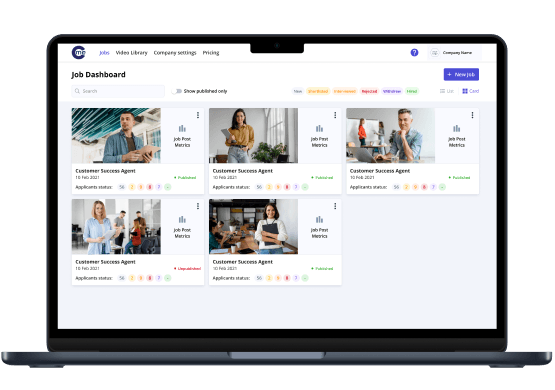
For Loving Work, a video-first hiring platform in the UK, we built the AI screening as decision support rather than black-box automation. The system produces candidate fit scores with clear explanations, and threshold rules can shortlist or reject applications while preserving a review path for edge cases.
An AI video interviewer, built on Google Gemini, runs adaptive interviews and keeps recordings and transcripts, so a hiring team can review any decision. Decision-making stays firmly in human hands, which is exactly what hiring demands.
Learn how we built a video-first hiring ecosystem that connects candidates and employers through AI-supported workflows
MyTelescope: a 20-minute answer that still shows its work
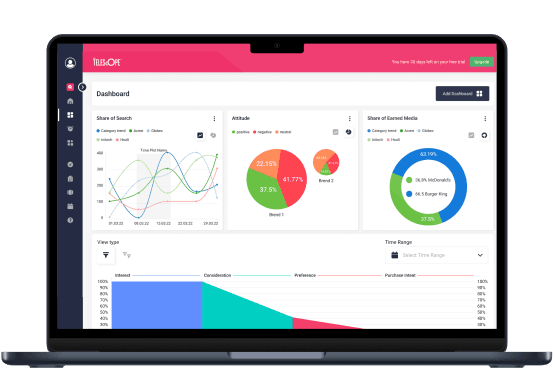
For MyTelescope, a brand analytics platform in Sweden, the decision was which market signals actually matter to a brand. The first version took up to 72 hours to process a report.
We rebuilt the pipeline with automated data collection and Machine Learning development to select the relevant signals, and cut processing time to about 20 minutes. The model tunes each analysis to what a given user values, so the output supports a faster call without hiding how it got there.
Learn how we built MyTelescope that gathers and analyses data within 20 minutes instead of 70 hours.
What we've learned
Four lessons hold up across both projects:
-
Start narrow. One decision, measured honestly, beats a broad multi-agent system that no one trusts. MyTelescope earned its speed by scoping the work to a single question.
-
Set escalation thresholds early. Decide up front which calls the agent makes alone and which route to a person, the way Loving Work clears the obvious cases and sends edge cases to a human reviewer.
-
Build the review path before launch. Logging and human review are cheap to design in and expensive to retrofit after a bad decision. Keep the inputs and transcripts from day one.
-
Let data quality set the ceiling. No model design rescues thin or biased inputs. Validate and clean the data before tuning the agent.
Final Thoughts
A decision-making agent is worth building when judgment, messy inputs, and volume overwhelm fixed rules, and only when you can trace and defend what it decides. Get the decision, the data, and the oversight right, and choosing the model is comparatively simple. Skip them, and speed is all you have when someone asks why.
Where this is heading
-
Autonomous decisions become normal. Gartner expects at least 15% of day-to-day work decisions to be made autonomously through agentic AI by 2028, up from virtually none in 2024, per Gartner.
-
Oversight becomes a buying requirement. As enterprises roll agents out, procurement and audit teams will expect explainability and audit trails by default, and an agent that cannot produce them will stall in review.
-
Build-versus-buy keeps shifting. As agentic frameworks and platforms mature, more teams will assemble agents from proven components and spend their effort on data, guardrails, and oversight instead of low-level plumbing.
The pattern behind all three is the same: the teams that win these decisions are the ones that can explain them.
If you are weighing an agent for a real decision in your business, we provide expert AI development services and can help you scope it and decide whether it is the right tool.
We are happy to share our expertise
FAQ

An AI agent in decision-making is a system that combines data, a model, and logic to recommend or make a decision toward a goal. Unlike a single model, it can plan across steps, call tools, and act on the result.
You design for it from the start: log the inputs, the model version, the decision, and who or what acted on it, and build the agent to show the reasoning behind each call. A decision your team cannot trace is one you cannot defend to an auditor, a regulator, or the person it affected.
We map the level of human oversight to the risk of the decision. Low-risk, reversible calls can run on their own with logging; high-value, irreversible, or low-confidence ones require a person to approve each action. We set those thresholds with you before launch, not after a bad decision forces the question.
Often simpler automation is the better answer, and we will tell you when it is. Agents earn their place only where fixed rules keep breaking down on judgment, exceptions, or messy inputs.
An AI model predicts or generates an output from an input. An AI agent uses one or more models plus logic, memory, and tool calls to decide what to do and carry it out. The model is a component; the agent is the system around it.