







Revenue Cycle Management vs Payment Integrity: Two Sides of Healthtech Money
Last updated:10 November 2026



Every insurance claim has two owners. To the provider, a line item is revenue for care delivered, and to the health plan, it is exposure until confirmed. Revenue cycle management protects the provider’s side, and payment integrity guards the plan’s.
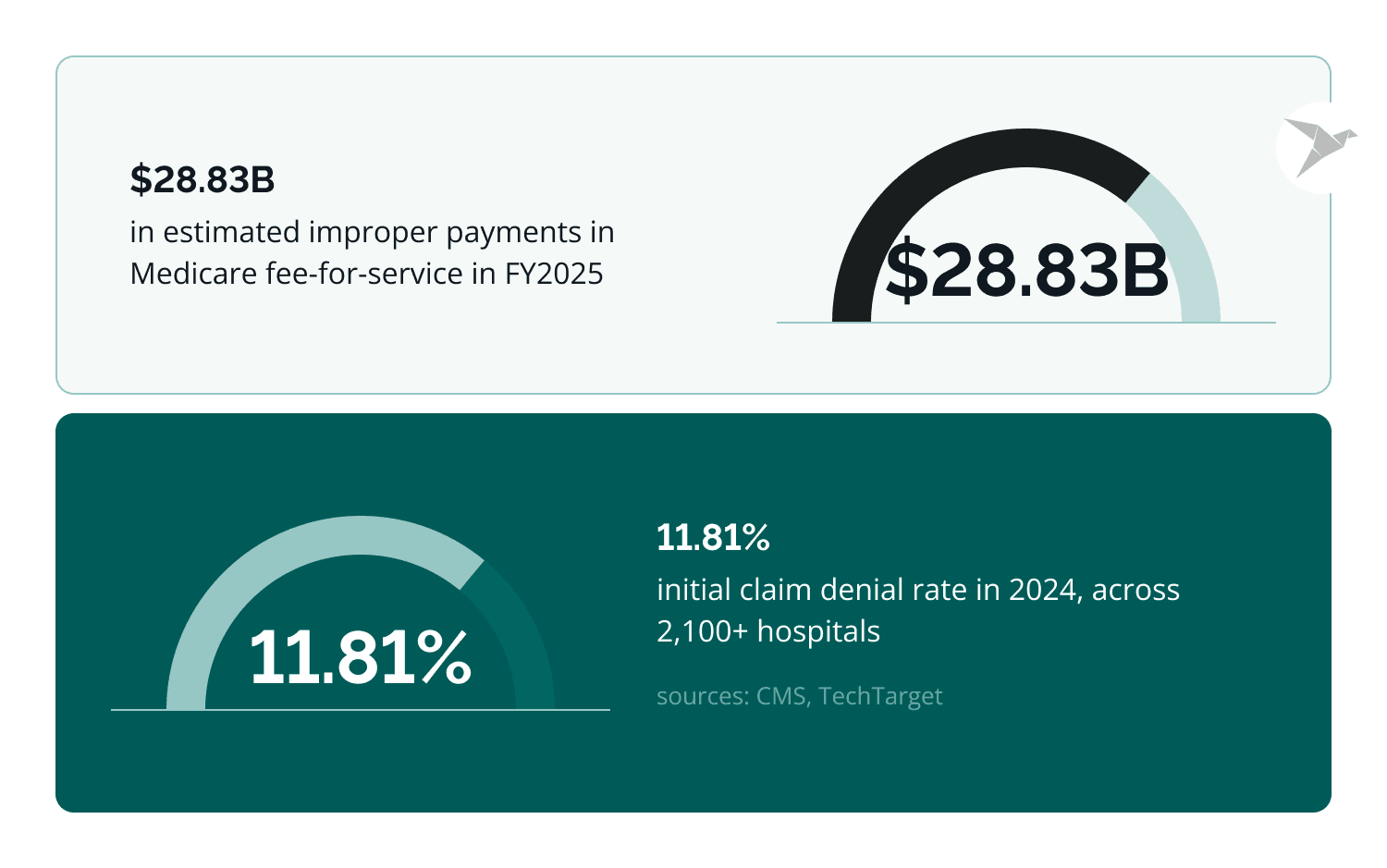
The Centers for Medicare & Medicaid Services (CMS) estimates Medicare fee-for-service made $28.83 billion in improper payments in fiscal year 2025. On the provider side, the initial claim denial rate reached 11.81% in 2024 across more than 2,100 hospitals, according to TechTarget.
In our new article, we cover both disciplines, their collision points, and the rules behind them, with expert commentary from Oleksandra Polotniuk, Senior Business Analyst at TechMagic.
Oleksandra has spent four of her five years in business analysis on healthcare projects, including electronic health and medical record systems (EHR and EMR), telehealth, interoperability, and revenue cycle platforms.

Key Takeaways
- Revenue cycle management (RCM) and payment integrity review the same claim, one for the provider and one for the health plan.
- Payment integrity belongs to the payer, outside RCM, and its closest provider-side equivalent is revenue integrity.
- The two sides clash at prior authorization, denials, appeals, and retrospective audits.
- Improper payment and denial rates are real figures, but neither proves fraud or payer overreach on its own.
- CMS-0057-F has set prior authorization deadlines since 2026 and requires payers to support electronic prior authorization by January 1, 2027.
What Is Revenue Cycle Management in Healthcare?
Revenue cycle management (RCM) is the process healthcare providers use to secure accurate, timely payment for the care they deliver. The Healthcare Financial Management Association (HFMA) defines it as “the process used by healthcare systems to track the revenue from patients, from their initial appointment or encounter with the healthcare system to their final payment of balance.”
Stages of the healthcare revenue cycle
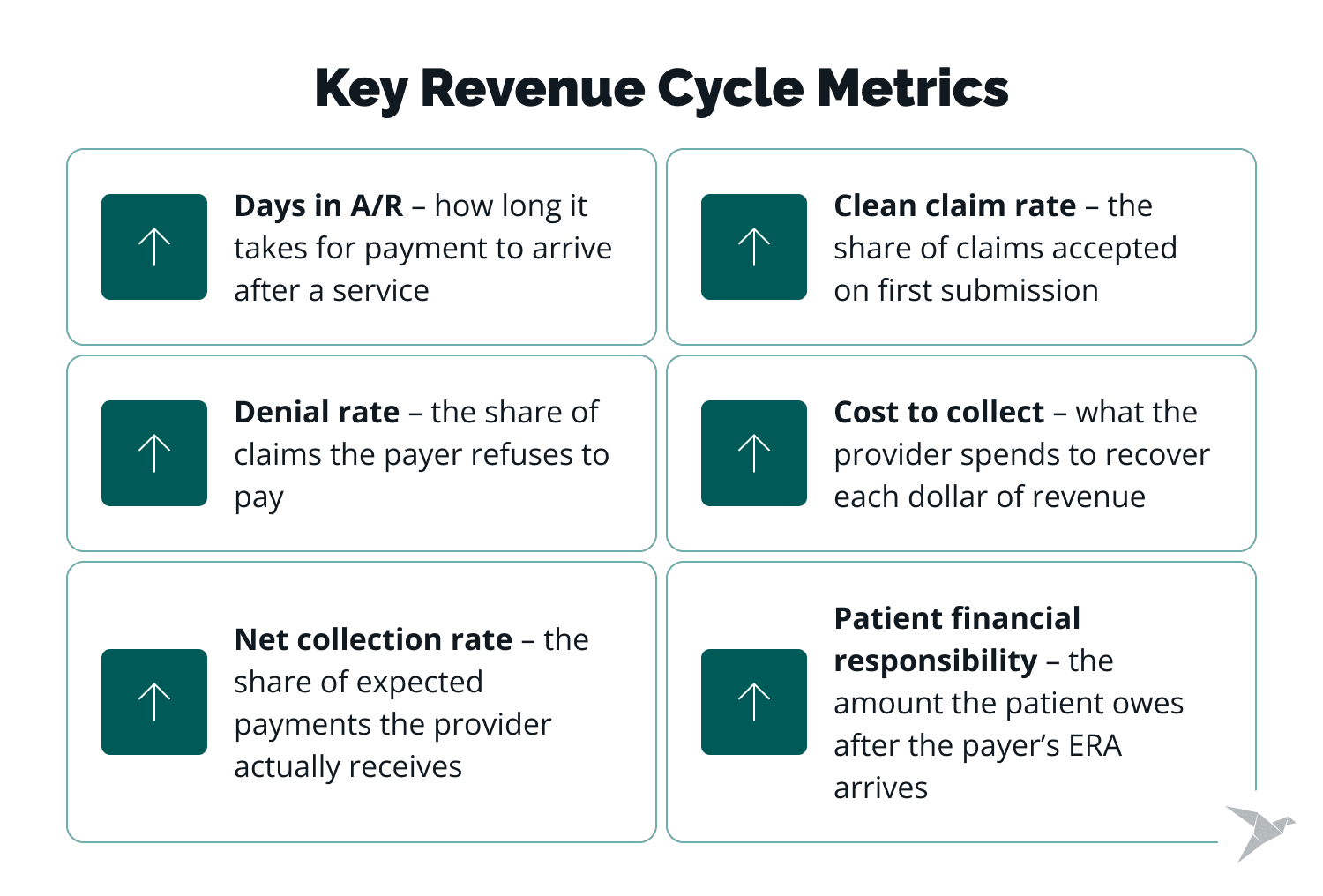
The revenue cycle moves through three groups of processes, and a mistake early on can lead to a denied claim at the end.
- Front-end processes: scheduling, patient registration, insurance verification, patient eligibility, prior authorization, and price estimation.
- Mid-cycle processes: the patient encounter, clinical documentation, medical coding, charge capture, and charge entry.
- Back-end processes: claim submission as an electronic data interchange (EDI) 837 transaction, the 835 electronic remittance advice (ERA) and payment posting, denial management and appeals, patient billing, payment plans, and collections.
Metrics and ownership
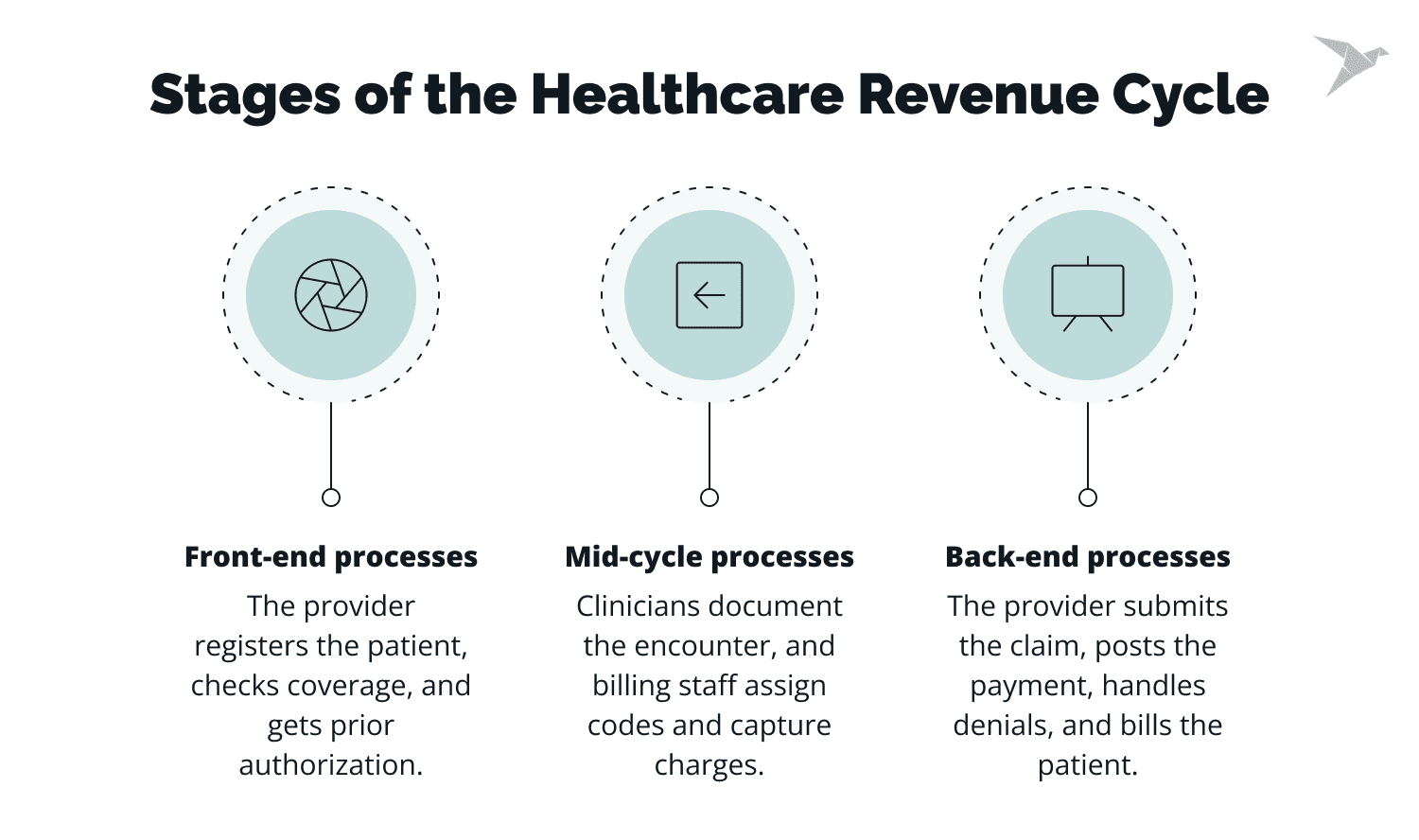
Revenue cycle leaders judge financial performance by days in accounts receivable (A/R), clean claim rate, denial rate, cost to collect, and net collection rate. Providers also watch patient financial responsibility, Oleksandra notes: the balance still owed once the payer’s ERA arrives. Together, these numbers shape a provider’s financial stability.
Inside a provider organization, the work is split across patient access, health information management (HIM), coding, billing, and outsourced RCM groups or tools.
Oleksandra describes a typical provider-side setup: the provider enters codes for the services delivered, a scrubber reviews claims, and billing managers track claim status and coordinate charges across patient accounts. Revenue integrity checks charges and codes before anything goes out.
Specialists can spend a whole revenue cycle career on this side without seeing how a payer reviews the claim. Oleksandra sees the same gap from the provider side, when a clinical decision has to fit into a claim form.
Expert view: What can a claim fail to show the payer?

“Medical necessity for a patient they see right now is not an easy thing to convey to the payer through a claim, as there is not much room for compassion in CMS-1500 [the standard professional claim form]. … Attachments, operational notes, and progress notes can supply people on the payer side with enough clear context to process the correct payment.” – Oleksandra Polotniuk, Senior Business Analyst at TechMagic
What Is Payment Integrity in Healthcare?
Payment integrity in healthcare is the payer-side discipline of making sure a claim is settled correctly: the right amount, to the right provider, for covered medical services, once.
Prepay and postpay review
Prepay review applies coding edits, payer policies, and clinical checks before money moves, so it has to be fast.
Postpay review audits settled claims and recovers overpayments. It can take longer and go deeper because the claim is already paid.
Workstreams, metrics, and ownership
Healthcare payment integrity covers the following workstreams:
- Claim edits test billed codes against payer policies and clinical rules.
- Diagnosis-related group (DRG) validation confirms that an inpatient stay is assigned to the correct DRG.
- Coordination of benefits (COB) decides which plan pays first when a member has double coverage.
- Subrogation shifts costs to a liable third party, such as an auto insurer.
- Fraud, waste, and abuse (FWA) detection flags billing patterns for investigation.
- Contract and pricing accuracy confirms each claim matches its fee schedule.
- Credit balance and overpayment recovery returns money the plan should not have released.
Payers measure results by savings per claim, recovery rate, prepay-to-postpay ratio, false positive rate, and provider abrasion. Provider abrasion is the friction a plan creates each time it flags a correct claim.
Payment integrity departments own error and pricing work, while special investigations units (SIUs) handle suspected fraud. Some plans add specialist vendors paid a share of recovered dollars. That model rewards vendors for finding more, so plans need to track false positives alongside savings.
How Do Revenue Cycle Management and Payment Integrity Differ?
Revenue cycle management and payment integrity differ in who runs them, what they optimize, and when they act on a claim. The revenue cycle management and payment integrity comparison below sets them side by side.
Where the comparison breaks down
The two disciplines are often described as mirror images, but that is only partly true. Before a claim goes out, revenue integrity checks ICD-10 diagnoses, CPT procedure codes, and supporting documents several times. Once it arrives, Oleksandra notes, the payer runs an almost identical review.
The check is the same, but the stakes are opposite: the provider reviews to get paid, the plan to avoid overpaying. When those two reviews disagree, this overlap between payment integrity and revenue cycle management becomes the starting point for disputes.
Where Do the Two Sides Collide?
The two sides collide at prior authorization, denials, appeals, and retrospective audits. At each point, both organizations have a legitimate reason to push back.
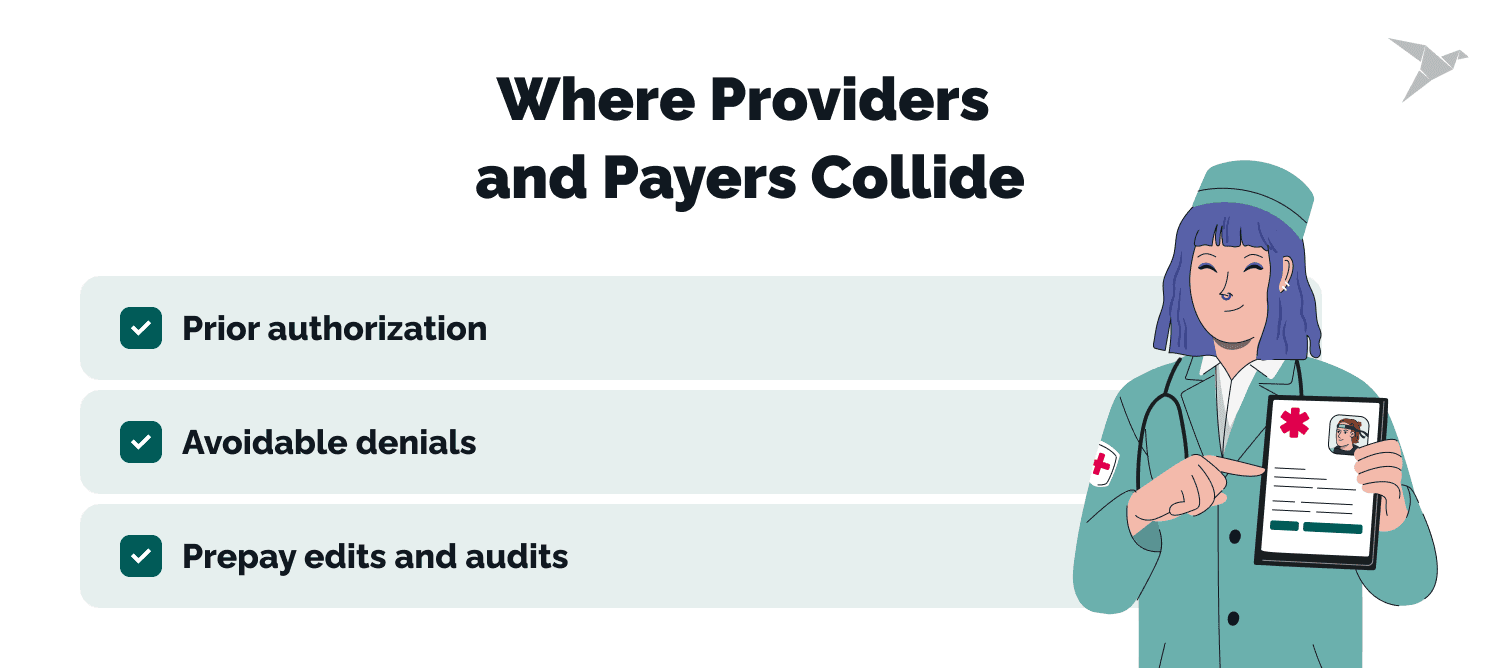
Prior authorization as the first collision
Prior authorization lets the health plan confirm coverage and medical necessity before care, while the provider needs to treat the patient in front of them. On one project, Oleksandra traced a provider’s lost revenue to two gaps: visits booked under authorizations that were already used up, and visits handled by an unapproved provider.
She proposed a two-part workflow. Authorizations that arrive by fax are indexed and matched to scheduled sessions, so staff see how many approved units remain. A CPT code map then shows which services each provider can handle, and schedulers book visits based on it.
Denials that should never have happened
In one case Oleksandra saw, a patient switched plans on the first of the month and came in on the second. The denial was correct, since the patient was no longer eligible under the old plan. The miss happened at scheduling. The fix was a batch check of insurance coverage for every scheduled patient 24 hours before the visit, so schedulers work from up-to-date information.
Prepay edits and retrospective audits
A prepay edit stops the plan from paying for an error. For the provider, the same edit can turn a claim it considers clean into rework and delay payment for services provided. Postpay audits work the other way: the plan recovers money it should not have released, and a claim the provider treated as closed is reopened.
The rework economy
Providers and health plans both hire staff whose main job is responding to the other organization’s decisions. Oleksandra has seen provider groups employ billing managers largely because services are often authorized only after the fact, so the first claim is denied and needs an appeal. Most of that cost landed on the provider group, while health plans staff appeal reviewers and auditors for the same disputes.
Appeals also stall for a simpler reason. When claim adjustment reason codes (CARCs) and remittance advice remark codes (RARCs) are too vague, billing staff cannot tell what extra information to attach.

Which Healthcare Rules Shape Both Sides?
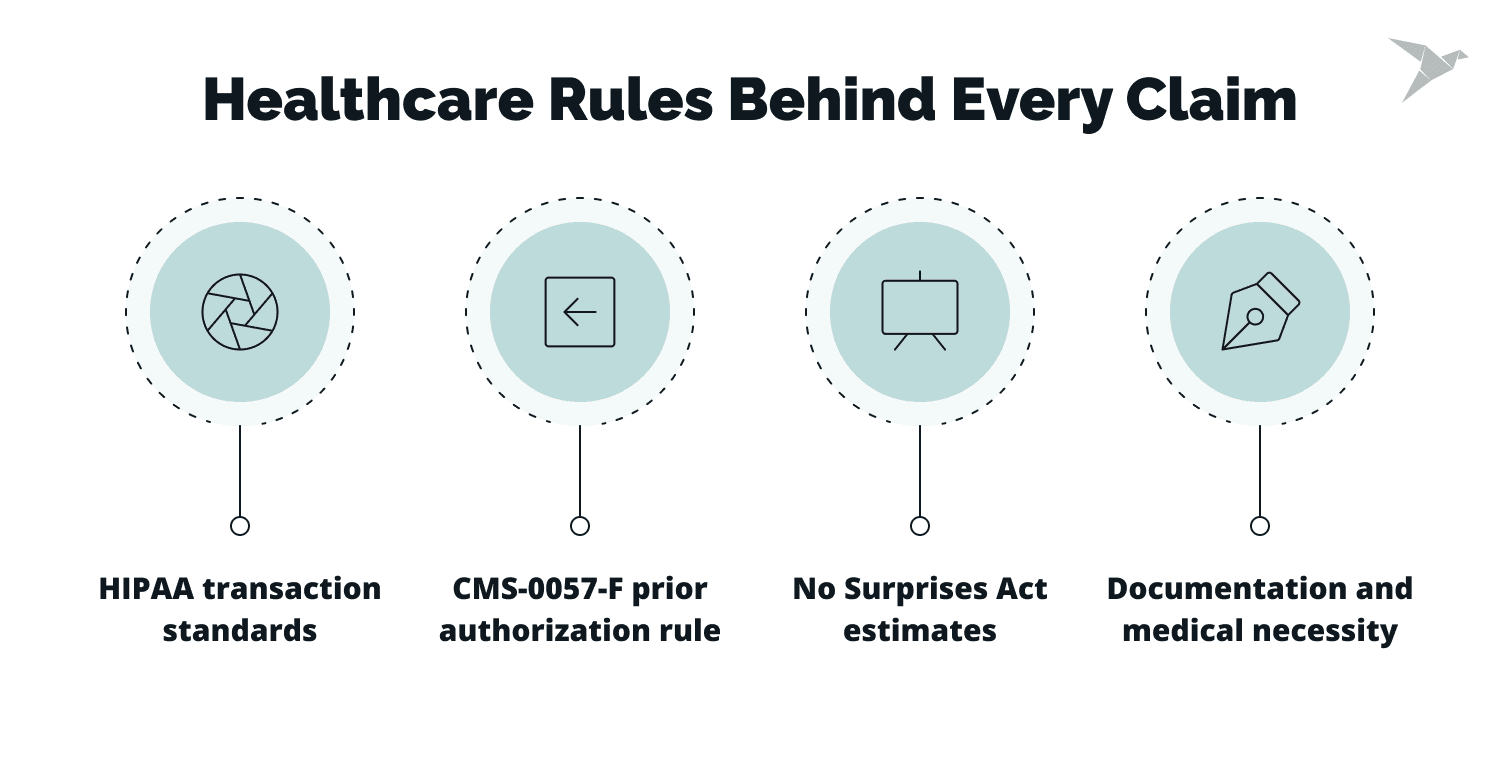
Federal rules on claim formats, prior authorization, patient estimates, and documentation apply to providers and payers alike. Both disciplines are built around regulatory compliance, so many of their processes are set by law.
HIPAA transaction standards and protected health information
The Health Insurance Portability and Accountability Act (HIPAA) requires X12 version 5010 formats when providers and health plans exchange the 837 claim, the 835 remittance, and eligibility and prior authorization transactions electronically. Every system on both sides also handles protected health information (PHI), so each claims integration needs extra privacy and security work.
In Oleksandra’s experience, standard electronic transactions speed up turnaround, keep A/R aging under control, and let billing staff work in one system with fewer trips to payer portals.
CMS-0057-F and prior authorization
The CMS Interoperability and Prior Authorization Final Rule (CMS-0057-F) covers Medicare Advantage, Medicaid, the Children’s Health Insurance Program (CHIP), and qualified health plan (QHP) issuers on federally facilitated exchanges.
Since January 1, 2026, all of these payers except QHP issuers must decide expedited prior authorization requests within 72 hours and standard ones within seven calendar days.
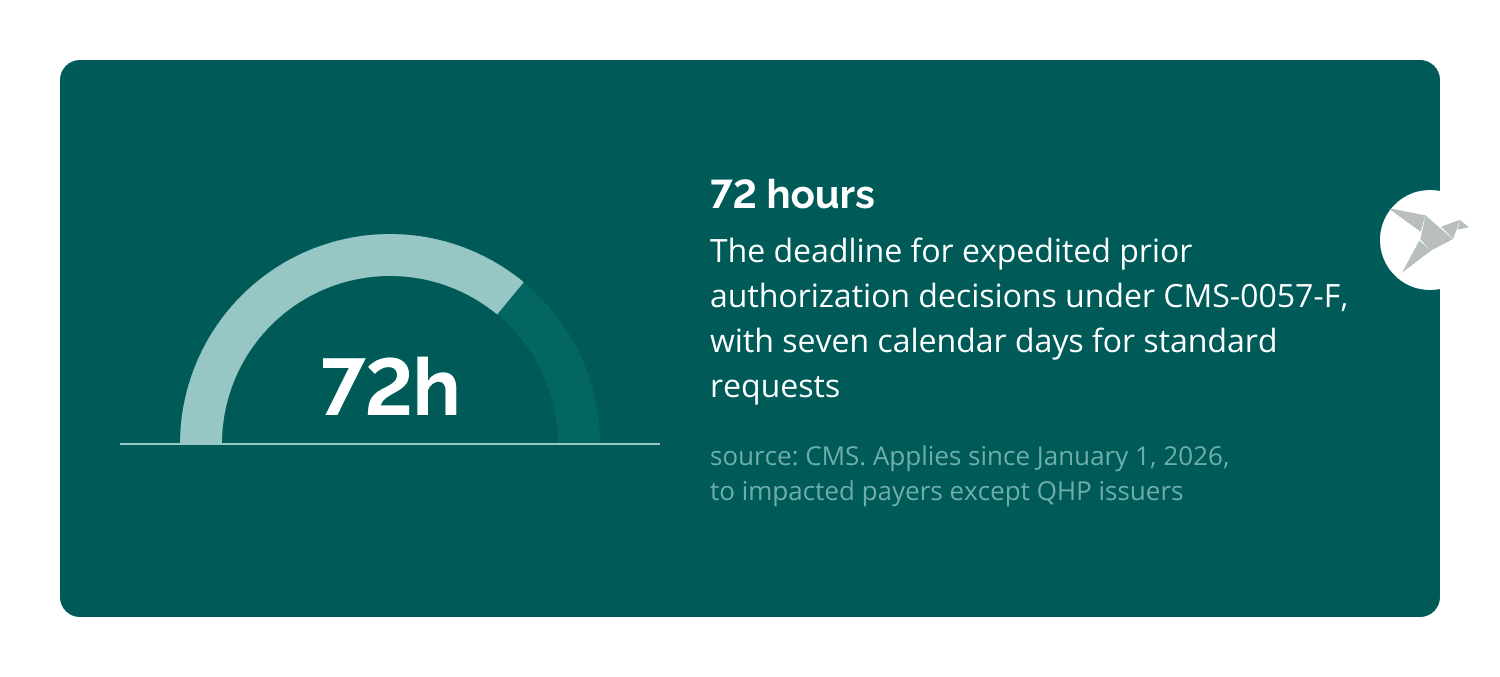
Each impacted payer must also give a specific reason for every denial and post prior authorization metrics on its website annually. Drug prior authorizations fall outside these provisions.
The rule also requires Fast Healthcare Interoperability Resources (FHIR) application programming interfaces (APIs), including one for prior authorization, by January 1, 2027.
In Oleksandra’s experience, prior authorization is hard to manage today and required for the majority of specialty care cases under Medicare Advantage and managed care. She expects real relief once payers expose these APIs.
The No Surprises Act and good faith estimates
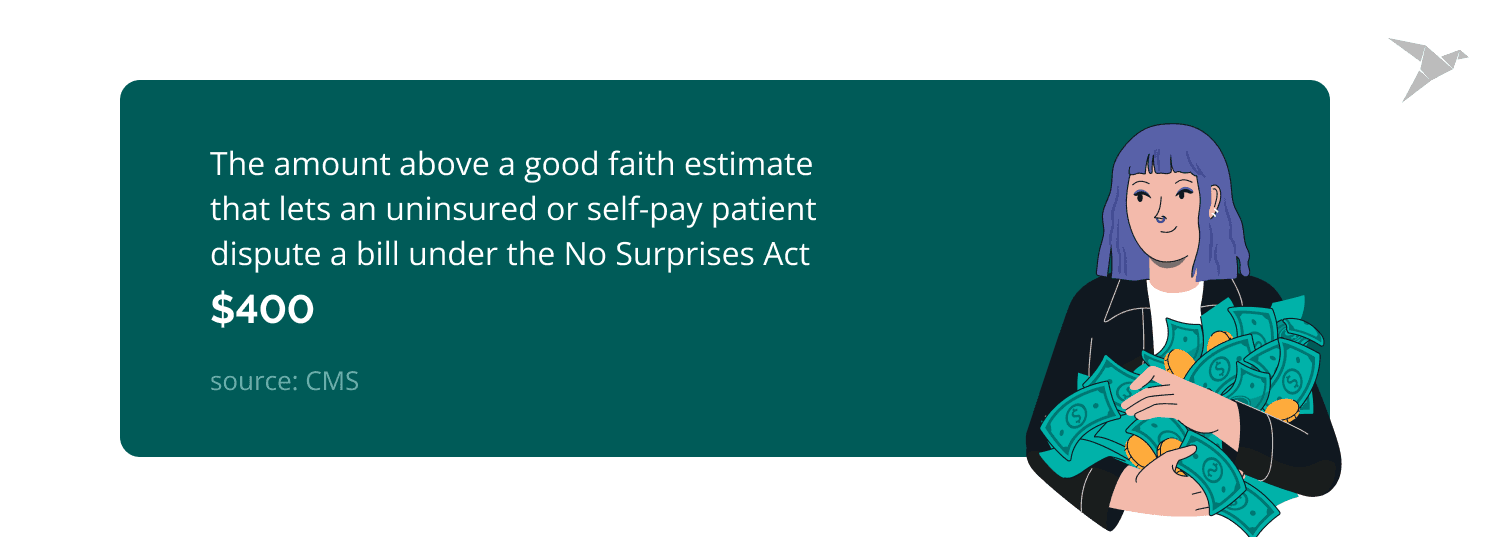
The No Surprises Act requires providers to give uninsured or self-pay patients a good faith estimate of expected charges before care. If a provider’s or facility’s bill comes in at least $400 above its estimate, the patient can start a dispute. Providers now have to settle accurate billing and other financial aspects of care before the visit.
Documentation and medical necessity
Every claim depends on the clinical documentation behind it. CMS reports that across its programs, most improper payments occur when documentation is insufficient for a reviewer to confirm them. Oleksandra points out that the handoff between clinical and financial work often breaks even earlier.
Expert view: Where does the handoff fail?
“Handoff often fails even before the encounter, as eligibility, COB, and prior-auth requirements exist on the step before the patients can even be scheduled, so clear alerting for all the rules on who can be scheduled and what they will owe is a must.” – Oleksandra Polotniuk, Senior Business Analyst at TechMagic
This section describes what each rule changes in operations. The legal reading belongs to each organization’s counsel and compliance team.
What Do the Numbers Actually Show?
Both sides have real numbers, and each set is often misread. Any comparison of payment integrity and revenue cycle management has to read both in context.
The payer-side number
The CMS improper payment estimate is easy to read as a fraud figure. CMS itself says improper payment measurement “is not a measure of fraud.” The estimate also counts underpayments, so part of it is money the provider was owed.
The provider-side number
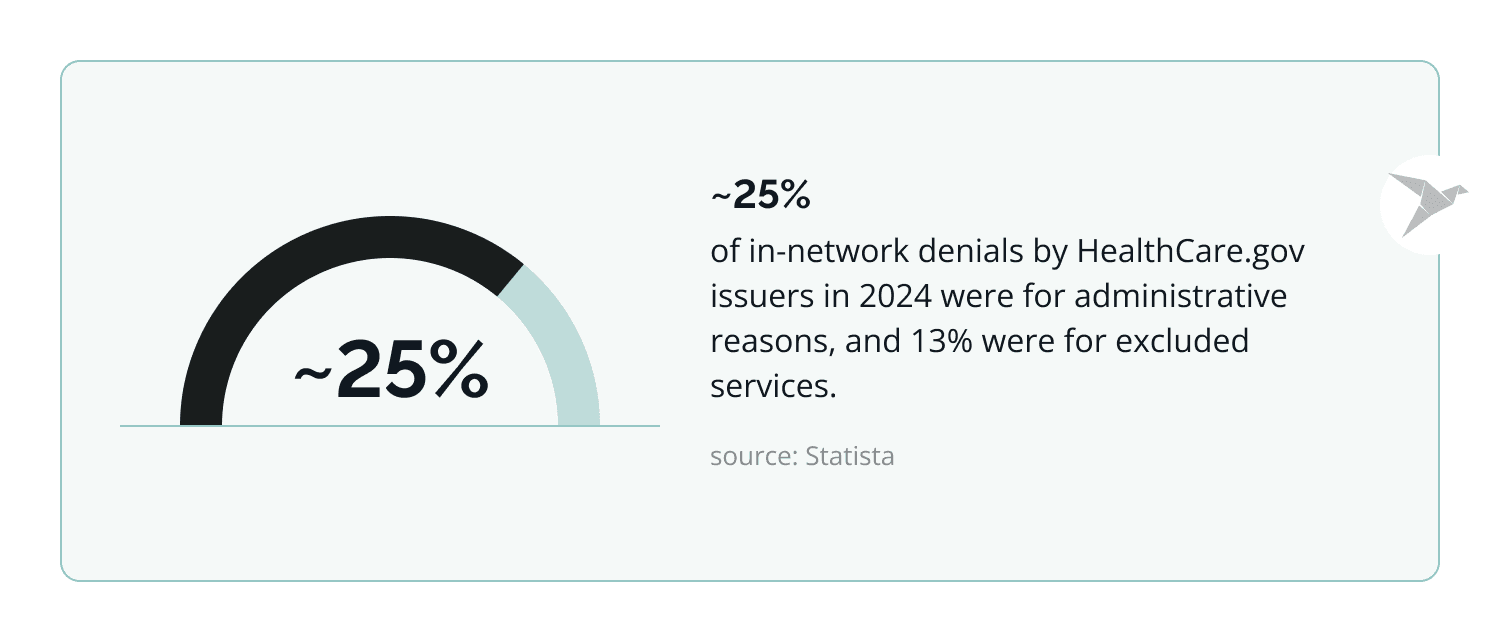
High claim denials can look like proof that an insurance provider is too strict, yet the causes are mixed. Among HealthCare.gov issuers in 2024, administrative reasons made up around 25% of in-network denials and excluded services 13%, according to Statista. These figures cover marketplace plans only, but they show how often a denial starts with paperwork or coverage rules.
The cost neither number captures
Neither figure shows the administrative burden of the dispute or the staff members it ties up on both sides. Patients are caught between the two organizations, waiting for disputed claims to be resolved and sometimes covering part of the healthcare costs themselves. Each delay shows up in patient satisfaction and the wider patient experience.
What Does This Mean for a Healthtech Product Team?
The side a product serves decides its data, integrations, compliance obligations, buyer, and definition of done.
Provider-side products
Provider-side products depend on the coding and documentation inside electronic health records, and the buyer is usually revenue cycle leadership rather than IT. That is why EHR development services have to support RCM processes alongside patient care.
For Oleksandra, the hardest part is mapping case-specific rules while leaving room for customization. One example is a rules matrix for optical character recognition (OCR) of faxes, which sets urgency by diagnosis and checks locations against approved facilities. Large practices also need work queues with multiple roles and permission layers to keep care coordination smooth.
Payer-side products
Claims platforms often run on legacy core systems that change only during infrequent release windows. Prepay logic sits in the payment path, so it cannot slow claims down. A false positive also has a human cost, because a provider office then has to rework the claim or appeal it.
Shared requirements
Both sides work with X12 formats such as the 837 and 835, CARC and RARC codes, eligibility transactions, and PHI handling. FHIR matters more each year, since CMS-0057-F requires payers to offer APIs built on it.
Both also need an audit trail that can defend a decision months later. Mapping these requirements before development starts is the job of healthcare IT consulting services.
Where Does AI Help in Healthcare Claims, and Where Does It Add Risk?
Across the healthcare industry, Artificial Intelligence is already common for prioritization and prediction. It becomes contested when it starts making decisions instead of supporting them.
Production use cases
Common uses include denial prediction and appeal drafting for providers, and prepay flagging for payers. Oleksandra sees AI earning its place in coding support, claim scrubbing, and anomaly detection. In these tasks, data analytics and Machine Learning help decide which claims a human checks first.
Risk and compliance exposure
In Oleksandra’s view, any AI use without guardrails or a human in the loop adds risk. Unexplained decisions and false positives can multiply disputes with providers instead of reducing them. CMS-0057-F requires a specific reason for every denied prior authorization, so a model that cannot explain its output leaves the plan without one.
Can the Two Sides Ever Align?
The two sides can partly align, and the mechanisms already exist. Adoption is uneven, but CMS-0057-F already requires specific denial reasons and will require electronic prior authorization by 2027.
Practitioner proposals
- Published edit rules help providers submit accurate claims, and Oleksandra calls clear logic a good start for automation.
- Specific denial reasons, she says, help billing managers act faster and keep A/R aging stable.
- Faster electronic attachments, in her experience, settle disputes sooner with clear shared context for the medical case.
- Gold-carding exempts providers with a strong approval record from some prior authorization, and prepay collaboration fixes problems early so clean claims settle in a timely manner.
The limit of alignment
A health plan and a provider chase different financial outcomes, and no technology changes that. Whether someone works in revenue cycle management or payment integrity, the shared goal is fewer claim disputes, settled at lower cost.
What Has TechMagic Built on Both Sides of the Claim?
TechMagic has built production software on both sides of the claim, including a payment integrity solution and HIPAA-compliant technology platforms for healthcare organizations.
Delivered projects
- Secure Payment Integrity Platform for Healthcare. TechMagic engineers and QA specialists worked inside a healthcare payment solutions provider’s team, building multi-system integrations, fraud prevention features, and test coverage on AWS Lambda, Node.js, MongoDB, and Angular.
- EMR Portal for MHC HealthCare. For a US injury treatment provider, TechMagic built a HIPAA-compliant EMR portal where physicians and attorneys exchange patient data, with an audit trail of every change.
- Medplum: HIPAA-compliant health platform. For a digital health company, TechMagic built a preventive care platform on Medplum where patients book healthcare services, physicians order lab tests, and consultations happen by video.
Approach and credentials
Technical buyers can evaluate TechMagic’s work in HL7 and FHIR integration, PHI-safe data engineering, audit trails, and QA for regulated healthcare payments. Since 2014, we have delivered 200+ projects.
In healthcare, we build HIPAA-compliant solutions with cybersecurity and data protection designed from the start. We hold ISO 27001, ISO 9001, and ISO/IEC 42001 certifications, as well as CREST accreditation for penetration testing.

Final Thoughts
Revenue cycle management vs payment integrity comes down to one claim, two balance sheets, and a shared cost in the middle. A payment integrity and revenue cycle management comparison shows two legitimate disciplines, and knowledge of both ends helps a product prevent disputes instead of processing them faster.
Where is this heading?
- Prior authorization is moving onto APIs. Impacted payers must have a FHIR Prior Authorization API live by January 1, 2027, giving provider-side products a standard way to submit requests.
- Explainable automation is likely to become the norm. Payers already owe a specific reason for every denied prior authorization, so a model that cannot explain its decision is hard to use.
- Front-end checks are likely to get more investment. Oleksandra’s examples show that eligibility, COB, and authorization checks at scheduling protect reimbursement and revenue capture before a claim exists.

FAQ

Revenue cycle management (RCM) in healthcare is the provider-side process of collecting accurate payment for care. RCM starts with patient registration, which collects demographic and insurance information, and ends with payment posting and denial management for claims the payer did not pay in full.
Insurance verification confirms a patient’s coverage before services are provided, so a claim does not fail on eligibility after the visit. Automated eligibility checks, such as a batch run 24 hours before scheduled visits, catch plan changes that happen between booking and care.
Payment integrity in healthcare is the health plan discipline of settling each claim correctly and only once.
Payment integrity is a payer-side discipline outside the provider’s revenue cycle, and revenue integrity is its counterpart on the care side.
Prepay payment integrity checks a claim before the health plan releases money, while postpay audits examine it afterward.
An improper payment in Medicare does not automatically mean fraud, according to the Centers for Medicare & Medicaid Services (CMS).
CMS-0057-F sets prior authorization decision deadlines, requires specific denial reasons, and mandates a Fast Healthcare Interoperability Resources (FHIR) Prior Authorization API by January 1, 2027.
Healthcare claims data falls under the Health Insurance Portability and Accountability Act (HIPAA), CMS-0057-F, and the No Surprises Act.
TechMagic builds software for both payers and providers, including a payment integrity platform and a HIPAA-compliant EMR portal.