 Software Development
 Security Services
 Cloud Services
 AI Services
 Other Services















 TechMagic Academy


How to Create a Mental Health App in 6 Steps
Last updated:30 July 2026


Did you know that over 970 million people worldwide suffer from a mental disorder, with anxiety and depression being the most common? As awareness of mental health issues grows, digital solutions have become crucial in bridging the gap between demand and accessibility.
Mental health apps, whether it is self-improvement apps or, more specifically – addiction recovery apps, offer people a way to track their emotions, receive professional support, and build better habits – all from the convenience of their smartphones. But how do you create a functional mental health app that truly helps?
This guide will walk you through the essential steps of mental health app development, key features of every mental health application, tech trends and best practices mental health app developers can use to make your product truly practical and modern.
Let’s go!
Key takeaways
- A mental health app helps people manage their emotional well-being through features like mood tracking, self-assessments, guided meditation, and virtual therapy.
- There are three main types of mental health apps, split by who uses them: patients (mood tracking, meditation, online therapy), clinicians (telepsychiatry, patient analytics), and organizations (corporate wellness, burnout prevention).
- Users stay when the app gets four things right. These are onboarding, mood and health tracking, educational content, and an easy way to reach support.
- Challenges like limited access, unreliable connectivity, weak regulation, the risk of self-misdiagnosis, and data privacy concerns all influence how you build the app. That is why it is important to tackle the toughest issues early.
- Development runs through six steps: research your audience, build the team, define features and prototype, develop securely for HIPAA and GDPR, test thoroughly, then launch and keep improving.
What is a Mental Health Application?
A mental health app is a digital tool that helps people manage their emotional well-being. Most offer features like self-assessments, mood tracking, meditation exercises, and virtual therapy. These apps became popular because they make support easier to access and much more affordable than weekly in-person visits.
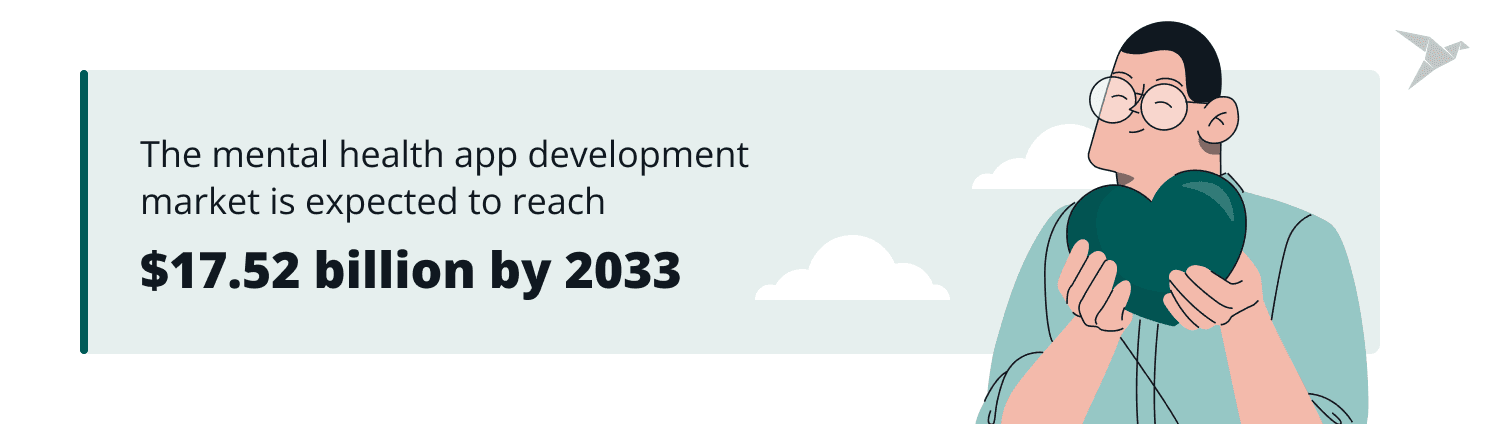
There is a wide variety of mental health apps. Some focus on a single task, like habit tracking. Others offer therapy-style conversations powered by AI, or connect users directly with licensed professionals through telemedicine. This variety is also reflected in their pricing. Experts claim that this market will reach $17.52 billion by 2033.
Why does the healthcare industry need mental health applications?
Did you know that over 36% of young adults (18-25) in the U.S. struggle with mental health issues? The pressure of balancing work and personal life is taking a toll on millions, and high occupational stress is making mental health tracking essential – especially in corporate settings.
Mental health apps are on the rise because of
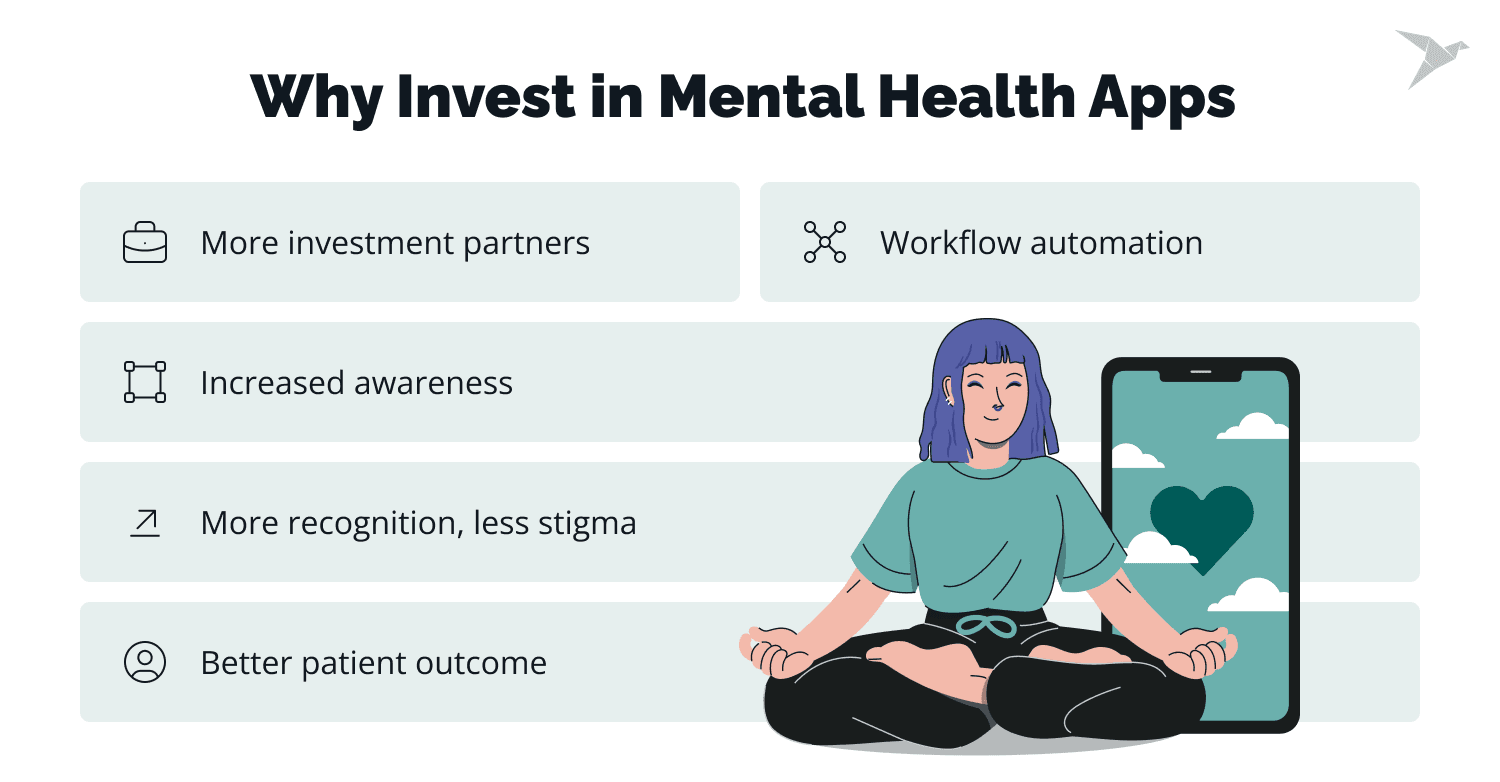
More recognition, less stigma. Mental health is no longer a taboo topic. Society finally recognizes it as a critical part of overall well-being, leading to greater acceptance of digital solutions like mental health apps.
Increased awareness. Governments and organizations worldwide are actively spreading awareness about mental health, encouraging more people to seek help and use digital tools.
Heavy investments. With rising demand, both private organizations and governments are pouring money into developing mental health apps that cater to different needs.
Mental health apps matter
Seeking therapy can be time-consuming and overwhelming. Companies providing HealthTech software development services create applications that remove those barriers by providing quick access to self-help tools and professional guidance. There are no waiting rooms or appointments – just support when your client needs it.
Traditional therapy is also expensive. Specified apps offer free or low-cost alternatives. Many provide educational resources, guided exercises, and even affordable therapy options, making mental health support accessible to more people.
We're here to help

What Are the Main Types of Mental Health Apps?
Each mental health app is designed for a specific purpose and user group. Some are made for patients, others for clinicians, and some for employers. This choice affects decisions about features and compliance. Here are the main categories, grouped by the intended user.
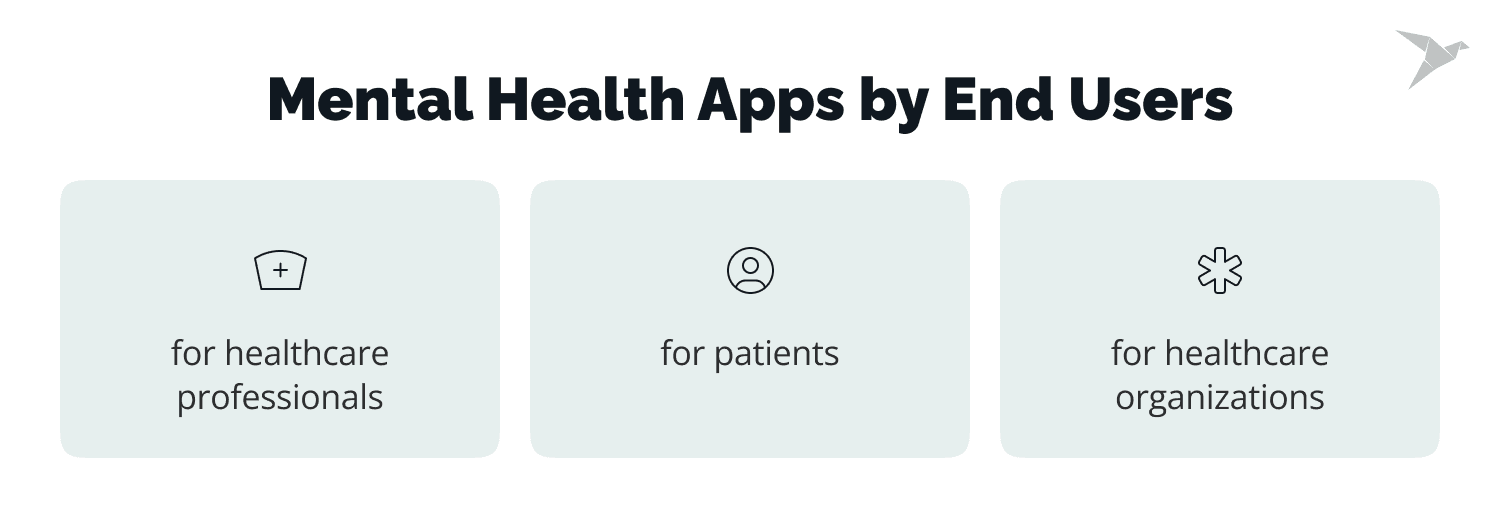
Apps for patients
These apps help people manage their own well-being. Most include tools for self-awareness, stress relief, and ways to connect with professional support if self-help is not enough.
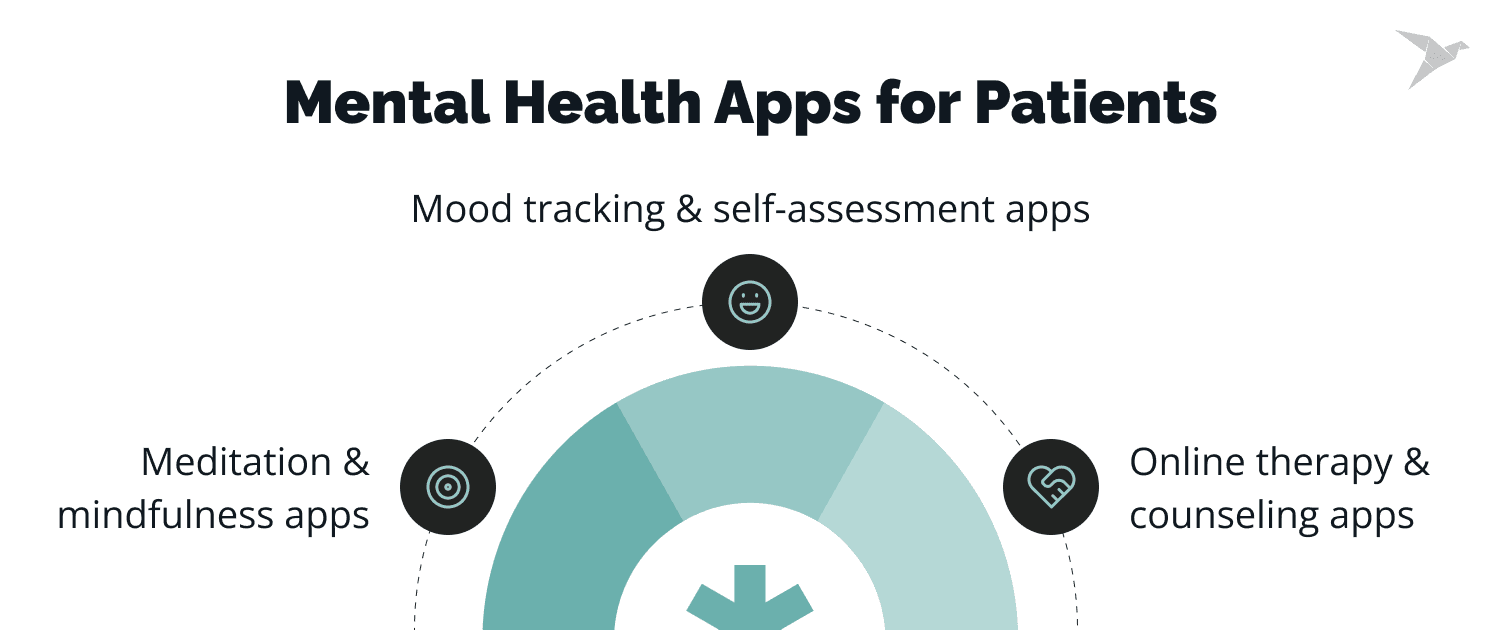
Mood tracking and self-assessment apps
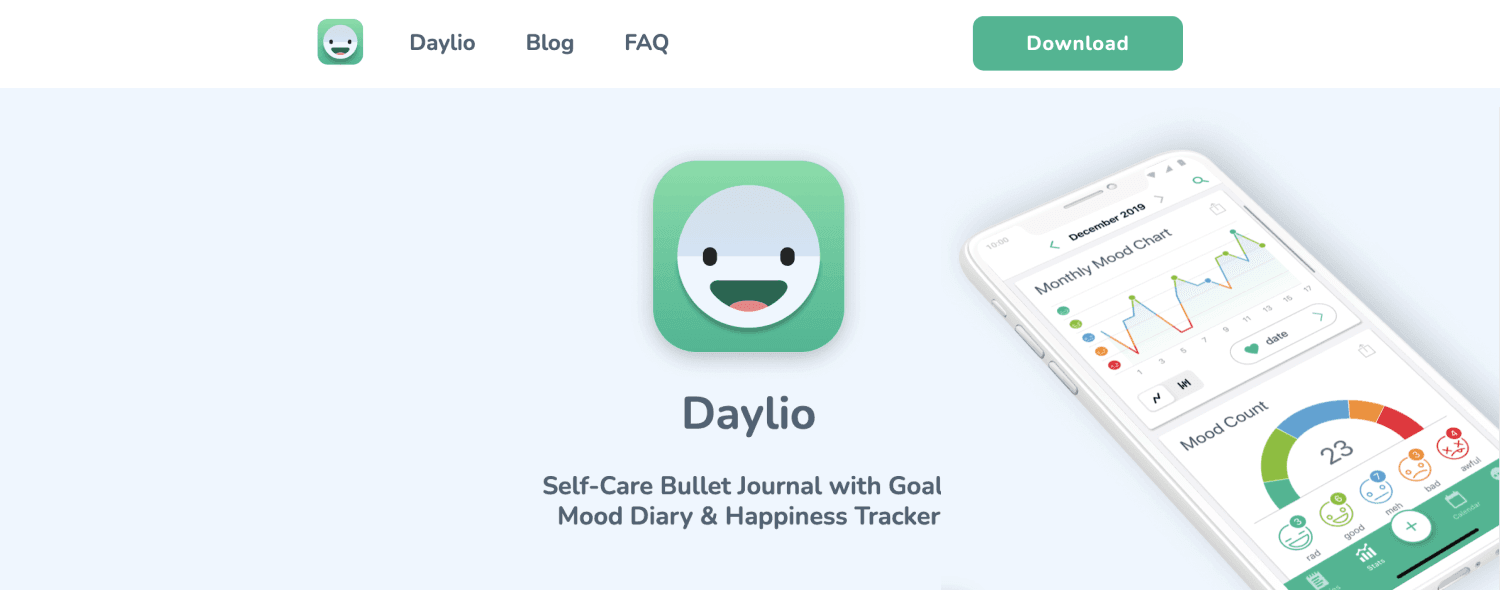
Mood tracking apps let users log emotions and daily activities, which makes patterns and triggers easier to see. Many go a step further with self-assessment questionnaires. Those help someone gauge their emotional state and notice when it is time to talk to a professional.
Example: Daylio records moods and habits in a journal-style format, so users can see how their days shape how they feel.
Meditation and mindfulness apps
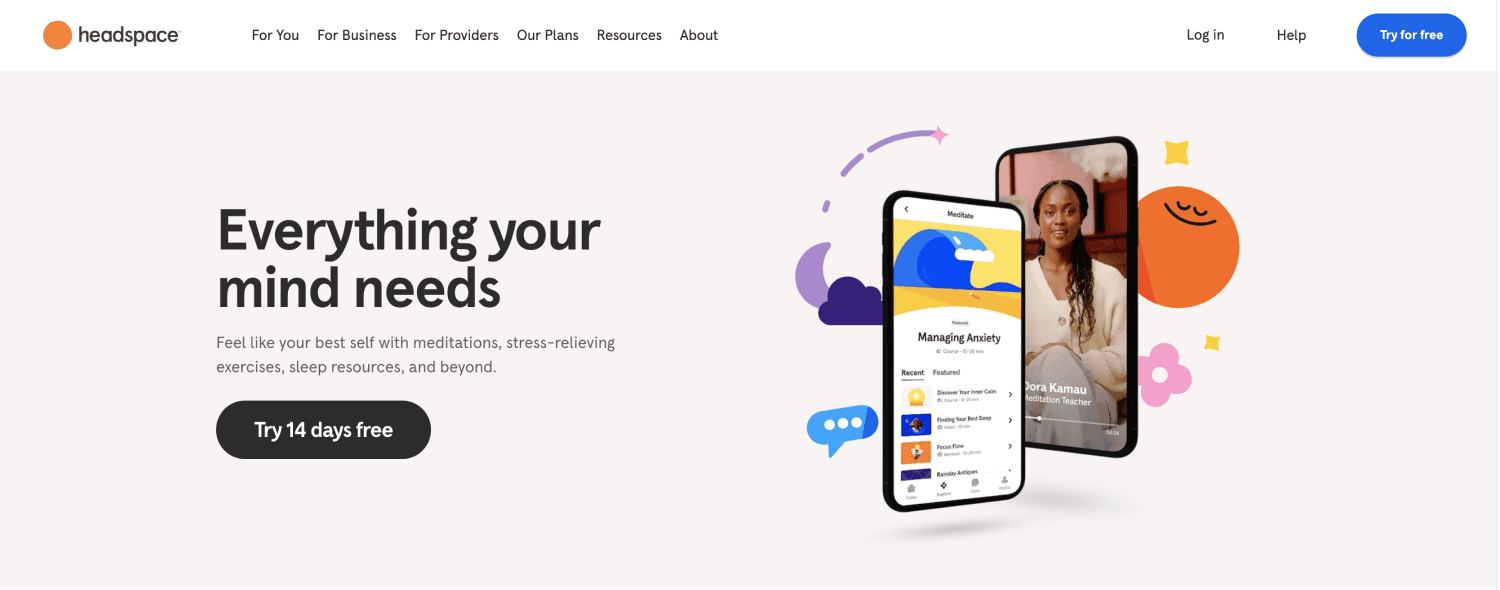
These apps guide users through meditation, breathing exercises, and relaxation techniques. They aim to reduce stress, improve sleep, and help users focus. Some also include nature sounds, bedtime stories, and structured programs for specific needs.
Example: Headspace offers guided meditation courses for managing stress, improving concentration, and sleeping better.
Online therapy and counseling apps
Some people prefer working with a professional rather than using self-help tools. Therapy apps connect users with licensed counselors through text, voice, or video, removing common barriers like time, location, and stigma that can prevent face-to-face sessions.
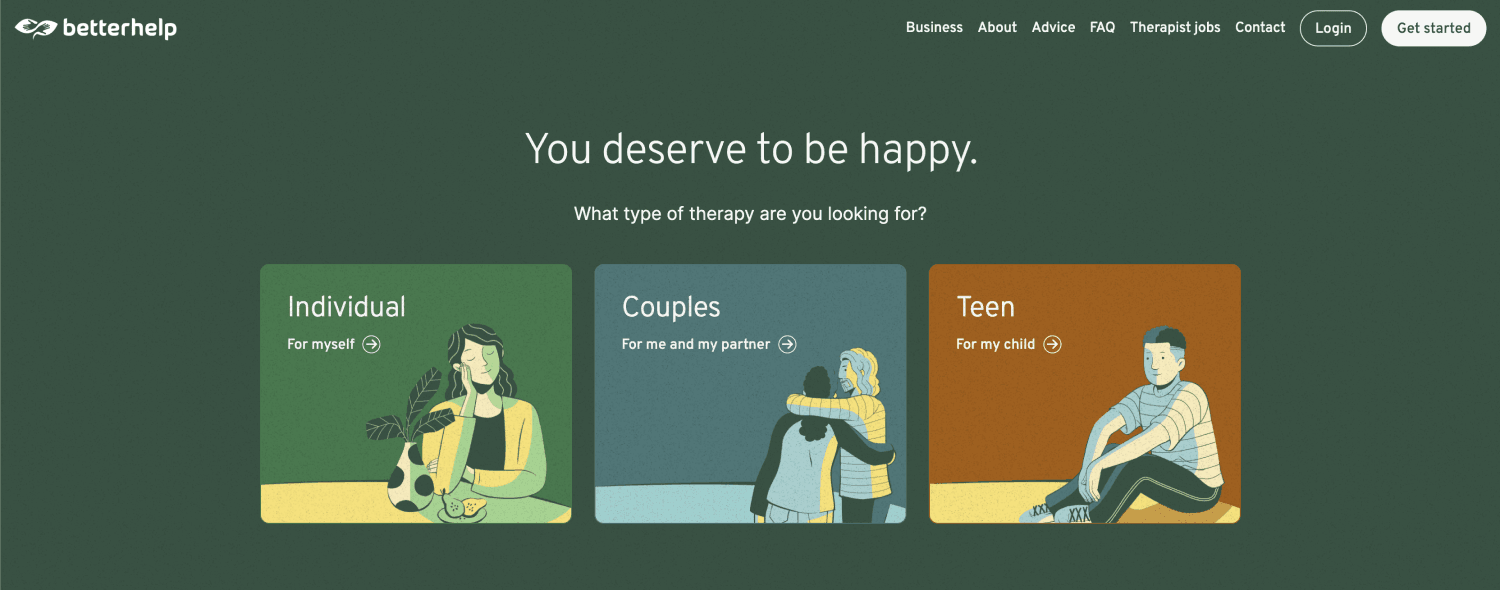
Example: BetterHelp offers unlimited messaging and scheduled live sessions with professional therapists, allowing users to receive support from the comfort of their homes.
Apps for mental health specialists
This second group serves the clinician rather than the patient. The tools here handle remote sessions, data tracking, and treatment planning.
Telepsychiatry and remote consultation apps
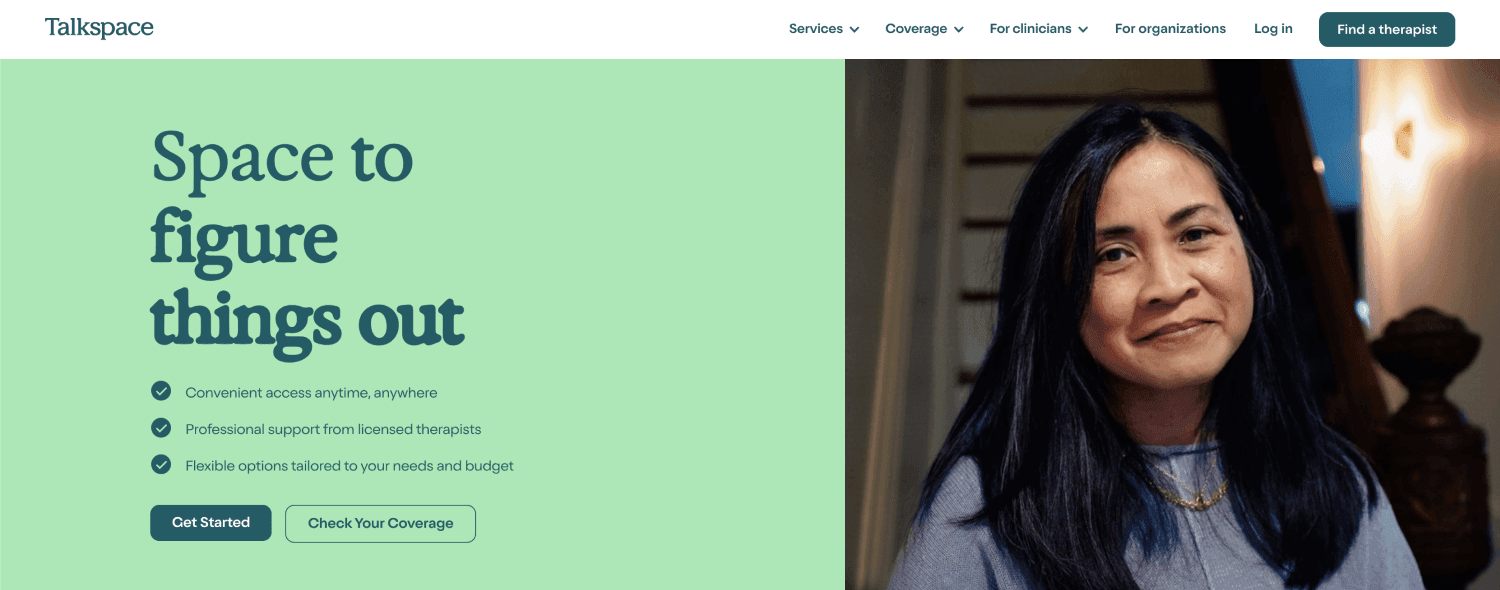
These platforms let professionals run therapy sessions remotely, which matters most for patients in rural or underserved areas. Secure messaging and video calls keep confidentiality and clinical standards intact.
Example: Talkspace connects therapists with patients for online therapy, wherever either person happens to be.
Mental health data and analytics apps
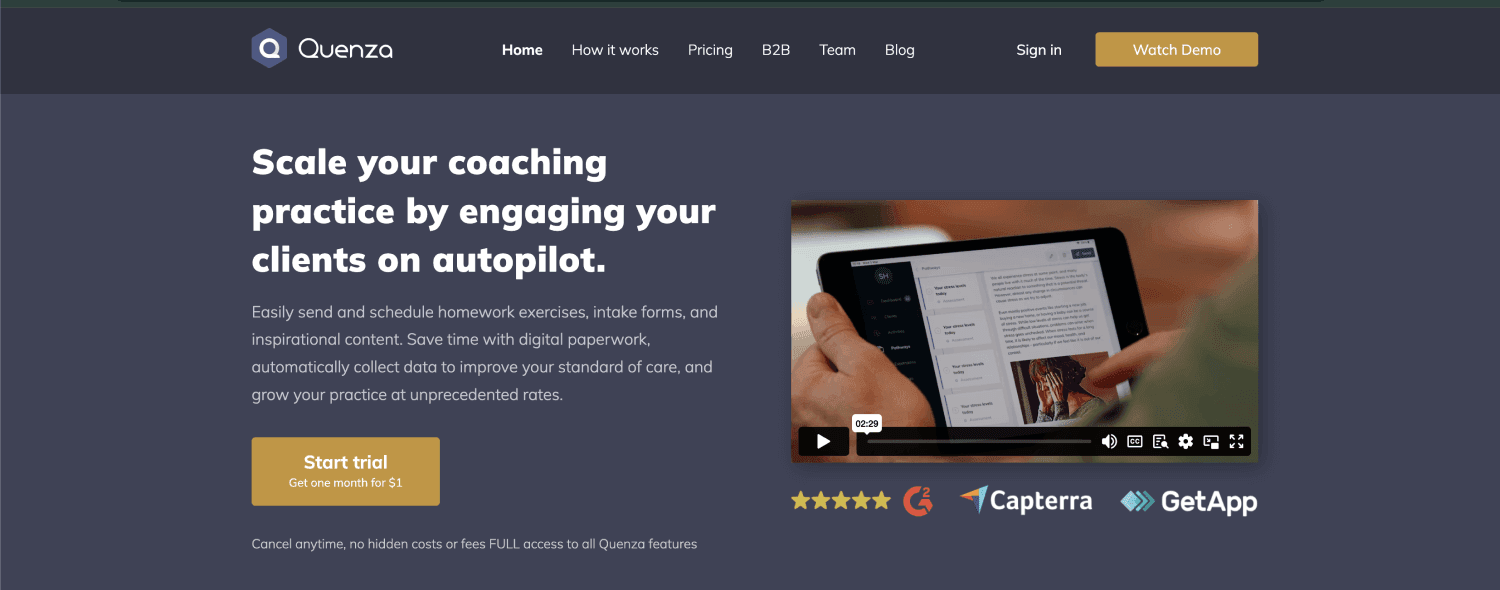
These help clinicians collect and analyze patient data so they can track progress over time. A therapist can build a customized treatment plan, watch whether a patient keeps up with the exercises, and adjust as they go.
Example: Quenza lets therapists design personalized exercises and see how patients engage with them.
Get professionals on your side

Apps for organizations
The third group answers to employers. Workplace stress and burnout have pushed more companies toward digital mental health support, and these apps sit inside benefits programs with a focus on prevention.
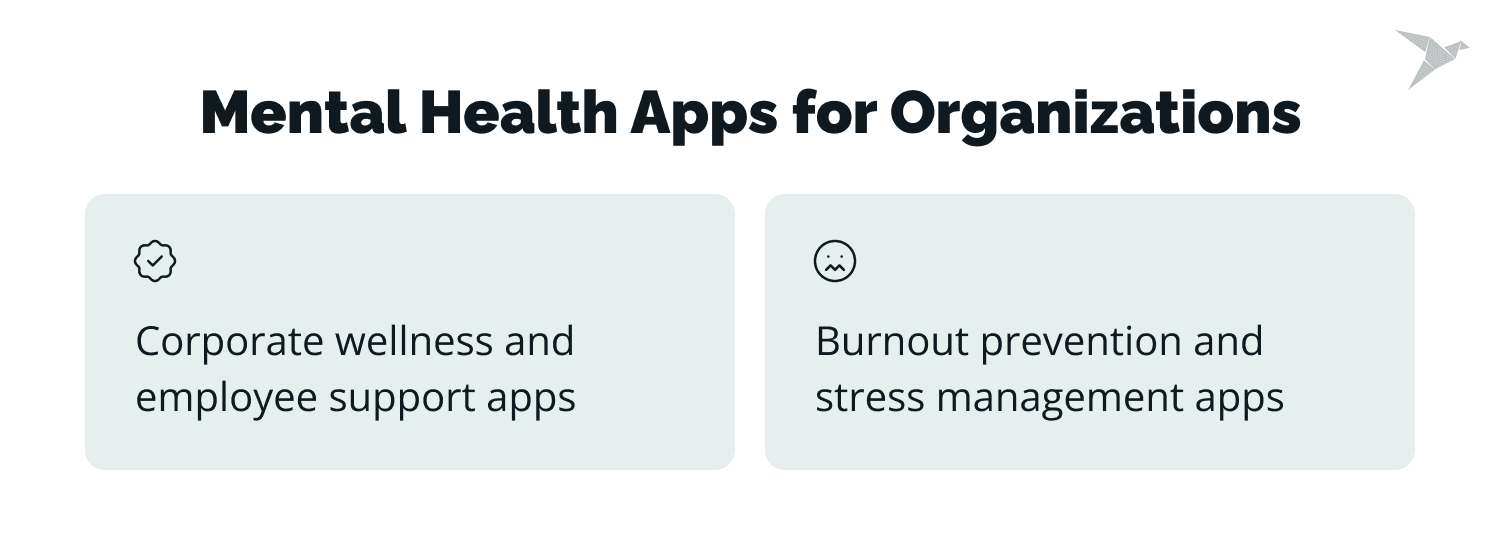
Corporate wellness and employee support apps
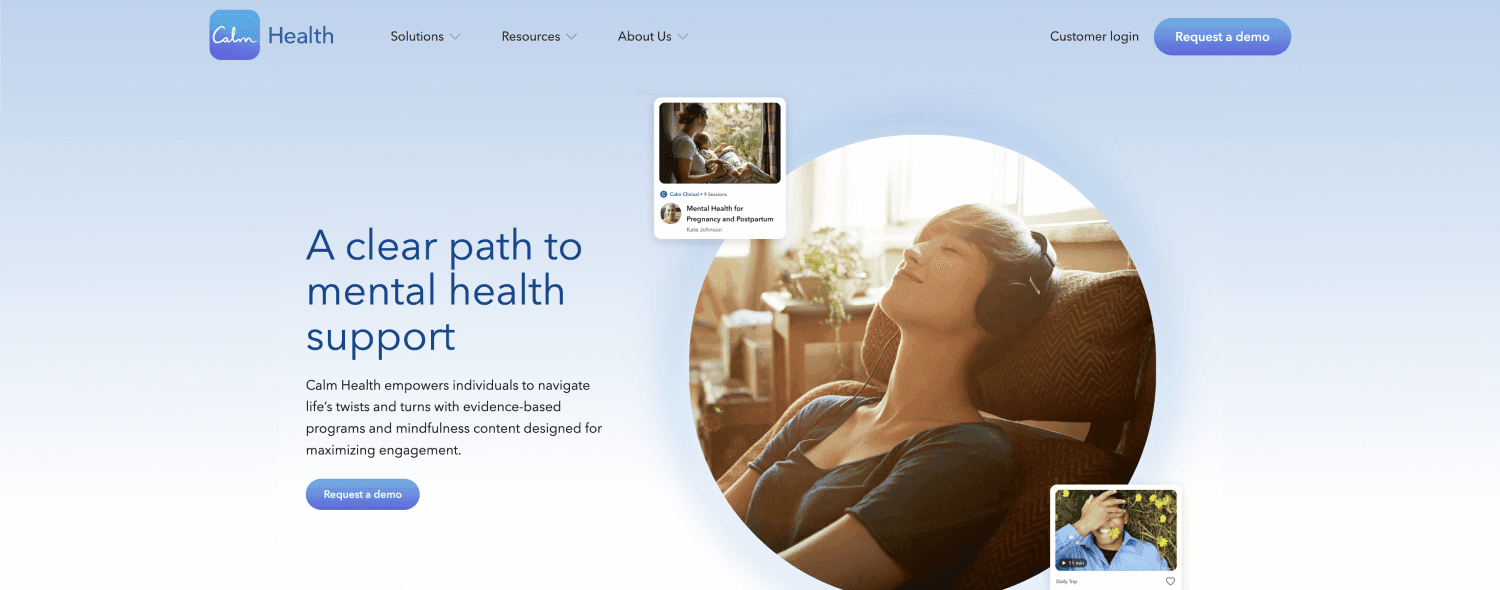
These applications give employees mental health resources, self-care exercises, and confidential counseling. Many add anonymous well-being checks and guided programs for stress management and resilience.
Example: Calm for Business, for instance, offers meditation programs, relaxation exercises, and mental wellness support tailored to workplace needs.
Burnout prevention and stress management apps
Built for busy professionals, these apps help users build resilience. They lean on cognitive behavioral therapy (CBT) techniques, daily exercises, and personalized plans to head off burnout before it lands.
Example: Happify takes a different angle. Its interactive activities draw on positive psychology and CBT to help users manage stress and steady their emotional well-being.

Necessary Mental Health App Features
Which features actually keep people coming back? Across the apps people stick with, the same short list shows up. They help users track how they feel, learn coping strategies, and reach support when they need it. Here is what belongs on that list, and why each one earns its place.
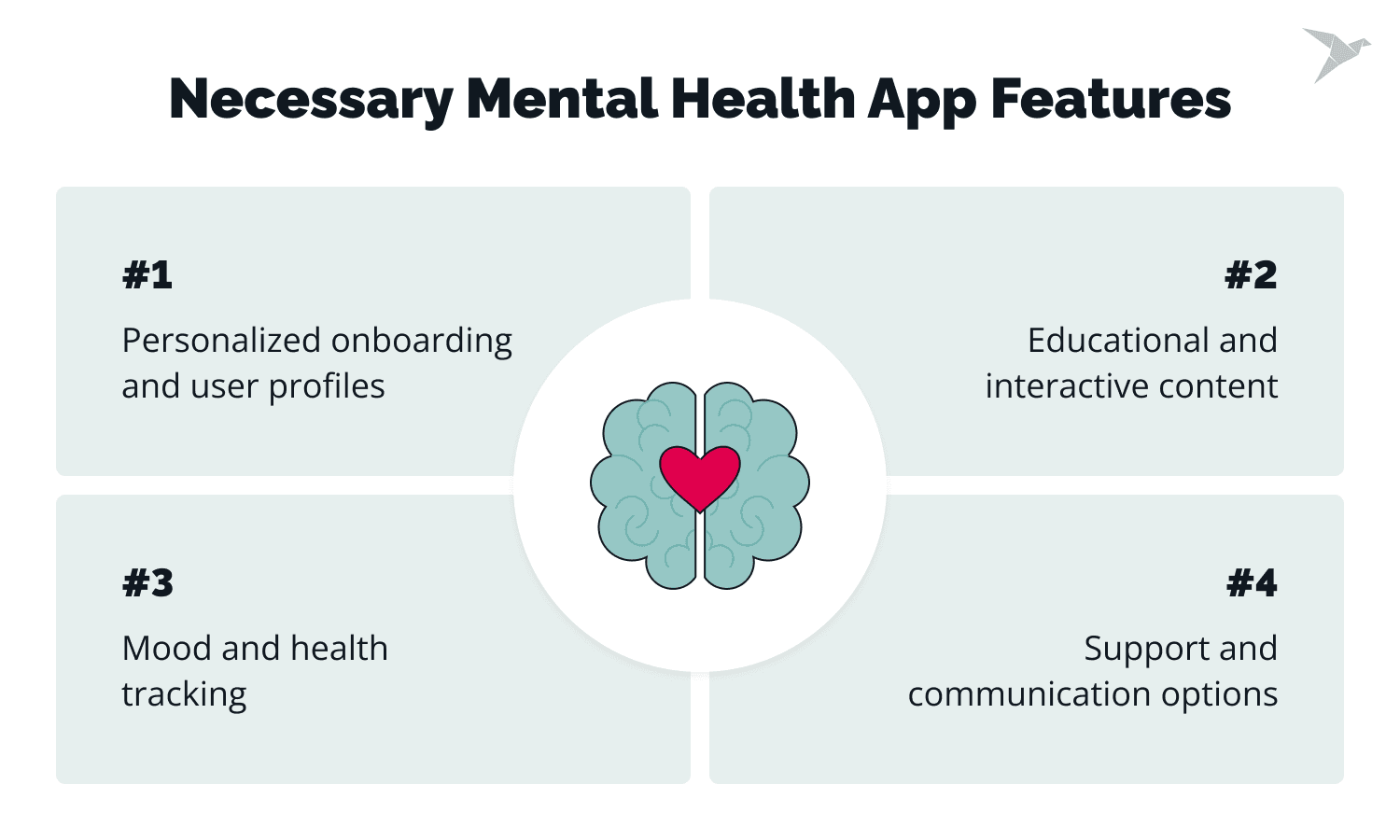
Personalized onboarding and user profiles
Onboarding decides whether someone stays past the first session, so keep it light. Guide users through profile creation, goal setting, and privacy choices without asking for everything at once. Done well, it drops people straight into the tools that fit them.
Sanvello is a good example. It reads a few early answers, then tailors the coping tools it surfaces to match.
Mood and health tracking
Tracking emotions and habits gives users a mirror. Log mood, sleep, and stress over a few weeks, and the triggers and trends start to show themselves. That growing self-awareness is what leads to better day-to-day decisions. Some apps add AI-driven insights on top to surface patterns a person would miss on their own.
Two examples make the difference concrete. Bearable tracks mood, symptoms, medications, and behaviors, so it is easy to see what affects mental health over time. Sanvello pairs mood tracking with progress assessments, connecting how someone feels to what they do each day.
Educational and interactive content
Good content gives users something solid to reach for on a hard day. Meditation and mindfulness exercises, sleep stories, self-help courses. All of it makes support more available without a therapist in the room.
Calm is the obvious case. It offers guided meditations, soothing sounds, and masterclasses from mental health experts, which is why so many people open it for stress relief. Headspace takes a similar route with sleepcasts, mindfulness courses, and daily exercises.
Support and communication options
The ability to reach another person matters most at the worst moment. That is where text chat, peer support communities, and video calls with licensed therapists come in, and it is what turns a passive app into something interactive.
Sanvello offers optional coaching and therapy sessions, so a user who needs more than self-help tools can talk to a professional. Happify adds peer support to its evidence-based exercises, which helps people stay motivated through shared experience.
Put those four together and you get the real value: personalized tracking, educational resources, and communication tools that help users take charge of their own well-being. Keep that combination in mind as you plan your own app.
Challenges in Mental Health Application Development
Mental health apps are popular. Building a good one is still hard. Accessibility gaps and data privacy risks can quietly erode user trust and cap your growth, so it helps to know what you are walking into.
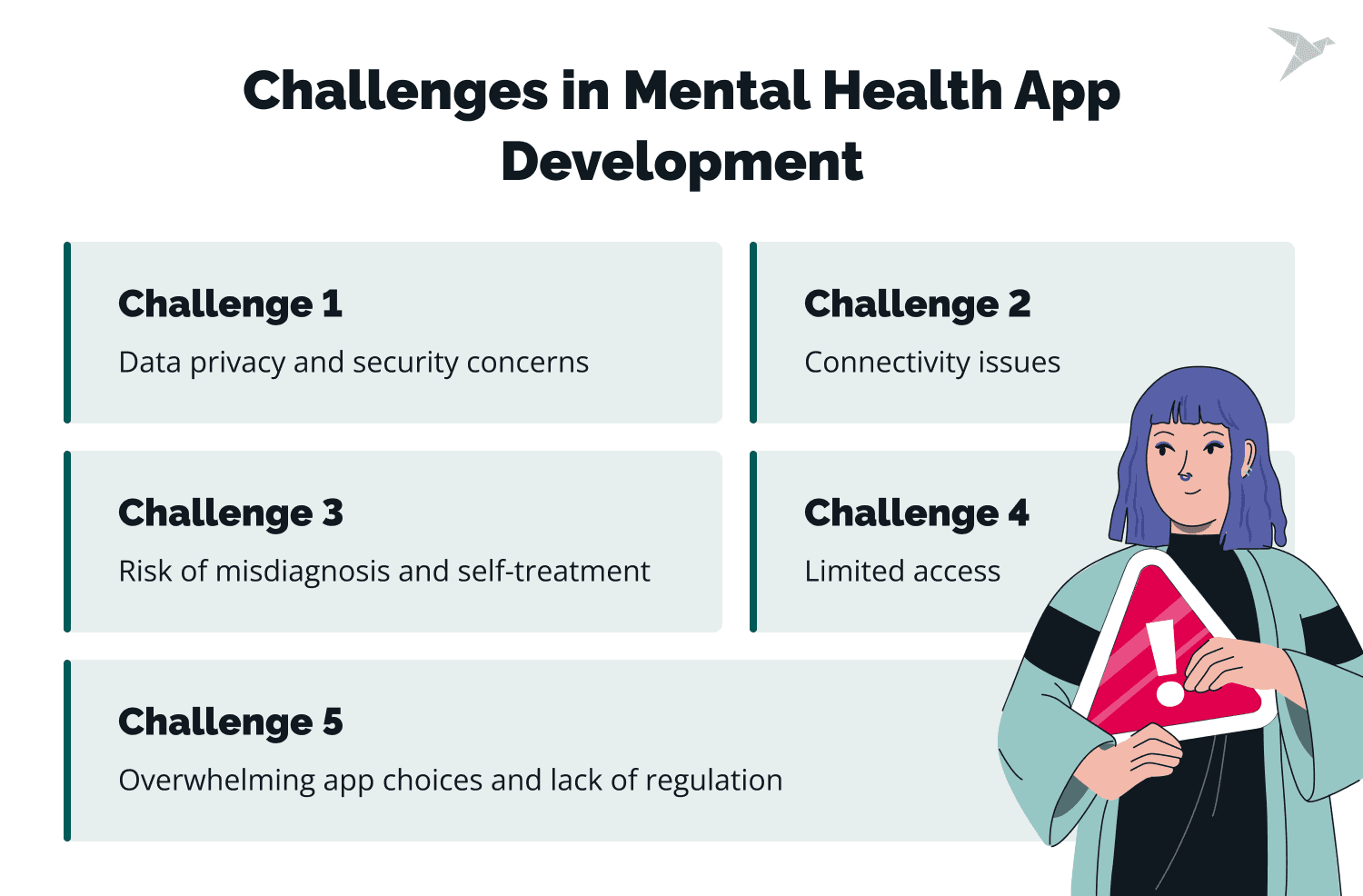
Limited access
Not everyone can easily use a mental health app. In lower-income regions, smartphone adoption stays low because of cost and limited digital literacy. Plenty of people simply do not know how to download, set up, or use these apps, and that caps the reach of even a well-built product. Without awareness and education behind it, a good app can still struggle to find users.
India shows the pattern clearly. Smartphone use there is growing but uneven across rural areas, so adoption lags behind the cities. Government-backed initiatives like Tele MANAS offer free tele-counseling to close the gap, yet digital literacy remains a real barrier.
Connectivity issues
Video therapy, live support, cloud-based tracking. All of it needs a stable internet connection. In areas with weak or unreliable service, users hit disruptions that make the app hard to use, and the timing is cruel. When an app fails to load at the exact moment someone needs it, people stop trusting it and stop coming back.
During the COVID-19 pandemic, users of the mental health app Wysa in some regions could not reach its AI chatbot at all because of poor network coverage. That is why so many teams build in offline functionality from the start.
Overwhelming app choices and lack of regulation
There are a lot of mental health apps. For users, that abundance turns the app store into a crowded shelf with no labels, where an evidence-based tool sits right next to one with no science behind it and looks exactly the same. Many apps claim to offer mental health support without any approval from bodies like the FDA. Without clinical validation, people can end up leaning on tools that do nothing, or that make things worse.
Risk of misdiagnosis and self-treatment
Most of these apps run on self-reported data, and that carries a risk. Users can misread their own symptoms or try to diagnose themselves. Someone going through a rough few weeks of stress might decide they have clinical depression and follow the wrong self-help plan for months.
Without expert assessment, an app can point someone toward the wrong approach instead of proper care.
Data privacy and security concerns
Privacy is the hardest problem here, full stop. These apps collect sensitive personal data, and not every one of them handles it well. Studies have found that many health apps send personal data over unsecured channels or rely on unencrypted communication, which leaves users exposed to breaches. And the trust cost is real. When people are not confident their information is safe, they hold back the very details that would make the app useful.
The BetterHelp case is the cautionary tale. In March 2023, the U.S. Federal Trade Commission (FTC) took action against BetterHelp, an online therapy platform, for sharing users' sensitive health data with third parties like Facebook and Snapchat after it had promised confidentiality. The case ended in a $7.8 million settlement and a ban on sharing health data for advertising. Incidents like that cost money and trust at the same time, and they are exactly why calls for stricter rules keep getting louder. Treat data security as a first-order requirement, and build it in early rather than at the end.
The road ahead
None of this is a reason to walk away. The opportunity is real, but the order of operations matters. Prioritize accessibility, clinical validation, and data security from day one, and you avoid the traps that sink adoption later. Get those right, and the app has a genuine shot at helping people. Skip them, and it will not matter how good the rest is.
6 Steps of Mental Health App Development
So how do you actually build a mental health application? The work balances usability, security, and clinical relevance at every stage. Here is a step-by-step process that takes you from a rough concept to a live product.
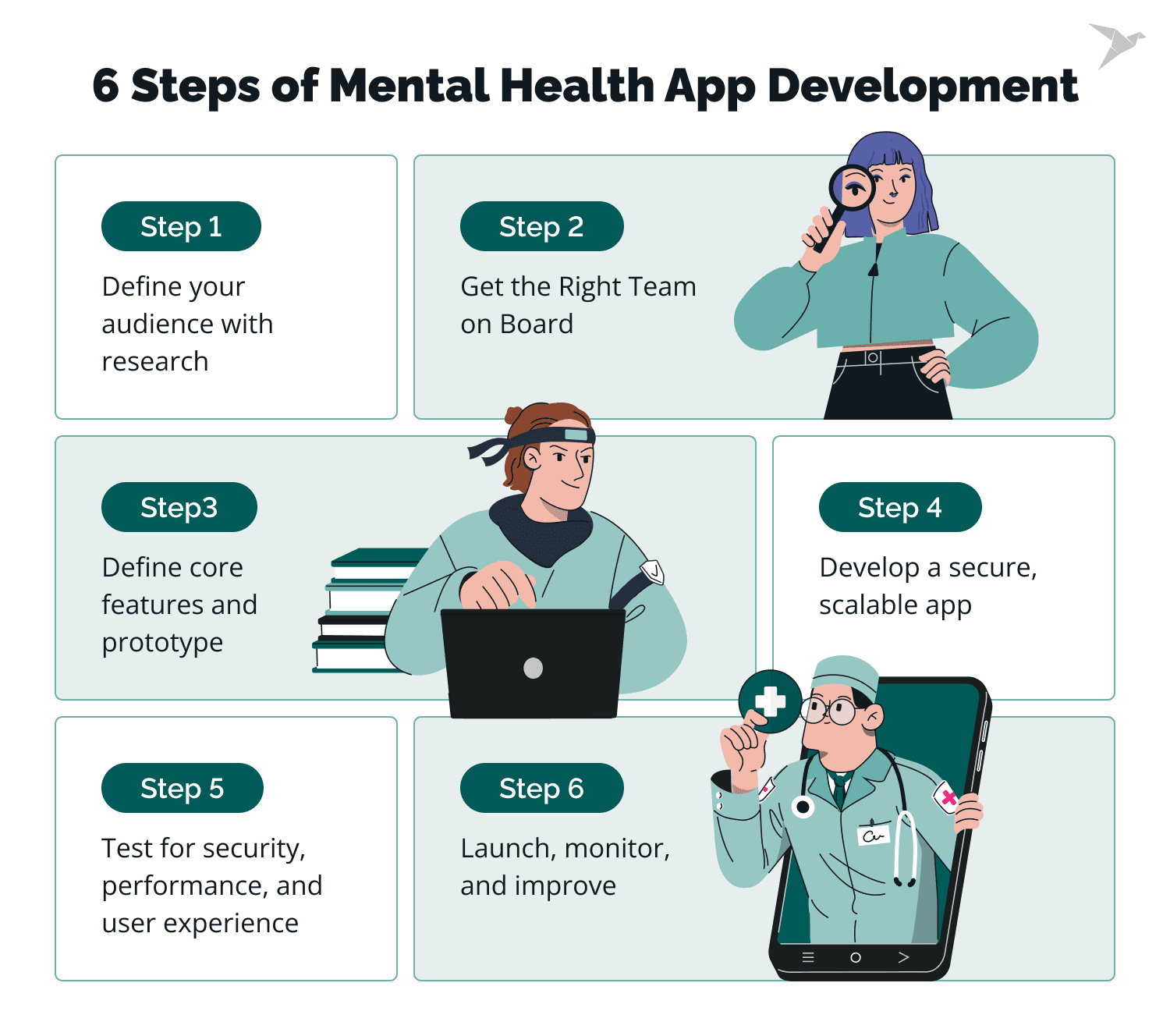
Step 1. Define your audience with research
Everything starts with a clear picture of who will use the app. Research their demographics, their challenges, and their digital habits, then let what you learn shape the features and the engagement plan.
People want different things. One user is looking for guided therapy sessions; another just wants AI-driven mood tracking. Accessibility runs underneath all of it: text-to-speech, adjustable fonts, and multilingual support decide how many people can use the app at all. Surveys, focus groups, and competitor analysis will show you the gaps in what already exists, and healthcare professionals can add practical insight into what patients actually need.
Step 2. Get the right team on board
A mental health app pulls in expertise from several fields at once. A well-rounded team usually looks like this:
- UX/UI designers who build an interface tuned to users' emotional needs.
- Healthcare professionals who validate the content and confirm it is clinically accurate.
- Software developers with real experience in mobile and web development, data security, and cloud infrastructure.
- Legal and compliance specialists who keep the app inside HIPAA, GDPR, or other privacy regulations.
- AI and data analysts, if the app includes personalized recommendations or predictive analytics.
Each role covers something the others cannot. Together, they are what keep the app reliable, secure, and usable.
Step 3. Define core features and prototype
Before anyone writes code, outline the app's core features based on your research. Prioritize what maps to real user needs: self-assessment tools, teletherapy, guided meditation, AI-powered insights. Resist the temptation to ship every idea at once, because a crowded app overwhelms the people you built it for.
Then prototype. Wireframes and interactive mockups let you test layout and flow cheaply, and early feedback from target users and clinicians helps you fix the interface while fixing it is still easy.
Step 4. Develop a secure, scalable app
Development is where security and performance get locked in. A well-structured backend keeps data processing and storage smooth. A clean front end keeps navigation simple. And strong measures like end-to-end encryption and multi-factor authentication protect the sensitive data at the center of it all.
Pay attention to healthcare regulatory compliance
Compliance is not negotiable in this space. HIPAA in the U.S., GDPR in Europe, PIPEDA in Canada. Each sets strict rules for handling patient information, and missing them brings both legal trouble and lost trust. Following established practices for GDPR-, PIPEDA-, and HIPAA-compliant app development helps your app meet the standards required to protect patient data.
Consider secure cloud
Cloud infrastructure makes scaling far easier as demand grows, and it keeps performance steady while you do it. Pick a reliable provider with built-in security features such as automated backups, encryption, and real-time threat detection. Then add role-based access controls, so that only authorized people can ever touch sensitive health data.
Future-proofing
Design the architecture to take updates and new features without long downtime. Build regular security audits and penetration testing into the development cycle, so you find vulnerabilities before an attacker does. The rule of thumb is simple: keep the app fast, secure, and adaptable as demand grows.
Step 5. Test for security, performance, and user experience
Thorough testing is what keeps a mental health app safe, reliable, and easy to use. Security risks are rising and users expect a smooth experience, so testing belongs at the center of development rather than the final week before launch.
Performance testing
The app has to run smoothly across devices and conditions. For reference, mobile apps average a 99.93% crash-free rate on iOS and 99.81% on Android, and that is the bar users quietly expect. Load testing shows how the app copes with heavy traffic. Stress testing pushes it to the extremes. Compatibility testing confirms it works across operating systems, screen sizes, and network speeds.
Usability testing
An app should be easy to navigate for a wide range of users. User feedback sessions show you where to adjust layout and interactions based on how people really behave. Accessibility testing confirms features like text resizing, voice commands, and screen reader support, so that people with different needs can use the app comfortably.
Regulatory compliance checks
Health apps handle sensitive data, which means privacy law is not something you test once and forget. HIPAA, GDPR, and PIPEDA all govern how you collect and store personal information. Testing should confirm the app encrypts data, secures logins, and tells users plainly how their information gets used.
Beta testing
A beta release puts the app in front of a small group in real settings before the full launch. This stage tends to surface the issues you missed, gives you a real read on performance, and buys you one last round of fixes based on how people actually use it.
Good testing lowers security risks, prevents technical failures, and keeps the app both effective and usable.
Step 6. Launch, monitor, and improve
Shipping the app is only the start. To keep it effective, plan for ongoing monitoring, feedback analysis, and regular updates from the beginning. A solid post-launch strategy is what protects your engagement and sets up long-term success.
Plan a smooth launch
A soft launch lets you test with a limited audience before you go wide. You gather feedback, fix what breaks, and refine before a larger user base ever sees it. App Store Optimization (ASO) improves visibility through clear descriptions, relevant keywords, and strong visuals. And partnering with mental health organizations or professionals helps you reach the right users while building credibility.
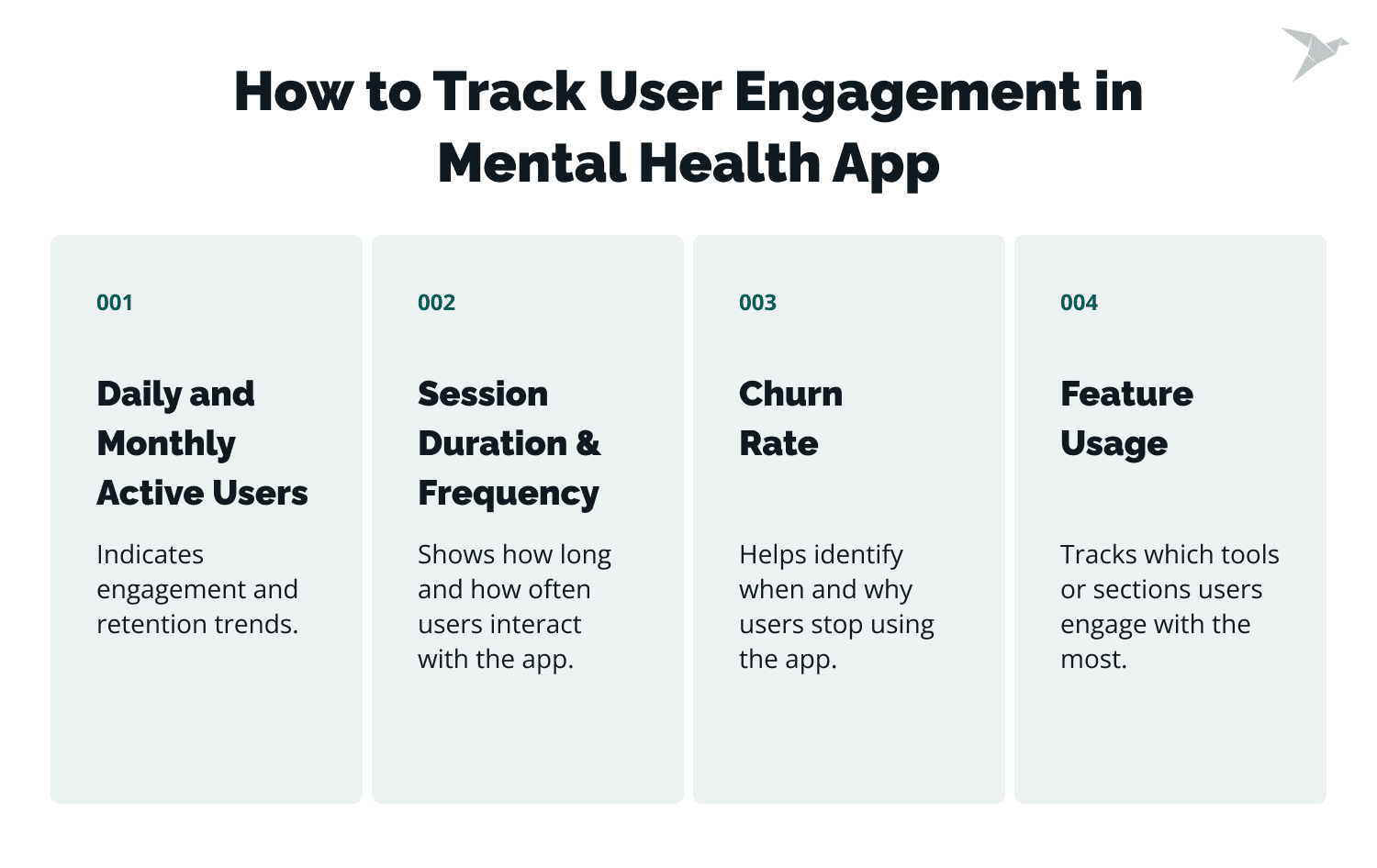
Track and analyze user engagement
Watching how people use the app tells you where to improve next. A few metrics are worth tracking closely:
- Daily and Monthly Active Users (DAU & MAU): your engagement and retention trends.
- Session duration and frequency: how long and how often people actually use the app.
- Churn rate: when and why users drop off.
- Feature usage: which tools people engage with, and which they ignore.
Context matters here. The average mobile user touches 30 apps per month, so a spot in that rotation has to be earned with an experience good enough to bring people back.
Gather and implement user feedback
Feedback points you straight at the usability problems and missing features you could not see from the inside. In-app surveys, app store reviews, direct support channels. Each one surfaces glitches and gaps you can act on. Regular updates based on that feedback show users you are listening, whether you are fixing bugs, reworking the interface, or adding tools. Over time, that is what builds trust.
Maintain compliance and security
Staying current with GDPR, HIPAA, and PIPEDA keeps user data protected as the rules shift. Regular compliance audits confirm your encryption, consent policies, and security protocols still meet the standard. Being open about how you handle data reassures users and reinforces their trust.
Here is the part teams forget. A good app does not just launch. It keeps evolving, and that steady improvement is what keeps a mental health app useful to the people who depend on it.
Monetization Strategies for Mental Health Apps
Building a mental health app costs real money: development, security, compliance, and upkeep. To stay sustainable without pricing out the people who need it most, you need the right revenue model. From what we have seen, these are the main options, with a practical note on each.
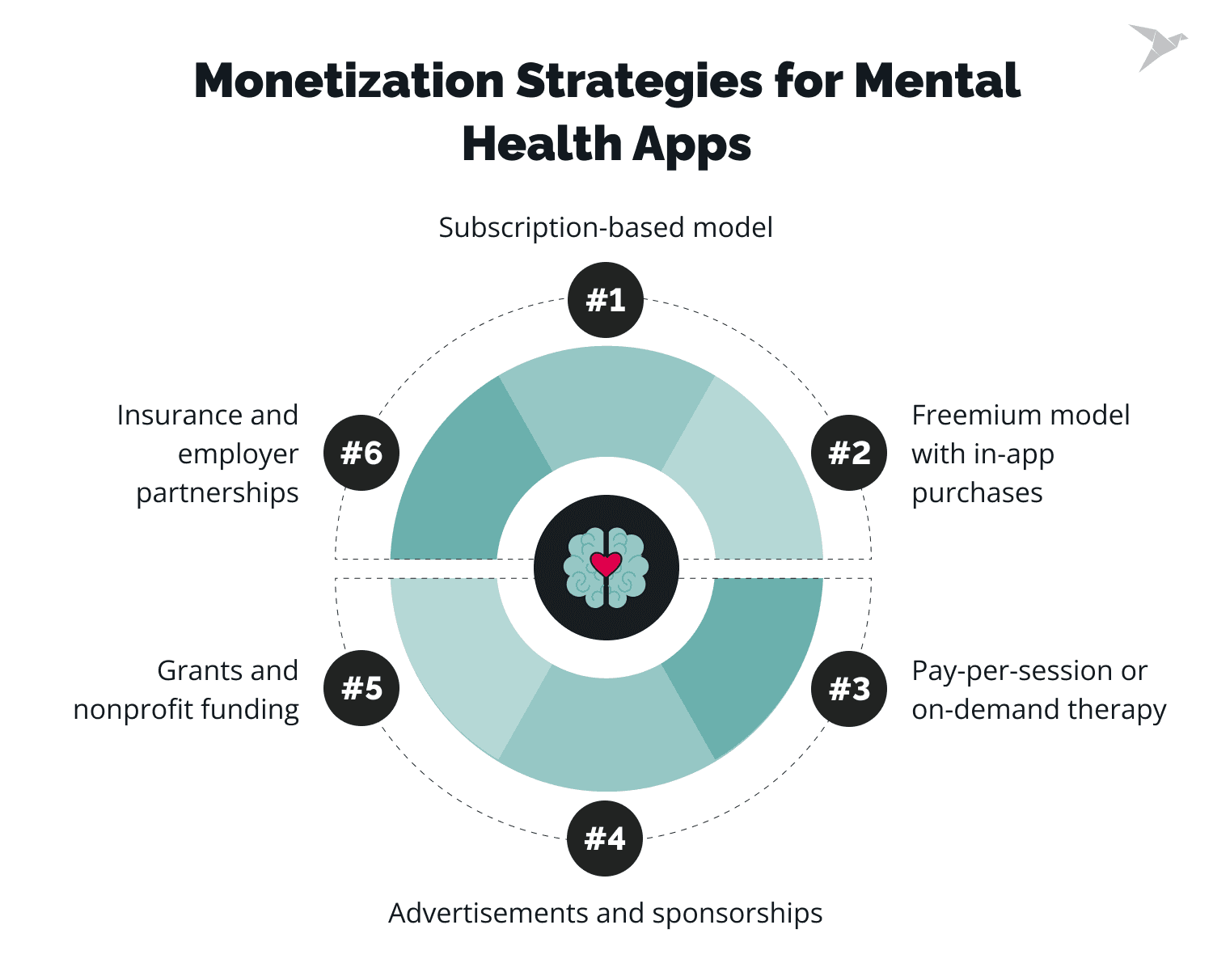
1. Subscription-based model
A subscription gives users access to premium content or features for a recurring fee, usually monthly or annually. It fits apps built around guided therapy, meditation programs, CBT exercises, or AI-driven insights.
How to implement it effectively:
Start with a free trial so users feel the benefit before they pay. Add tiered pricing, such as basic, premium, and family plans, so different people can pick what fits. And keep the content moving, because a subscription that stops adding new features or exclusive content is the first thing anyone cancels.
2. Freemium model with in-app purchases
A freemium model gives away a basic version and charges for the advanced features. It works well for apps offering guided meditations, self-help exercises, or AI-powered mood tracking.
How to implement it effectively:
The free version has to be genuinely useful. If it is not, users never find a reason to pay. From there, one-time purchases work nicely for specific tools, like an in-depth therapy module or a personalized assessment. Let people buy only what they need instead of forcing a subscription, and you signal that you respect how they want to use the app.
3. Insurance and employer partnerships
Plenty of mental health apps sell through insurers or employers as part of a healthcare benefit. This model suits apps offering therapy sessions, wellness coaching, or stress management.
How to implement it effectively:
- Partner with corporate wellness programs to fold the app into employee benefits.
- Work with insurance companies to cover app-based mental health support.
- Offer custom business plans for organizations that want to give their whole workforce access.
4. Pay-per-session or on-demand therapy
Some apps connect users with licensed therapists for scheduled or on-demand video and chat sessions. Instead of subscribing, the user pays per session or for a limited package.
How to implement it effectively:
- Set transparent pricing, with clear options from single sessions to bundles.
- Use secure, HIPAA-compliant telehealth integrations to protect patient data.
- Include free resources for users who cannot afford therapy but still benefit from educational content.
5. Grants and nonprofit funding
For apps aimed at underserved communities or public health goals, grants and nonprofit funding can be a steady source of support. Many government and private organizations fund mental health innovation.
How to implement it effectively:
- Apply for healthcare and mental health grants from foundations and government programs.
- Work with nonprofit organizations whose mental health goals line up with yours.
- Lead with the app's social impact when you approach donors or advocacy groups.
6. Advertisements and sponsorships (with caution)
Ads and sponsored content can bring in revenue, but in a mental health app they need a careful hand. Handled badly, they disrupt the experience and damage the trust you worked to build.
How to use ads responsibly:
- Stick to non-intrusive formats like banners or optional sponsored content.
- Choose relevant sponsors, such as mental health professionals, wellness brands, or healthcare providers.
- Never promote harmful or misleading products, and keep every promotion aligned with ethical mental health practice.
How to choose the right monetization strategy?
There is no single right answer. The best model depends on your audience, your features, and your long-term goals, and many successful apps blend two or three. One might run a freemium model with in-app purchases while also partnering with corporate wellness programs. Whatever mix you land on, keep pricing fair, transparent, and matched to what users actually need. That balance is what builds a sustainable business and a resource people trust at the same time.
Develop Your Mental Health App with TechMagic
Building a mental health app takes engineering skill, security discipline, and a working knowledge of healthcare technology. At TechMagic, we have spent years building HealthTech software: secure, scalable products that hold up to industry standards.
Proven track record in healthcare technology
We have built digital health products that people actually use. One of them is Sqord, a fitness-tracking app that helps children build healthy habits. Our portfolio also covers patient engagement, wellness tracking, and telehealth, and that mix is what gives us the grounding to build mental health apps that genuinely support the people using them.
Security at the core of every development stage
Security drives every stage of the work, from the first sprint through to launch. Our team includes certified security specialists who keep projects compliant with HIPAA, GDPR, and other data protection rules. From encrypted databases to secure authentication, we build apps that protect user data at every layer, and our cloud integration experience means we do it without trading away performance.
A practical, custom approach to every client
We work with clear communication and no hidden steps. Healthcare providers, startups, and larger organizations all get the same thing from us: a team that learns their specific needs and turns the idea into a working product. The approach is straightforward. No unnecessary delays, no overcomplicated process, just a team focused on shipping something that works.
Build your mental health app with confidence
The partner you choose shapes the outcome more than almost any other decision. With a real healthcare portfolio, a security-first approach, and a habit of doing the work properly, TechMagic is ready to help you build. Contact us to talk through your project and take the first step toward a secure, effective mental health solution.
Wrapping Up: Key Market Opportunities
Mental health apps are changing how people reach care, and they are making support more available, affordable, and usable in the process. As awareness grows, more people are looking for digital tools that help them manage stress, track their emotions, and reach a professional when they need one.
The market is growing fast, and so is the demand for tools that are secure, usable, and accessible. People want an app that fits into daily life: a simple way to track well-being, find resources, and talk to a therapist from their phone. This is not a passing trend anymore. Digital health is becoming part of how care actually gets delivered.
For businesses and healthcare providers, that shift is an opening. Whether the product is a stress-management tool, guided therapy, or a community space, people need solutions that help them take charge of their mental health. And the technology is finally there to do it well, with better personalization, stronger security, and more engaging experiences than a few years ago.
If you are weighing a mental health app, the timing is good. The demand exists, the technology is ready, and the chance to help people is real. A well-designed app can improve users' lives and still work as a sustainable, scalable business. The first step is turning your idea into a practical product. If you want to see what is possible, let's talk through how to build it.
FAQ
The cost of developing general mental health apps varies based on features, compliance needs, and complexity. A basic app may start at $50,000, while more advanced apps with AI and telehealth features can exceed $200,000.
A simple app can take 3-6 months, whereas a feature-rich platform with AI-driven recommendations and telemedicine capabilities may require 9-12 months.
Yes. Mental health apps earn revenue through subscriptions, in-app purchases, and partnerships with healthcare providers. With demand for mental health support rising, these apps have strong market potential.
Data security starts with strong encryption, secure authentication, and regular security audits. Compliance with regulations like HIPAA and GDPR is essential for protecting sensitive healthcare data. Working with experienced mental health app developers helps confirm your app meets those standards.
Core features include mood tracking, guided meditation, self-assessment tools, and secure communication with mental health specialists. Adding AI-driven insights, progress tracking, and personalized content can deepen engagement and make the app more useful.